The Apex of Avian Artistry: Ramy RC Unveils the World’s Largest Remote-Controlled Airbus A380
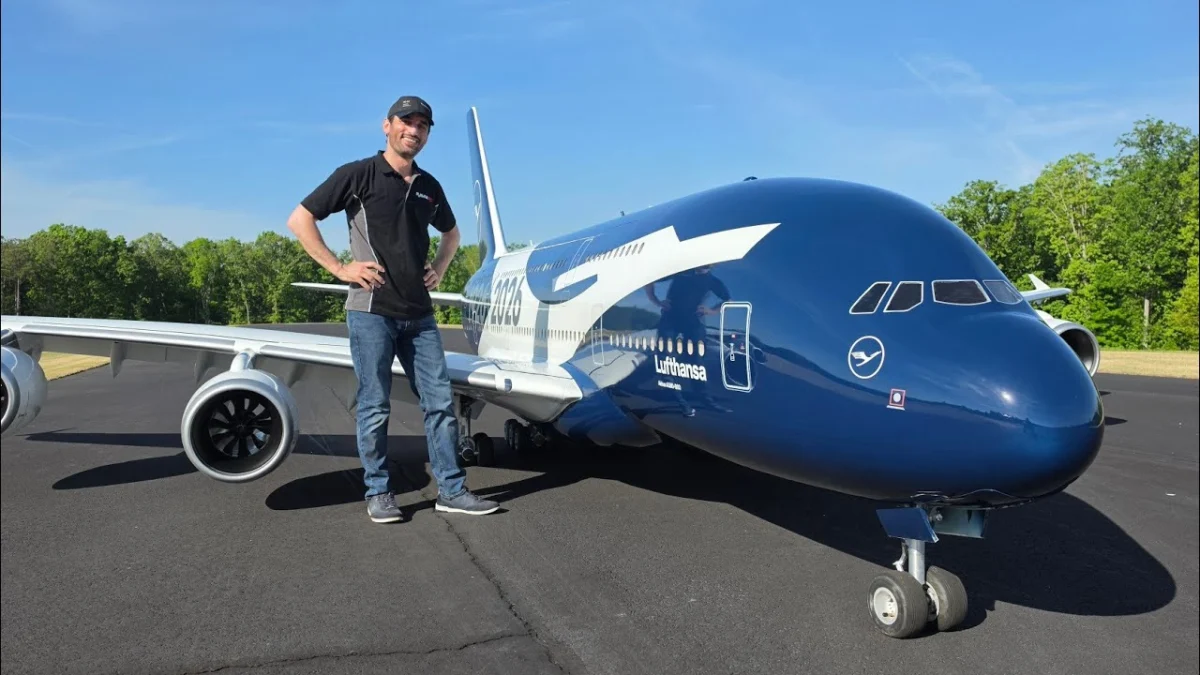
Dusseldorf, Germany – In a breathtaking display of engineering prowess, unwavering dedication, and an unyielding passion for aviation, master modeler Ramy RC has once again pushed the boundaries of the remote-controlled aircraft hobby. His latest creation, an astonishing 1/8 scale replica of the iconic Airbus A380, has been officially unveiled as the largest RC A380 ever built, captivating audiences worldwide and setting a new benchmark for scale modeling. This monumental achievement not only celebrates the grandeur of the original superjumbo but also stands as a testament to the boundless ingenuity of the RC community.
Main Facts: A Colossus of the Skies, Miniaturized
The sheer scale of Ramy RC’s A380 is difficult to fully grasp without seeing it in action. Stretching an imposing 29 feet (8.83 meters) from nose to tail and boasting an immense 32-foot (9.75 meters) wingspan, this behemoth of the skies dwarfs typical RC aircraft. With a hefty take-off weight of 800 pounds (362 kilograms), it’s not merely a model; it’s a meticulously crafted, fully functional miniature airliner capable of graceful flight. To put its size into perspective, its wingspan alone exceeds the length of a small single-engine general aviation aircraft, making it a true marvel of airborne engineering.
The unveiling, prominently featured in a YouTube video titled "World’s Biggest RC A380 – Lufthansa 100th Anniversary Reveal," showcased the aircraft in a livery befitting its majestic presence, commemorating a century of aviation heritage. The event was not just a flight demonstration but a celebration of precision, a tribute to the original aircraft, and a beacon of inspiration for enthusiasts globally.
Unparalleled Construction and Material Science
The construction of such a colossal model demanded an innovative blend of materials and advanced manufacturing techniques. The fuselage, the central spine of this airborne giant, is a sophisticated composite structure. It begins with CNC (Computer Numerical Control) cut EPS (Expanded Polystyrene) foam cores, providing the foundational shape and volume. These foam sections are then meticulously laid up with layers of fiberglass on the exterior, imparting exceptional rigidity and a smooth, paintable surface that perfectly replicates the A380’s sleek contours. Internally, strategically placed carbon fiber reinforcements provide critical structural integrity, safeguarding against torsional stresses and ensuring the fuselage can withstand the immense forces encountered during flight. This judicious combination of lightweight foam, strong fiberglass, and ultra-strong carbon fiber achieves an optimal strength-to-weight ratio, crucial for an aircraft of this magnitude.
The wings, arguably the most complex and structurally critical components of any aircraft, are a symphony of diverse materials. To manage the immense aerodynamic loads and bending moments during flight, Ramy RC engineered a hybrid structure incorporating carbon fiber, aluminum, foam, and wood components. Carbon fiber spars run the length of the wings, providing primary load-bearing strength. Aluminum elements are used for critical joint connections and control surface linkages, offering robustness and precision. Foam contributes to the airfoil shape and reduces overall weight, while select wooden components might be employed for internal bracing or attachment points, leveraging their unique strength characteristics. This multi-material approach underscores a deep understanding of aerospace engineering principles, scaled down to the demands of a giant RC model.
Obsessive Attention to Detail
What truly elevates Ramy RC’s A380 beyond a mere large model is the fanatical attention to detail that permeates every aspect of its design. Unlike many scale models where windows are often painted on for simplicity, each window on this A380 is an actual, individual opening. These apertures are framed with custom 3D-printed window surrounds and fitted with clear acrylic panes, mirroring the realism of a full-size airliner. This commitment to authenticity is so profound that, as noted in the accompanying video, one can even observe a window momentarily dislodging during a flight sequence – a testament to the dynamic forces at play and the model’s true-to-life construction.
Furthermore, the landing gear, a marvel of miniaturized hydraulics and mechanics, operates with a sequence of door movements identical to the real Airbus A380. An actual Airbus mechanic, commenting on the build, validated this extraordinary fidelity, remarking that "the landing gear door order of operations are identical to the real thing." Such endorsements from industry professionals underscore the incredible accuracy and dedication invested in this project, bridging the gap between hobbyist passion and professional aerospace engineering.
Powering this magnificent model are eight powerful electric ducted fan (EDF) units, meticulously integrated into the wing structure, precisely mimicking the quad-engine configuration of the full-scale A380. These EDFs provide the necessary thrust to lift and propel the 800-pound aircraft, drawing power from an array of high-capacity lithium-polymer battery packs. The control systems are equally sophisticated, involving multiple high-torque servos for precise manipulation of control surfaces (ailerons, elevators, rudder, flaps) and advanced flight stabilization electronics to ensure smooth and predictable flight characteristics, crucial for an aircraft of this size and complexity.
A Legacy of Precision: The Chronology of Ramy RC’s Masterpiece
The creation of the world’s largest RC A380 is not an overnight feat but the culmination of years of dedicated work, iterative design, and a relentless pursuit of perfection. For Ramy RC, this project represents the pinnacle of his modeling career, building upon previous successes and lessons learned.
The Genesis of a Giant
Ramy RC’s fascination with the Airbus A380 is well-documented. The sheer audacity of the full-scale superjumbo, its double-deck configuration, and its status as a symbol of modern aviation engineering clearly resonated with his own ambition. The decision to build a 1/8 scale model was not arbitrary; it was a deliberate choice to push the boundaries of what was considered achievable in the RC world, creating a model that would offer both impressive scale presence and realistic flight characteristics. The conceptualization phase likely involved countless hours of studying blueprints, photographs, and technical data of the real A380, meticulously translating its complex geometry into a buildable RC design.
Lessons from the Predecessor: The First A380 Build
Astute observers of the RC aviation scene might recognize Ramy RC from his previous, equally impressive, A380 build, which garnered significant attention and was featured on platforms like Hackaday. That earlier model, while groundbreaking in its own right, served as an invaluable proving ground. Every complex project yields insights, and the first A380 likely provided critical lessons in structural design, material selection, power system integration, and flight dynamics. It allowed Ramy to refine his techniques for CNC foam cutting, composite layup, and the intricate detailing required for a truly scale replica. This new, larger A380 is therefore not just a bigger version but an evolved, optimized design, incorporating all the knowledge and experience gained from its predecessor, demonstrating a continuous cycle of innovation and improvement.
The Multi-Year Construction Odyssey
The journey from raw materials to a flying giant was a multi-year odyssey. The design phase, undoubtedly utilizing sophisticated CAD (Computer-Aided Design) software, would have involved precise calculations for aerodynamics, structural loads, and weight distribution. Once the digital blueprints were finalized, the physical construction began:
- Fuselage Fabrication: This likely started with cutting hundreds of EPS foam sections using large-format CNC machines. These sections were then carefully joined, sanded, and prepared for the composite layup. The application of fiberglass and carbon fiber layers, often a messy but critical process, would have been done in controlled environments to ensure optimal adhesion and strength.
- Wing Assembly: The wings, with their complex internal structure of spars, ribs, and leading/trailing edge components, would have been assembled separately. This involved precise cutting and fitting of carbon, aluminum, and wood elements, followed by the foam core and outer skin application. The integration of control surface hinges and servo mounts would have been paramount for reliable flight.
- Engine Nacelle Construction and Integration: The eight EDF units required custom-built nacelles, perfectly shaped to replicate the A380’s engine housings. These would have been designed for optimal airflow and thrust efficiency.
- Landing Gear Engineering: The custom-fabricated landing gear, with its complex articulation and hydraulic (or pneumatic) mechanisms, would have been a project in itself, requiring precision machining and careful calibration to ensure smooth deployment and retraction.
- Electronics and Control System Integration: Wiring hundreds of feet of cables for power, control signals, and lighting, installing multiple high-power ESCs (Electronic Speed Controllers) for the EDFs, and integrating the advanced RC receiver and flight controller systems would have demanded meticulous planning and execution.
- Detailing and Finishing: The final stages involved the painstaking work of adding the 3D-printed windows, external antennas, navigation lights, and the elaborate Lufthansa livery. The painting process alone for such a large model would have required specialized equipment and significant time to achieve a flawless, scale-accurate finish.
Testing and Maiden Flight
Before taking to the skies, the A380 would have undergone extensive ground testing: taxi tests to evaluate ground handling, brake effectiveness, and steering; engine run-ups to verify thrust and system integrity; and comprehensive checks of all control surfaces and electronics. The maiden flight itself would have been a high-stakes event, the culmination of years of effort. Pilots capable of handling an aircraft of this size and value are rare, and the initial flights would have focused on trimming the aircraft, verifying its stability, and ensuring all systems performed as expected. The success of these flights is a testament to the robust design and meticulous construction.
Supporting Data and Engineering Marvels
The creation of Ramy RC’s A380 is a masterclass in applying real-world engineering principles to a model scale. It provides compelling "supporting data" for the complexity and ingenuity involved.
Aerodynamics and Structural Integrity at Scale
Scaling down a full-size aircraft introduces unique aerodynamic challenges. Air behaves differently at smaller scales and lower Reynolds numbers, meaning that simply shrinking a design doesn’t always guarantee identical flight characteristics. Ramy RC’s success implies a deep understanding of these scale effects. The composite structure of the fuselage and wings is not just for weight reduction but also for managing the immense forces during flight. The wings, with their high aspect ratio, are particularly susceptible to bending and torsion. The internal carbon fiber spars and aluminum reinforcements are crucial for maintaining the wing’s shape and integrity under lift and turbulence. The structural design had to account for the 800-pound weight, ensuring that every component could withstand the stresses of take-off, flight, and landing.
The Powerplant: Eight Electric Ducted Fan Units
The choice of eight electric ducted fan (EDF) units is a significant engineering decision. Unlike propellers, EDFs closely mimic the appearance and thrust characteristics of jet engines. Each EDF unit comprises a high-RPM electric motor driving a multi-bladed fan encased within a duct. For an 800-pound aircraft, these EDFs must be incredibly powerful, likely operating at very high wattages. The total power output, possibly tens of kilowatts, necessitates a sophisticated electrical system, including heavy-gauge wiring, advanced battery management systems (BMS), and multiple high-current Electronic Speed Controllers (ESCs) to regulate power to each motor. The battery packs themselves would be massive, composed of numerous high-capacity lithium-polymer cells, carefully balanced for optimal performance and safety, providing sufficient energy for several minutes of exhilarating flight.
Advanced Control Systems and Flight Dynamics
Controlling an aircraft of this size requires more than just a standard RC transmitter. The flight control system likely incorporates advanced features such as gyroscopic stabilization, potentially even GPS-assisted flight modes, to manage stability in varying wind conditions. Multiple high-torque digital servos are employed for each control surface (ailerons, elevators, rudder, flaps, spoilers, thrust reverse), ensuring precise and reliable actuation. The sheer number of control channels and the complexity of programming the various flight modes, including realistic landing gear and flap sequences, demand a highly advanced radio system and extensive setup. The ability to manage such a heavy aircraft through complex maneuvers like take-off and landing is a testament to the robustness of these systems and the skill of the pilot.
Weight Management: A Constant Battle
Achieving a flyable 800-pound model while maintaining structural integrity is a delicate balancing act. Every material choice, every design decision, is made with weight in mind. The use of EPS foam as a core, coupled with the strength of fiberglass and carbon fiber, is a prime example of optimizing for strength-to-weight. Any excess weight would demand more thrust, larger batteries, and ultimately reduce flight performance and increase stress on the airframe. The design meticulously distributes the weight of the batteries, motors, and electronics to maintain the correct center of gravity, crucial for stable flight.
Estimated Investment
While Ramy RC has not publicly disclosed the exact cost, one can infer the immense financial investment involved. Materials alone—high-grade carbon fiber, aerospace-grade aluminum, custom-cut foam, dozens of powerful EDF units, massive LiPo battery packs, sophisticated servos, and advanced control electronics—would run into tens of thousands of dollars, if not more. Add to this the cost of specialized tools (large-format CNC machines, composite layup equipment), custom fabrication, and the untold thousands of hours of skilled labor, and the total value of this project could easily exceed the cost of a luxury car. This makes the A380 not just a hobby project but a significant personal investment in a passion.
Echoes from the Aviation Community: Official Responses and Expert Commentary
The unveiling of Ramy RC’s colossal A380 has resonated deeply within the global aviation community, eliciting widespread admiration and validating the extraordinary effort involved.
Overwhelming Public and RC Community Reaction
The immediate response to the YouTube video and subsequent media coverage has been overwhelmingly positive. Viewers from around the world have expressed awe at the model’s size, realism, and flight performance. Comments sections are flooded with superlatives, reflecting a shared sense of wonder and respect for the craftsmanship. Within the specialized RC aviation community, Ramy RC is celebrated as a visionary, an innovator who continually raises the bar for what is possible in scale modeling. His work inspires countless other hobbyists to pursue their own ambitious projects, demonstrating that dedication and skill can transform dreams into tangible, flying realities.
Expert Validation: An Airbus Mechanic’s Endorsement
Perhaps one of the most significant forms of "official response" came from an unexpected source: an actual Airbus mechanic who commented on the YouTube video. His observation that the "landing gear door order of operations are identical to the real thing" is a powerful endorsement. It signifies that the model’s level of detail goes beyond superficial aesthetics, delving into the functional accuracy of complex systems. For an industry professional to recognize and commend such fidelity speaks volumes about the quality and precision of Ramy RC’s engineering. This isn’t just a toy; it’s a meticulously engineered replica that accurately mirrors the operational nuances of its full-scale counterpart. This kind of validation bridges the gap between the hobby world and professional aviation, highlighting the serious engineering principles applied in advanced RC modeling.
Impact on the RC Industry and Future Prospects
Ramy RC’s A380 serves as a powerful showcase for the capabilities of modern RC technology. It demonstrates how advancements in composite materials, powerful electric propulsion systems, sophisticated flight controllers, and accessible manufacturing techniques like CNC and 3D printing are enabling hobbyists to undertake projects of unprecedented scale and complexity. This achievement pushes the boundaries of the hobby, inspiring manufacturers to develop more powerful components and other modelers to dream bigger. It also elevates the public perception of RC aircraft, moving beyond simple toys to sophisticated, high-performance machines that embody genuine engineering artistry.
Such a prominent model is also a prime candidate for exhibitions at major international airshows and RC events. Its presence would undoubtedly draw massive crowds, serving as a powerful educational tool to demonstrate the principles of flight and the marvels of scale modeling to a broad audience, potentially inspiring the next generation of engineers and aviators.
Broader Implications and The Future of RC Aviation
Ramy RC’s world’s largest RC A380 is more than just a record-breaking model; it carries significant implications for the spirit of innovation, the convergence of hobbies and professional fields, and the enduring legacy of iconic aircraft.
The Enduring Spirit of Innovation
This project is a profound testament to human ingenuity and dedication. In an age often dominated by digital entertainment, Ramy RC reminds us of the profound satisfaction derived from hands-on creation, problem-solving, and the pursuit of excellence. It embodies the maker spirit, a relentless drive to build, test, and refine, pushing the limits of what is thought possible. This spirit is crucial for progress in all fields, from engineering to art, and projects like the A380 serve as powerful reminders of its importance.
Bridging Hobbies and Professional Engineering
Ramy RC’s work beautifully illustrates how advanced hobbies like RC aviation are increasingly converging with professional engineering disciplines. The principles applied in designing and building this A380—aerodynamics, structural analysis, material science, electrical engineering, control systems—are fundamentally the same as those used in designing full-scale aircraft. This fusion allows hobbyists to develop practical skills and deep theoretical knowledge, potentially inspiring careers in aerospace and related industries. It demonstrates that passion-driven projects can lead to incredibly sophisticated outcomes, blurring the lines between amateur and professional expertise.
The A380’s Enduring Legacy
The full-size Airbus A380, despite being an engineering triumph, is no longer in production, with its final delivery made in 2021. This decision marked the end of an era for the superjumbo, a magnificent aircraft that struggled to find its niche in a market increasingly favoring smaller, more efficient twin-engine jets. However, Ramy RC’s model ensures that the A380’s iconic silhouette and engineering marvel will continue to inspire and captivate. It serves as a living, flying tribute to an aircraft that, for a time, redefined air travel. The article’s mention that the full-size A380s still flying can run on cooking oil highlights another aspect of innovation in aviation—the pursuit of sustainable fuels. While the RC model runs on clean electric power, both scenarios reflect a forward-thinking approach to aviation’s future.
Future Trends in RC Aviation
Ramy RC’s A380 hints at the exciting future of RC aviation. We can anticipate:
- Larger and More Complex Models: As materials become lighter and stronger, and power systems more efficient, even larger and more detailed scale models of airliners, military jets, and even spacecraft might become feasible.
- Increased Automation and Autonomy: Integration of more advanced flight controllers, GPS, and potentially even AI-driven systems could lead to models capable of more autonomous flight, complex maneuvers, and enhanced safety features.
- Advanced FPV (First Person View) Integration: Immersive FPV systems, perhaps with multiple cameras providing cockpit-like views, could further enhance the realism and pilot experience for large models.
- Sustainable Power Sources: While Ramy’s A380 is electric, future innovations might explore even more advanced battery technologies, or even miniature hydrogen fuel cell systems, further reducing the environmental footprint of RC flying.
- Accessibility through Technology: As CNC machines, 3D printers, and advanced simulation software become more affordable and user-friendly, the barrier to entry for ambitious projects may lower, allowing more individuals to pursue large-scale modeling.
In conclusion, Ramy RC’s world’s largest RC A380 is a monumental achievement that transcends the hobbyist realm. It is a powerful symbol of human ingenuity, a tribute to an iconic aircraft, and a vivid demonstration of how passion, coupled with advanced engineering, can bring the most ambitious dreams to life, inspiring countless others to reach for the skies.