DIY Ethanol: A Home-Brewed Solution for Fuel Scarcity in Uncertain Times


FOR IMMEDIATE RELEASE
In an era increasingly defined by geopolitical instability, climate change-induced disruptions, and economic volatility, the prospect of essential resources becoming scarce is no longer confined to the realm of speculative fiction. Among these vital commodities, fuel stands paramount, powering everything from transportation to agriculture and emergency services. As global supply chains face unprecedented pressures, the ability to generate alternative energy sources locally could transform from a niche hobby into a critical survival skill. A recent demonstration by the online persona "[Hyperspace Pirate]" has brought this potential into sharp focus, showcasing a relatively straightforward method for producing ethanol fuel from common sugar, offering a glimpse into a self-sufficient future.
Main Facts: Empowering Self-Sufficiency Through Biofuel
The core revelation from [Hyperspace Pirate]’s recent video demonstration is the accessibility of ethanol fuel production using readily available materials and basic scientific principles. At its heart, the process involves the microbial conversion of sugar (sucrose) into ethanol and carbon dioxide, followed by a distillation step to purify the fuel. This capability suggests a tangible pathway for individuals and communities to mitigate the impact of potential fuel shortages, whether triggered by natural disasters, economic collapse, or prolonged disruptions to traditional supply lines.
The demonstration highlights baker’s yeast (Saccharomyces cerevisiae) – a microorganism more commonly associated with bread making and alcoholic beverages – as the primary agent for fermentation. This yeast efficiently metabolizes sugar, yielding an ethanol-water mixture that can then be distilled. The distillation process, crucial for separating the ethanol from water and other byproducts, was shown to utilize a self-made reflux column, a necessary engineering solution given the azeotropic nature of ethanol-water mixtures.
While the technical feasibility is clear, the current economic viability of DIY ethanol production for personal use remains a significant hurdle. [Hyperspace Pirate]’s analysis, factoring in the cost of sugar and electricity for distillation, pegged the price at approximately $2.62 per liter (or $9.91 per gallon) in Florida, a figure that currently exceeds conventional gasoline prices even amidst recent fluctuations. This suggests that for DIY ethanol to be economically attractive under normal circumstances, a significantly cheaper, ideally free, feedstock would be required, alongside optimized production processes.
Despite the present economic disincentives, the underlying message is profound: the knowledge and capability to produce one’s own fuel could become an invaluable asset in a crisis. The ability to transform agricultural products or even waste into a usable energy source represents a powerful form of resilience, challenging conventional notions of energy dependence.
Chronology: From Ancient Fermentation to Modern Biofuel
The journey of ethanol as a fuel source is not a new one; its history is intertwined with human civilization’s long-standing relationship with fermentation and the quest for alternative energies.
Historical Context of Ethanol as Fuel
Fermentation, the biological process at the heart of ethanol production, dates back millennia, initially for alcoholic beverages. However, ethanol’s potential as a motor fuel began to be seriously explored in the late 19th and early 20th centuries. Henry Ford, a visionary in automotive manufacturing, famously designed his Model T to run on ethanol, gasoline, or a combination of both. He once declared, "The fuel of the future is going to come from fruit like that sumac out by the road, or from apples, weeds, sawdust—almost anything. There is alcohol in every farm." This early recognition of ethanol’s versatility laid the groundwork for future biofuel development.
Throughout the 20th century, interest in ethanol waxed and waned, often correlating with periods of oil scarcity or high petroleum prices, such as the oil crises of the 1970s. Brazil, in particular, emerged as a pioneer, launching its Proálcool program in 1975 to reduce dependence on imported oil by promoting ethanol derived from sugarcane. Today, ethanol is widely used globally, predominantly as an additive to gasoline (e.g., E10 in many countries) to boost octane and reduce emissions, and in higher blends like E85 for flex-fuel vehicles.
The Demonstration by [Hyperspace Pirate]
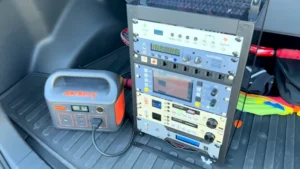
The recent video by [Hyperspace Pirate] serves as a contemporary case study, demystifying the process for the modern enthusiast or prepper. The demonstration unfolds in several distinct stages:
-
Feedstock Procurement: The video begins by emphasizing the need for an appropriate feedstock. For simplicity and availability, common white sugar (sucrose) was chosen. While other starchy or cellulosic materials can be used, sugar provides the most direct and easily fermentable source for yeast.
-
Fermentation Setup: The core of ethanol production starts with fermentation. [Hyperspace Pirate] illustrates how baker’s yeast (Saccharomyces cerevisiae) is introduced into a sugar-water solution. This yeast, a single-celled fungus, consumes the sugar in an anaerobic environment, metabolizing it into ethanol and carbon dioxide as waste products. The process is relatively straightforward, requiring a controlled environment to allow the yeast to thrive and produce ethanol efficiently.
-
Distillation Process: Once fermentation is complete and the yeast has produced an ethanol concentration of approximately 10-15% in the solution, the next critical step is distillation. This separates the ethanol from the water and other fermentation byproducts. The video meticulously details the construction and operation of a self-made reflux column.
-
Addressing the Azeotropic Challenge: A key technical challenge in ethanol distillation is the formation of an azeotropic mixture with water. Ethanol and water form an azeotrope at about 95.6% ethanol by weight, meaning that at this concentration, their boiling points converge, making further separation by simple distillation impossible. [Hyperspace Pirate]’s reflux column design aims to mitigate this by promoting multiple vaporization-condensation cycles within the column. This setup helps condense water vapor back into the boiling flask, allowing a higher concentration of ethanol vapor to reach the top of the column and then the condenser, thereby increasing the purity of the collected distillate beyond what a simple still could achieve.
-
Conversion Rate and Final Product: The demonstration reveals that the conversion rate of plain white sugar to ethanol is approximately 54%, with the remaining mass primarily converted into carbon dioxide. The resulting ethanol, after distillation, is then tested.
-
Engine Testing: To validate its utility as a fuel, the produced ethanol is shown powering a combustion engine appropriately converted to run on 100% ethanol. The engine performs "pretty well," confirming the practical applicability of the home-brewed fuel.
Supporting Data: The Science, Economics, and Environmental Footprint
Understanding the nuances of DIY ethanol production requires delving into the scientific principles, the economic realities, and the broader environmental context.
The Science Behind Ethanol Production
The fundamental process relies on alcoholic fermentation, a metabolic pathway primarily carried out by yeast. Saccharomyces cerevisiae is particularly efficient at this. In the absence of oxygen (anaerobic conditions), yeast converts glucose (a simple sugar, readily derived from sucrose) into ethanol (CH3CH2OH) and carbon dioxide (CO2). The simplified chemical equation is:
C6H12O6 (Glucose) → 2 C2H5OH (Ethanol) + 2 CO2 (Carbon Dioxide)

This reaction is exothermic, releasing energy for the yeast to grow and reproduce. The concentration of ethanol produced by yeast is typically limited to 10-18% before the ethanol itself becomes toxic to the yeast.
Distillation then separates the ethanol from the fermented "mash." Ethanol has a lower boiling point (78.37 °C) than water (100 °C). By heating the mixture, ethanol vaporizes preferentially, and these vapors are then cooled and condensed back into liquid form. As highlighted, the azeotropic mixture of ethanol and water (approximately 95.6% ethanol and 4.4% water at atmospheric pressure) is a critical consideration. Simple distillation cannot achieve higher purity than this azeotrope. To obtain anhydrous (water-free) ethanol, more advanced techniques such as azeotropic distillation (using a third component like benzene or cyclohexane), molecular sieves, or vacuum distillation are required. The reflux column employed by [Hyperspace Pirate] is a practical approach to maximize the purity attainable through simple, home-scale equipment, by providing multiple theoretical plates for separation.
Feedstock Alternatives and Efficiency
While sugar is convenient for demonstration, a wider array of feedstocks can be utilized:
- Sugar-based Feedstocks: Sugarcane, sugar beets, molasses, and fruit provide simple sugars that are directly fermentable by yeast. These are generally the most efficient for ethanol production.
- Starch-based Feedstocks: Corn, wheat, barley, potatoes, and cassava contain starches that first need to be broken down into fermentable sugars using enzymes (saccharification) before fermentation can occur. This adds an extra step and cost to the process.
- Cellulosic Feedstocks: Lignocellulosic biomass, found in agricultural residues (corn stover, wheat straw), dedicated energy crops (switchgrass), and wood chips, represents a vast and sustainable resource. However, converting cellulose into fermentable sugars is significantly more complex and energy-intensive, requiring advanced enzymatic or acid hydrolysis treatments. "Cellulosic ethanol" is a frontier of biofuel research, promising to utilize non-food resources, but it remains more expensive and challenging to produce at scale.
The overall efficiency and energy balance of ethanol production vary significantly with the feedstock and process. Corn ethanol, for instance, has been criticized for its energy input-to-output ratio and its impact on food prices. Cellulosic ethanol, while more sustainable in feedstock choice, faces higher processing costs. For DIY purposes, the "free" or low-cost availability of feedstock heavily dictates the practicality.
Economic Analysis of DIY Ethanol
[Hyperspace Pirate]’s economic breakdown offers a sobering reality check. Using off-the-shelf sugar and factoring in electricity costs for the distillation column (2.57 kWh/L) at Florida’s $0.12/kWh, the total cost comes to $2.62/L or $9.91/gallon. This calculation highlights several critical factors:
- Feedstock Cost: Sugar is relatively expensive as a feedstock. For economic viability, one would ideally need access to cheap or free sugar sources, perhaps from waste streams, damaged crops, or home-grown produce.
- Energy Input for Distillation: The energy required to heat the mixture and achieve distillation is substantial. Electricity prices vary widely, and in regions with higher electricity costs, the per-liter price would escalate further. Utilizing solar thermal or other renewable heat sources could significantly reduce this cost.
- Equipment Costs: The initial investment in distillation equipment, even if DIY, represents a sunk cost. For commercial operations, economies of scale significantly reduce per-unit production costs.
- Opportunity Cost: The time and effort invested in production also carry an opportunity cost.
Compared to current gasoline prices, which fluctuate but rarely reach $9-$10 per gallon in most regions for standard fuel, DIY ethanol from sugar is currently not economically competitive. This underscores the premise that its value proposition shifts dramatically under crisis conditions where conventional fuel is unavailable at any price.
Environmental Considerations
The environmental impact of ethanol production is a complex topic:
- Carbon Neutrality: Ethanol is often promoted as a "carbon-neutral" fuel because the CO2 released during combustion is theoretically offset by the CO2 absorbed by the plants during their growth. However, a full life-cycle analysis (LCA) must account for emissions from farming (fertilizers, machinery), processing, and transportation. The "carbon debt" associated with land-use change (e.g., converting forests to biofuel crops) can also negate carbon savings.
- Land Use and Water Footprint: Large-scale ethanol production from food crops (like corn or sugarcane) can compete with food production and require significant land and water resources, raising concerns about food security and environmental degradation. Cellulosic ethanol aims to address this by using non-food biomass.
- Emissions: Burning ethanol produces fewer particulate matter emissions than gasoline and can reduce carbon monoxide and hydrocarbon emissions. However, it can also lead to higher emissions of nitrogen oxides (NOx), contributing to smog.
For small-scale DIY production, the environmental footprint is generally localized and depends heavily on the feedstock source and energy used for distillation. If waste sugar is utilized and renewable energy powers the distillation, the environmental benefits could be more pronounced.
Official Responses: Navigating Regulation and Policy
The realm of DIY fuel production, particularly involving ethanol, intersects with a complex web of government regulations and established industry interests.
Regulatory Landscape
Home distillation, even for fuel, often falls under strict regulatory scrutiny, primarily due to the historical association with alcoholic beverages and the potential for evasion of excise taxes.
- Alcohol Production Laws: In many countries, including the United States, producing alcohol (ethanol) for consumption without a permit is illegal and subject to severe penalties. While the intent here is fuel, the chemical process is identical to producing moonshine. Specific permits are usually required for fuel alcohol production, even at small scales, which can be cumbersome and costly to obtain.
- Safety Regulations: The distillation of highly flammable liquids like ethanol poses significant fire and explosion risks. Regulations exist for the safe handling, storage, and transportation of such materials, which are often overlooked in informal DIY setups.
- Fuel Standards and Emissions: Fuels used in vehicles are subject to quality standards (e.g., octane rating, vapor pressure, contaminants) to ensure proper engine function and to control emissions. Home-produced ethanol might not meet these standards, potentially damaging engines or violating environmental regulations if used on public roads.
Government Stance on Biofuels
Governments worldwide generally support biofuels as part of broader energy diversification and climate change mitigation strategies.
- Promotional Policies: In the U.S., the Renewable Fuel Standard (RFS) mandates the blending of increasing volumes of biofuels into the nation’s transportation fuel supply. Similar policies exist in the EU, Brazil, and other countries. These policies aim to reduce greenhouse gas emissions, enhance energy security, and support agricultural sectors.
- Subsidies and Research: Commercial biofuel producers often benefit from tax credits, grants, and other subsidies. Governments also fund research and development into advanced biofuels, particularly cellulosic ethanol and other next-generation technologies that promise greater sustainability.
- Distinction between Commercial and DIY: While commercial biofuel production is encouraged, small-scale, unregulated DIY production often remains in a legal gray area or is explicitly prohibited due to concerns about taxation, safety, and quality control.
Industry Perspectives
- Oil and Gas Industry: Historically, the oil and gas industry has viewed alternative fuels as competition. However, many major oil companies now participate in biofuel production and blending, adapting to regulatory mandates and market shifts.
- Biofuel Industry: The commercial biofuel industry is a significant global sector, continuously investing in efficiency improvements and new technologies. They emphasize the importance of scale, sustainability, and adherence to quality standards.
- Automotive Industry: Vehicle manufacturers have adapted engines to run on ethanol blends (E10, E15, E85), developing "flex-fuel" vehicles that can operate on various gasoline-ethanol mixtures. However, running conventional engines on 100% ethanol requires specific modifications (e.g., fuel system materials, engine tuning) due to ethanol’s different chemical properties and energy content.
Implications: Preparing for a Future of Uncertainty
The ability to produce ethanol fuel at home carries significant implications, particularly in the context of increasing global instability and the potential for systemic disruptions.
Societal Impact of Fuel Scarcity
The "what if" scenarios painted by [Hyperspace Pirate] – a local gas station running dry, or ceasing to exist – are not merely hypothetical. Natural disasters (hurricanes, earthquakes, floods), cyberattacks on critical infrastructure, or major economic downturns can swiftly cripple fuel distribution networks. In such events, access to transportation, emergency services, and even basic power generation (if fueled by internal combustion engines) can grind to a halt.
The ability for individuals or small communities to produce their own fuel offers a powerful psychological and practical buffer against such crises. It fosters a sense of resilience and self-sufficiency, reducing dependence on external, potentially fragile, systems. This independence extends beyond personal vehicles, potentially fueling generators for electricity, agricultural machinery, or vital communication systems. The shift from consumer to producer of such a fundamental resource can empower communities to withstand shocks more effectively.
Technical Challenges and Safety
While appealing, DIY ethanol production is not without its significant challenges and inherent dangers:
- Complexity: The process, particularly distillation with a reflux column to achieve higher purity, requires a basic understanding of chemistry, physics, and engineering principles. Improper setup can lead to inefficient production or hazardous conditions.
- Safety Risks: Ethanol is highly flammable, and its vapors can form explosive mixtures with air. Heating large quantities of fermenting mash or distilled ethanol in a poorly ventilated or improperly constructed setup carries substantial risks of fire, explosion, and burns. Handling and storing the final product also requires extreme caution.
- Chemical Exposure: Exposure to ethanol vapors, particularly in concentrated forms, can be irritating or harmful. Proper ventilation and personal protective equipment are crucial.
- Engine Conversion: As noted, standard gasoline engines are not designed to run on 100% ethanol. Ethanol is corrosive to certain plastics and rubbers commonly found in older fuel systems, and its lower energy density requires different fuel-air mixtures for optimal combustion. Converting an engine requires knowledge of fuel system modifications and engine tuning, which can be complex and costly.
These challenges underscore that while the concept is powerful, practical implementation requires careful planning, adherence to safety protocols, and a solid technical understanding.
The "Mad Max" Scenario Revisited
The article’s closing reflection on the world of Mad Max not running on ethanol is poignant. In a post-apocalyptic scenario, where conventional infrastructure has collapsed, the ability to synthesize fuel from readily available biomass would indeed be a "highly marketable skill." The value system would shift dramatically: monetary wealth would be rendered meaningless, replaced by practical skills, essential resources, and the ability to innovate under extreme duress. Bioethanol production would not just power vehicles; it would power survival, trade, and the nascent rebuilding of society. It would transform individuals with such knowledge into invaluable assets, perhaps even leaders in resource-scarce communities.
Future Outlook and Innovation
The interest generated by demonstrations like [Hyperspace Pirate]’s video highlights a broader societal fascination with resilience and self-reliance. This curiosity can spur further innovation, even at the grassroots level.
- Advanced Biofuels: Beyond simple sugar fermentation, ongoing research into advanced biofuels promises more efficient and sustainable methods. This includes developing new strains of yeast or bacteria engineered for higher ethanol yields, or enzymes that more effectively break down tough cellulosic biomass. Algae-based biofuels, which can produce high yields without competing for arable land, also hold significant promise.
- Open-Source Innovation: The DIY and open-source movements could play a crucial role in democratizing access to biofuel production knowledge and technology. Sharing designs for efficient stills, fermentation setups, and feedstock processing methods could accelerate adoption and adaptation in crisis scenarios.
- The Quest for Sustainable Energy: Ultimately, the pursuit of DIY ethanol is part of humanity’s broader, ongoing quest for sustainable and affordable energy. While it may not be the primary solution for global energy needs, it represents a potent symbol of human ingenuity and adaptability in the face of an uncertain future. The ability to harness microbial power to fuel our machines, even in a small way, offers a compelling vision of distributed energy independence.