The Invisible Tax on Tech: How Unplanned Work and ‘Context Switching’ Are Quietly Sabotaging Software Engineering Velocity
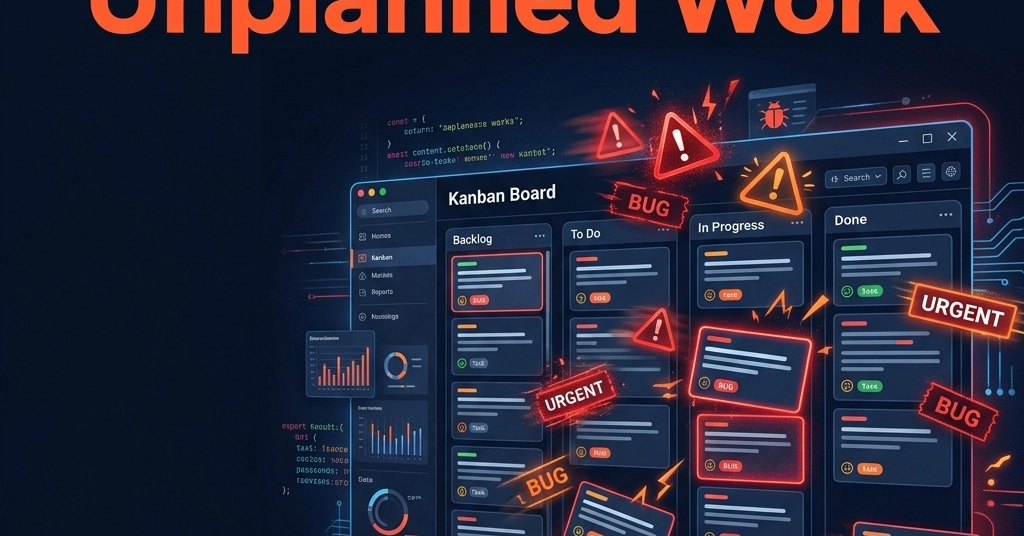
Every Monday morning, software engineering teams around the world gather for sprint planning. The ritual is characterized by a shared sense of optimism: digital kanban boards are meticulously cleaned, story points are calculated with mathematical precision, and developers align on a realistic set of deliverables. The team is primed to ship high-quality code.
Then, Tuesday happens.
A Slack notification chimes: the CEO needs a "quick favor" on a high-profile demo. By Wednesday afternoon, a major enterprise client discovers an edge-case bug in production. On Thursday, the marketing department requests an urgent modification to a lead-generation landing page. By the time the weekend approaches, the pristine, balanced sprint board is buried under an avalanche of ad-hoc, "high-priority" tickets that were never discussed, scoped, or approved during planning.
This phenomenon is known as unplanned work, and industry experts increasingly identify it as the silent killer of engineering velocity, product quality, and developer morale. While many organizations treat these interruptions as minor, isolated incidents, collective data suggests they represent a systemic drain on corporate productivity and capital.
The Anatomy of a Ruined Sprint: A Chronology of Chaos
To understand the destructive nature of unplanned work, one must observe how a typical two-week sprint unravels under the weight of unscheduled demands. The cycle of disruption follows a highly predictable, yet rarely managed, trajectory:
[Day 1: Planning] ---> [Day 2: The "Quick Favor"] ---> [Day 4: Production Fire] ---> [Day 8: The Cascade Effect] ---> [Day 10: Retrospective & Burnout]Phase 1: The Illusion of Order (Days 1–2)
The sprint begins with high commitment. Developers pull tasks from the backlog based on their calculated capacity. Velocity metrics from previous weeks suggest the goals are highly achievable.
Phase 2: The Micro-Interruption (Days 3–4)
The first wave of unplanned work arrives. It rarely presents itself as a major crisis; instead, it masquerades as a "five-minute task." A product manager asks a developer to query a database for a sales report; an executive requests a minor UI tweak. Because these tasks bypass the official ticketing system, they remain invisible to project management tools.
Phase 3: The Systemic Shock (Days 5–7)
A critical bug or system outage occurs in the production environment. Because no dedicated resource has been allocated to handle maintenance, developers must abandon their core sprint tasks mid-stream. The team enters a state of high-stress triage.
Phase 4: The Cascade Effect (Days 8–10)
As the sprint deadline nears, developers attempt to return to their original commitments. However, the loss of momentum is catastrophic. To meet the original delivery dates, testing is rushed, code reviews are bypassed, and technical debt is actively introduced. The sprint ends with missed targets, half-finished features, and a demoralized team.
Supporting Data: The Cognitive and Financial Toll of Context Switching
The primary damage of unplanned work is not merely the hours lost to the disruptive tasks themselves. Rather, the true culprit is cognitive context switching—the mental tax paid when a human brain is forced to shift focus from one complex problem-solving state to another.
The Science of Cognitive Lag
Research conducted by Dr. Gloria Mark, a professor of informatics at the University of California, Irvine, reveals that it takes an average of 23 minutes and 15 seconds to return to a deep focus state after a single interruption.

When a software engineer—whose work requires sustaining complex mental models of codebase architectures—is interrupted for a "quick 10-minute fix," the true cost to the company is closer to an hour of lost high-value productivity.
+-------------------------------------------------------------------------+
|                         THE CONTEXT SWITCHING TAX                       |
+-------------------------------------------------------------------------+
|  [ Focused Deep Work ] ---> ( Interruption: "Quick Bug Fix" )           |
|                                     |                                   |
|                                     v                                   |
|                         [ Perform Task: 10 Mins ]                       |
|                                     |                                   |
|                                     v                                   |
|                         [ Cognitive Recovery: 23 Mins ]                 |
|                                     |                                   |
|                                     v                                   |
|  [ Rebuilding Mental Model: 15 Mins ]                                   |
+-------------------------------------------------------------------------+
|  TOTAL TIME LOST FOR A 10-MINUTE TASK: ~48 MINUTES                      |
+-------------------------------------------------------------------------+
The Multi-Project Penalty
In his classic text Quality Software Management, systems thinker Gerald Weinberg quantified the capacity loss associated with juggling multiple projects simultaneously:
| Number of Simultaneous Projects | % of Time Dedicated to Project | Loss to Context Switching |
|---|---|---|
| 1 Project | 100% | 0% |
| 2 Projects | 40% per project | 20% |
| 3 Projects | 20% per project | 40% |
| 4 Projects | 10% per project | 60% |
When unplanned work forces developers to divide their focus between active sprint goals and ad-hoc operational requests, they effectively operate at a fraction of their cognitive capacity. The organizational result is a dramatic drop in throughput and an exponential increase in software defect rates.
Expert Frameworks: How Leading Engineering Teams Protect Their Sprints
While it is impossible to eliminate unplanned work entirely—software bugs will inevitably occur, and market conditions will shift—highly mature engineering organizations do not leave their capacity to chance. Instead, they implement structural guardrails to absorb operational shocks.
1. The "Firefighter" Rotation
Rather than forcing the entire team to absorb interruptions, engineering leaders often designate a single developer as the "Firefighter" (sometimes referred to as the Support Cop or Batman) for the duration of the sprint.
- The Mandate: The designated Firefighter is completely excluded from the sprint’s core commitments. Their capacity is planned at 0% for new features.
- The Responsibility: They act as a shield for the rest of the team, triaging all incoming bug reports, ad-hoc data requests, and urgent administrative tasks.
- The Benefit: The remaining developers are granted uninterrupted blocks of deep focus, preserving their flow state and ensuring feature delivery remains on schedule.
2. The 20% Capacity Buffer Rule
A common mistake in agile project management is planning capacity at 100% of the team’s theoretical limits. If a team has 100 hours of combined development time, booking all 100 hours for feature work leaves zero margin for error.
According to queuing theory, a system operating at 100% utilization will experience infinite queue lengths when any variability is introduced. To counter this, elite teams apply a 20% buffer rule:
$$textPlanned Feature Capacity = textTotal Capacity times 0.80$$
If no operational emergencies arise during the sprint, the team simply pulls well-scoped items from the top of the product backlog. If emergencies do occur, the buffer absorbs the impact, keeping the primary sprint commitments secure.
3. Exposing and Eliminating "Ghost Tickets"
The most insidious form of unplanned work is the "ghost ticket"—tasks requested via private messages, casual conversations, or email that never enter the official issue-tracking system.
To manage unplanned work, organizations must first measure it. Teams should enforce a strict administrative policy: "If it takes longer than 15 minutes, it requires a ticket." By tracking these ad-hoc requests, engineering managers gain the empirical data necessary to demonstrate to business stakeholders how out-of-band requests directly delay the product roadmap.

The Shift to Predictive Analytics in Engineering Management
As organizations face mounting pressure to optimize operational efficiency, the software development industry is shifting from reactive post-mortems to proactive, predictive analytics.
Traditional project management tools like Jira or Linear function primarily as static ledgers; they record what has happened or what is currently in progress, but they offer little foresight into systemic risks. This visibility gap is where modern engineering intelligence platforms are focusing their efforts.
Platforms such as Rahnuma.io are entering the market to address this specific pain point. Rather than relying on manual status updates, these tools leverage machine learning models to analyze a team’s historical velocity, code commit patterns, and past disruption rates.
By identifying patterns of unplanned work and tracking systemic bottlenecks, these predictive engines can forecast deadline risks up to 30 days in advance. If a team’s sprint is on a trajectory to derail due to an accumulation of ad-hoc tasks, engineering leaders receive early warnings, allowing them to adjust expectations and reallocate resources before a public failure occurs.
Implications for Modern Tech Leadership
The battle over unplanned work is not merely a technical dispute between developers and product managers; it is a fundamental business challenge with significant macroeconomic implications.
1. Developer Retention and Burnout
In a highly competitive talent market, developer burnout remains a primary driver of costly engineering turnover. Software engineers are fundamentally motivated by the act of creation and problem-solving. When their days are fragmented by constant context switching, administrative overhead, and shifting priorities, job satisfaction plummets. Protecting developer focus is increasingly recognized as a key retention strategy.
2. The Cost of Technical Debt
When sprints are disrupted by unplanned work, teams are forced to make trade-offs. The most common trade-off is code quality. Rushed implementations, bypassed unit tests, and skipped code reviews result in technical debt. This debt must eventually be repaid, usually in the form of even more unplanned work—such as critical production bugs—creating a vicious, self-reinforcing cycle of engineering inefficiency.
+-----------------------------------------------------------------+
|                    THE TECHNICAL DEBT Vicious CYCLE             |
+-----------------------------------------------------------------+
|                                                                 |
|     +---> [ Unplanned Work Interrupts Sprint ]                  |
|     |                      |                                    |
|     |                      v                                    |
|     |     [ Developers Rush to Meet Deadlines ]                 |
|     |                      |                                    |
|     |                      v                                    |
|     |     [ Code Quality Drops / Tech Debt Rises ]              |
|     |                      |                                    |
|     |                      v                                    |
|     |     [ More Bugs & Production Outages Occur ]              |
|     |                      |                                    |
|     +----------------------+                                    |
|                                                                 |
+-----------------------------------------------------------------+
3. Alignment of Business and Engineering
For organizations to scale successfully, there must be absolute transparency regarding engineering capacity. When business leaders understand that an ad-hoc request is not "free," but rather comes at the direct expense of the strategic product roadmap, they can make highly informed decisions.
By quantifying the cost of unplanned work through rigorous tracking and predictive modeling, engineering leaders can move from defensive gatekeeping to collaborative, data-driven partnerships with business executives. Only then can organizations hope to break the cycle of chaotic sprints and build a sustainable, high-velocity delivery engine.