Unveiling a Lost Possibility: Fan-Made Twilight Princess Port Challenges Nintendo’s Past Decisions on the 3DS
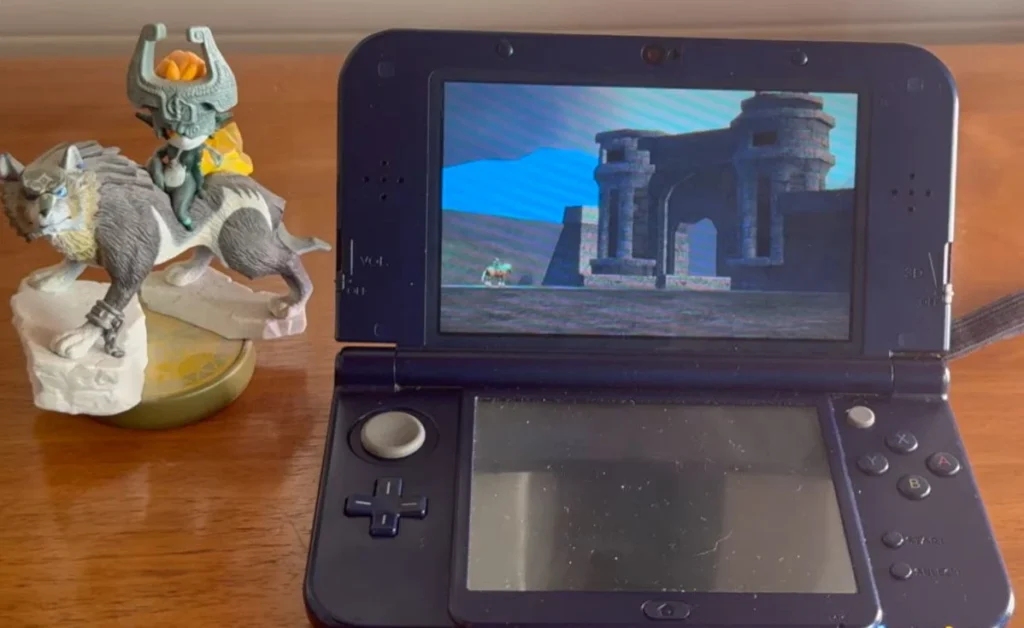
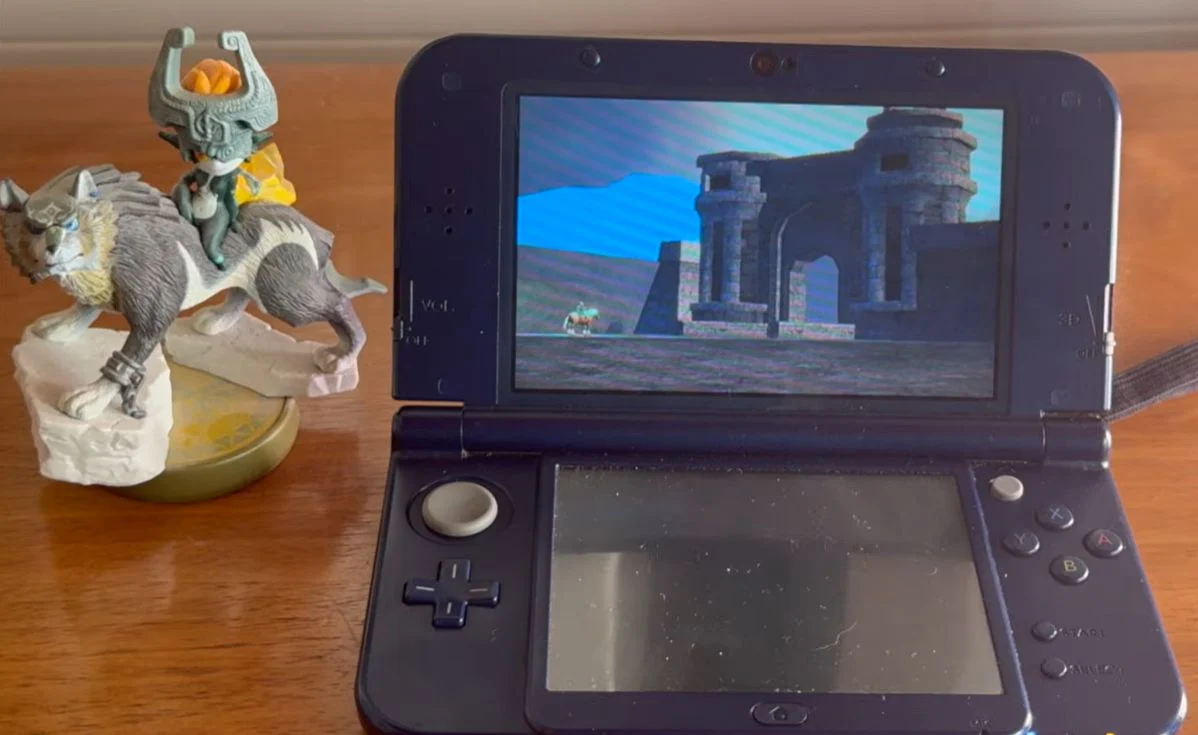
For years, the fervent fanbase of Nintendo’s The Legend of Zelda: Twilight Princess harbored a persistent "what if" scenario: what if this beloved GameCube/Wii classic had joined its N64 predecessors on the Nintendo 3DS? While Ocarina of Time 3D and Majora’s Mask 3D graced the handheld with stunning remasters, Twilight Princess remained conspicuously absent, leaving fans to ponder the technical feasibility. Now, a groundbreaking fan-led initiative, spearheaded by a developer known only as [Tobi], has not only answered that question but emphatically demonstrated that an official 3DS port was not just possible, but demonstrably achievable. Leveraging recently decompiled source code for the game, [Tobi]’s early porting efforts showcase Twilight Princess running surprisingly well on the 3DS, reigniting discussions about the handheld’s untapped potential and Nintendo’s strategic choices.
This revelation, initially demonstrated through a compelling video, casts a new light on the Nintendo 3DS’s hardware capabilities, positioning it far closer to its console brethren than many had previously acknowledged. Despite the early stage of development, characterized by graphical glitches and inherent instability typical of such ambitious undertakings, the core game is already playable. This extraordinary progress underscores a significant achievement within the homebrew community and serves as a powerful testament to the dedication and technical prowess of independent developers. The project’s next phases promise bug fixes, crucial optimizations, and even the tantalizing prospect of rendering the game in stereoscopic 3D, a hallmark feature of the handheld system. This unofficial port not only fulfills a long-standing fan desire but also provides a retrospective validation that Nintendo could have, "easily," delivered an official version of Twilight Princess for its innovative dual-screen device.
The Genesis of a Speculation: Why Twilight Princess on 3DS?
The Nintendo 3DS, launched in 2011, quickly established itself as a potent platform for revisiting cherished classics, particularly from the Nintendo 64 era. The stunning success of The Legend of Zelda: Ocarina of Time 3D (2011) and Majora’s Mask 3D (2015) set a powerful precedent. These weren’t mere emulations; they were meticulously rebuilt remasters, boasting enhanced graphics, improved controls, and the unique stereoscopic 3D effect that breathed new life into iconic Hyrule landscapes. The critical acclaim and commercial success of these titles cemented the 3DS’s reputation as a prime destination for experiencing legendary Zelda adventures on the go.
Naturally, following the N64 remasters, speculation mounted about which Zelda title might be next. For many, The Legend of Zelda: Twilight Princess, originally released in 2006 for both the GameCube and as a launch title for the Wii, was the logical successor. Its darker, more mature tone, expansive world, and unique Wolf Link mechanics made it a standout entry in the series. The idea of experiencing its vast Hyrule fields and intricately designed dungeons in portable 3D was a dream for countless fans. However, as the years passed and the 3DS hardware continued its lifecycle, an official announcement for Twilight Princess 3D never materialized, leaving the community to wonder if the hardware simply wasn’t up to the task or if Nintendo had other priorities.
Chronology of a Breakthrough: From Speculation to Playable Port
The journey from a distant fan dream to a tangible, playable demonstration of Twilight Princess on the 3DS is a fascinating narrative, deeply rooted in the evolution of game preservation, reverse engineering, and the sheer tenacity of the homebrew community.
The Hardware Question: Could the 3DS Truly Compete?
At the heart of the initial speculation lay the fundamental question of hardware capability. The Nintendo 3DS, while a significant leap from its predecessor, the DS, was still a handheld device. The GameCube and Wii, its original platforms, were dedicated home consoles. Comparing their specifications is crucial to understanding the perceived challenges.
The Nintendo 3DS boasts a dual-core ARM11 MPCore CPU (at 268 MHz, though often underclocked or used for system functions) and a single-core PICA200 GPU developed by Digital Media Professionals (DMP), capable of sophisticated graphics rendering, including per-pixel lighting, procedural textures, and of course, stereoscopic 3D. Crucially, it features 128 MB of FCRAM (Fast Cycle DRAM), a type of high-bandwidth RAM, along with 6 MB of VRAM.
In contrast, the GameCube featured an IBM "Gekko" CPU (485 MHz) and an ATI "Flipper" GPU (162 MHz), with 24 MB of 1T-SRAM and 16 MB of ARAM for audio and other data. The Wii built upon this, essentially an overclocked GameCube with additional RAM, featuring a "Broadway" CPU (729 MHz) and an "Hollywood" GPU (243 MHz), alongside 88 MB of main RAM and 3 MB of texture memory.
While raw clock speeds suggest a significant disparity, the 3DS’s architecture, particularly its GPU, was designed for efficient rendering on a small screen with specific modern graphical features. The original article correctly notes the 3DS’s hardware is "decidedly more beefy" than the DS/DSi and puts it "within batting distance" of the GameCube/Wii. This "batting distance" isn’t about matching raw power but about having enough headroom to render the game, albeit with necessary optimization and potential compromises on resolution or texture detail, to run acceptably on the handheld’s native screen. The 128 MB of FCRAM, in particular, offers a substantial memory pool for a handheld, a critical factor for games with large assets like Twilight Princess.
The Catalyst: Decompiled Source Code and Community Effort
The real game-changer for this project was the recent availability of the decompiled source code for The Legend of Zelda: Twilight Princess. Decompilation is a complex process of reverse engineering a compiled program (like a commercial video game) back into its original, human-readable source code. This is a monumental undertaking, often requiring years of collaborative effort from a dedicated community of programmers, hackers, and enthusiasts.
For Twilight Princess, the successful decompilation meant that developers like [Tobi] no longer had to painstakingly guess how the game worked by analyzing its compiled executable. Instead, they had access to the actual instructions, logic, and asset definitions used by Nintendo’s original developers. This access dramatically simplifies the porting process, allowing developers to understand the game’s internal workings, identify dependencies, and adapt it to new hardware much more efficiently than traditional reverse engineering or emulation methods. It bypasses many of the challenges associated with creating an emulator from scratch or trying to force a game designed for one architecture to run on another without knowing its core logic. The availability of this source code transformed Twilight Princess from a black box into an open book, enabling direct modifications and optimizations for a new target platform.
[Tobi]’s Vision and Execution: Bridging the Gap
Armed with the decompiled source code, [Tobi] embarked on the ambitious project. The goal was not merely to emulate the game, but to port it natively, allowing it to leverage the 3DS’s hardware directly. This approach offers significant performance advantages over emulation, as the game can be compiled specifically for the 3DS’s ARM architecture and PICA200 GPU.
The initial stages, as detailed by [Tobi] and demonstrated in the video, involved getting the game to boot and render basic scenes. This "quick-and-sloppy" porting approach focuses on functionality first, dealing with graphical fidelity and performance later. It’s a common strategy in game development and porting, where the objective is to establish a working baseline before refining the experience. The rapid progress seen, with the game essentially "playable" in its early state, speaks volumes about both the quality of the decompiled source code and [Tobi]’s skill in adapting it. This immediate playability, even with expected visual artifacts, confirms the underlying architectural compatibility and the potential for a fully functional port.
Technical Achievements and Current State: A Glimpse into the Future
The current status of [Tobi]’s Twilight Princess port for the 3DS is a remarkable technical achievement, offering a tantalizing look at what could have been. The demonstration video, a crucial piece of supporting data, visually confirms the core viability of the project.
Initial Playability: A Foundation for Further Development
Despite being an early-stage port, the game’s ability to run "surprisingly well" is the most significant takeaway. This means that fundamental game mechanics, character movement, environment rendering, and basic interactions are functional. Players can navigate Link through portions of Hyrule, engage with the world, and experience the game’s core loop, albeit with visual imperfections.
These "impressive graphical glitches and overall instability" are entirely expected in such a nascent port. They likely manifest as:
- Texture errors: Incorrectly loaded textures, missing textures, or textures rendered with incorrect palettes or filters, leading to garbled visuals or flat, untextured surfaces.
- Lighting issues: Incorrect light sources, shadows behaving erratically, or environments appearing too dark or too bright.
- Shader inaccuracies: Visual effects like water reflections, particle effects, or atmospheric shaders not rendering correctly or at all.
- Frame rate fluctuations: While the core game runs, the frame rate might dip significantly in complex scenes, during combat, or when transitioning between areas, impacting the smoothness of gameplay.
- Geometry culling issues: Parts of the environment or characters might pop in and out of view unexpectedly.
- Control mapping challenges: Adapting a game designed for a traditional controller (GameCube/Wii) to the 3DS’s smaller button layout and single analog stick (or Circle Pad Pro for a second stick) requires careful consideration and mapping, which might still be rudimentary at this stage.
However, the fact that the game is "essentially already playable" indicates that the core engine has been successfully translated to the 3DS hardware. This means the CPU is processing game logic, the GPU is rendering scenes, and the memory management is largely functional. It’s a testament to the fundamental compatibility between the GameCube/Wii’s design philosophy and the 3DS’s capabilities, particularly when direct source code access allows for targeted adjustments.
Optimization Challenges and Roadmap: The Path Ahead
[Tobi]’s outlined next steps are critical and highlight the significant work still required to transform this proof-of-concept into a polished, enjoyable experience.
- Bug Fixing: This will involve systematically addressing the graphical glitches, ensuring textures load correctly, lighting behaves as intended, and visual effects are accurately rendered. This is often a painstaking process of debugging and tweaking rendering pipelines.
- Optimization: This is arguably the most crucial step for a handheld port. It involves fine-tuning the game’s performance to ensure a consistent and smooth frame rate, reasonable battery consumption, and efficient use of the 3DS’s resources. This could entail:
- Asset compression/downscaling: Reducing the resolution or complexity of textures, models, and other assets to fit within the 3DS’s memory and rendering capabilities without sacrificing too much visual fidelity.
- Drawing distance adjustments: Modifying how far objects are rendered to reduce the load on the GPU.
- Shader simplification: Adapting complex GameCube/Wii shaders to more efficient equivalents on the PICA200 GPU.
- CPU/GPU workload balancing: Ensuring neither the CPU nor GPU is bottlenecking performance, optimizing game logic to run efficiently on the ARM11.
- Stereoscopic 3D Rendering: The prospect of having Twilight Princess rendered in true stereoscopic 3D is a highly exciting development. This would leverage the 3DS’s unique display, adding depth and immersion that would differentiate it significantly from the original console versions or even the Wii U’s Twilight Princess HD. Implementing this requires rendering two slightly offset images for each eye, which doubles the rendering workload and requires careful integration into the game’s rendering pipeline. This feature alone would make the 3DS port a unique experience.
The successful implementation of these steps would not only refine the existing functionality but also elevate the port to a level where it could genuinely stand as a viable alternative way to experience Twilight Princess.
Re-evaluating the "Batting Distance": Technical Deep Dive
To further underscore the "batting distance" between the 3DS and its console counterparts, consider the context of other successful GameCube/Wii ports or remasters on less powerful hardware. For instance, games like Resident Evil 4 (GameCube) were ported to the PlayStation 2 and even mobile devices, albeit with significant visual compromises. The 3DS, with its comparatively robust GPU and ample FCRAM, offered a much more capable foundation.
The PICA200 GPU, while not matching the raw shader power of modern consoles, was designed for efficient forward rendering, common in games of the GameCube/Wii era. Its capabilities include vertex and pixel shaders, hardware transformation and lighting, and anti-aliasing. This means that the fundamental graphical techniques used in Twilight Princess align well with what the 3DS’s GPU can achieve. The primary challenge lies in scaling the complexity and resolution of the console-era assets and effects to the handheld’s screen size and processing budget. The 128 MB of FCRAM is particularly advantageous, as modern games often demand significant memory for textures, models, and game state. This generous memory pool for a handheld allows the 3DS to load and manage a substantial amount of Twilight Princess‘s original assets, reducing the need for overly aggressive downsampling or streaming solutions.
The Silence from Nintendo: A Missed Opportunity?
The success of [Tobi]’s unofficial port naturally leads to a retrospective analysis of Nintendo’s decisions regarding Twilight Princess on the 3DS. Why did an official version never materialize, especially given the clear technical feasibility now demonstrated by a single developer working without corporate resources?
Nintendo’s Stance on Fan Projects and IP Protection
Nintendo is notoriously vigilant about protecting its intellectual property. While fan creations like [Tobi]’s port are often celebrated by the community, they typically exist in a legal grey area. Nintendo has a history of issuing cease-and-desist orders against fan-made games, ROM hacks, and even projects that merely utilize its assets, citing copyright and trademark infringement. This aggressive stance, while understandable from a business perspective, often puts it at odds with the very community that passionately supports its franchises.
It is highly unlikely that Nintendo will officially comment on [Tobi]’s project. Any acknowledgment could be seen as tacit approval, which could complicate their IP enforcement strategies. Instead, the company generally prefers to maintain a silence that implicitly disapproves of such unauthorized uses of their property. While this approach protects their brand and revenue streams, it also means missing out on potential positive public relations from celebrating the ingenuity of their fanbase.
Why No Official Port? Speculation and Business Realities
Several factors likely contributed to Nintendo’s decision not to pursue an official Twilight Princess 3D port:
- Development Costs and Resource Allocation: Official game development, especially remasters of this scale, is a costly and time-consuming endeavor. It requires significant investment in a dedicated development team, quality assurance, marketing, and legal oversight. Nintendo’s internal studios and key external partners were likely focused on developing new titles for the 3DS (like A Link Between Worlds) or, more significantly, shifting resources towards the then-upcoming Nintendo Switch.
- Market Timing and Console Lifecycle: By the time Majora’s Mask 3D was released in 2015, the 3DS was already several years into its lifecycle. While still successful, Nintendo was undoubtedly looking towards its next hardware innovation. Developing a major remaster like Twilight Princess 3D late in the 3DS’s life cycle might not have been deemed commercially viable enough to justify the investment, especially if the target audience was already moving towards newer platforms.
- The Existence of Twilight Princess HD on Wii U: In 2016, Nintendo released The Legend of Zelda: Twilight Princess HD for the Wii U. This was a full high-definition remaster, offering significantly enhanced visuals and gameplay improvements. From a business perspective, it’s plausible that Nintendo viewed the Wii U version as the definitive modern iteration of the game, and investing in a separate, lower-resolution 3DS version might have been seen as redundant or cannibalistic, especially if the goal was to drive Wii U sales (however modestly).
- Technical Hurdles from an Official Standpoint: While [Tobi]’s project proves technical feasibility for a playable fan port, an official release demands a much higher standard. Nintendo would need to ensure a consistent 30fps (or 60fps), perfect graphical fidelity, extensive bug testing, certification, and optimization for all 3DS models (including the original 3DS, 3DS XL, New 3DS, etc.). These requirements add layers of complexity and cost that might have been perceived as too high for the expected return on investment at the time.
- Strategic Focus: Nintendo’s overall strategy might have dictated a focus on new Zelda experiences (like Breath of the Wild) or distinct remakes/remasters for specific platforms, rather than porting every major title to every available console.
In essence, while the technical capacity for Twilight Princess on 3DS clearly existed, corporate strategy, resource allocation, market conditions, and the simultaneous development of other Zelda projects likely outweighed the perceived benefits of an official handheld port.
Broader Implications: Legacy, Preservation, and the Future of Homebrew
[Tobi]’s achievement extends far beyond merely satisfying a nostalgic "what if." It carries significant implications for game preservation, the capabilities of homebrew development, and the enduring legacy of the Nintendo 3DS.
Validating the 3DS’s Untapped Potential
This port serves as a powerful validation of the Nintendo 3DS’s often underestimated hardware capabilities. For a handheld that frequently faced criticism for its initial price point and early software lineup, its ability to run a game of Twilight Princess‘s scale, even in an unoptimized state, confirms that it possessed significant power. It prompts questions about what other GameCube or even early Wii titles could have found a home on the device, potentially enriching its library even further. The 3DS was a highly capable machine, and projects like this showcase that it had more headroom than official releases sometimes demonstrated.
The Power of Decompilation and Homebrew in Game Preservation
The Twilight Princess 3DS port is a shining example of the critical role decompilation plays in game preservation and understanding. By reverse-engineering a game’s source code, communities gain unprecedented insight into its internal workings, allowing for:
- Platform adaptation: Porting games to new, unsupported hardware, as seen here.
- Bug fixing and enhancements: Community patches can often fix long-standing bugs or add features that were never officially implemented.
- Modding: Enabling extensive modifications that prolong a game’s lifespan and creativity.
- Educational value: Providing a direct look at how commercial games are engineered, invaluable for aspiring developers and computer science enthusiasts.
Homebrew, the practice of running unauthorized software on proprietary hardware, often faces an uphill battle against console manufacturers. However, it is an undeniable force for innovation, customization, and, crucially, preservation. As digital storefronts for older consoles (like the 3DS eShop) inevitably close, homebrew projects become increasingly vital in ensuring that games remain accessible and playable for future generations, transcending the limitations of official support.
A Testament to Fan Dedication and Technical Skill
Ultimately, [Tobi]’s project is a profound testament to the passion, dedication, and extraordinary technical skill of the homebrew and game preservation communities. Working without the budgets, teams, or tools of a major game studio, these individuals push the boundaries of what is thought possible, driven purely by love for the games and a desire to explore new frontiers. Their efforts inspire, educate, and demonstrate that the lifespan and potential of gaming hardware often extend far beyond the parameters set by their creators.
Conclusion
The unofficial port of The Legend of Zelda: Twilight Princess to the Nintendo 3DS by [Tobi] is more than just a fan project; it is a significant technical achievement and a powerful commentary on the history of gaming hardware and development. It definitively answers a long-standing "what if," proving that an official 3DS version of the GameCube/Wii classic was indeed feasible. While Nintendo chose a different path, this homebrew endeavor highlights the substantial, often untapped potential of its consoles and the relentless ingenuity of its most dedicated fans.
As [Tobi] continues to refine and optimize the port, the prospect of experiencing Twilight Princess in true stereoscopic 3D on a handheld device remains an exciting and tangible goal. This project not only breathes new life into a beloved Zelda title but also reinforces the invaluable contributions of the homebrew community to game preservation, technical innovation, and the enduring legacy of gaming. It stands as a vibrant reminder that even when official support wanes, the spirit of creation and exploration within the community burns ever brighter.