AWS Summit NYC and the New Frontier: Scaling AI-Native Development and FinOps Automation
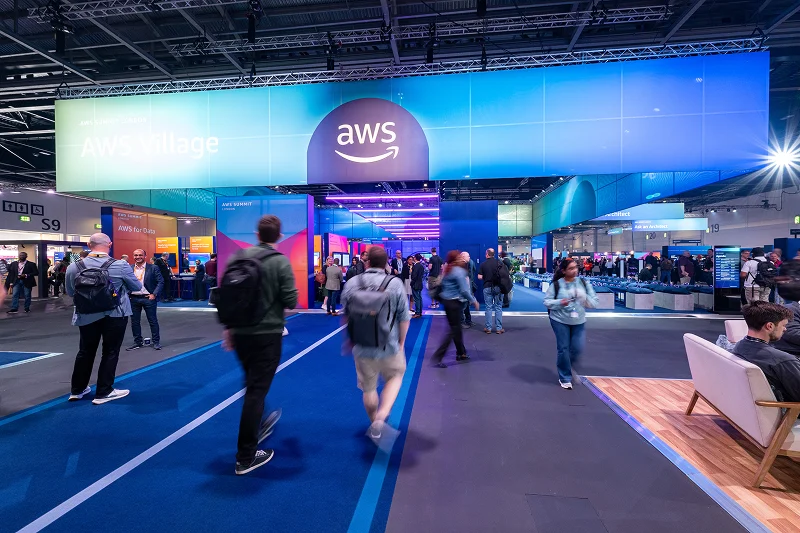
As the tech industry converges on New York City for the annual AWS Summit, the conversation has shifted from theoretical AI exploration to the practical, high-velocity implementation of "Agentic AI." Held at the iconic Javits Center, this year’s summit serves as a launchpad for a new generation of developer tools and management frameworks designed to fundamentally alter how software is built, secured, and optimized within the cloud ecosystem.
While the physical halls of the Javits Center were packed with engineers and architects, the impact of the announcements ripples far beyond Manhattan. For those unable to attend in person, the keynote—led by Dr. Swami Sivasubramanian, VP of Agentic AI, and Chet Kapoor, VP of Security Services and Observability—has set the tone for the remainder of the year. The focus is clear: moving beyond simple chatbots toward autonomous, task-oriented agents that can handle end-to-end development lifecycles.
Main Facts: The Shift to AI-Native Development
The headline of this week’s news cycle is the publication of a groundbreaking internal analysis from Amazon’s own engineering teams. Dr. Swami Sivasubramanian’s latest report, "How frontier teams are reinventing AI-native development," provides a rare, data-driven look at how Amazon has successfully integrated generative AI into its internal workflows.
The findings are stark. By treating AI not as a mere autocomplete tool, but as an integral agentic partner, teams have achieved productivity gains that were previously considered impossible. Perhaps most notably, a specialized team of six engineers successfully rebuilt the Amazon Bedrock inference engine in just 76 days. This project, which had been originally scoped for a team of 30 developers over an 18-month timeline, was completed in a fraction of the time with a much smaller footprint.
Supporting Data: Quantifying the Velocity
The metrics provided in the report serve as a roadmap for any enterprise attempting to scale AI adoption. Across various pilots within Amazon’s retail and grocery divisions, the results were consistent:
- Deployment Velocity: The median productivity gain across structured pilots was a staggering 4.5x, with some high-performing teams exceeding 10x improvements.
- Feature Cycle Compression: The "Perfect Order Experience" team saw its feature development cycle collapse from two weeks to a single afternoon.
- Operational Efficiency: The WW Grocery division reduced the time required to draft technical design documentation from five days to just a few hours.
These figures represent a fundamental decoupling of head-count from output, suggesting that "frontier teams"—those that fully embrace agentic workflows—are operating in a different paradigm than their traditional counterparts.
The Five Pillars of the "Frontier Team"
To achieve these results, the report outlines five distinct operational practices. These are not merely suggestions but foundational requirements for teams looking to replicate this success:
- Invest in Agent Context: Success begins before the first line of code is written. Teams must curate high-quality steering files, establish rigorous coding standards, and maintain structured repositories to provide agents with the necessary "mental model" of the project.
- Accept the "Integration Dip": There is an initial period of slowdown while workflows are restructured and human-agent interfaces are refined. Organizations must be prepared to push through this friction.
- Autonomous Task Backlogs: To enable agents to run in parallel, tasks must be granular, well-scoped, and documented. This allows for asynchronous execution without the need for constant human supervision.
- Explicit Intent: Code generation is only as good as the requirements provided. Frontier teams use structured specifications to define intent before an agent begins writing code, ensuring the AI remains aligned with architectural goals.
- Shift Testing Left: Agents must be equipped to self-correct. By integrating automated testing early in the development lifecycle, agents can iterate and fix errors before the code ever reaches the deployment pipeline.
New Product Spotlight: AWS FinOps Agent
Beyond developer productivity, this week’s summit also marked the preview release of the AWS FinOps Agent. As cloud environments grow in complexity, managing costs has become a major pain point for engineering managers and financial controllers alike.
The AWS FinOps Agent is designed to bridge the gap between technical operations and financial governance. It functions as an autonomous analyst that performs the following tasks:
- Proactive Querying: Users can ask the agent natural language questions about their cloud spend, such as "Why did our S3 costs spike in the us-east-1 region?"
- Anomaly Detection & Remediation: The agent doesn’t just identify cost anomalies; it investigates root causes and can autonomously surface findings to Slack channels.
- Workflow Automation: The agent can integrate directly with project management tools like Jira, automatically opening tickets when it identifies opportunities for rightsizing, idle resource termination, or Savings Plans optimizations.
By automating these recurring tasks, AWS is signaling a shift toward "self-healing" cloud infrastructures where financial efficiency is baked into the deployment process rather than reviewed as a reactive post-mortem.
Implications for the Industry
The implications of these developments are profound. The transition from human-led manual development to agent-orchestrated development suggests that the role of the software engineer is evolving into that of a "system architect" or "agent supervisor."
If a team of six can replace a team of 30, the barrier to entry for building complex, scalable infrastructure drops precipitously. However, this shift places a heavier premium on clear communication, structured documentation, and security. As noted in the closing of Dr. Sivasubramanian’s post, the current findings on "commit velocity" are only the beginning. The industry must now grapple with the secondary effects of this speed: release management, security compliance, and the long-term maintenance of AI-generated codebases.

Chronology of the 2026 AWS Summit NYC
- June 14: Pre-summit excitement builds as industry analysts analyze early data from Amazon’s internal AI pilots.
- June 16: The AWS Summit officially opens at the Javits Center. The initial sessions focus on the democratization of AI infrastructure.
- June 17: Keynote address by Dr. Swami Sivasubramanian and Chet Kapoor. Official preview of the AWS FinOps Agent.
- June 18: Deep-dive technical sessions focusing on security, observability, and the integration of agentic workflows into legacy environments.
- June 19: Closing remarks and focus on the "Builder Center," where developers can contribute to open-source solutions and networking.
Official Response and Future Outlook
The prevailing sentiment among AWS leadership is one of cautious, high-velocity optimism. While the productivity gains are unprecedented, the focus remains on "responsible scaling." Chet Kapoor’s involvement in the keynote underscores the company’s commitment to ensuring that the move toward agentic development does not compromise the security or stability of the cloud.
The upcoming follow-up reports from the AWS team promise to address the "missing pieces" of the puzzle, specifically regarding security operations and the lifecycle management of AI-native projects. For organizations observing these trends, the message is clear: the era of manual cloud orchestration is rapidly drawing to a close. The future belongs to those who can effectively define intent, structure their repositories, and trust the agentic infrastructure to handle the heavy lifting of execution.
As the industry moves forward, the "frontier team" model will likely become the benchmark for operational excellence. Whether you are a startup looking to compete with larger incumbents or an enterprise seeking to optimize your massive cloud footprint, the tools unveiled this week provide the necessary leverage to transform how value is delivered in the cloud.
For those looking to stay connected, the AWS Builder Center remains the primary hub for documentation, community discussion, and hands-on labs. The summit may be ending, but the work of integrating these new capabilities into production pipelines is only just beginning.