Unearthing a Digital Relic: GIMP 0.54 Resurfaces as a Flatpak Time Capsule
FOR IMMEDIATE RELEASE
Linux Desktops Get a Blast from the Past as GIMP 0.54, the Iconic 1996 Image Editor, is Revived Through Flatpak
[CITY, STATE] – [DATE] – In a remarkable feat of digital archaeology and open-source engineering, the venerable GIMP (GNU Image Manipulation Program) version 0.54, a pioneering image editing suite from 1996, has been meticulously resurrected and made accessible to modern Linux users. This project, spearheaded by the dedicated digital preservationist known as [balooii], packages the vintage software as a Flatpak, transforming a piece of computing history into a fully runnable application on contemporary systems. More than just a nostalgic trip, this release offers a unique window into the early days of open-source software development, the evolution of graphical user interfaces, and the foundational technologies that shaped today’s digital landscape.
While the immediate utility of a 28-year-old image editor might seem limited in an era of sophisticated digital tools, the significance of this Flatpak extends far beyond mere functionality. It represents a critical effort in software preservation, allowing enthusiasts, historians, and developers alike to interact directly with a pivotal piece of open-source heritage. This initiative underscores the enduring commitment of the open-source community to not only innovate for the future but also to safeguard the digital past.
Main Facts: A Journey Back to 1996
The core of this exciting development is the successful packaging of GIMP 0.54, originally released during a nascent period of personal computing where Windows 95 reigned supreme and its successor, Windows 98, was still known internally as Windows 97. This particular version of GIMP holds a special place in its lineage as the earliest iteration for which a complete, surviving source code repository exists, making its preservation all the more crucial.
The project, undertaken by [balooii], was far from a straightforward recompilation. Reviving software from such a distinct technological epoch required a deep dive into legacy codebases, extensive patching, and an understanding of the intricate dependencies that characterized the software development of the mid-1990s. The resulting Flatpak package provides a sandboxed environment, allowing GIMP 0.54 to run seamlessly on modern Linux distributions without encountering the myriad compatibility issues typically associated with vintage software.
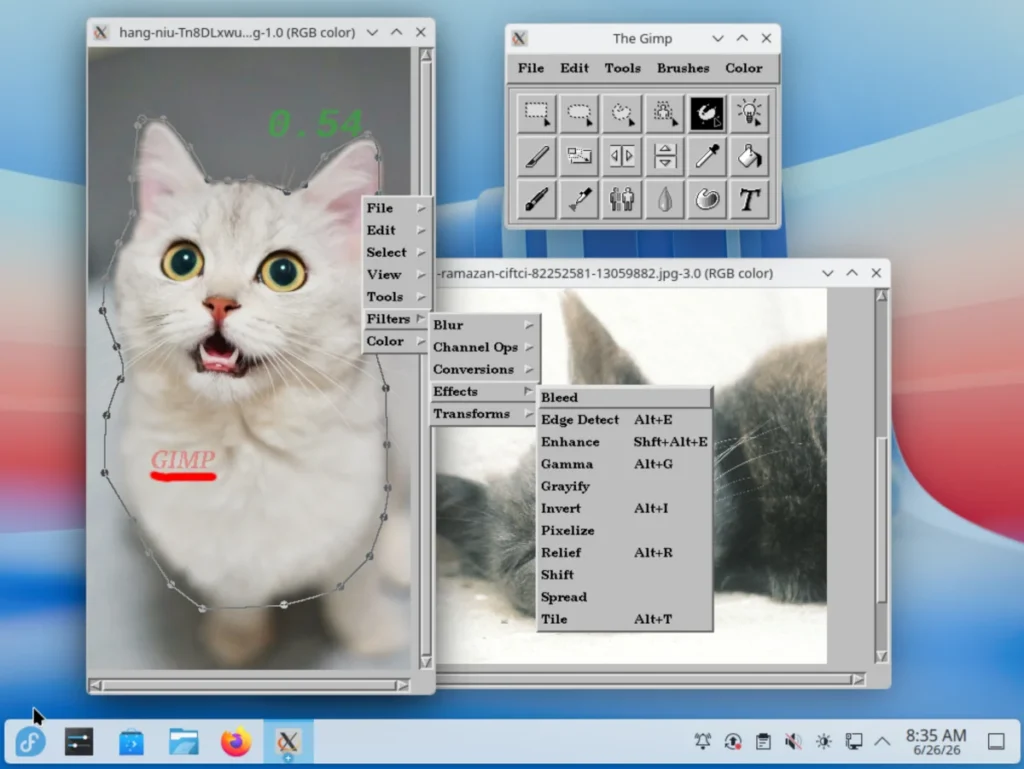
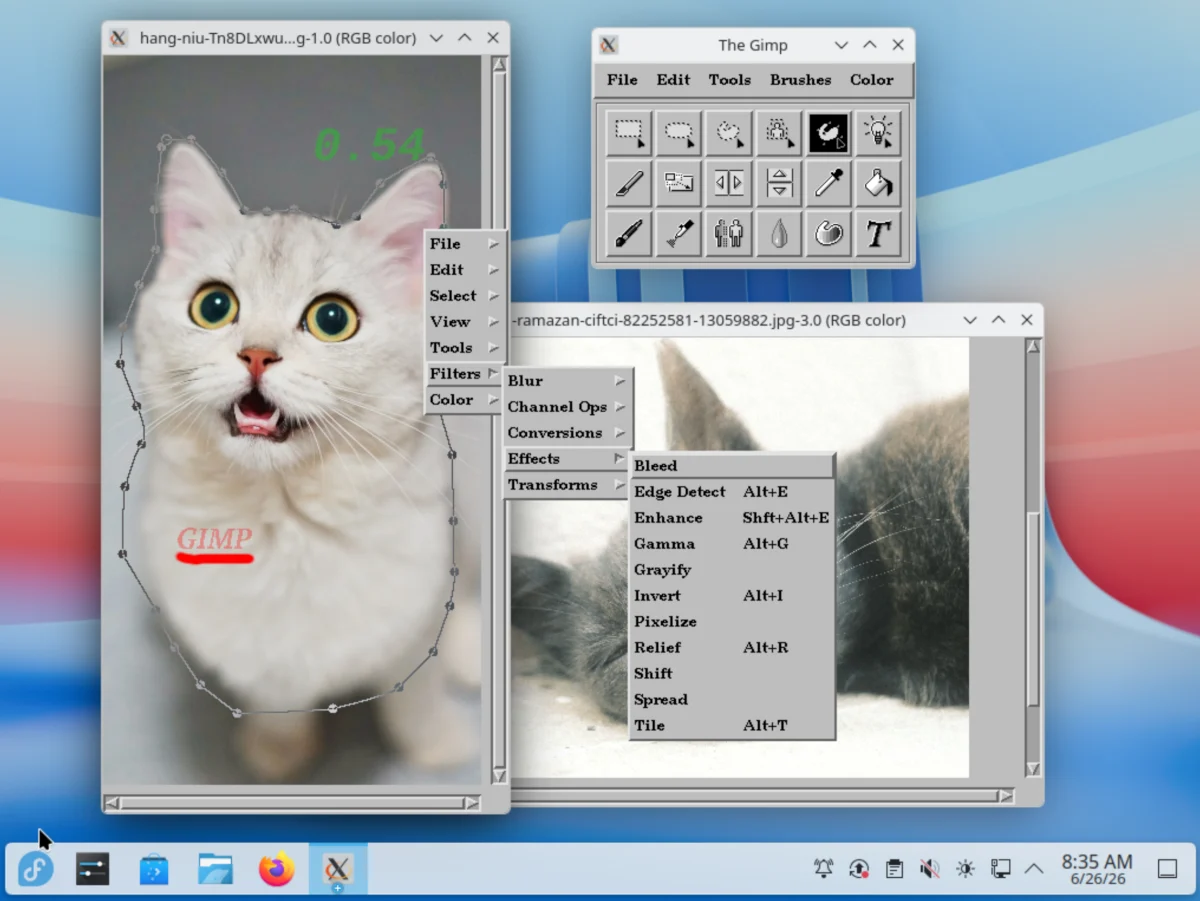
Upon launching the Flatpak, users are transported to an era defined by simpler interfaces and a different philosophy of software interaction. GIMP 0.54 famously utilized the Motif widget toolkit, a proprietary graphical user interface toolkit prevalent in Unix-like systems during the late 20th century, before GIMP’s developers embarked on creating their own, now ubiquitous, GIMP Toolkit (GTK). Furthermore, this version showcases the "multiple unconnected windows" user interface paradigm, a design choice that, while offering flexibility, often sparked fervent debate among users accustomed to the single-window interfaces of commercial competitors like Adobe Photoshop and Paint Shop Pro.
Beyond the core application, the Flatpak is a veritable digital time capsule, bundled with a collection of plugins and tutorials contemporary to GIMP 0.54’s original release. These accompanying materials not only enhance the historical experience but also provide invaluable insights into the workflows, creative approaches, and technical limitations faced by digital artists and enthusiasts decades ago. This meticulously assembled package is more than just an application; it is an interactive archive, inviting exploration into the foundational elements of modern image manipulation software.
Chronology: GIMP’s Evolution and the Path to Preservation
To fully appreciate the significance of GIMP 0.54, it’s essential to trace the program’s origins and its pivotal role in the open-source movement. GIMP was conceived in 1995 by Spencer Kimball and Peter Mattis, then students at the University of California, Berkeley. Their ambitious goal was to create a free and open-source alternative to expensive commercial image editing software, primarily for Unix-like operating systems. This vision resonated deeply with the burgeoning open-source ethos of the time, driven by a desire for software freedom and collaborative development.
1995-1996: The Genesis and Motif Era
The initial development of GIMP took place rapidly. Version 0.54, released in 1996, represents one of its earliest publicly available iterations. During this formative period, GIMP relied heavily on the Motif toolkit. Motif, developed by the Open Software Foundation (OSF), was a popular choice for professional Unix workstations, known for its gray, chiseled aesthetic and robust feature set. However, its proprietary nature and licensing costs were at odds with the burgeoning free software philosophy. This dependency presented a significant challenge for GIMP’s long-term sustainability and widespread adoption.
1997: The Birth of GTK
The limitations imposed by Motif ultimately spurred one of GIMP’s most significant contributions to the open-source world: the creation of the GIMP Toolkit (GTK). Frustrated by Motif’s restrictions and the desire for a truly free and customizable toolkit, Kimball and Mattis began developing GTK from scratch in 1997. This decision was monumental; GTK not only freed GIMP from proprietary constraints but also laid the groundwork for the GNOME desktop environment, becoming one of the most widely used graphical toolkits in the Linux ecosystem. The transition from Motif to GTK marked a critical turning point, cementing GIMP’s independence and fueling its future growth.
Late 1990s – Early 2000s: Growth and UI Evolution
As GIMP matured through the late 1990s and early 2000s, it continued to evolve rapidly. The "multiple unconnected windows" interface, characteristic of 0.54, persisted for many years. This design, where each image, toolbox, and dialog box existed as a separate, floating window, was a common approach in early graphical environments, particularly on Unix. While some users appreciated the flexibility to arrange their workspace across multiple monitors (a luxury for some at the time), many found it cumbersome and less intuitive than the single-window or tabbed interfaces offered by commercial competitors. The debate over GIMP’s UI would rage for years, eventually leading to the implementation of an optional single-window mode in later versions, reflecting a broader shift in user experience design.
The Present Day: Flatpak and Digital Preservation
Fast forward to today, and the concept of running GIMP 0.54 on a modern system is a testament to the power of open source and containerization technologies. The decision by [balooii] to utilize Flatpak for this preservation effort is strategic. Flatpak, a universal packaging system for Linux, isolates applications from the host system, bundling all necessary libraries and dependencies. This makes it an ideal solution for packaging legacy software, circumventing the complex dependency hell that often plagues attempts to run older applications on contemporary operating systems. The Flatpak provides a stable, self-contained environment, effectively freezing GIMP 0.54 in time, allowing it to execute as it would have decades ago, but on today’s hardware and software infrastructure.
Supporting Data: Technical Hurdles and UI Philosophy
The journey to bring GIMP 0.54 to a modern Linux desktop was fraught with technical challenges, highlighting the inherent difficulties in software archaeology. The original source code, while complete, was written for compilers, libraries, and operating system environments that are vastly different from those used today.
The Patching Process: The project’s GitLab repository reveals a comprehensive series of patches applied by [balooii]. These modifications were crucial to bridge the gap between 1996 and the present. Common issues encountered when compiling old software include:
- Compiler Compatibility: Modern compilers (like GCC) are stricter and adhere more closely to contemporary C standards, often flagging constructs that were acceptable or common in older C code. Patches would have addressed warnings or errors related to implicit declarations, type conversions, and memory management practices.
- System Calls and APIs: Operating system interfaces have changed significantly. Functions for window management, file I/O, and inter-process communication have evolved or been deprecated. The patches would likely have updated calls to align with modern Linux kernel interfaces or X11 protocols.
- Library Dependencies: GIMP 0.54 relied on specific versions of libraries, notably Motif. Modern systems either don’t have these libraries or have vastly different versions. The Flatpak approach mitigates this by bundling the necessary (and patched) Motif libraries, but the process of making Motif itself compile and function correctly on a modern stack is a non-trivial task. This often involves ensuring the correct X11 headers and libraries are linked, and that the Motif-specific rendering functions can interface with modern display servers.
- Architectural Differences: While GIMP 0.54 was primarily for 32-bit systems, modern Linux is predominantly 64-bit. Ensuring the old code compiles and runs correctly in a 64-bit environment, often requiring specific compiler flags or minor code adjustments, adds another layer of complexity.
Motif: A Glimpse into Early Unix GUIs: The reliance on Motif is a critical historical detail. Motif was a foundational element of the Common Desktop Environment (CDE), a standard desktop environment for Unix workstations in the 1990s. Its distinctive 3D-chiseled appearance and widget set defined the look and feel of professional applications on platforms like Solaris, HP-UX, and AIX. By running GIMP 0.54, users can directly experience the aesthetic and interaction model that predated the widespread adoption of GNOME and KDE, offering valuable context for understanding the evolution of desktop computing. The licensing model of Motif (initially proprietary and expensive) was a significant driver for the open-source community to develop alternatives like GTK and Qt.
The "Multiple Unconnected Windows" UI Debate: The user interface of GIMP 0.54 is a stark reminder of a different era in software design.
- The Paradigm: In this model, the main toolbox, each image document, and every dialog box operates as a separate, independent top-level window.
- Arguments for (then): Proponents argued this offered maximum flexibility. Users could arrange tools and images across multiple monitors (if they had them) without constraints, tailoring their workspace precisely. It also reflected the modular nature of many early Unix applications.
- Arguments Against (then and now): Critics found it cluttered, difficult to manage, and prone to losing windows behind others. For users coming from Windows or Macintosh environments, where applications typically confined their documents and tools within a single main application window (Single Document Interface – SDI, or Multiple Document Interface – MDI), GIMP’s approach felt alien and inefficient. Commercial powerhouses like Photoshop and Paint Shop Pro consistently employed single-window or MDI designs, which many users perceived as more professional and organized. The eventual adoption of an optional single-window mode in GIMP was a direct response to this long-standing user feedback. Experiencing 0.54 first-hand allows users to understand the roots of this enduring UI debate.
Bundled Plugins and Tutorials: A Digital Time Capsule: The inclusion of contemporary plugins and tutorials elevates this Flatpak beyond a mere software artifact. These assets provide ethnographic data on how early digital artists worked:
- Plugins: What kinds of filters and effects were considered cutting-edge in 1996? How complex were they? This reveals the state of computational graphics capabilities at the time.
- Tutorials: Without the ubiquitous video tutorials of today, learning complex software often relied on text-based guides, often distributed with the software or in early web pages. These tutorials offer insights into the learning curves and fundamental concepts taught to new users, reflecting a more patient and exploratory approach to software mastery.
Community Reception and Developer Insights
While there are no "official responses" from a corporate entity regarding this fan-driven preservation project, the reception within the open-source and retro-computing communities has been overwhelmingly positive. The work of [balooii] is widely celebrated as a significant contribution to digital heritage.
[balooii]’s Motivation: The impetus behind such an arduous project often stems from a blend of technical curiosity, a passion for history, and a desire to contribute to the open-source ethos of shared knowledge. [balooii]’s dedication to meticulously patch, compile, and package GIMP 0.54 speaks volumes about the value placed on preserving the foundational elements of modern computing. This effort serves as a prime example of how individual enthusiasts, driven by personal interest, can play a crucial role in safeguarding digital history for the broader community. The project’s repository on GitLab acts as a transparent record of the technical challenges overcome and the solutions implemented, providing invaluable insights for future preservationists.
Community Engagement: The Linux and GIMP communities, known for their appreciation of both historical context and technical prowess, have embraced this Flatpak release with enthusiasm. Discussions on forums and social media highlight the blend of nostalgia for those who remember the software from its early days, and educational curiosity for younger generations who have only known modern, feature-rich GIMP versions. This project fosters intergenerational dialogue about software development and user experience.
GIMP Project’s Perspective (Implicit): Although the current GIMP development team has not issued a formal statement on this specific Flatpak, the spirit of such preservation efforts aligns perfectly with the core principles of open source. Open-source projects inherently facilitate historical analysis because their source code is publicly available, unlike many proprietary applications that become "black boxes" once their original developers move on or companies cease to exist. The GIMP project has always valued its community contributions, and projects like [balooii]’s demonstrate the vibrant ecosystem that surrounds and supports it. This historical artifact serves as a benchmark, allowing current GIMP users and developers to reflect on how far the software has come, appreciating the iterative improvements in performance, features, and usability.
Implications: Software Archaeology and Digital Heritage
The Flatpak release of GIMP 0.54 carries profound implications for several domains, extending beyond mere nostalgic amusement.
Software Archaeology and Digital Heritage: This project is a shining example of practical software archaeology. Just as physical artifacts reveal insights into past civilizations, functional legacy software provides invaluable data for understanding the evolution of technology, design principles, and user interaction paradigms. As software increasingly becomes an integral part of human culture, its preservation is as critical as that of literature, art, or architecture. Projects like this ensure that future generations of researchers, developers, and historians can directly interact with, analyze, and learn from the digital artifacts that shaped our present. It highlights the vulnerability of digital information to obsolescence and the urgent need for proactive preservation strategies.
The Role of Open Source in Preservation: The fact that GIMP 0.54 could be resurrected is largely due to its open-source nature. Had it been a proprietary application from 1996, without public source code, such a revival would be nearly impossible. This project underscores the inherent advantage of open-source software for long-term preservation and historical research. The availability of source code provides the necessary raw material for adaptation, recompilation, and re-platforming, ensuring that the software’s intellectual and functional heritage is not lost to time. It makes a compelling case for encouraging open-source practices, not just for present-day innovation but for future historical continuity.
Flatpak and Containerization as Preservation Tools: The successful deployment of GIMP 0.54 via Flatpak showcases the immense potential of containerization technologies as tools for digital preservation. By encapsulating an application and all its dependencies within a self-contained unit, Flatpak effectively insulates legacy software from the ever-changing host operating system. This approach offers a robust and scalable method for preserving not just individual applications, but entire software environments, ensuring their runnable state for decades to come. It suggests a future where digital archives might routinely offer "Flatpak-like" containers for historical software, making it easily accessible and executable across diverse platforms.
Educational Value for Modern Developers and Designers: For contemporary software developers and UI/UX designers, running GIMP 0.54 offers invaluable educational insights. It provides a tangible demonstration of how software was built and interacted with in a vastly different technological landscape. It encourages reflection on:
- Resource Constraints: How did developers optimize for slower processors, less RAM, and lower-resolution displays?
- UI/UX Evolution: What were the prevailing design philosophies? Why did certain UI patterns (like the multi-window approach) fall out of favor? How have user expectations evolved?
- Debugging and Development Practices: The simplicity of the code base, compared to modern frameworks, can offer lessons in fundamental programming concepts.
Nostalgia and Engagement: Finally, the project offers a powerful dose of nostalgia for those who remember the early days of personal computing and the nascent internet. It serves as a reminder of how far technology has advanced and the pioneering spirit of the individuals who built the digital world we inhabit today. This nostalgic appeal can also serve as an engagement tool, drawing new users into the world of open source and digital preservation.
In conclusion, the Flatpak release of GIMP 0.54 is more than a technical achievement; it is a cultural artifact brought back to life. It bridges the past and the present, offering a tangible link to the origins of open-source image editing and the broader evolution of digital technology. Through the dedication of individuals like [balooii] and the power of modern containerization, the digital heritage of the open-source movement continues to be preserved, studied, and celebrated.