The Future of Code Presentation: How MicroLighter is Revolutionizing Syntax Highlighting
The landscape of web development is littered with heavy dependencies—libraries that we install out of habit rather than necessity. For years, the standard for displaying code on the web has been synonymous with robust but bulky JavaScript libraries like Prism.js. However, a significant shift is occurring, driven by the maturation of the CSS specification. Enter MicroLighter, a new project by Dave Rupert (Davatron5000) that promises to strip away the complexity of traditional syntax highlighting, favoring the raw power of modern browser APIs.
By leveraging the CSS Custom Highlight API, MicroLighter is not just an alternative; it represents a fundamental change in how we treat code as a first-class citizen of the web.
Main Facts: A Leaner Alternative
The core value proposition of MicroLighter is simplicity. Traditional syntax highlighters often require a DOM-heavy approach, injecting hundreds of nested <span> tags, classes, and complex structures into your document to colorize keywords, strings, and operators. This bloat increases the size of the DOM, slows down rendering, and creates maintenance headaches.
MicroLighter flips the script. It relies on the CSS Custom Highlight API—a feature that recently hit Baseline status—to handle the styling of ranges within the document. By offloading the visual heavy lifting to the browser’s engine via CSS, the library achieves:
- Semantic Markup: Your code remains clean, readable HTML without being "polluted" by thousands of markup spans.
- Performance Gains: Smaller file sizes lead to faster Time-to-Interactive metrics.
- Modern CSS Integration: Full support for
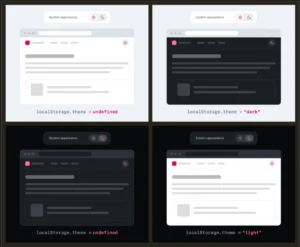
light-dark()and CSS custom properties, allowing developers to create themes that respect system-level dark mode settings natively. - Modularity: Developers can choose to implement the library as a web component, or pull in specific features like line numbers or language support à la carte.
Chronology: From Prism to Modern Native APIs
To understand the significance of MicroLighter, one must look at the evolution of code presentation on the web over the last decade.
The Prism.js Era
For years, the industry standard was Prism.js. It was, and remains, an incredibly robust tool. It brought syntax highlighting to countless blogs, documentation sites, and tutorials. It was battle-tested and provided support for hundreds of programming languages. However, as web performance became a key SEO metric, developers began to notice that the "cost" of Prism—the JavaScript execution time and the bytes sent over the wire—was becoming an unnecessary tax on users.
The Shift Toward Native
The journey toward a native solution began with the proposal of the CSS Custom Highlight API. This API was designed to allow developers to style arbitrary ranges of text without modifying the DOM. As browsers (Chrome, Edge, and eventually others) began to ship support for this feature, the potential for a "no-markup" syntax highlighter became a reality.
The Arrival of MicroLighter
In 2024 and 2025, Dave Rupert began developing MicroLighter to address the specific needs of content-heavy sites like CSS-Tricks. The goal was to maintain the functionality users expected—themes, line numbers, and language support—without the dependency overhead. By August 2026, the migration was complete on major platforms, proving that the concept was not only viable but superior in terms of resource management.
Supporting Data: The Efficiency Gap
When considering a migration, developers look for empirical data. The transition from a legacy library like Prism to a modern solution like MicroLighter provides a clear window into the performance savings modern CSS can offer.
Comparative Benchmarking (August 2026 Update)
Following the integration of MicroLighter into a production environment, the performance metrics were stark:
| Metric | Prism.js | MicroLighter |
|---|---|---|
| Raw Size | 35 KB | 13.9 KB |
| Gzipped Size | 9.3 KB | 5.2 KB |
| DOM Impact | High (Spans/Classes) | Low (Semantic) |
These figures represent a nearly 50% reduction in gzipped payload size. For high-traffic blogs, this translates to faster page loads and reduced bandwidth costs, particularly for users on low-powered mobile devices or restricted data plans.
The "Light-Dark" Advantage
Beyond raw size, the use of light-dark() CSS functions allows for seamless theme transitions. In the past, switching between light and dark modes often required JavaScript to toggle classes on the body or the code block itself. With MicroLighter, themes are defined via CSS variables:
--syntax-background: light-dark(#ffffff, #0d1117);
--syntax-keyword: light-dark(#cf222e, #ff7b72);
Because these variables respond to the user’s system preferences, the "flicker" associated with JavaScript-based theme switching is eliminated entirely.
Official Perspectives: The Philosophy of "Less"
The development of MicroLighter is rooted in the belief that the web should be an extensible, native platform. In discussions surrounding the release, the focus has consistently been on the "de-bloating" of the web.
"It’s not that there isn’t any JavaScript involved," notes the project’s documentation. "It’s that less of it is needed." This sentiment aligns with a broader movement in the frontend community toward "Zero-JS" or "Low-JS" architectures. By leaning into modern CSS, MicroLighter acts as a catalyst for other developers to revisit their own dependencies.
Furthermore, the modular nature of the project—allowing for an "à la carte" installation—addresses the common "one size fits all" problem of legacy libraries. Users no longer need to download a 30KB library when they only need support for one or two languages.
Implications: The Future of Web Content
The success of MicroLighter signals a broader shift in how web standards are adopted. We are entering an era where the browser provides the primitives that were previously reserved for third-party libraries.
Implications for Web Design
- Standardization: As more libraries adopt the Custom Highlight API, we can expect to see a convergence in how code is presented, making the web more accessible and consistent.
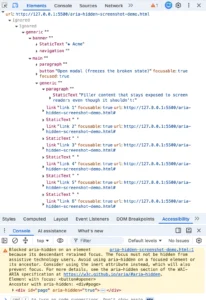
- Semantic Integrity: The shift away from injecting hundreds of span elements back into the DOM is a win for accessibility. Screen readers and other assistive technologies often struggle with the "tag soup" created by traditional highlighters; semantic, clean HTML is inherently more accessible.
- The Rise of Web Components: MicroLighter’s use of custom elements (e.g.,
<micro-lighter>) demonstrates how developers can encapsulate complex functionality into simple, declarative HTML tags. This makes the implementation process for authors significantly less prone to error.
A New Standard for Documentation
This evolution has profound implications for technical documentation. Companies that maintain massive developer portals—such as those for React, Vue, or cloud services—can drastically improve their "Time to First Byte" (TTFB) by adopting native highlighting methods. When documentation is faster to load, developers can find the information they need with less friction.
The Legacy of Innovation
MicroLighter reminds us of the power of clever engineering. Much like the "clever web font" syntax highlighting projects that preceded it, MicroLighter proves that there is almost always a way to do more with less. By replacing bloated dependencies with well-supported CSS primitives, we aren’t just saving a few kilobytes—we are reclaiming the web from the excessive complexity that has defined the last decade of frontend development.
As we look toward the future, the question for developers is no longer "what library should I use?" but rather "does the browser already provide the tool I need?" In the case of syntax highlighting, the answer is an emphatic "yes." The era of bloated code blocks is coming to a close, and a lighter, faster, more semantic web is taking its place.