Raising the Bar: Google Play Unveils New Performance and Migration Standards for Android Developers
By Technical Correspondent
In a significant move to fortify the Android ecosystem, Google Play has announced a series of rigorous new quality requirements aimed at optimizing app performance and streamlining the user experience during device transitions. As mobile hardware evolves and user expectations for seamless, high-performance applications reach an all-time high, Google is intervening to address two critical pain points: excessive memory consumption and the friction associated with migrating user accounts between devices.
Raghavendra Hareesh Pottamsetty, General Manager of Google Play Developer & Monetization, underscored the company’s "shared commitment" to maintaining a healthy ecosystem. By setting these new benchmarks, Google aims to ensure that apps remain stable, responsive, and secure across the vast, diverse landscape of Android-powered hardware.
The Core Mandates: What is Changing?
The new policy framework is bifurcated into two primary initiatives: Performance Thresholds and Zero-Tap Sign-In standards. These requirements are not merely suggestions; they are prerequisites for developers to maintain full discoverability and publishing privileges on the Google Play Store.
1. Performance and Memory Optimization
The mobile industry is currently navigating complex hardware constraints. As devices become more powerful, they also become more resource-intensive, often leading to "memory bloat." To combat this, Google Play is implementing strict thresholds regarding:
- Dynamic Memory Usage: Reducing the amount of RAM an app consumes while active.
- Bitmap Memory Usage: Optimizing how images and graphical assets are handled to prevent system-wide slowdowns.
- DEX Code Optimization: Streamlining code execution to minimize the overhead on the Android Runtime (ART).
2. The Zero-Tap Sign-In Requirement
Beyond performance, Google is tackling the "onboarding tax"—the time and effort users spend signing into apps when setting up a new device. The new Zero-Tap Sign-In standard will mandate that apps supporting user sign-ins must utilize the Android Restore Credentials API. This allows for the automatic migration of sign-in states, ensuring that when a user moves to a new device, their apps are ready for use immediately without requiring manual re-authentication.

Chronology of Implementation
Google has provided a clear roadmap to allow developers ample time to refactor their codebases and integrate the necessary APIs.
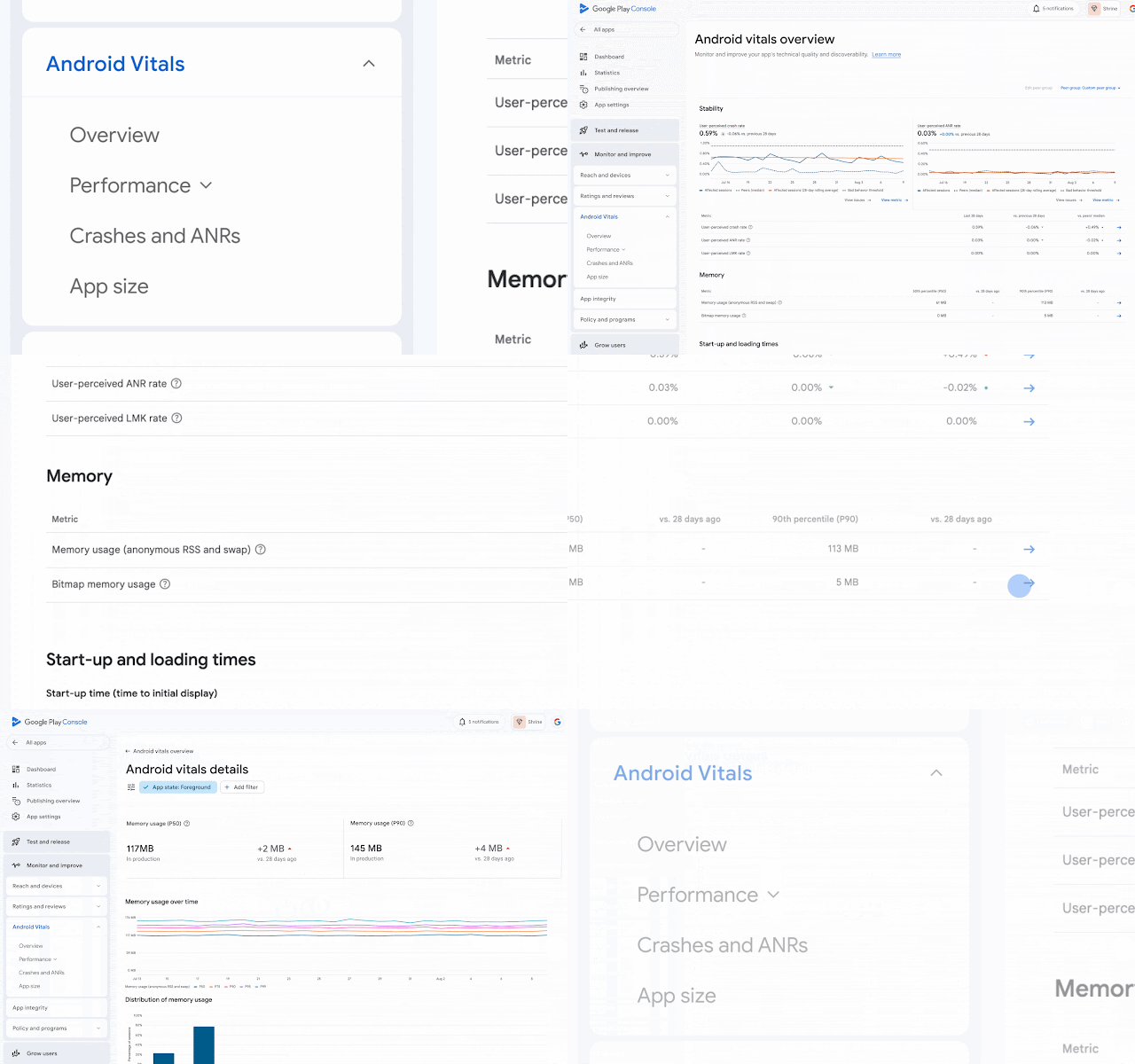
- Immediate Phase (Ongoing): Google has begun rolling out new diagnostic tools within the Play Console. These tools include enhanced "Android Vitals" metrics, which provide developers with granular insights into memory bloat and DEX code optimization issues.
- Diagnostic Expansion (Late 2026): Developers can expect further tooling, including deeper integration with the Android Memory Limiter, providing visibility into how apps behave under strict memory constraints.
- Enforcement Phase: Performance (February 2027): Compliance with the new "bad behavior thresholds" becomes mandatory. Apps that fail to meet these performance standards risk reduced visibility or potential removal from the store.
- Enforcement Phase: Migration (April 2027): The Zero-Tap Sign-In requirement goes into effect. Developers failing to implement the Restore Credentials API will face similar consequences regarding store presence.
Supporting Data and Technical Context
The push for these standards stems from years of telemetry data gathered via Android Vitals. Google’s research indicates that "bad behavior"—defined as excessive memory usage, frequent crashes, and sluggish startup times—is the primary driver for user churn and negative app reviews.
Understanding the "Memory Limiter"
The Android Memory Limiter is a sophisticated kernel-level mechanism designed to prevent any single application from monopolizing system RAM. Previously, developers often lacked the visibility to understand why their apps were being throttled or terminated by this system. By introducing specific metrics for "Anonymous RSS + Swap," Google is moving toward a transparent model where developers can see the exact impact of their memory footprint on real-world device performance.
The Role of the Restore Credentials API
The Zero-Tap Sign-In requirement is rooted in security and user retention. By leveraging the Android Restore Credentials API, developers can ensure that sensitive sign-in tokens are moved securely during a device transfer. This eliminates the need for users to remember passwords or perform secondary verification steps, which is statistically where the highest rate of user abandonment occurs during the "new device" phase.
Official Perspective: Balancing Growth and Quality
In his official announcement, Pottamsetty emphasized that these mandates are not intended to be punitive, but rather to foster a "premium experience."
"As the Android ecosystem continues to evolve, we are learning more about unique use cases across different RAM buckets and device tiers," Pottamsetty noted. "Our goal is to help developers proactively discover, investigate, and optimize their apps."

Google has also addressed concerns regarding the impact on the gaming industry. While games are currently exempt from the mandatory Zero-Tap Sign-In requirement, the company has signaled that dedicated, tailored solutions for gaming authentication will arrive in 2027. This suggests a recognition that game development environments—often involving complex, custom login systems—require more nuanced integration strategies than standard utility or productivity apps.
Implications for the Developer Community
The transition to these new standards will require a significant shift in development culture for many studios.
Financial and Operational Impacts
For large-scale developers, the cost of refactoring code to meet memory thresholds may be substantial. However, the potential long-term benefits include higher user retention rates and better ratings on the Play Store. Conversely, for indie developers and smaller teams, the burden of implementation may feel significant. To mitigate this, Google has promised ongoing support through its help center and technical documentation.
The "Quality-First" Marketplace
The primary implication of this shift is the creation of a "Quality-First" marketplace. Historically, the Play Store has been criticized for the prevalence of unoptimized "junk" apps. By institutionalizing these performance thresholds, Google is effectively pruning the ecosystem. Apps that cannot perform reliably will simply no longer be discoverable.
This move mirrors industry trends in mobile computing, where the focus has shifted from raw feature growth to "experience stability." In an era where a user might switch devices every 24 to 36 months, the "onboarding experience" is now just as critical as the app’s core functionality.
Future-Proofing
The announcement also notes that these thresholds are expected to "adapt over time." This is a clear signal to developers that they should build their apps with a focus on modularity and efficiency, as the goalposts for "optimal performance" will likely continue to move as hardware capabilities expand.
.gif)
Conclusion: Preparing for the Future
As the February and April 2027 deadlines approach, the onus is on the developer community to audit their existing portfolios. The integration of new Android Vitals metrics into the development workflow is no longer an optional task but a fundamental part of the product lifecycle.
By aligning with these standards, developers are not just complying with Google’s policies; they are investing in the longevity of their applications. A faster, more efficient, and seamlessly transferable app is a more successful app. As the Android ecosystem matures, these quality-of-life improvements will likely define the next generation of mobile software, separating industry-leading applications from the rest of the pack.
For further details and technical documentation, developers are encouraged to visit the official Google Play Console Help Center and the dedicated developer blog for ongoing updates and best-practice guides.