The Architecture of Reliability: A Comprehensive Guide to Modern Database Testing and Data Quality Assurance
As modern software applications evolve into complex ecosystems driven by high-frequency mobile apps, cloud infrastructure, and massive data pipelines, the demand for robust backend architectures has never been higher. While users frequently judge software by the responsiveness and aesthetic appeal of its user interface, the true engine of any application lies beneath the surface: the database.
Ensuring the security, integrity, and performance of these backend systems has given rise to the specialized discipline of database (DB) testing. Far from being a mere checklist item, database testing is now a critical pillar of software engineering, safeguarding enterprise applications across industries ranging from healthcare and finance to global retail and aerospace systems.
Main Facts: The Growing Imperative of Database Validation
Modern software development faces a paradox: as front-end technologies become more streamlined and accessible through frameworks designed for Android, iOS, and web deployment, the underlying back ends grow exponentially more intricate. Traditional database management systems are increasingly challenged by big data volumes and high-velocity transaction requirements.

To manage this complexity, organizations rely on a diverse market of database management tools, including enterprise solutions like MS SQL Server, Oracle, and DB2, alongside open-source platforms like MySQL and PostgreSQL. Each of these tools varies significantly in cost, robustness, scalability, and security architecture.
Consequently, database testing has emerged as a distinct engineering practice. It is no longer optional to simply verify that an application launches; engineers must validate that the data moving through the system is accurate, secure, and compliant with strict business logic. Database testing focuses on four core pillars:
- Data Mapping: Ensuring seamless, error-free transit between the user interface and the backend storage.
- ACID Properties: Validating transaction reliability (Atomicity, Consistency, Isolation, and Durability).
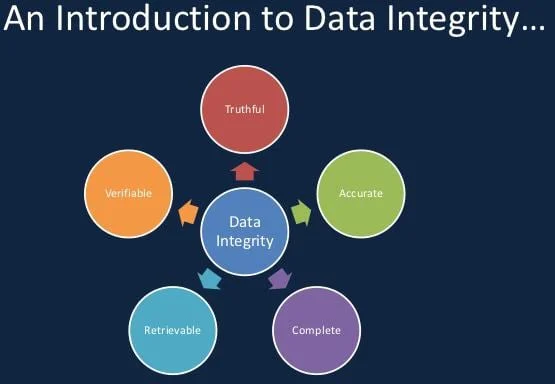
- Data Integrity: Guaranteeing that shared data updates synchronously across all application modules.
- Business Rule Conformity: Testing advanced database objects like relational constraints, triggers, and stored procedures.
Chronology of Database Testing Evolution
The practice of database quality assurance has undergone a significant transformation alongside the evolution of software architectures. Understanding this trajectory highlights why modern testing methodologies are structured the way they are.

Era 1: The Monolithic and Client-Server Paradigm
In the early days of desktop and simple client-server applications, databases were largely passive repositories. Testing during this phase was predominantly manual and reactive. Engineers verified basic CRUD operations (Create, Retrieve, Update, Delete) directly through application forms, checking if basic tables stored expected values. Little attention was paid to distributed transactions or complex database-level business logic.
Era 2: The Web and Relational Explosion
With the advent of web applications and widespread e-commerce in the late 1990s and 2000s, databases evolved from simple storage bins into active computing environments. Developers began pushing business logic directly into the database layer via stored procedures, triggers, and foreign key constraints. Testing methodologies adapted by incorporating SQL-based validation scripts, data mapping checks, and schema integrity assessments.
Era 3: Big Data, Mobile, and Distributed Cloud Ecosystems
Today, applications operate across distributed cloud environments, handling unstructured big data and millions of concurrent transactions per second. Modern database testing has shifted toward automation, continuous integration pipelines, and rigorous validation of ACID properties in distributed networks. Today’s testers must not only understand front-end behavior but also write complex SQL queries, analyze query execution plans, and leverage specialized database automation tools to ensure zero data loss during system failures.

Supporting Data: The Core Testing Checklist
To execute an effective database testing strategy, QA engineers systematically evaluate specific database components and transactional behaviors. Below is a detailed breakdown of the primary focus areas in a modern database testing checklist.
1. Transactions and ACID Compliance
Every financial transaction, inventory update, or user sign-up relies on database transactions that must strictly adhere to the ACID framework:
- Atomicity: Ensures that a transaction is all-or-nothing. If any single step fails, the entire transaction must roll back, leaving the database completely unaltered.
- Consistency: Guarantees that any database transaction brings the database from one valid state to another, maintaining all predefined rules, such as foreign key constraints or column checks (e.g., verifying that the sum of two related columns always equals 100).
- Isolation: Ensures that concurrent transactions executed simultaneously do not interfere with one another, preventing dirty reads or race conditions.
- Durability: Confirms that once a transaction has been committed, its changes are permanent, surviving system crashes, power failures, or software errors.
2. Database Schemas and Structural Integrity
A database schema defines how data is organized, structured, and related. Testing schemas involves verifying that table structures, primary keys, foreign keys, data types, and null constraints match the system requirements specification (SRS) or business requirements specification (BRS) documents exactly.

3. Triggers and Stored Procedures
Modern relational database management systems (RDBMS) execute automated logic via triggers and stored procedures.
- Triggers: Automated pieces of code that execute in response to specific events on a table (such as automatically enrolling a newly registered student into specific subject tables). Triggers are tested using both black-box methods (performing UI actions that invoke the trigger and checking results via SELECT statements) and white-box methods (independently executing embedded SQL queries to compare outcomes).
- Stored Procedures: User-defined functions stored directly within the RDBMS. Testers validate these by executing call statements and analyzing the returned result sets for accuracy, performance, and boundary conditions.
4. Field Constraints
Data validation rules—such as Default values, Unique constraints, and Foreign keys—must be rigorously tested. For example, testers deliberately input data via the user interface or direct backend data loads that violate unique or foreign key constraints to ensure the application properly intercepts the violation and displays appropriate error messages.
Official Perspectives and Industry Best Practices
Industry leaders and quality assurance experts advocate for a structured, multi-step process when approaching database validation. While tools and frameworks vary, the consensus engineering lifecycle follows a clear progression:

- Environment Preparation: Establish an isolated test database populated with representative test data that mirrors production complexity without compromising sensitive user information.
- Test Execution: Execute test scenarios, ranging from basic CRUD operations to complex multi-user concurrent transactions.
- Result Verification: Review output data using structured query language (SQL) commands—predominantly the
SELECTstatement, alongside Data Definition Language (DDL), Data Manipulation Language (DML), and Data Control Language (DCL) commands. - Validation against Expected Results: Compare actual database states against business requirements and design documents.
- Stakeholder Reporting: Document findings, log database defects, and collaborate with developers to remediate performance bottlenecks or integrity gaps.
Practical Approaches for Testers
Experts recommend three primary methodologies for executing database tests:
- Writing Custom Queries: The most robust approach for small-to-medium systems. Testers write their own SQL queries to verify data changes, enhancing their technical skill set and ensuring deep test coverage.
- Collaborative Querying: Utilizing queries provided by developers when dealing with highly complex enterprise databases where writing custom verification scripts independently is impractical.
- Automated Database Testing Tools: Leveraging specialized automation software to streamline data comparison, schema validation, and regression testing across continuous deployment pipelines.
Implications for Software Engineering and Enterprise Security
The increasing emphasis on rigorous database testing carries profound implications for the software development industry.
First, it bridges the historical gap between front-end developers and back-end database administrators (DBAs). As applications demand real-time data synchronization across microservices, developers and testers alike must possess strong foundational knowledge of database architecture, relational constraints, and transaction management.

Second, robust database testing is a critical component of cybersecurity and data privacy compliance. With regulations such as GDPR, HIPAA, and CCPA imposing strict penalties for data breaches and corruption, verifying database access controls—using Data Control Language (DCL) commands like GRANT and REVOKE—ensures that only authorized users and application modules can manipulate sensitive records.
Finally, while some organizations historically viewed database testing as an expensive bottleneck that slowed down release cycles, modern DevOps practices have proven the opposite. Catching data mapping errors, integrity violations, and ACID compliance failures early in the development lifecycle prevents catastrophic production failures, data loss, and costly emergency hotfixes.
As applications grow smarter and data volumes expand, mastering database testing is no longer a niche skill—it is an indispensable competency for engineering teams building the resilient digital infrastructure of tomorrow.