The Rise of Neutrality: Analyzing the 2026 Open Data Infrastructure Report


In the landscape of modern enterprise software, few shifts have been as significant as the transition of data infrastructure from proprietary silos to open, vendor-neutral ecosystems. A pivotal case study in this transformation is OpenSearch. Born from the ashes of a licensing dispute, the project has evolved from a tactical fork into a strategic cornerstone of global data operations. Today, as the industry navigates the complexities of the AI-driven era, a new report from the Linux Foundation and the OpenSearch Software Foundation provides a comprehensive look at how organizations are choosing to build their digital future.
The 2026 Open Data Infrastructure Report serves as more than a progress update; it is a barometer for the health of open-source data management. With insights gleaned from 294 organizations—ranging from lean consultancies to massive IT vendors—the report highlights a clear trend: companies are prioritizing sovereignty, cost-efficiency, and vendor neutrality as they scale their AI workloads.
A Chronology of a Fork: From Elastic to Foundation
To understand the current state of OpenSearch, one must look back at the catalyst of its existence. In 2021, the landscape of search and analytics was disrupted when Elastic, the maintainer of Elasticsearch and Kibana, shifted its licensing model. This move, which placed significant restrictions on how those tools could be utilized in a commercial context, prompted AWS to spearhead the creation of OpenSearch.
By keeping the project under the permissive Apache 2.0 license, the community ensured that the code would remain accessible, forkable, and, most importantly, neutral. This was the first step in a multi-year journey toward independence. The project’s maturation culminated in September 2024, when the Linux Foundation officially launched the OpenSearch Software Foundation. This move institutionalized the project’s governance, effectively removing the "AWS-only" label and placing the reins of development into the hands of a broader, community-led steering committee.

Two years later, the results of this transition are evident. The project has moved from being a reactive alternative to a proactive industry standard.
The AI Imperative: Data Infrastructure in the Era of LLMs
The 2026 report paints a vivid picture of an industry obsessed with the potential of Generative AI. Among the 294 surveyed organizations, a staggering 82% reported that they are actively integrating LLM-powered applications into their workflows.
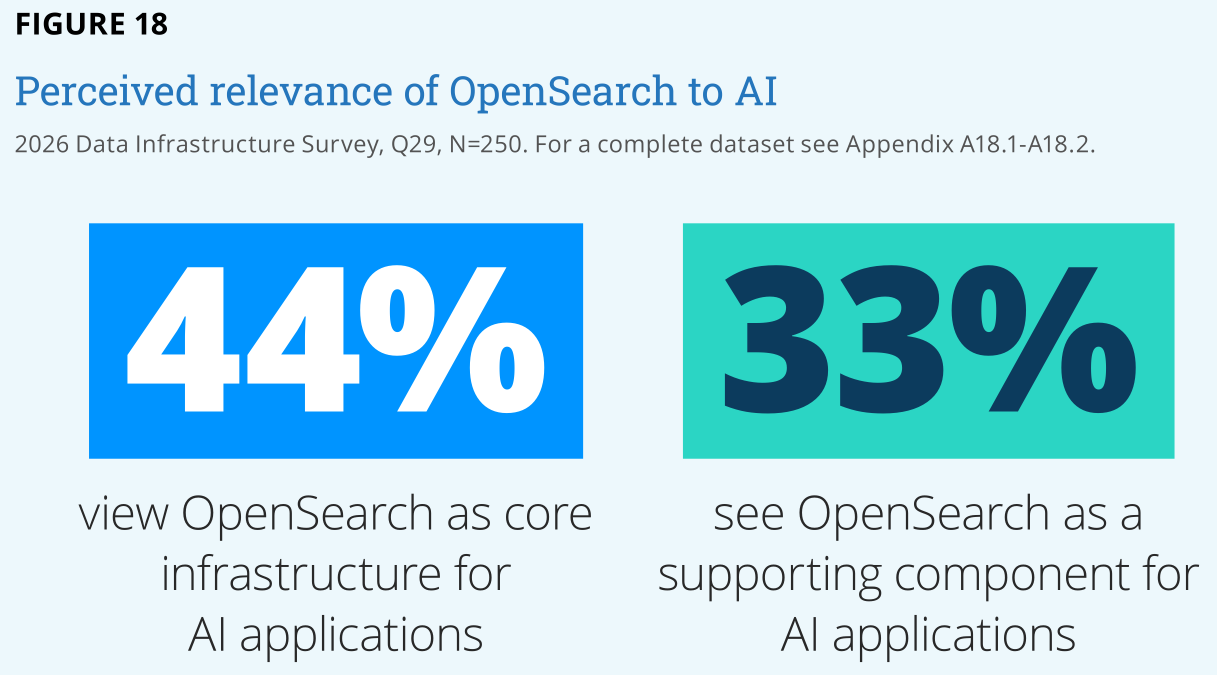
However, AI is not merely a feature—it is an architectural challenge. The data feeding these models requires robust, performant, and scalable infrastructure. The report reveals that 83% of organizations across all global regions are already running AI workloads or have concrete plans to do so. Within the OpenSearch ecosystem specifically, 62% of users are utilizing the platform for AI tasks, and notably, 44% view OpenSearch as a core component of their AI stack rather than a peripheral tool.
This shift signifies a maturation of the AI market. Organizations are no longer content with "black-box" AI solutions provided by single-vendor clouds. Instead, they are demanding transparent, open-source layers where they can control the retrieval-augmented generation (RAG) processes, vector search capabilities, and the underlying data analytics.

Supporting Data: By the Numbers
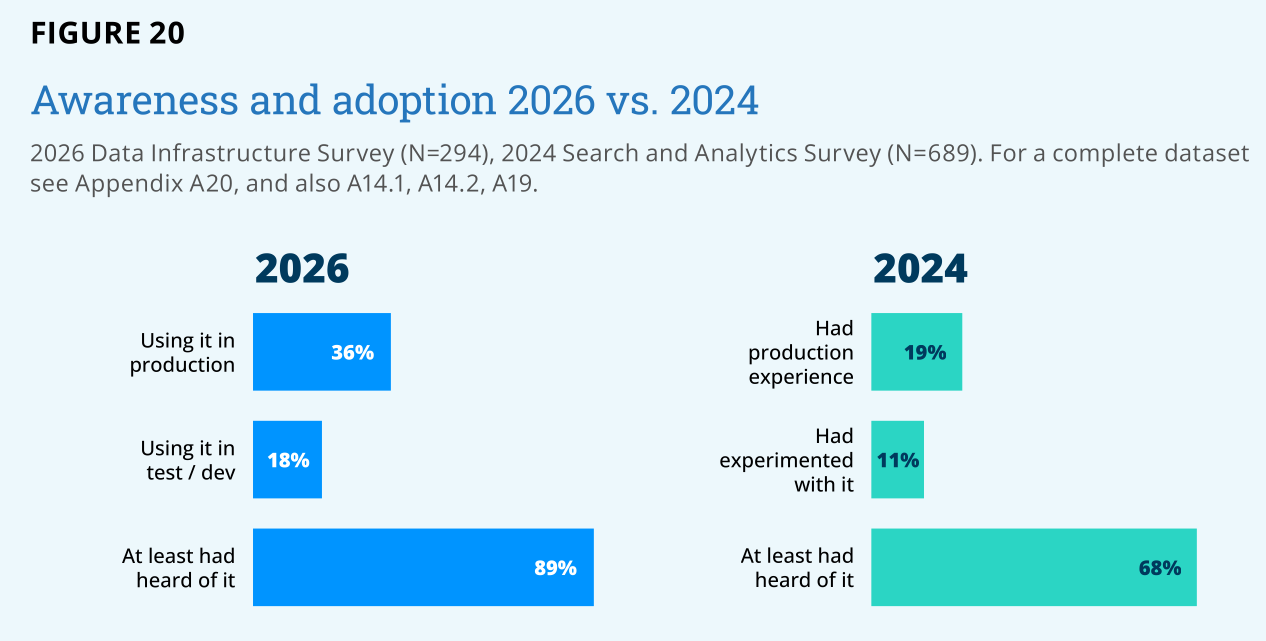
The adoption metrics for OpenSearch are compelling. In 2024, brand awareness sat at 68%; by May 2026, that figure jumped to 89%. Even more impressive is the growth in production deployments, which doubled from 19% to 36% in just two years.
When organizations select their data infrastructure, they are increasingly driven by a "TRIAD" of concerns:
- Total Cost of Ownership (TCO): 80% of organizations cite this as a top priority. In an era of ballooning AI compute costs, the predictability of open-source licensing is a major financial safeguard.
- Security and Compliance: 79% of firms prioritize this, reflecting the critical nature of the data stored within these systems.
- Vendor Independence: 69% of respondents identified this as a deciding factor, signaling a widespread desire to avoid "vendor lock-in."
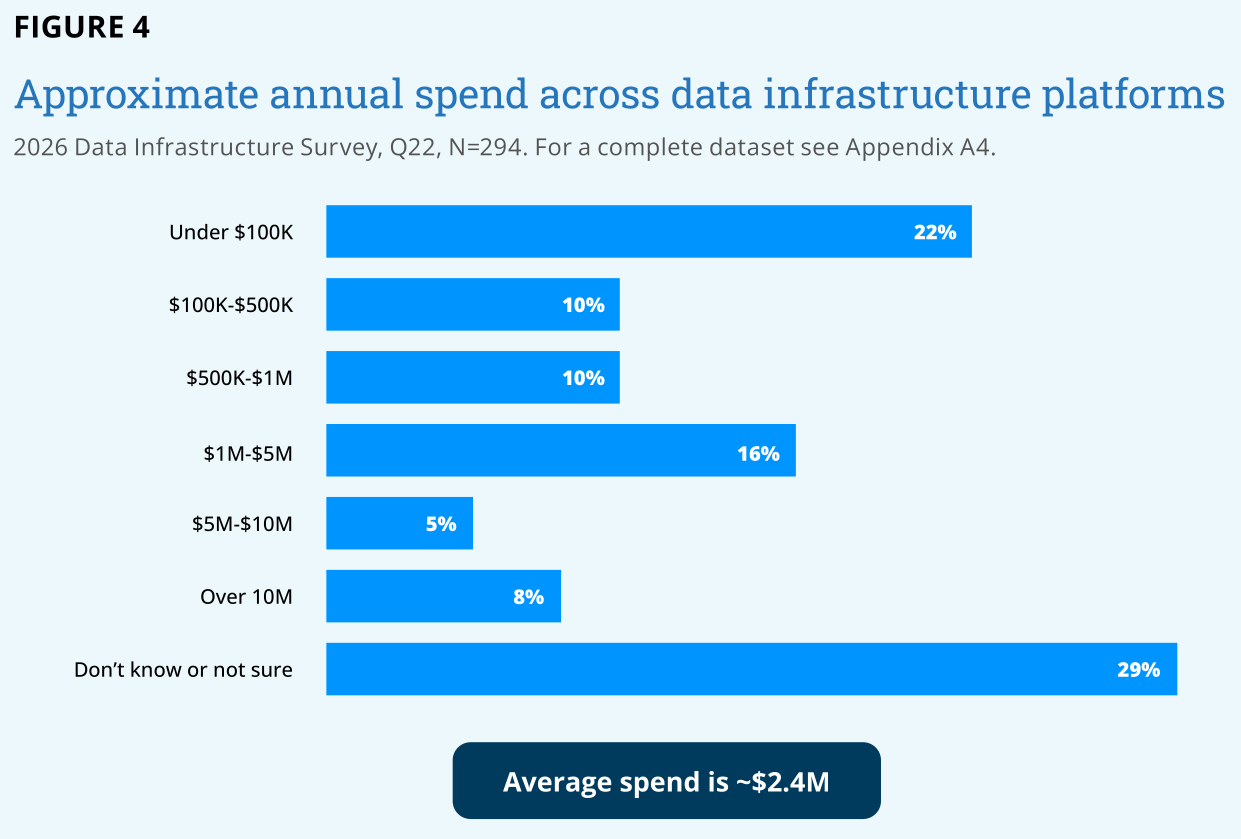
Furthermore, 71% of respondents identified the ability to run infrastructure outside the control of any single cloud provider as a strategic imperative. As annual data infrastructure budgets hover around $2.4 million per organization, the desire for "sovereignty" is not just a philosophical preference—it is a fiscal necessity.
The Functional Landscape: What Are Users Doing?
The utility of OpenSearch remains rooted in its heritage but is rapidly expanding. While 91% of active users utilize it for traditional search and retrieval, the scope is broadening:
- Log Analytics and Observability: 83% of users rely on the platform to maintain visibility into their systems.
- Real-Time Analytics: 70% of organizations use it to process high-velocity data.
- Hybrid Search: 68% of users employ a hybrid approach, combining traditional keyword search with vector-based AI retrieval, which is becoming the "gold standard" for enterprise search applications.
Despite this breadth of utility, the report reveals a critical insight regarding the lifecycle of these deployments: the majority (60%) of users characterize their current OpenSearch setup as experimental or "swappable." Only 36% have reached the stage where they consider their deployment mission-critical. This suggests significant room for growth, as the remaining 64% of the market represents a massive opportunity for the foundation to prove the long-term reliability and stability of the platform.
Official Responses and Strategic Growth
The OpenSearch Software Foundation has not rested on its laurels. Alongside the publication of the 2026 report, the foundation announced the addition of three new members, most notably Intel. This move is strategic; by partnering with hardware giants, the foundation ensures that OpenSearch is optimized for the latest silicon, particularly for AI-intensive workloads.
We spoke with Bianca Lewis, Executive Director of the OpenSearch Foundation, regarding the future of the platform in the age of agentic AI. Her perspective highlights the friction currently felt by enterprise leaders.
"The technology stack powering agentic AI is shifting rapidly," Lewis explained. "With growing uncertainty around AI costs, long-term commitments to proprietary platforms present both a financial and architectural risk. Now, leaders are turning to an open, vendor-neutral platform to strategically mitigate risk."
Lewis emphasizes that the value of an open data layer extends beyond the code itself. "An open data layer provides cost data and full visibility into which services are being called, giving teams the clarity needed to accurately cost and manage their infrastructure. This delivers the flexibility to innovate without vendor lock-in, ensuring organizations maintain sovereignty over both their data and their spend as the future of AI takes shape."
Implications: The Future of Sovereign Data
The findings of the 2026 Open Data Infrastructure Report point toward a definitive future: one where enterprise software is increasingly defined by its openness and its resistance to centralized control.
As organizations grapple with the high costs of training and running AI models, the "vendor-neutral" argument becomes harder to ignore. The transition of OpenSearch from a fork to a foundational pillar of the Linux Foundation ecosystem represents a successful model for how open-source projects can scale.
The implications for the industry are profound. For smaller vendors, the move toward open infrastructure provides a level playing field. For the end-user, it offers a hedge against the predatory pricing models that often follow proprietary lock-in.
However, challenges remain. The report indicates that while adoption is high, deep integration is still in its nascent stages. For OpenSearch to truly cement itself as the backbone of global data, the foundation must continue to focus on ease of use, robust long-term support (LTS), and bridging the gap between "experimental" deployments and "mission-critical" infrastructure.
As we look toward the remainder of 2026 and beyond, the message from the market is clear: the era of blind reliance on proprietary "walled gardens" is waning. The companies that thrive will be those that build their data strategies on foundations that are as flexible as the code they run—and as transparent as the data they process. OpenSearch has positioned itself at the center of this paradigm shift, and its next chapter will likely determine the architecture of the AI-driven internet for years to come.