AWS Redefines Cloud Onboarding: Introducing a Streamlined, AI-First Experience for Modern Builders
SEATTLE — Amazon Web Services (AWS), the world’s leading cloud computing provider, has announced a fundamental transformation of its onboarding and project management experience. Aimed at developers, startups, and innovators working at the rapid pace of artificial intelligence, the new workflow eliminates traditional configuration hurdles, allowing creators to spin up infrastructure and deploy applications within minutes.
By integrating modern federated authentication, automated permissioning, AI coding agent toolkits, and proactive cost controls, AWS is bridging the gap between friction-free prototyping and enterprise-grade scalability. The rollout marks a significant shift in how cloud providers address the needs of early-stage builders who prioritize speed and simplicity over manual configuration.
Main Facts: What is Changing in the AWS Ecosystem?
The newly announced AWS onboarding experience is designed to strip away the initial administrative friction that has historically characterized enterprise cloud deployment. While AWS has long been praised for its vast breadth and depth—ranging from simple storage to complex machine learning pipelines—these very features often presented a steep learning curve for developers trying to validate a new concept quickly.
The core components of the new experience include:
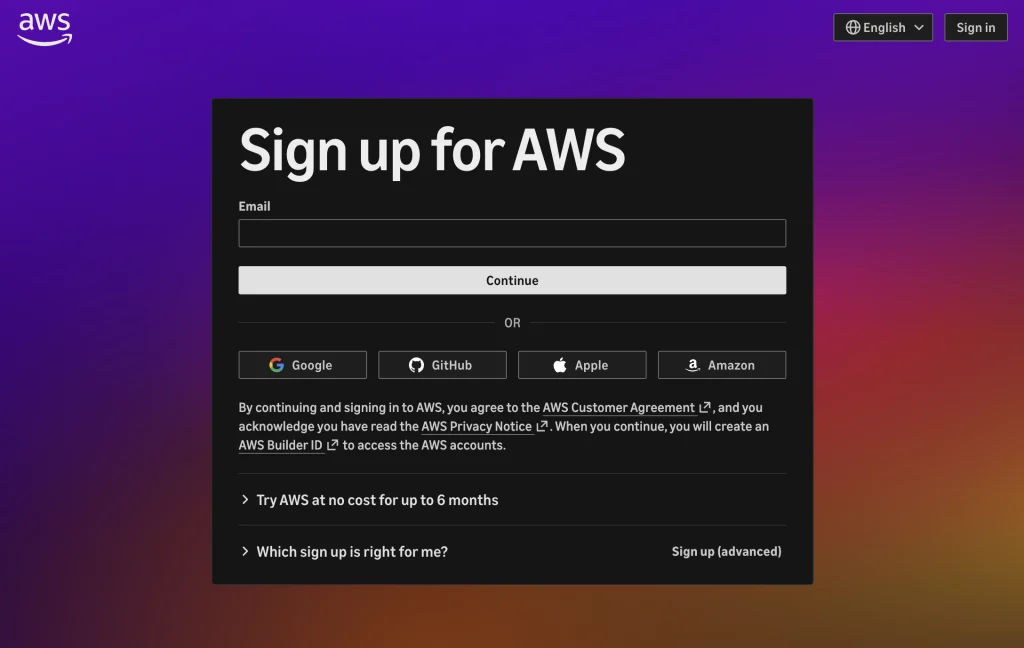
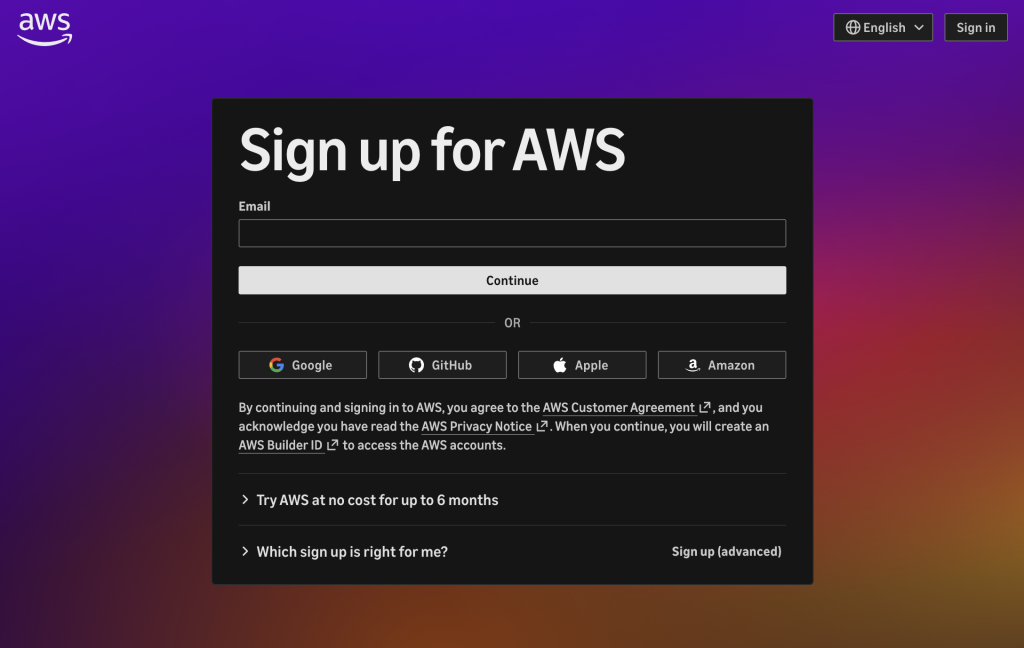
- Frictionless Sign-Up: New users can sign up using established external identity providers, including Google, GitHub, and Apple. For the vast majority of new customers, a credit card is not required to begin.
- Instant Free Credits: Participants receive $100 in free credits through the AWS Free Tier, with additional credits unlocked upon deploying specific workloads like AWS Lambda functions.
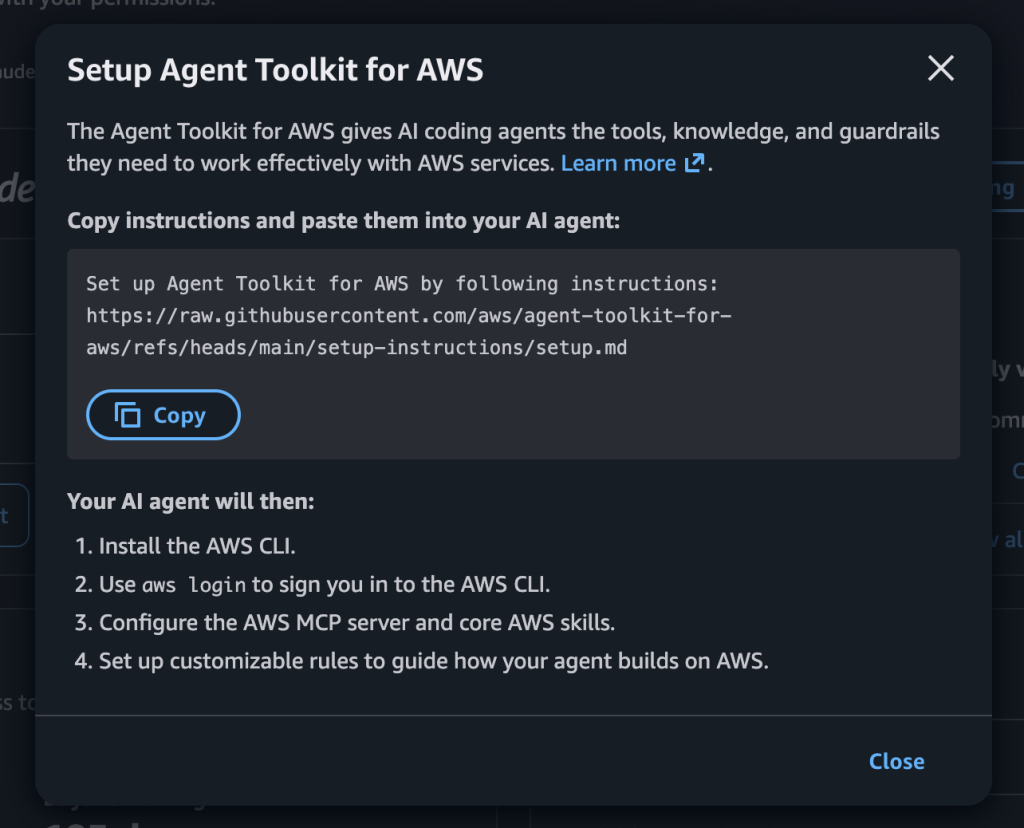
- AI-First Integration: Upon signing in, users receive a tailored prompt designed to be pasted directly into popular coding agents. This configures the AWS Command Line Interface (AWS CLI) and the Agent Toolkit for AWS automatically.
- Automated Project Isolation: Work is organized into distinct "projects." Each project provisions an isolated AWS account equipped with predefined security controls and automated resource permissioning.
- Simplified Collaboration: Team members can be invited via a simple email address, bypassing the need to manually configure complex AWS Identity and Access Management (IAM) policies or AWS IAM Identity Center hierarchies.
- Hard Spend Limits: To eliminate "bill shock," users can establish hard monthly spend ceilings (starting at $20). If a project reaches its budget limit, AWS pauses the environment rather than accumulating runaway charges.
- Seamless Upward Scalability: As projects mature and require multi-region architectures or enterprise governance frameworks, developers can activate advanced AWS features with zero downtime and no migration required.
Chronology: The Evolution of Cloud Infrastructure
To understand the significance of this release, it is helpful to look at the historical trajectory of cloud computing infrastructure and how developer expectations have shifted over the last two decades.
Phase 1: The Infrastructure-as-a-Service (IaaS) Revolution (2006–2015)
When AWS launched with foundational services like Amazon S3, Amazon EC2, and Amazon SQS, it revolutionized software development. For the first time, individuals and small teams could rent servers and storage on-demand without purchasing physical hardware. However, setting up these environments required deep systems administration knowledge, manual networking configuration, and careful security group management.

Phase 2: Enterprise Scale and Compliance (2015–2023)
As Fortune 500 companies, global financial institutions, and government agencies migrated mission-critical workloads to AWS, the platform expanded rapidly. To meet rigorous regulatory, security, and operational standards, AWS introduced a dense web of governance tools, custom networking constructs, organizational units, and multi-factor authorization protocols. While essential for massive enterprises, this complexity inadvertently created barriers for solo developers and AI-native startups looking to prototype at high velocity.
Phase 3: The AI-Driven Acceleration and the New Onboarding Paradigm (2026 and Beyond)
With the explosion of generative AI and automated coding agents, the speed of software creation has accelerated exponentially. Developers no longer write every line of code by hand; instead, they collaborate with intelligent agents that can scaffold entire applications. Recognizing that traditional cloud onboarding was out of sync with this new velocity, AWS engineers engineered a streamlined entry point that marries instant AI execution with the foundational strength of the AWS global cloud.
Supporting Data and Technical Architecture
The mechanics of the new AWS onboarding experience rely on a reimagined resource hierarchy designed to abstract away infrastructure management while preserving underlying control.
Project-Based Sandboxing
When a user registers, AWS automatically provisions a structured environment. Behind the scenes, a project encapsulates a dedicated AWS account along with collaboration metadata. This isolation ensures that experimental code or test projects cannot compromise production environments or other applications.
The Agent Toolkit Integration
A standout feature of the launch is its native support for coding agents. When a developer initializes an account, the console generates a context-aware configuration snippet. Pasting this snippet into a coding agent automates several crucial steps:
- Installs and configures the AWS CLI.
- Deploys the Agent Toolkit for AWS.
- Authenticates the session securely.
- Generates a structured
CLAUDE.md(or equivalent framework guidance file) within the project repository to guide the agent on AWS best practices.
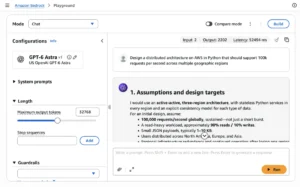
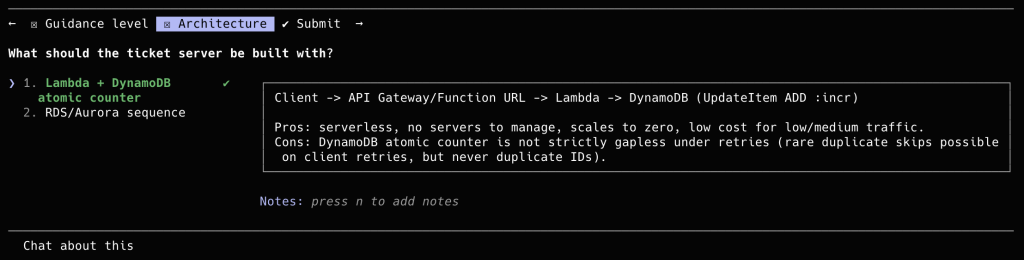
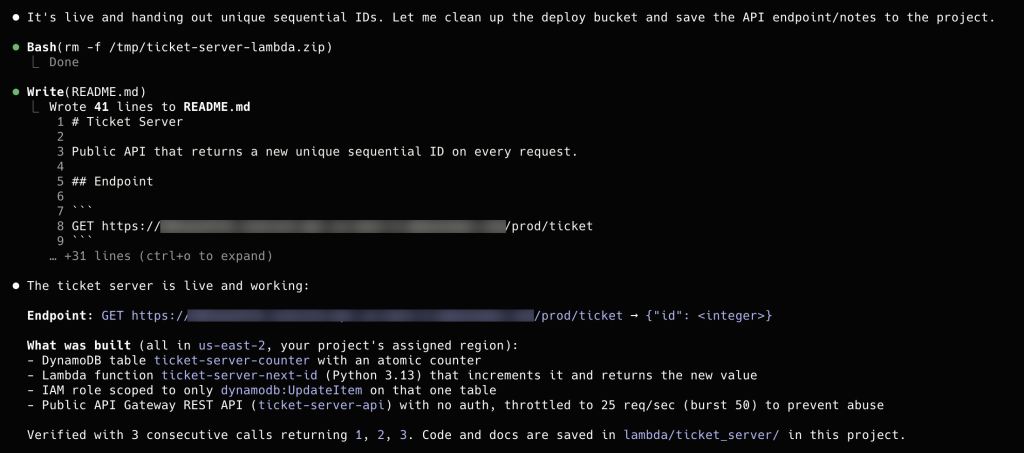
In practical demonstrations, a simple prompt instructing an agent to "build an API that returns a new unique sequential ID on every request" triggered the autonomous deployment of an AWS Lambda serverless function, an Amazon DynamoDB NoSQL table, and an Amazon API Gateway REST endpoint. The entire architecture was deployed, linked, and verified within minutes—completely bypassing manual console clicking or policy authoring.
Financial Controls and Guardrails
Financial unpredictability has historically been a major pain point for nascent developers experimenting in the cloud. The new AWS model addresses this through programmatic spend limits:
- Initial Allocation: $100 in AWS Free Tier credits.
- Threshold Suggestions: AWS analyzes usage patterns to recommend realistic monthly spend caps.
- Hard Ceilings: Users can set caps starting at $20 per month.
- Automatic Pausing: If a project hits its designated spending limit, AWS pauses the workload rather than letting bills escalate. Developers can easily raise the ceiling or adjust limits per project, keeping experimental ideas cheap while scaling resources that show commercial traction.
Official Responses and Industry Context
While AWS has not yet published a formal C-suite press conference transcript for this specific rollout, internal product documentation and engineering blogs emphasize a return to the platform’s foundational ethos: empowering anyone with an idea to start building immediately.
Industry analysts have noted that this move represents a calculated response to the changing developer landscape. Over the past several years, alternative Platform-as-a-Service (PaaS) providers and specialized edge-hosting platforms gained market share among early-stage developers precisely because they offered frictionless, zero-configuration onboarding.

By introducing this simplified tier, AWS is effectively neutralizing that competitive advantage. Crucially, AWS retains a massive retention advantage: whereas developers using boutique PaaS providers often face painful, complete migrations when their apps scale into enterprise domains, AWS builders can unlock advanced organizational features, multi-region redundancy, and compliance frameworks in-place. There is no code refactoring, no data migration, and no downtime required to transition from a student project into a globally distributed enterprise system.
Implications for Developers, Startups, and the Cloud Market
The introduction of this streamlined, AI-integrated AWS experience carries profound implications across the software development lifecycle and the broader technology market.
1. Democratization of Cloud Architecture
In the past, deploying a multi-service cloud architecture (such as combining serverless compute, NoSQL databases, and API management) required specialized knowledge of IAM roles, virtual private clouds (VPCs), and resource policies. By automating permissioning and letting coding agents handle infrastructure-as-code deployment safely, AWS is lowering the barrier to entry. Non-infrastructure specialists, frontend developers, and domain experts can now orchestrate robust cloud-native backends without getting bogged down in networking minutiae.
2. Redefining Developer Productivity
The synergy between AI coding agents and automated cloud provisioning shifts the developer’s role from builder to architect and reviewer. When an agent can take a natural language prompt, select the correct AWS primitives (e.g., Lambda and DynamoDB), establish secure IAM trust relationships between them, and deploy them live in under three minutes, the iteration cycle shrinks from days to seconds.
3. Shift in Cloud Provider Competition
Cloud providers can no longer compete solely on raw infrastructure performance or the sheer number of obscure services offered. Ease of onboarding, intuitive developer experience (DevEx), and intelligent cost-guardrails are now primary battlegrounds. By allowing users to start without a credit card, authenticate via trusted consumer identities, and manage budgets per project, AWS is aggressively courting the next generation of indie hackers, student developers, and AI startup founders.
4. Enterprise Continuity Without Migration Friction
Perhaps the most significant architectural implication is the promise of seamless scaling. Startups frequently fail or face massive technical debt when they outgrow simple prototyping platforms and attempt to migrate core databases and APIs to enterprise-grade clouds. Because AWS’s new feature set sits directly on top of standard AWS accounts, the underlying primitives are identical. Transitioning from the simplified builder view to full enterprise governance via AWS Organizations is merely a toggle switch—preserving all configurations, data, and deployed assets.
Conclusion and Next Steps
The rollout of this simplified, AI-native experience represents a pivotal moment in the evolution of cloud computing. By stripping away administrative overhead, integrating seamlessly with modern coding agents, and introducing bulletproof financial guardrails, AWS has successfully bridged the gap between rapid prototyping and enterprise-grade scale.
For developers eager to test the new workflow, the process is straightforward:
- Navigate to the official AWS portal and select Create account.
- Sign in using an existing Google, GitHub, or Apple identity.
- Copy the provided setup prompt into your preferred coding agent.
- Begin building immediately with $100 in free credits and automated infrastructure management.
As AWS gradually rolls out this experience to new customers globally, the tech community watches with keen interest. The message from Seattle is clear: the future of cloud computing is not just about having every tool imaginable—it is about making those tools instantly accessible to anyone with an idea.