Breaking the Silence: NASA’s X-59 Paves the Way for a New Era of Supersonic Travel
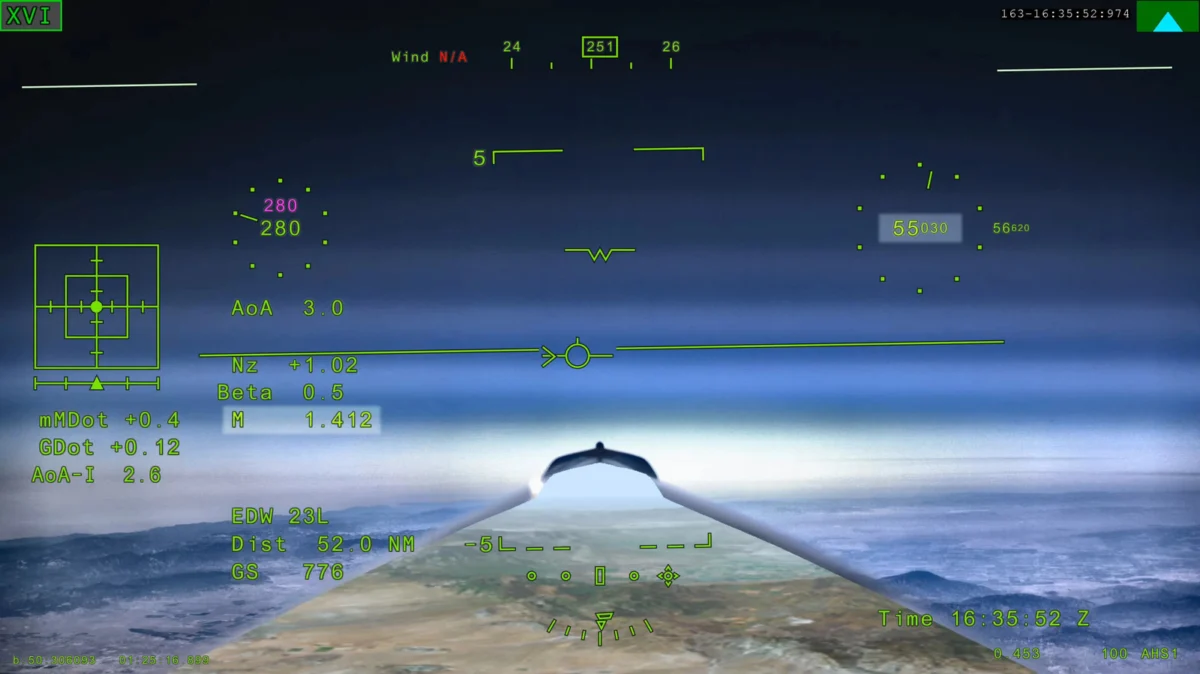
In a milestone that echoes the pioneering spirit of the mid-20th century, NASA’s X-59 research aircraft has officially crossed into the realm of supersonic performance. By successfully reaching Mach 1.4 at an altitude of 55,000 feet, the agency has moved one step closer to solving one of aviation’s most persistent engineering challenges: the bone-shaking sonic boom that has effectively banned commercial supersonic flight over land for over half a century.
The X-59, the centerpiece of NASA’s Quiet SuperSonic Technology (Quesst) mission, is not merely an exercise in raw speed. It is a sophisticated acoustic instrument designed to transform the jarring, explosive "boom" of supersonic travel into a gentle, barely perceptible "thump." With these latest flight milestones, the aircraft is moving rapidly from the hangar to the horizon, setting the stage for a series of community-based acoustic validation flights that could fundamentally reshape the future of global transit.
The Core Objective: Redefining the Supersonic Experience
The primary objective of the X-59 program is to prove that supersonic flight does not have to be a public nuisance. Since the retirement of the Concorde and the subsequent global restrictions on supersonic flight over land—instituted due to the disruptive noise profiles of such aircraft—the industry has been largely confined to subsonic travel.
The X-59 is designed to alter the shockwave profile generated by flight at speeds exceeding Mach 1. By manipulating the air pressure waves that traditionally coalesce into a single, thunderous boom, the X-59’s unique airframe forces these waves to dissipate before they reach the ground. NASA characterizes this sound as a "quiet sonic thump," a noise profile they hope will be considered no more intrusive than the sound of a car door closing in the distance.
Chronology of Progress: From Hangar to Mach 1.4
The recent progress of the X-59 has been marked by a methodical, safety-first approach that characterizes NASA’s most complex aerospace endeavors.
Early June 2026: The Initial Breakthrough
On June 5, 2026, the X-59 completed its first successful foray into supersonic territory, hitting Mach 1.1. This flight served as the "proof of concept" for the aircraft’s structural integrity and engine performance at the threshold of the sound barrier. By clearing this initial hurdle, engineers were able to gather baseline data on how the aircraft handled the transition from transonic to supersonic flight.
Mid-June 2026: Pushing the Envelope
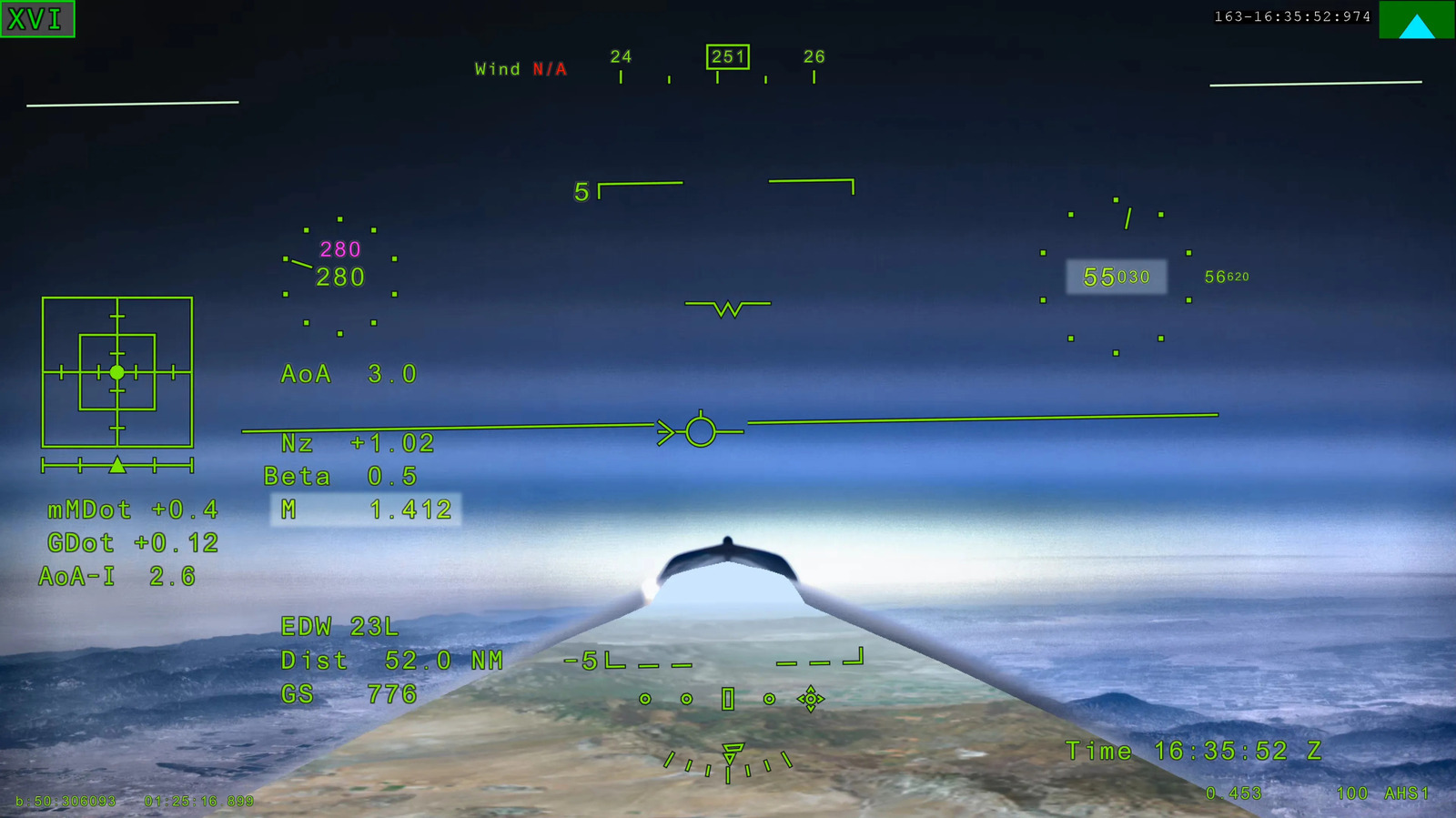
Following the success of the June 5 flight, the team moved quickly to expand the flight envelope. On June 12, 2026, the X-59 pushed further, achieving a speed of Mach 1.4 (approximately 924 mph) at an altitude of 55,030 feet. This specific flight was critical, as it mirrored the exact speed and altitude conditions that the aircraft will be required to maintain during its upcoming mission phases.
The Interim Phase: Strategic Noise Masking
During this current testing phase, NASA is employing a unique strategy to conduct its research without violating existing noise regulations. The X-59 is currently flying in tandem with a support aircraft that produces a traditional sonic boom. By flying alongside this "booming" craft, the X-59 can conduct its tests in restricted airspace while the more conventional craft masks the acoustic signature of the X-59, allowing engineers to focus on internal sensor telemetry and flight control validation.
Supporting Data: The Science of the "Thump"
The success of the X-59 relies on a synergy of advanced computational fluid dynamics and cutting-edge materials science. The aircraft’s design is long and slender, with a beak-like nose that accounts for nearly a third of the craft’s total length. This design is intentional: it prevents the various shockwaves generated by the nose, wings, and tail from merging into a single powerful wave.
Key Performance Indicators (KPIs)
- Targeted Noise Level: 75 Perceived Level Decibel (PLdB), compared to the 105+ PLdB produced by traditional supersonic aircraft.
- Cruise Altitude: 55,000 feet, which allows for optimal aerodynamic efficiency and fuel consumption at supersonic speeds.
- Current Flight Status: Successful demonstration of Mach 1.4, with steady-state flight characteristics meeting all predicted computer models.
The data harvested from these flights is being funneled into the Quesst mission’s centralized database, which will eventually be used to petition aviation regulators—such as the FAA and international civil aviation bodies—to lift the bans on overland supersonic travel.
Official Perspectives: The Road Ahead
NASA’s leadership and the Quesst mission team have maintained a disciplined optimism regarding the recent tests. According to official mission briefings, the June 12 flight was described as "the most critical step to date," as it validated that the aircraft could not only reach the required speeds but also hold them steadily enough to generate consistent, measurable acoustic data.
"We are no longer just theorizing about quiet supersonic flight," noted a lead systems engineer involved with the program. "We are now demonstrating it in the physical world. The transition from digital models to high-altitude flight is where the real engineering happens, and the X-59 is performing exactly as our simulations predicted."
However, the agency remains cautious. The "acoustic validation" phase—the next major milestone—will involve flying over specialized ground sensors to map the sound footprint of the aircraft with extreme precision. Only after this validation is complete will the project move to the community response phase.
Implications: The Future of Commercial Aviation
The potential implications of the X-59’s success are staggering. If NASA can prove that a supersonic aircraft can fly over populated areas without causing noise complaints, the aviation industry could see a renaissance of high-speed travel.
Economic and Logistical Shifts
- Reduced Transit Times: Flights that currently take 8 to 10 hours could be cut to 4 or 5. A trip from New York to Los Angeles, or London to Tokyo, could become a comfortable "same-day" experience for business and leisure travelers.
- Regulatory Reform: The success of the X-59 provides the empirical evidence necessary for regulatory bodies to draft new rules based on sound levels rather than speed. This would be a move away from the blanket bans of the 1970s toward a performance-based regulatory framework.
- Industry Revitalization: Companies looking to develop next-generation supersonic transports (SSTs) are watching the X-59 closely. The data provided by NASA is essentially "open source" in its benefit to the industry, providing a roadmap for future commercial designs.
Societal Considerations
Despite the technical progress, the social challenge remains. The "Quesst" mission is specifically designed to engage the public. By flying over diverse communities and collecting feedback, NASA aims to understand the human element of supersonic noise. It is one thing for a sensor to record 75 PLdB; it is quite another for a citizen to experience it while sitting in their backyard.
The public’s perception will be the ultimate arbiter of whether the supersonic era returns. If the "thump" is deemed acceptable, the industry will have a green light for investment. If it is still perceived as a disturbance, the X-59 may remain a scientific curiosity rather than the progenitor of a new commercial fleet.
Conclusion: A New Horizon
As the X-59 continues its flight test program, it carries the weight of decades of aviation history. The transition from the explosive, disruptive era of the 20th century to a more refined, technologically elegant future is currently happening at 55,000 feet.
The milestone of Mach 1.4 is more than just a number; it is a signal to the global aerospace community that the barriers to speed are not insurmountable. Through rigorous testing, transparent data collection, and a focus on human-centric design, NASA is proving that we can reach for the future without breaking the peace of those below. The coming months of acoustic validation will be the final test of this vision, and for a world that has grown accustomed to the slower pace of subsonic travel, the return of supersonic flight—quietly and efficiently—could be the most significant aviation development of the century.