Beyond the Brawl: The Nintendo GameCube’s Unlikely Second Life as a Windows NT Workstation
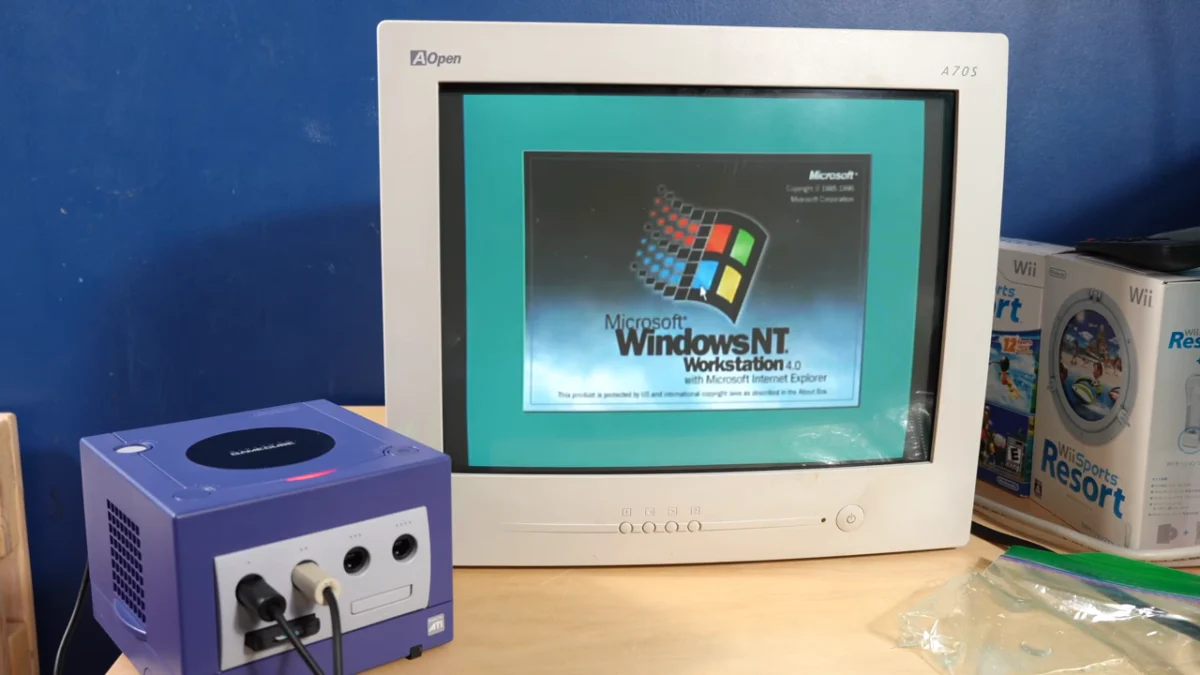
DATELINE: [Current City, e.g., San Francisco], [Current Date, e.g., June 18, 2026] – The Nintendo GameCube, a console revered by millions for its iconic purple hue, unique handle, and timeless classics like Super Smash Bros. Melee, is now making headlines for a purpose far removed from its intended gaming pedigree. In an astounding feat of reverse engineering and dedicated development, a team of enthusiasts has successfully ported and booted a mid-1990s workstation operating system, Windows NT, onto the diminutive console. This unexpected fusion of retro gaming hardware and vintage enterprise software highlights the enduring spirit of technological exploration and pushes the boundaries of what enthusiasts believe is possible.
For decades, the GameCube has been synonymous with unparalleled gaming experiences and a distinctive, vaguely rectangular aesthetic that set it apart from its contemporaries. Its powerful IBM PowerPC "Gekko" processor and innovative design cemented its place in gaming history. However, its capabilities as a platform for running a desktop operating system, particularly one as robust and historically significant as Windows NT, were entirely unforeseen. The revelation that one’s beloved purple console could, with a bit of technical wizardry, transform into a functional, albeit rudimentary, Windows NT machine, has sent ripples of excitement through the retro-computing and console modding communities.
The core of this remarkable achievement lies in Microsoft’s often-forgotten foray into the PowerPC architecture for its Windows NT operating system. While the vast majority of NT installations ran on Intel x86 processors, Microsoft did produce versions compatible with other architectures, including PowerPC, Alpha, and MIPS, during the mid-to-late 1990s. This historical footnote has now been resurrected and repurposed by a collaborative team of developers – identified as [Rairii], [NTx86], and [stonedDiscord]. Their meticulous work has culminated in a functional port, now publicly available on GitHub under the repository "entii-for-workcubes," opening the door for anyone with the inclination and technical know-how to explore this peculiar operating system on their cherished GameCube.
Beyond the original GameCube, the port’s versatility extends to other Nintendo consoles sharing similar architectural roots. Enthusiasts can also boot Windows NT on the Nintendo Wii, a direct successor to the GameCube, and even within the Wii U’s "vWii" mode, which emulates the original Wii environment. This broader compatibility underscores the robustness of the port and the shared lineage of these Nintendo systems, all powered by variations of IBM’s PowerPC processors.
The journey to bring Windows NT to the GameCube is not merely a technical triumph; it is a testament to the dedication of a community driven by curiosity and the sheer challenge of "because it’s there." As documented in a comprehensive video by [Jiga Tech] on YouTube, the installation process, while demanding, reveals the intricate steps involved in breathing new life into a console far past its prime, transforming it into an unexpected canvas for a bygone operating system.
The Genesis of an Unlikely Port: A Chronological Journey
The story of Windows NT on the GameCube is a fascinating intersection of disparate technological eras, demanding a closer look at the historical context that made such a project conceivable.
Microsoft’s PowerPC Ambitions: A Historical Detour
To understand the feasibility of this port, one must first revisit Microsoft’s ambitious, albeit ultimately short-lived, strategy for Windows NT in the 1990s. Windows NT, first released in 1993, was designed from the ground up to be a hardware-agnostic, portable operating system, unlike its MS-DOS and Windows 9x predecessors. This portability was a cornerstone of its architecture, enabling it to run on various CPU instruction sets.
Among these, the PowerPC architecture held significant promise. Developed jointly by Apple, IBM, and Motorola, PowerPC processors were touted as a high-performance alternative to Intel’s x86 line. Major computer manufacturers, including Apple (for its Macintosh line), IBM (for its RS/6000 workstations and some PC models), and Motorola, adopted PowerPC. Microsoft, aiming for broad market penetration and anticipating a multi-architecture computing future, developed versions of Windows NT for PowerPC, specifically NT 3.51 and NT 4.0. These versions targeted high-end workstations and servers, offering a robust, multi-user, multi-tasking environment. However, due to several factors—including Intel’s rapid advancements with Pentium processors, Apple’s exclusive focus on macOS for its PowerPC Macs, and a lack of widespread third-party software support for NT on PowerPC—Microsoft eventually ceased development for non-x86 architectures by the late 1990s. This left a relatively small but significant footprint of PowerPC-compatible NT binaries in computing history.
The GameCube’s Core: An Unexpected PowerPC Ally
Fast forward to 2001, Nintendo released the GameCube, powered by the IBM "Gekko" CPU. This processor was a custom-designed derivative of IBM’s PowerPC 750 (G3) family, clocked at 485 MHz. While optimized for gaming, its fundamental architecture was PowerPC. This shared heritage with the PowerPC versions of Windows NT created a theoretical, if extremely challenging, pathway for compatibility. The GameCube, with its Gekko CPU, 24 MB of main RAM, 16 MB of ARAM (Audio RAM, also usable for graphics data), and ATI "Flipper" GPU, presented a compact yet potent PowerPC-based platform.
The Spark of an Idea: Identifying the Opportunity
The precise moment the idea to port Windows NT to the GameCube germinated among [Rairii], [NTx86], and [stonedDiscord] remains a subject of community lore, but it likely stemmed from a deep understanding of both retro console hardware and the intricacies of vintage operating systems. The key insight would have been recognizing the GameCube’s PowerPC core as a potential, albeit highly specialized, target for the dormant PowerPC NT binaries. This realization would have kicked off a monumental undertaking, blending historical computing knowledge with modern reverse-engineering techniques.
The Development Crucible: Overcoming Formidable Hurdles
The actual porting process would have been fraught with immense technical challenges. Windows NT, even its PowerPC variant, was designed for a different class of hardware, typically systems with more standardized BIOS/firmware interfaces, more abundant RAM, and a wider array of peripheral support.
- Bootloader Adaptation: The GameCube has a highly specialized boot process designed to load Nintendo-signed software from its proprietary mini-DVDs. The first major hurdle would have been developing a custom bootloader capable of initializing the GameCube’s hardware sufficiently to then hand off control to the NT kernel. This would involve understanding the console’s low-level memory map, CPU initialization routines, and I/O controllers.
- Kernel Patching and Driver Development: The existing PowerPC NT kernel would have been designed for specific PowerPC reference platforms, not a GameCube. Significant patching would be required to adapt the kernel to the Gekko CPU’s specific nuances and to interact with the GameCube’s unique hardware components. This includes creating custom drivers for:
- Graphics (ATI Flipper): NT would need a display driver to render its graphical interface on the GameCube’s video output. This is a complex task, as the Flipper GPU has a very different architecture from the standard graphics cards NT expected.
- Input (Controllers): NT relies on standard keyboard and mouse input. The GameCube’s proprietary controller ports and gamepad input scheme necessitated a custom input driver to translate controller commands into mouse movements and keyboard strokes.
- Storage (Memory Cards/SD Adapters): NT needs a persistent storage medium. While the GameCube used mini-DVDs and memory cards, the port likely leverages modern SD card adapters (like the SD2SP2 or GC Loader) for storing the OS image and files, requiring a custom file system driver.
- Memory Management: Adapting NT’s memory management to the GameCube’s relatively constrained 24MB main RAM and its specific memory banks would have been critical.
- Debugging and Optimization: The entire process would have involved countless hours of debugging, testing, and optimizing. Given the lack of official documentation for running a non-Nintendo OS on the GameCube, the developers would have relied heavily on community-driven reverse engineering efforts and their own deep technical expertise. The collaboration between [Rairii], [NTx86], and [stonedDiscord] highlights the distributed nature of such complex projects within the open-source community.
The Public Release: A Milestone Achieved
The culmination of these efforts was the release of "entii-for-workcubes" on GitHub. This repository not only provides the necessary binaries and tools but also serves as a living document of the porting process, inviting further contributions and refinements from the broader community. The project’s public demonstration by [Jiga Tech] on YouTube provided the crucial visual proof and a practical guide for others to replicate the achievement, solidifying its place as a significant milestone in retro-computing.
Supporting Data: Peeling Back the Technical Layers
The GameCube’s internal architecture, while powerful for its time, presents a unique set of challenges and limitations when repurposed as a Windows NT workstation. Understanding these technical details provides deeper insight into the ingenuity required for this port.
GameCube Hardware Specifications: A Closer Look
- CPU: IBM Gekko (PowerPC 750CXe-based), 485 MHz. This is the lynchpin of the compatibility, being a member of the PowerPC family that Windows NT once supported. Its speed, while modest by today’s standards, was competitive with entry-level workstations of the mid-90s that might have run NT.
- RAM: 24 MB main RAM (1T-SRAM) and 16 MB ARAM (SDRAM). Totaling 40 MB, this is on the lower end for a comfortable Windows NT experience, especially for NT 4.0, which typically recommended 32 MB or more. NT 3.51 was slightly less demanding. Managing this limited memory efficiently would have been paramount for the port.
- GPU: ATI "Flipper" (162 MHz). This custom-designed GPU, while excellent for rendering Nintendo’s stylized graphics, is vastly different from the standard VGA/SVGA cards NT drivers expected. Crafting a driver to interface with Flipper’s unique command set and memory architecture to display the NT GUI is a monumental task. This explains why graphical performance might be minimal or basic.
- Storage: Proprietary 8cm mini-DVD drive (1.35 GB capacity) and memory card slots. For the NT port, relying on the mini-DVD for OS installation is impractical. Modern GameCube modding often involves SD card adapters (like the SD2SP2, GC Loader, or GCLoader PnP), which allow the console to read from standard SD cards. This is the likely storage medium for the NT installation, requiring custom SD card drivers.
- Input/Output: Four controller ports, two memory card slots, analog A/V output, digital A/V output (on later models), serial ports (on earlier models, for broadband/modem adapters). The lack of standard USB or PS/2 ports for keyboard/mouse is a significant hurdle.
Windows NT Version and Expected Limitations
The specific version of Windows NT used is likely NT 3.51 Workstation or NT 4.0 Workstation, as these were the most common PowerPC variants. Given the GameCube’s hardware constraints and unique architecture, users should manage expectations regarding functionality:
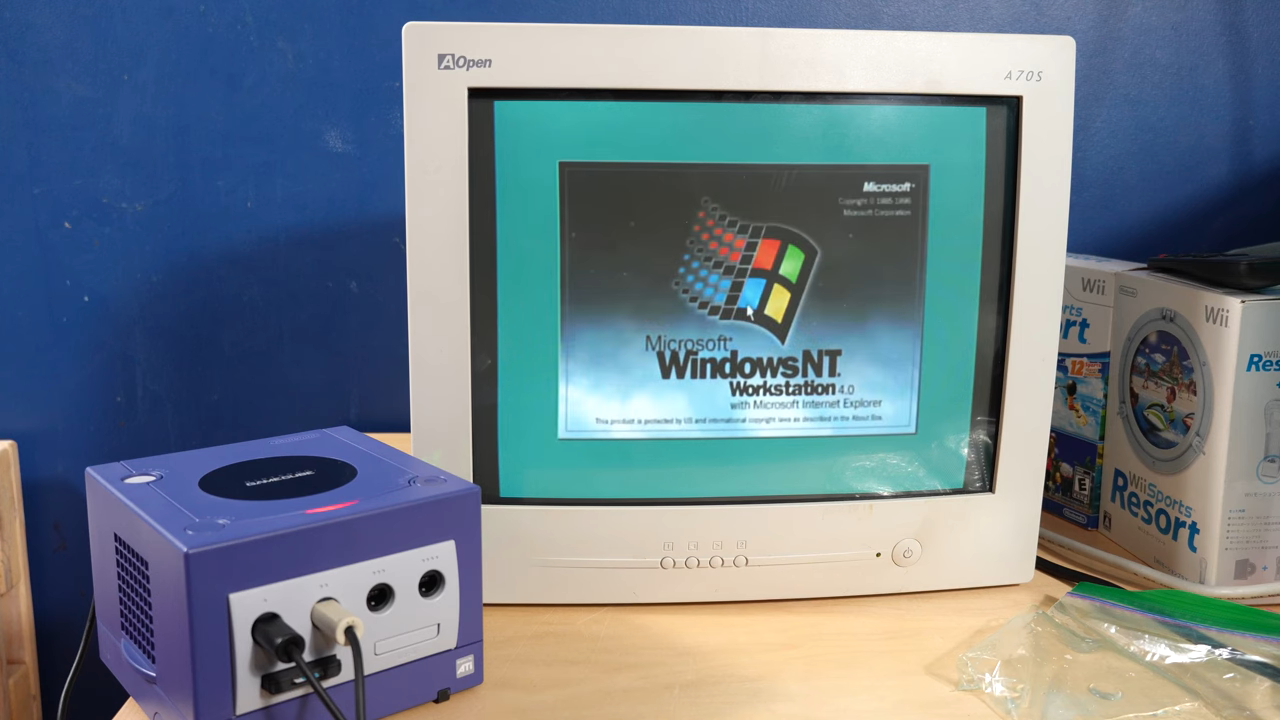
- Graphical Performance: The graphical user interface (GUI) of Windows NT will likely be functional but basic, potentially running at a low resolution and color depth. Complex graphical operations, animations, or video playback are highly improbable.
- Input: This is a critical challenge. As the original article notes, "The GameCube never really came with a proper keyboard." While rare, official GameCube keyboard controllers (like the ASCII Keyboard Controller for Phantasy Star Online) did exist. However, the [Jiga Tech] video explicitly mentions that that specific model couldn’t be made to work with the ported NT version, highlighting the complexities of driver compatibility. This means users will likely have to "fuss with a range of controller-entry methods," possibly using on-screen keyboards controlled by a gamepad, or custom USB-to-GameCube controller adapters that emulate keyboard input.
- Networking: The GameCube’s optional broadband adapter connected via one of the serial ports. Integrating network drivers for this highly specific hardware into the NT kernel would be another significant challenge, making internet connectivity unlikely without further development.
- Sound: The GameCube’s custom sound hardware (DSP) would also require a dedicated driver, which might not be a priority in initial ports.
- Software Compatibility: While NT itself runs, installing and running period-appropriate PowerPC NT applications would be an entirely separate, and likely even more challenging, endeavor, limited by the available RAM, storage, and lack of peripheral support.
The "Why": Motivation and Community Context
Why undertake such an arduous task? The motivations are multifaceted:
- Technical Challenge: For many in the hacking and modding community, the ultimate goal is to push hardware beyond its intended limits. Porting a complex OS like NT to a gaming console is a supreme test of skill, knowledge, and perseverance.
- Historical Preservation: This project helps preserve a niche but important piece of computing history – the PowerPC versions of Windows NT – by making them runnable on accessible, if unconventional, hardware. It’s a form of digital archaeology.
- "Because It’s There": A common adage in exploration, this sentiment perfectly captures the spirit of many retro-computing projects. The mere possibility of achieving something extraordinary is often motivation enough.
- Community Engagement: Such projects foster collaboration, knowledge sharing, and inspire others within the retro-tech and modding communities. The [Jiga Tech] video, demonstrating the installation, is a prime example of this community-driven knowledge dissemination.
The GameCube NT port is not an isolated phenomenon. The retro-computing scene is vibrant with similar projects: running Linux on various consoles (Dreamcast, Xbox, PS2), porting ancient DOS games to modern handhelds, or even projects like "ordering pizza from your Sega Dreamcast," as referenced in the original article. These endeavors collectively highlight a deep appreciation for computing history and an insatiable desire to tinker.
Official Responses: Silence and Strategic Distance
In the realm of console modding and retro-computing, official responses from the original manufacturers are rare, and for good reason.
Nintendo’s Perspective: A Legacy Uninterrupted
Nintendo, as a company, operates with a clear focus on its current and future gaming platforms. The GameCube, now two decades old, is a legacy product. While they certainly cherish the console’s place in their history, an unofficial, community-driven port of a third-party operating system falls well outside their operational purview. Nintendo’s primary concern with unauthorized modifications typically revolves around piracy or activities that undermine their current business models (e.g., modern console jailbreaks). A Windows NT port on a GameCube does neither. Therefore, an official statement from Nintendo on this specific achievement is highly improbable and, frankly, unnecessary from their perspective. Their silence should be interpreted not as disapproval, but as a strategic detachment from activities that do not directly impact their ongoing business or intellectual property enforcement.
Microsoft’s Historical Context: A Chapter Closed
Similarly, Microsoft is unlikely to issue an official statement regarding the GameCube NT port. The PowerPC versions of Windows NT represent a closed chapter in Microsoft’s operating system history. While historically significant, they are no longer supported or commercially relevant to the company. Their focus is squarely on modern Windows iterations (Windows 10, Windows 11) and cloud services. From Microsoft’s standpoint, this port is an enthusiast project utilizing an obsolete product, posing no threat or benefit to their current strategic goals. The fact that the PowerPC NT binaries are difficult to acquire legally (often requiring old installation media) further distances the company from the project.
The Spirit of Independence: A Community-Driven Narrative
The lack of official corporate responses is, in many ways, a defining characteristic of the console modding and retro-computing scenes. These communities thrive on independent research, collaborative development, and a shared passion for technology, often operating in a space where official endorsement is neither sought nor expected. This independence allows for unrestricted exploration and innovation, pushing boundaries that corporate entities, bound by commercial interests and legal frameworks, typically cannot or will not. The story of Windows NT on the GameCube is thus entirely a narrative of community ingenuity and perseverance.
Implications: Beyond the Novelty Factor
The successful porting of Windows NT to the Nintendo GameCube carries implications that extend beyond mere technical novelty, touching upon aspects of historical preservation, technical education, and the future of retro-computing.
A Testament to Technical Prowess and Perseverance
First and foremost, this achievement stands as a profound testament to the technical prowess, deep understanding of computer architecture, and sheer perseverance of the development team. Porting an operating system, especially one as complex as Windows NT, to an embedded system like a gaming console with limited resources and proprietary hardware, is an endeavor that demands expertise across multiple domains: reverse engineering, low-level programming, driver development, and operating system internals. It highlights the incredible capabilities of dedicated individuals within the open-source and hacking communities.
Historical Preservation and Digital Archaeology
The project serves a vital role in historical preservation. It breathes new life into a forgotten branch of Windows NT development – the PowerPC versions – making them accessible and runnable on a widely available, if now vintage, hardware platform. This act of digital archaeology prevents these niche operating systems from fading entirely into obscurity, allowing new generations to interact with and study them. It provides tangible evidence of Microsoft’s multi-architecture ambitions and the technological landscape of the mid-1990s. For computer science students and enthusiasts, it offers a practical, hands-on demonstration of OS portability and hardware-software interaction.
Fostering Education and Inspiration
Such projects are invaluable educational tools. By documenting the process (as seen in [Jiga Tech]’s video and the GitHub repository), the developers provide a blueprint for understanding low-level system interactions. It can inspire budding engineers and computer scientists to delve deeper into operating system development, embedded systems, and reverse engineering, demonstrating that with enough dedication, even seemingly impossible technical feats can be accomplished. It demystifies complex systems and encourages experimentation.
The "Just Because" Factor: Celebrating Human Curiosity
At its heart, the Windows NT on GameCube project embodies the spirit of human curiosity and the drive to explore. It’s a powerful example of pursuing a goal "just because it’s there" or "just because it can be done." This fundamental human trait has driven countless innovations throughout history, and in the context of retro-tech, it fuels a vibrant community dedicated to pushing the boundaries of what old hardware can do. It reminds us that technology is not just about utility, but also about wonder and exploration.
Future Possibilities and Broader Trends
What could be next for "entii-for-workcubes"? Future development might focus on optimizing performance, developing more robust drivers for graphics, sound, or networking, or even attempting to run specific PowerPC NT applications. The success of this project could also inspire similar efforts to port other vintage or niche operating systems to other unexpected hardware platforms, further enriching the retro-computing landscape.
This project aligns with a broader trend of repurposing and re-evaluating older technology. As new hardware cycles rapidly, there’s a growing appreciation for the engineering marvels of past decades. Modding communities are not just about nostalgia; they are about extending the life and utility of electronics, reducing waste, and celebrating the ingenuity embedded in historical devices.
In conclusion, the transformation of a Nintendo GameCube from a beloved gaming console into a functional, if limited, Windows NT workstation is more than just a quirky hack. It is a profound statement about the enduring power of collaborative human ingenuity, a testament to the versatility of classic hardware, and a vibrant example of how communities can breathe new life into forgotten corners of technological history. As we look to the future of computing, the GameCube’s surprising second act reminds us that the past still holds untold secrets, waiting to be unearthed by curious minds.