The Critical Backbone: A Comprehensive Guide to Database Testing in Modern Software Engineering
In the contemporary digital landscape, the complexity of software applications has reached unprecedented levels. From high-frequency financial trading platforms and global e-commerce ecosystems to localized mobile applications and mission-critical healthcare systems, the modern application is only as robust as its foundation. At the heart of this foundation lies the database (DB). As front-end interfaces become increasingly sophisticated to meet user expectations, the backend systems that power them have become exponentially more intricate. Consequently, Database Testing has evolved from a niche activity into a fundamental pillar of software quality assurance.
The Evolution of Data-Centric Architecture
The surge in mobile technology, cloud-native applications, and the ubiquitous nature of "Big Data" has redefined the requirements for backend stability. Traditional databases, which once sufficed for static, record-keeping tasks, are now being challenged by massive, unstructured datasets and the need for sub-millisecond transaction processing.
Today, industries ranging from aerospace—where real-time data integrity is a matter of life and safety—to retail—where consistency across omni-channel platforms is the key to customer retention—rely heavily on sophisticated Database Management Systems (DBMS). Tools such as Oracle, MySQL, PostgreSQL, MS SQL Server, and DB2 are no longer just storage repositories; they are active, intelligent components of the business logic. Because these systems are the "single source of truth," any failure in data integrity or security can lead to catastrophic business consequences.

The Core Pillars of Database Validation
Database testing is not merely about checking if data is saved; it is a multi-layered verification process. To ensure a database is secure, reliable, and performant, testers must focus on four primary pillars:
1. Data Mapping and Structural Integrity
Data mapping is the process of ensuring that information flows accurately between the User Interface (UI) and the backend storage. When a user interacts with a frontend form, the application must map that data to the correct database fields, adhering to predefined schemas. Testers must verify that the schema—the formal definition of data organization—remains consistent throughout the application’s lifecycle.
2. ACID Properties: The Gold Standard of Reliability
In any high-performance environment, transactions must be bulletproof. This is achieved through the adherence to ACID properties:

- Atomicity: Ensures that a transaction is treated as a single "unit." Either every part of the transaction succeeds, or none of it does.
- Consistency: Guarantees that a transaction takes the database from one valid state to another, maintaining all predefined rules and constraints.
- Isolation: Ensures that concurrent transactions do not interfere with one another, preventing data corruption during simultaneous access.
- Durability: Confirms that once a transaction is committed, it remains permanent, even in the event of system failures, power outages, or hardware crashes.
3. Data Integrity and CRUD Operations
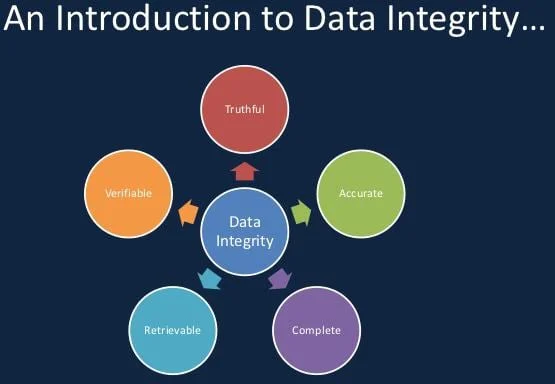
The end-user primarily interacts with the database through Create, Retrieve, Update, and Delete (CRUD) operations. Data integrity testing ensures that the most recent, accurate version of data is reflected across all system modules. A failure here is common: for instance, if a user updates their billing address on a profile page but the order history page still displays the old address, the system has failed the data integrity test.
4. Business Rule Conformity
Modern databases are no longer passive storage units. They house complex logic via stored procedures, triggers, and relational constraints. Validating these business rules is arguably the most complex part of testing. It requires testers to move beyond basic SQL queries and perform logic-heavy validation to ensure that the database enforces business policies (e.g., "a student cannot be enrolled in a class that exceeds maximum capacity") automatically.
Chronology of a Database Testing Lifecycle
The testing process follows a structured path that mirrors the development lifecycle:

- Environment Preparation: Establishing the test database, ensuring it mimics the production environment’s configuration, and populating it with realistic test data.
- Execution Phase: Running a series of SQL queries (Data Definition, Data Manipulation, and Data Control languages) to test the system’s reaction to various inputs.
- Result Validation: Comparing the actual output against the expected results derived from the Business Requirements Specification (BRS).
- Reporting and Remediation: Documenting discrepancies and collaborating with development teams to refine queries or database objects.
Practical Strategies for Modern Testers
Testing a database effectively requires a hybrid approach. The most successful QA professionals employ a combination of the following:
Manual Query Development
Writing custom SQL queries provides the most granular control over the testing process. By directly querying the database, testers can bypass the UI to check if the underlying tables are being updated correctly. This requires a deep understanding of the database schema and SQL, but it remains the most robust method for small to medium-sized applications.
Leveraging Automation
For complex or massive databases, manual testing is often insufficient. Automation tools are essential for repetitive tasks, such as verifying field constraints (Default values, Unique keys, Foreign keys). Using scripts—such as VBScript or modern Python-based automation frameworks—allows testers to quickly validate that input constraints are enforced and that unauthorized data entries are rejected.

Collaborative Validation
There is often a debate regarding whether testers should write their own queries or rely on those provided by developers. The industry consensus is a "trust but verify" model. While developers often provide the queries used in production, the tester must independently validate the logic. If a query provided by a developer is semantically flawed, relying on it blindly will result in a false sense of security.
Implications for Future Development
The rise of distributed databases and cloud-native storage systems has added new layers of difficulty to database testing. As organizations move toward microservices architectures, the "database" is often split across multiple nodes, making consistency harder to maintain.
Furthermore, Database Security Testing has emerged as a critical subset. With the increasing frequency of data breaches, verifying access control lists (ACLs), ensuring proper use of GRANT and REVOKE commands, and testing for SQL injection vulnerabilities are no longer optional—they are legal and ethical requirements.

Conclusion: The Path Forward
Database testing is far from a stagnant discipline. It is a high-stakes, technically demanding field that requires a synthesis of SQL proficiency, business acumen, and a deep understanding of software architecture.
Despite the initial belief that rigorous database testing adds overhead or creates bottlenecks, the long-term ROI is undeniable. A well-tested database prevents costly downtime, preserves customer trust, and ensures the accuracy of the data that fuels modern business decision-making. As technology continues to evolve, the demand for testers who can bridge the gap between high-level user interfaces and deep-level data structures will only continue to rise. For the modern software engineer, mastering the database is not just an advantage; it is a necessity for building the systems of tomorrow.