The Digital Revolution in Tank Management: How Smart Level Sensors are Transforming Industrial Operations
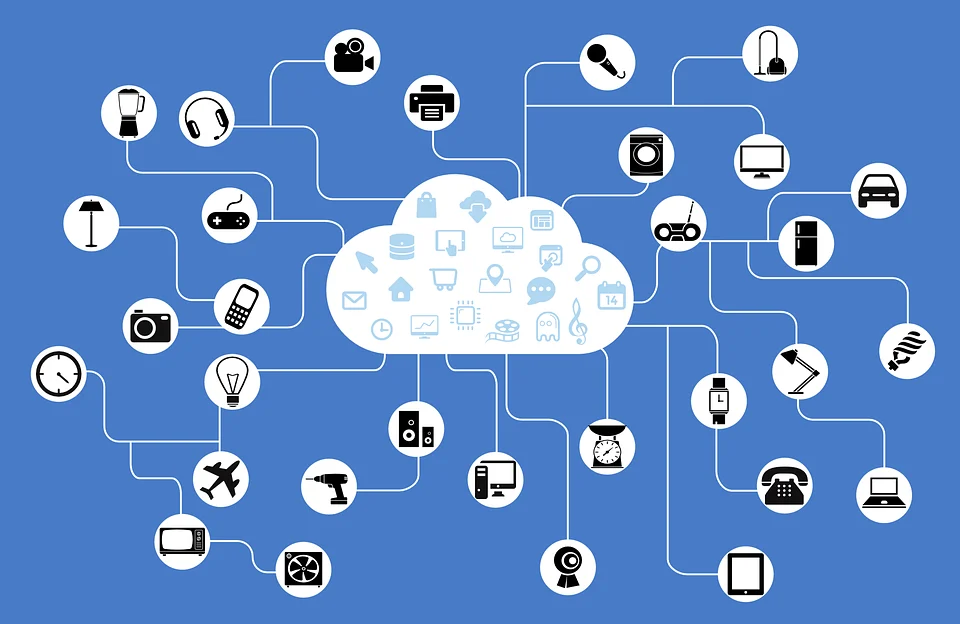
In the modern industrial landscape, the mantra is clear: efficiency, safety, and data-driven intelligence are the pillars of long-term survival. As manufacturing plants, chemical refineries, agricultural hubs, and municipal water systems strive to eliminate waste and prevent catastrophic downtime, a critical, often overlooked component has taken center stage: the modern level sensor. Once a simple mechanical tool, the level sensor has evolved into a sophisticated, IoT-enabled sentinel, fundamentally altering how industry monitors, manages, and secures its most vital resources.
The Evolution of Monitoring: From Manual Inspection to IIoT
For decades, the standard for inventory management was rudimentary. Workers were dispatched to storage tanks, silos, and reservoirs, armed with clipboards and measuring rods to manually estimate liquid or solid levels. This "boots-on-the-ground" approach was not only inefficient—leading to delayed data and human error—but it also exposed personnel to hazardous environments, from volatile chemical containers to unstable remote water treatment sites.
Today, the Industrial Internet of Things (IIoT) has dismantled this archaic model. By integrating advanced sensing hardware with wireless connectivity and cloud-based analytics, industries have transitioned from reactive, manual reporting to a model of proactive, real-time visibility. This shift represents a paradigm change: operators no longer "check" levels; they observe them continuously via centralized dashboards, receiving automated alerts the moment a threshold is crossed.
Chronology of Technological Adoption
The adoption of smart level monitoring has followed a distinct path, mirroring the broader industrial shift toward digitalization:
- The Analog Era (Pre-2000s): Dependence on manual float switches, physical dipsticks, and sight glasses. Maintenance was strictly scheduled, leading to either unnecessary inspections or dangerous "run-out" scenarios.
- The Automation Transition (2000–2010): The introduction of wired PLC (Programmable Logic Controller) systems. While this allowed for centralized control, the high cost of trenching and cabling limited deployments to high-value, stationary assets.
- The Wireless Surge (2010–2020): The emergence of cellular and early Wi-Fi-based sensors. This period saw the first successful deployments of remote monitoring in agriculture and energy, though power consumption remained a significant hurdle.
- The IIoT Intelligence Age (2020–Present): The current era, characterized by low-power wide-area networks (LPWAN) like LoRaWAN and NB-IoT. These technologies allow sensors to run on batteries for years, enabling deployment in even the most remote, off-grid locations.
Supporting Data: Why Industries Are Investing
The business case for upgrading to smart level monitoring is grounded in concrete operational improvements. Industry analysts suggest that companies implementing IIoT-enabled level sensors typically see a 15–20% reduction in inventory carrying costs and a significant decrease in "emergency" supply chain logistics.
- Hazard Mitigation: By reducing the need for site visits, organizations have reported a 30% reduction in workplace incidents associated with confined spaces or remote travel.
- Asset Utilization: Smart monitoring provides the "granular visibility" necessary to optimize delivery schedules. Instead of "just-in-case" deliveries, logistics managers can shift to "just-in-time" models, reducing truck rolls and carbon emissions.
- Downtime Prevention: In chemical processing, a failure to detect a low-level state can result in pump cavitation and costly equipment failure. Modern radar and ultrasonic sensors provide accuracy to within a millimeter, ensuring that pump protection systems engage long before damage occurs.
Real-World Applications: Municipal Water and Beyond
The most compelling case study for this technology is found in municipal water management. Cities worldwide are grappling with aging infrastructure and the need for sustainable resource management.
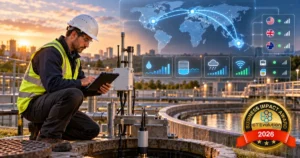
By deploying sensor networks across reservoirs, stormwater basins, and pumping stations, utility managers can now monitor the entire lifecycle of water distribution. In flood-prone urban centers, these sensors serve as early warning systems. When water levels in drainage basins approach overflow thresholds, the system automatically triggers alerts to municipal authorities, allowing for preemptive flood mitigation and resource mobilization.
Similarly, in the oil and gas sector, the adoption of radar-based level sensors has become a standard for safety compliance. In remote pipeline environments, constant surveillance of storage infrastructure prevents environmental disasters by detecting leaks through mass-balance calculations—if the inventory drops unexpectedly without a recorded outflow, the system automatically shuts down the line.
Technical Deep-Dive: Radar vs. Ultrasonic
As the technology matures, the industry has shifted away from contact-based sensors toward non-contact solutions.
Radar-based level sensors have gained significant market share due to their immunity to environmental factors. Unlike float-based systems, which can become fouled by viscous materials or damaged by turbulence, radar transmitters use high-frequency radio waves to measure distance. They remain unaffected by temperature fluctuations, dust, or vapor pressure, making them the gold standard for harsh industrial environments.
Ultrasonic sensors, conversely, remain the preferred solution for cost-sensitive, clean-liquid applications. They are easy to install and provide excellent performance in non-hazardous, standard-temperature settings. The key, according to engineers, is the integration of these sensors into the broader IIoT architecture. Modern transmitters now support communication protocols like Modbus and LTE, allowing them to feed data directly into enterprise resource planning (ERP) software.
Official Industry Perspectives: The Road to Autonomy
Industry leaders and manufacturers of sensor hardware emphasize that the technology is no longer just about measurement—it is about predictive maintenance.
"The sensor is the eyes, but the AI is the brain," says one lead engineer at a prominent industrial sensor firm. "By using machine learning algorithms to analyze historical level data, we can now predict exactly when a tank will reach a critical level based on consumption patterns. This removes the guesswork from supply chain management."
This perspective is echoed by sustainability officers who note that smart monitoring is essential for ESG (Environmental, Social, and Governance) goals. By optimizing the fill-levels of chemical and fuel tanks, companies can significantly reduce their carbon footprint by eliminating inefficient transport and preventing spills.
Challenges to Widespread Integration
Despite the clear benefits, the path to full-scale digital transformation is not without obstacles:
- Cybersecurity: As sensors become connected devices, they become potential entry points for network breaches. Manufacturers are now prioritizing "security-by-design," utilizing end-to-end encryption for all sensor data transmission.
- Interoperability: Integrating legacy infrastructure—tanks that have been in service for 40 years—with modern cloud platforms remains a technical challenge. Retrofitting these assets often requires specialized gateways that translate legacy signals into modern data formats.
- Connectivity Gaps: While LPWAN technologies have solved many range issues, there remain "black zones" in deep rural or mountainous areas. The ongoing expansion of satellite-based IoT (such as Starlink-integrated sensors) is currently the primary solution being tested to bridge this final gap.
Implications for the Future: The Autonomous Facility
The trajectory of level sensor technology is moving toward full autonomy. We are approaching an era where industrial sites will not only monitor themselves but also manage their own procurement. Imagine a chemical storage tank that, upon sensing its own depletion, automatically communicates with a supplier’s logistics system to schedule a delivery, generates a purchase order, and adjusts its own internal pump settings to optimize the inflow—all without a single human keystroke.
This shift toward the "Autonomous Facility" will redefine the roles of industrial workers. Rather than performing manual inspections, technicians will transition into system analysts and maintenance specialists who oversee the health of the monitoring network itself.
Conclusion
The modern level sensor has transcended its origins as a mere measurement tool to become the bedrock of the Industrial IoT ecosystem. By providing real-time, actionable data, these devices enable companies to navigate the complexities of the 21st-century supply chain with unprecedented agility.
Whether it is a municipal water department preventing a flood, an agricultural farm optimizing irrigation to conserve water, or a refinery ensuring safety through remote monitoring, the value proposition is universal: data beats speculation. As we look toward the future, the integration of AI-driven analytics and advanced sensor technology will continue to separate market leaders from those tethered to the manual, reactive methods of the past. For businesses looking to scale, modernize, and thrive, the investment in smart, connected level monitoring is no longer an optional upgrade—it is a competitive necessity.