The Monetization Frontier: AWS WAF Introduces Direct Billing for AI Bot Traffic
In a landmark shift for the digital economy, Amazon Web Services (AWS) has officially launched an AI traffic monetization capability within its AWS WAF (Web Application Firewall) service. This development marks the first time content publishers can programmatically charge AI bots and automated agents for accessing protected web content directly at the network edge.
As artificial intelligence models evolve from simple search indexers into sophisticated data-hungry agents, the infrastructure burden on content creators has skyrocketed. With this new suite of tools, AWS is providing a mechanism to rebalance the value exchange between those who create content and the entities that train AI upon it.
The State of the Web: AI’s Consumption Crisis
For years, the internet operated under a symbiotic "crawl-for-referral" model. Traditional search engine crawlers would index a webpage and, in return, provide the publisher with valuable traffic—clicks, ad impressions, and user engagement. However, the rise of Large Language Models (LLMs) and generative AI has fundamentally broken this cycle.
The 50% Milestone
Recent industry data indicates that AI bot traffic now accounts for more than 50% of total web traffic for many major content providers. Even more startling is the trajectory of this growth: AI-specific crawlers are expanding at a rate exceeding 300% year-over-year. Unlike the search crawlers of the past, these modern AI agents consume vast quantities of data to generate summaries, answers, and synthetic content directly within AI interfaces.
This behavior leaves publishers in a precarious position: they bear the full cost of infrastructure, server bandwidth, and content creation, while the "consumer"—the AI bot—returns little to no measurable traffic back to the original source. This "value extraction" without compensation has become a central tension in the digital media landscape, forcing publishers to either block bots entirely or accept the mounting costs of free data harvesting.
A Technical Solution at the Edge
AWS WAF’s new monetization capability acts as an intermediary, allowing publishers to reclaim control. By integrating directly into the network edge, AWS allows site owners to enforce "Payment Required" policies without modifying their origin infrastructure or deploying custom application code.
How the Mechanism Works
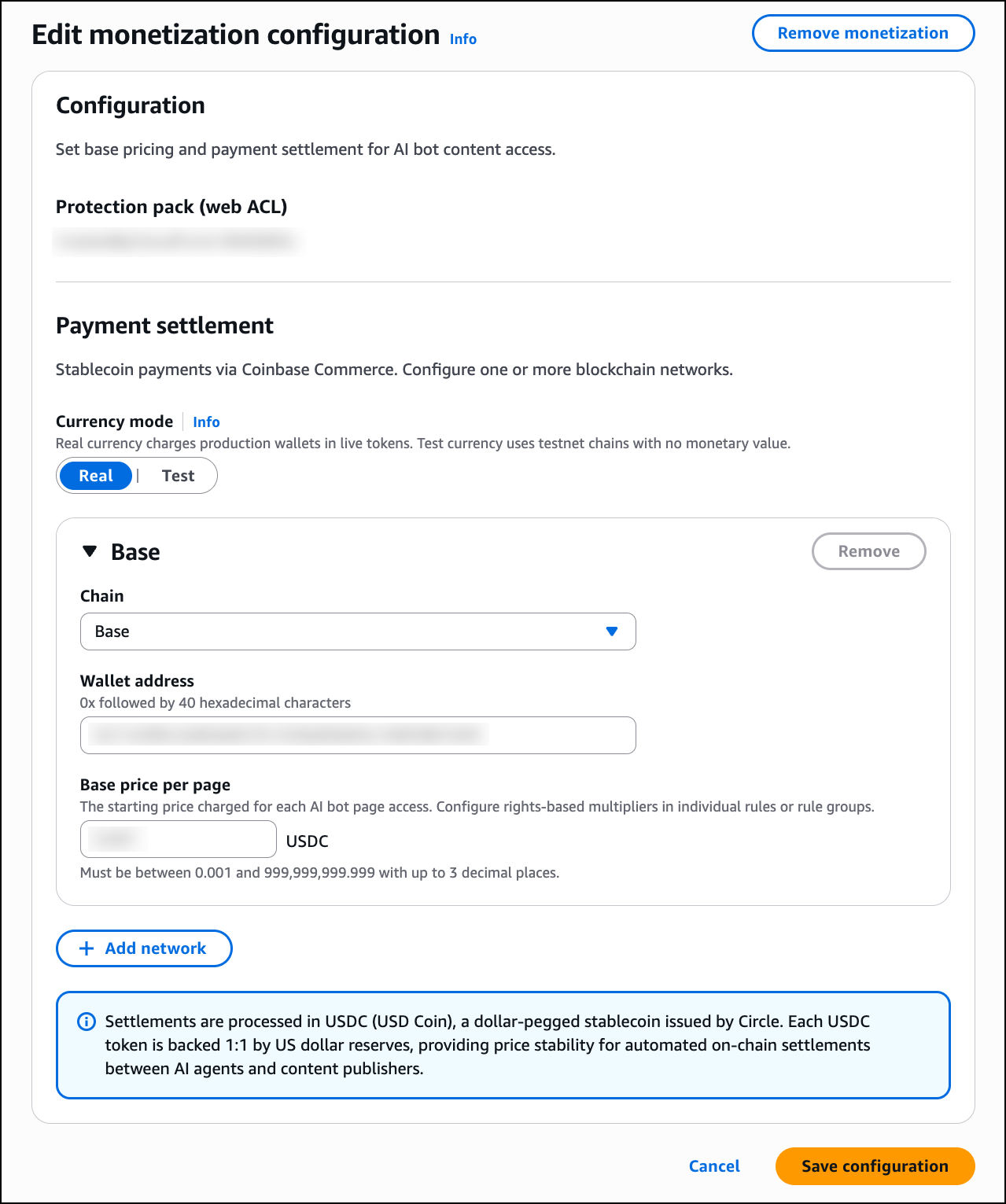
The system leverages the HTTP 402 "Payment Required" status code. When an AI bot attempts to scrape a protected path, AWS WAF intercepts the request and responds with a machine-readable price manifest in JSON format. This manifest, built on the x402 open protocol, specifies the cost in USDC (a stablecoin), the supported blockchain networks (such as Base or Solana), and the destination wallet address.
For an AI developer, the integration is designed to be autonomous. An x402-compatible agent can receive this manifest, execute a payment authorization on the blockchain, and, once verified by the WAF, gain seamless access to the requested content. This process removes the need for publishers to negotiate thousands of individual licensing agreements or build complex billing backends.

Chronology and Implementation: A Step-by-Step Guide
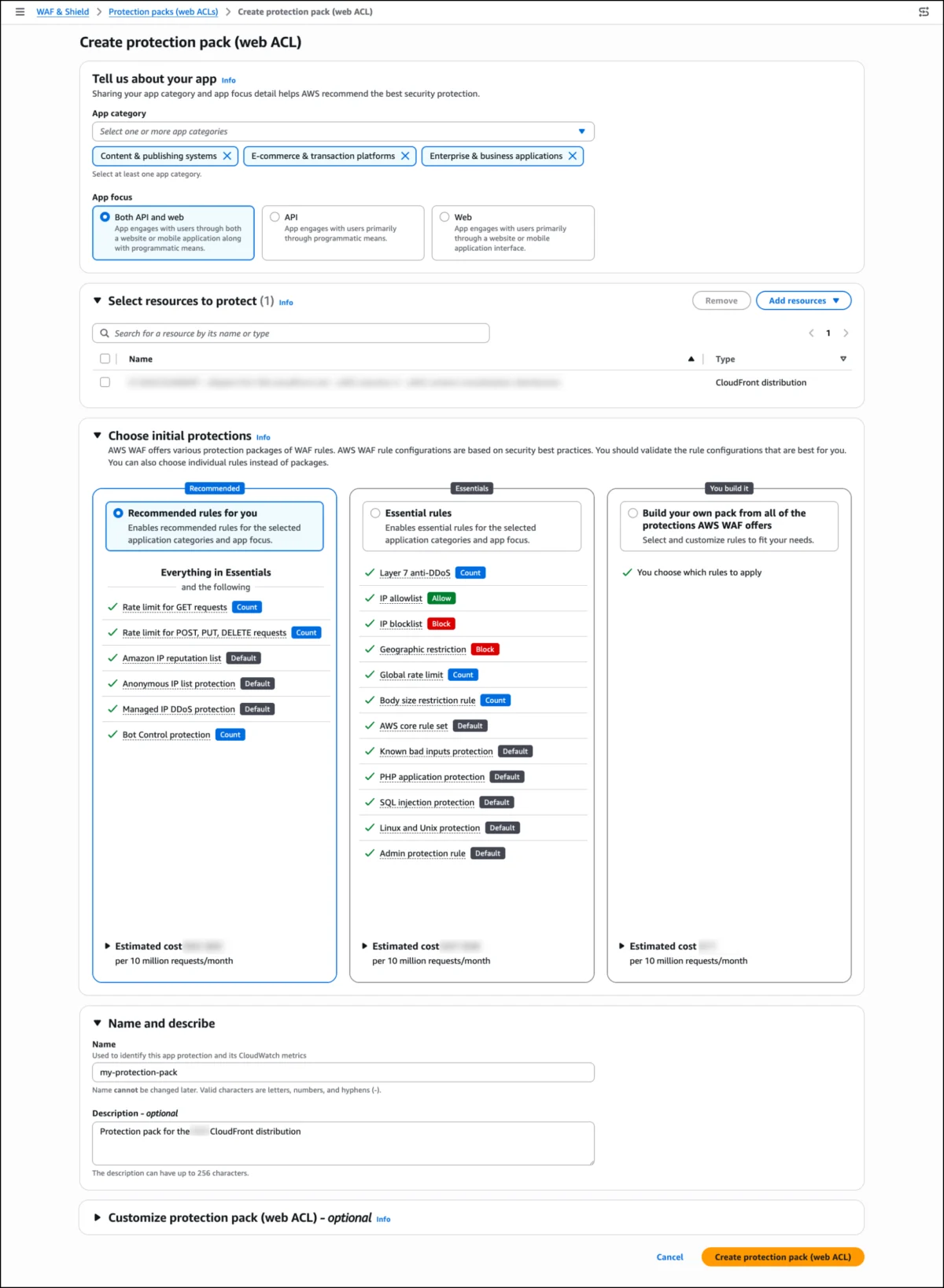
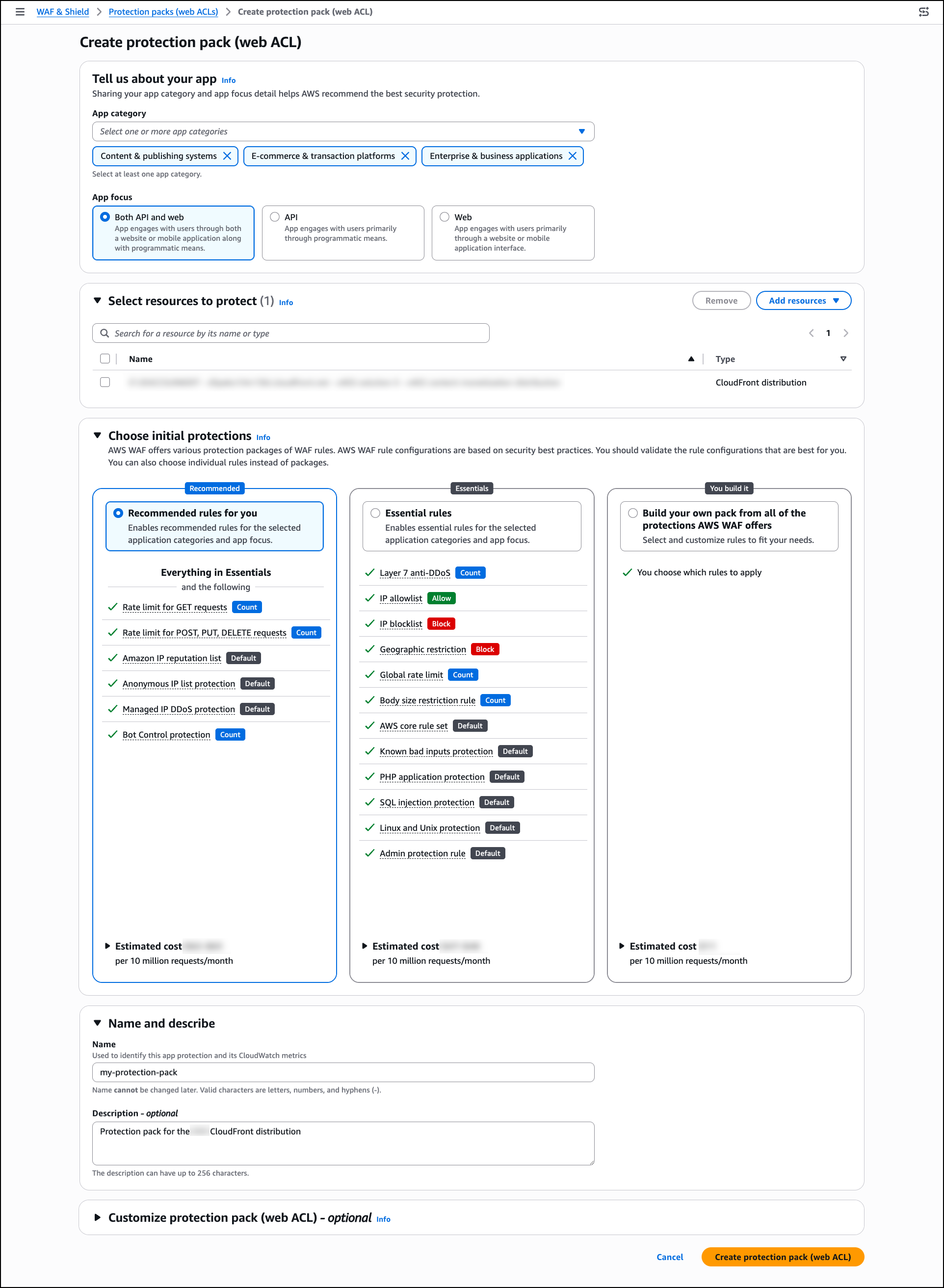
The deployment of this system is integrated into the existing AWS WAF and Shield console. For organizations looking to implement these protections, the workflow is structured around "Protection Packs."
Phase 1: Configuration and Visibility
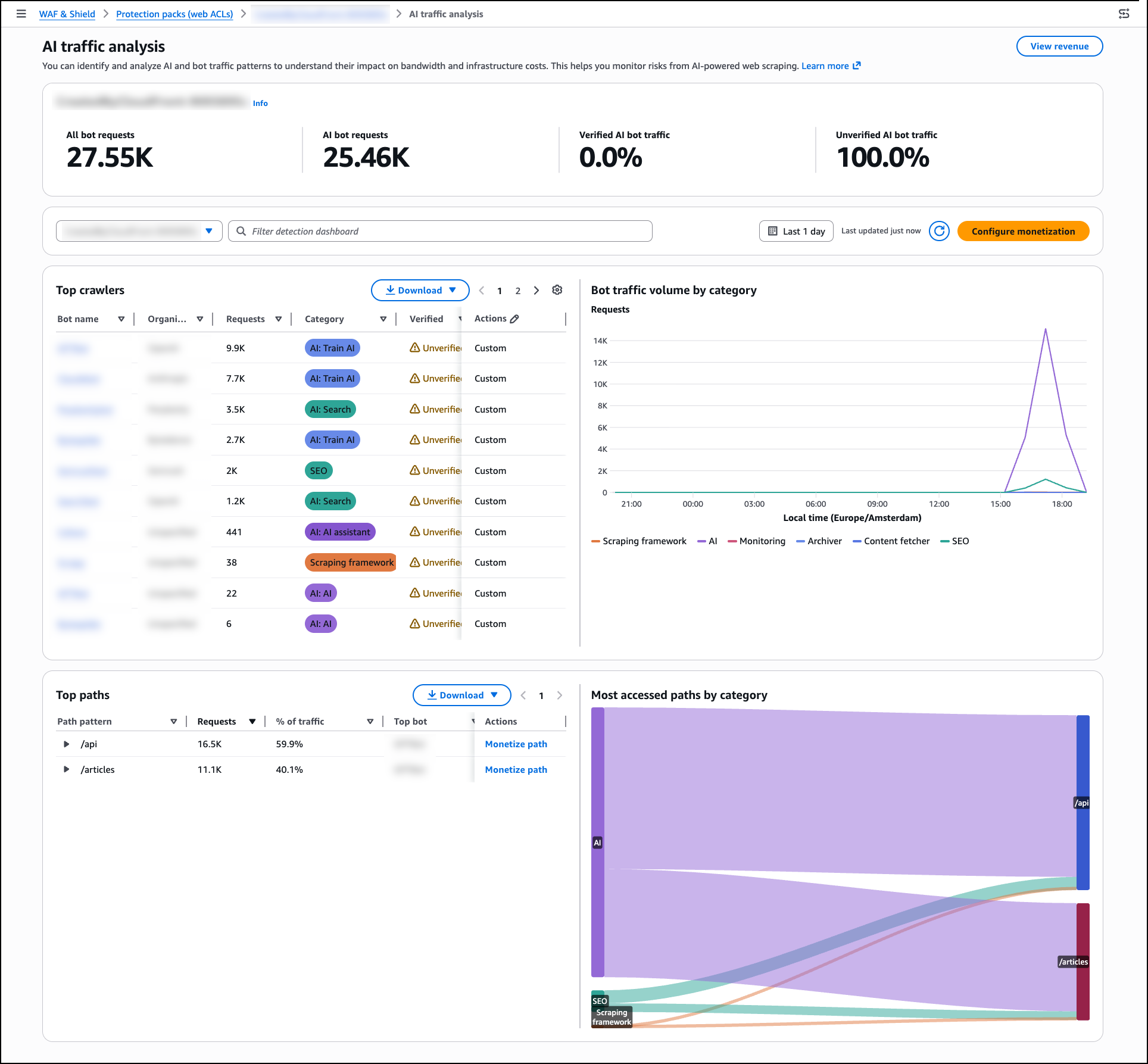
Before charging for access, administrators must enable AWS WAF Bot Control. This system is already capable of classifying over 650 distinct bot and agent types, including prominent entities like GPTBot, Claude-Web, and Perplexity-Bot. Once enabled, the AI traffic analysis dashboard provides deep insights into how much bandwidth and cost each bot category is consuming.
Phase 2: Defining the Rules
Using the Protection Pack interface, publishers can define granular policies:
- Monetize: Triggers the 402 payment flow.
- Allow: Grants free access.
- Block: Denies access entirely.
- Challenge/CAPTCHA: Forces verification of the client’s nature.
By creating multiple protection packs, a publisher could, for example, charge a premium rate for high-value research data while allowing free access to basic public-facing information.
Phase 3: The Test Environment
AWS has included a "Currency Mode" toggle to allow for safe testing. By switching to "Test" mode, developers can simulate the entire payment flow using testnets (like Base Sepolia or Solana Devnet) and faucets. This ensures that the technical handshake—the manifest delivery, the wallet integration, and the verification—is flawless before a single dollar of real currency is at stake.
Supporting Data: Analytics and Revenue Reconciliation
The power of the new system lies in its transparency. The AI Access Monetization dashboard is not merely a gatekeeper; it is a sophisticated analytics suite. Publishers can track:
- Total Revenue: Broken down by verified versus unverified bot traffic.
- Top Revenue Sources: Identifying which specific AI agents are generating the most value.
- Path Ranking: A heatmap illustrating exactly which content paths are most attractive to AI crawlers, allowing for data-driven pricing adjustments.
The "Settlements" tab provides a full ledger for reconciliation, allowing financial teams to track payment methods and investigate failed transaction attempts. This level of granular financial reporting is unprecedented for edge-level security services.
Official Stance and Future Roadmap
While AWS currently facilitates the infrastructure, the company has clarified its neutral position: AWS does not process the payments itself, nor does it levy a "tax" on the revenue generated. The disbursement is entirely self-managed by the publisher through their preferred wallet provider.
The Road Ahead
The current iteration supports blockchain-based settlements, primarily utilizing Coinbase’s x402 Facilitator. However, the roadmap for the service is aggressive. AWS has confirmed that integration with Stripe for traditional fiat-based account payments and broader support for the Machine Payments Protocol (MPP) are currently in development. These upcoming features are expected to lower the barrier to entry for enterprises that may not yet be equipped to handle blockchain-based treasury operations.
Implications for the AI Ecosystem
The introduction of this tool has profound implications for the future of the internet.
1. The End of the "Free Lunch" Era
For the last decade, AI developers have enjoyed a "wild west" era of data acquisition. By making the cost of scraping explicit, AWS is effectively forcing AI companies to put a price on the data they ingest. This could lead to a two-tiered internet: one where high-quality, verified data is "paid-access" for AI, and another where low-value, noisy data remains free.
2. A New Revenue Stream for Publishers
For struggling digital publishers, this could represent a vital new revenue stream. Rather than relying solely on advertising or subscription models—both of which are increasingly undermined by AI summaries—publishers can now capture value from the very machines that are threatening their traditional business models.
3. Standards for Machine-to-Machine Payments
By championing the x402 protocol, AWS is helping to standardize how machines negotiate value. If this protocol gains widespread adoption, it could simplify not just content scraping, but a host of micro-transactional interactions between autonomous agents, from API calls to data processing tasks.
4. Regulatory and Legal Considerations
While the technology provides a technical solution, it does not bypass the legal complexities of copyright law. Publishers must still decide whether accepting a payment from an AI bot constitutes a "license" to use the content for training. However, the ability to block or rate-limit these bots via the same dashboard provides a dual-layer strategy: legal enforcement where necessary, and market-based monetization where possible.
Conclusion
AWS WAF’s new AI traffic monetization capability represents a significant turning point in the relationship between human-generated content and artificial intelligence. By shifting the power dynamic from "unauthorized extraction" to "negotiated access," AWS has provided a pragmatic, scalable, and technologically sound path forward. As this feature rolls out across CloudFront distributions globally, the digital economy may finally have the tools required to ensure that the creators of tomorrow’s intelligence are compensated for the work of yesterday.