Revolutionizing Relational Data: A Deep Dive into TensorFlow GNN 1.0
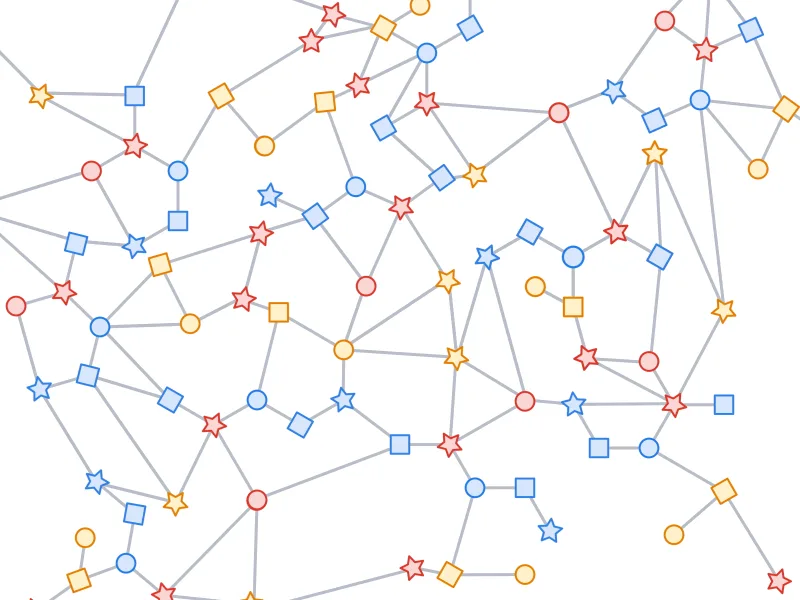
In the modern era of data science, the world is increasingly defined not by isolated data points, but by the complex, invisible threads that connect them. Whether mapping the intricate pathways of a neural network in the brain, tracking the logistical flow of global supply chains, or identifying communities within massive social networks, understanding relationships is as vital as analyzing the objects themselves.
To address this, Google has officially released TensorFlow GNN 1.0 (TF-GNN), a robust, production-grade library designed to bring the power of Graph Neural Networks (GNNs) to the scale of modern industrial applications. Developed through a cross-departmental collaboration between Google Research, Core ML, and DeepMind, this release marks a significant milestone in bridging the gap between discrete graph-based structures and the continuous world of deep learning.
Main Facts: What is TF-GNN?
At its core, TF-GNN is a specialized library built within the TensorFlow ecosystem that allows developers to model, train, and deploy neural networks on graph-structured data. Historically, machine learning (ML) has favored "regular" data structures—such as the uniform grids of pixels in images or the linear sequences of words in text. Graphs, by contrast, are irregular, consisting of nodes (objects) and edges (relationships) that vary in connectivity and density.
TF-GNN addresses this by introducing the tfgnn.GraphTensor, a sophisticated, first-class composite tensor that encapsulates both the graph’s structure and the features attached to its nodes and edges. By treating these structures as primary citizens within tf.data.Dataset and tf.function, the library allows researchers and engineers to manipulate complex relational data with the same ease as traditional tensor operations.
The library is explicitly designed for heterogeneous graphs, where different types of nodes and edges exist within the same system. In a real-world database—such as a citation network of academic papers—there are distinct entities (authors, papers, journals) and distinct relationships (authored, cited, published in). TF-GNN handles these variations natively, allowing for more accurate and nuance-aware models.

Chronology: The Evolution of Graph Learning
The journey to TF-GNN 1.0 was not an overnight success but the culmination of years of academic and practical research into relational learning.
- Pre-2015: Early graph-based algorithms like DeepWalk and Node2Vec laid the groundwork by demonstrating that graph connectivity could be translated into vector representations, allowing for basic predictive tasks.
- 2015–2019: The emergence of Message Passing Neural Networks (MPNNs) began to formalize the idea that nodes could "communicate" with neighbors, iteratively updating their internal states to reflect their local context.
- 2020–2022: As the industry recognized the limitations of standard neural networks on non-Euclidean data, Google teams began prototyping a unified framework that could handle the scale of billions of edges. During this time, the foundational principles of
GraphTensorwere developed. - 2023: Beta iterations of the GNN library were tested internally across various Google product surfaces, refining the efficiency of subgraph sampling—the process of breaking down massive, unmanageable graphs into smaller, trainable segments.
- February 2024: The official launch of TF-GNN 1.0. This release signifies that the library has moved from an experimental research tool to a production-ready software suite, complete with documentation, tutorials, and a stable API for the global developer community.
Supporting Data and Technical Architecture
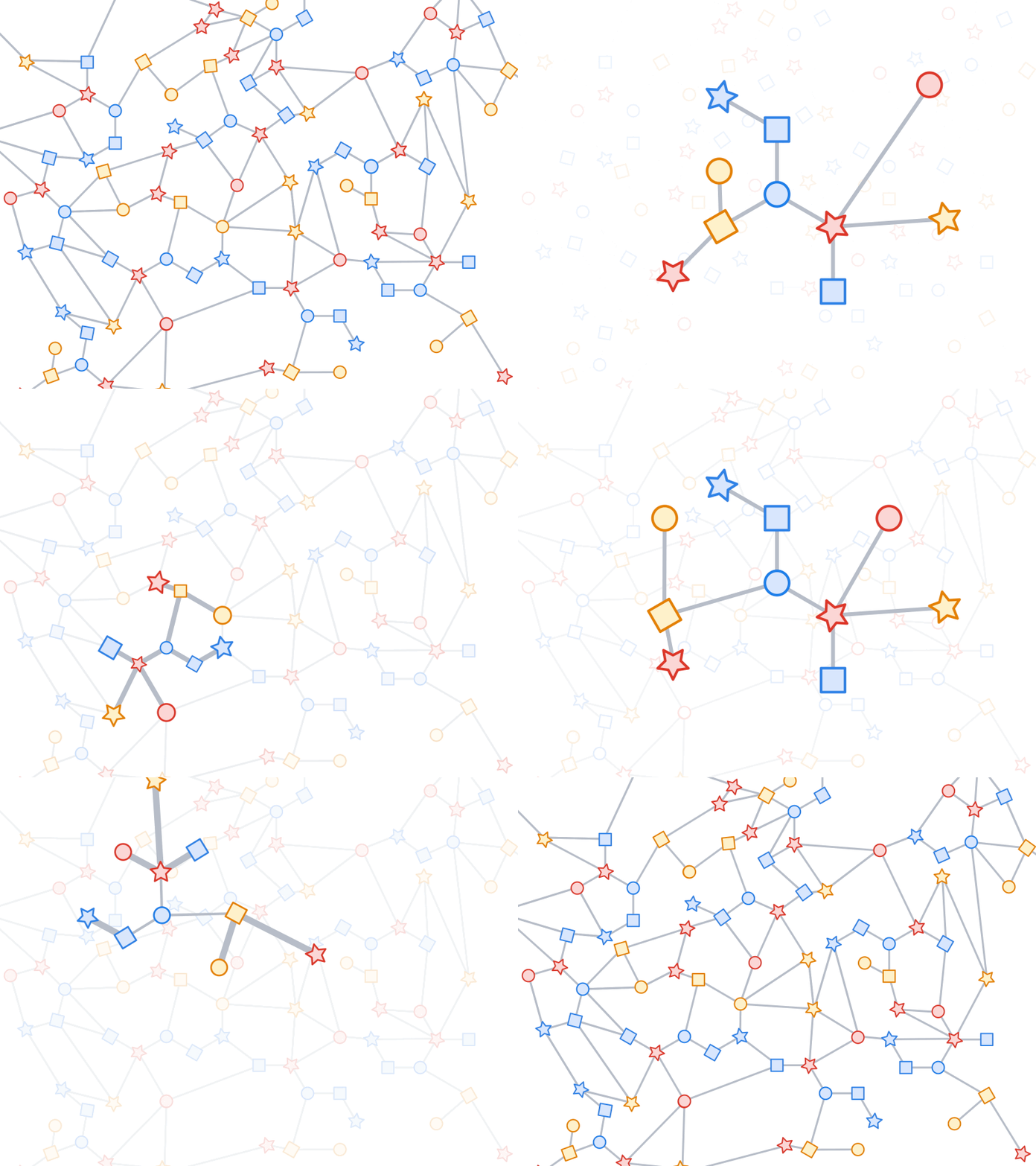
The technical brilliance of TF-GNN 1.0 lies in its approach to subgraph sampling. Training a neural network on a graph with millions of nodes is computationally prohibitive. To solve this, TF-GNN employs a dynamic sampling strategy. Rather than training on the entire graph, the library samples small, tractable subgraphs that contain sufficient context for a specific task.
The Power of Dynamic Sampling
TF-GNN offers three distinct modes of sampling, catering to different scales of data:
- Interactive Sampling: Designed for exploration and prototyping within Colab notebooks.
- In-Memory Sampling: Optimized for small-to-medium datasets that fit within the main memory of a single host.
- Distributed Apache Beam Sampling: A powerhouse solution for "Big Data," capable of handling hundreds of millions of nodes and billions of edges by distributing the workload across a cluster.
Message Passing and Latent States
Once a subgraph is sampled, the GNN initiates "message passing." In each round, a node aggregates information from its neighbors. After n rounds, the hidden state of a node effectively "knows" about all other nodes within n hops. By layering these operations, TF-GNN allows developers to build deep, expressive models that capture both local features and global graph topology.
Official Responses and Expert Perspectives
The release is framed by the developers—Dustin Zelle, Arno Eigenwillig, and their extensive team—as a democratization of advanced graph techniques. In their official communication, they emphasized that TF-GNN is not just about building models, but about "bridging the chasm" between discrete relational information and the continuous representation required for modern AI systems.
"We are excited to announce the release of TensorFlow GNN 1.0," the team noted in the release announcement. "It is built from the ground up for heterogeneous graphs… to advance the application of GNNs in TensorFlow at scale and fuel further innovation in the field."
The project’s collaborative nature—spanning Google Research, Core ML, and DeepMind—underscores the strategic importance of this technology. By integrating with the high-level Keras API, the team ensured that developers could transition to graph-based deep learning without needing to abandon their existing workflows or learn entirely new frameworks from scratch.
Implications for the Future of Machine Learning
The release of TF-GNN 1.0 has profound implications for the trajectory of artificial intelligence.
1. Beyond Standard AI
Traditional deep learning is often described as "feature-blind" to the relationships between entities. A recommendation system using standard neural networks might look at a user’s purchase history, but a GNN-based system can look at the network of products, identifying how a user’s interest in one niche item relates to their potential interest in a distant, seemingly unrelated product through a complex chain of social and categorical connections.
2. Industry-Wide Applications
The ability to process large-scale heterogeneous graphs is expected to accelerate progress in several key sectors:
- Drug Discovery: Modeling the interactions between molecules, where the "graph" is the chemical structure and the "prediction" is the efficacy of a potential treatment.
- Knowledge Graphs: Enhancing search engines and digital assistants by mapping the semantic relationships between concepts in the world’s knowledge base.
- Cybersecurity: Detecting fraudulent behavior by identifying anomalous patterns within massive, interconnected transaction networks.
3. Interpretability and Trust
One of the most innovative features included in the 1.0 release is the built-in support for integrated gradients. By visualizing which edges or features contributed most to a model’s prediction, developers can gain a "peek" into the "black box" of the neural network. This transparency is critical for building trust in AI systems, particularly in sensitive fields like healthcare or finance.
4. A New Standard for Developers
By providing a "Runner" that manages the complexities of distributed training, padding, and model orchestration, TF-GNN reduces the barrier to entry. This will likely lead to an influx of GNN-based solutions in the open-source community, as developers move from using basic, ad-hoc graph scripts to robust, standardized architectures.
Conclusion
TensorFlow GNN 1.0 is more than just a library; it is a foundational infrastructure for the next generation of relational intelligence. By synthesizing the discrete nature of graphs with the fluid, continuous learning capabilities of deep neural networks, Google has provided the tools necessary to unlock the latent potential within the world’s most complex datasets. As organizations move beyond simple pattern recognition toward a deeper, structural understanding of their data, the adoption of tools like TF-GNN will likely become a requirement for staying at the forefront of the artificial intelligence revolution. For those ready to begin, the extensive documentation, Colab notebooks, and research papers accompanying the release serve as a comprehensive roadmap into the fascinating, interconnected world of graph neural networks.