The Bedrock of Reliability: A Comprehensive Guide to Modern Database Testing
In the contemporary digital landscape, software applications have evolved into highly intricate ecosystems. From the ubiquity of mobile applications to the massive scale of enterprise-level cloud platforms, the complexity of the "front end"—the interface users interact with—is matched, and often surpassed, by the complexity of the "back end." At the heart of this architecture lies the database, the silent engine that powers everything from simple retail transactions to the critical systems governing healthcare, finance, and aerospace navigation.
As software systems grow in sophistication, the imperative to ensure the security, integrity, and performance of these databases has never been greater. Database testing is no longer a peripheral task; it is a fundamental pillar of quality assurance (QA) that ensures data is accurate, consistent, and resilient under pressure.
Main Facts: The Anatomy of Database Testing
At its core, database testing is the process of verifying that the data stored in a database is accurate, secure, and functions as expected within the context of an application. It is not merely about checking the data entries; it is about validating the structure, the logic, and the reliability of the data lifecycle.

Modern applications often deal with "Big Data"—datasets so large and complex that traditional relational database management systems (RDBMS) struggle to process them. Consequently, testers must now be familiar with a diverse array of tools, including MySQL, PostgreSQL, Oracle, and MS SQL Server, each with its own unique performance characteristics, security features, and cost structures.
The Core Pillars of Validation
To effectively validate a database, testers must focus on four critical areas:
- Data Mapping: Ensuring that data flows seamlessly between the user interface and the backend. Every field must be accurately mapped to its corresponding database column.
- ACID Properties: Validating that every transaction adheres to the principles of Atomicity, Consistency, Isolation, and Durability.
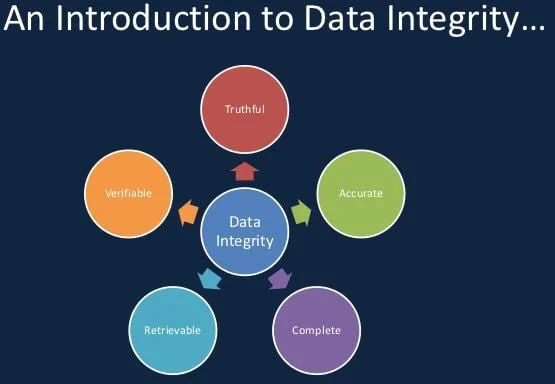
- Data Integrity: Ensuring that the most recent, accurate values are reflected across all modules, forms, and screens of the application.
- Business Rule Conformity: Verifying that complex constraints, triggers, and stored procedures function precisely according to the business logic.
Chronology: The Evolution of Database Validation
The methodology of database testing has undergone significant shifts in the last decade. Historically, testing was a largely manual affair, characterized by ad-hoc SQL queries executed by developers.

- The Early Era: Database testing was primarily focused on simple schema validation. If the table existed and data could be inserted, the database was considered "tested."
- The Mid-Development Phase: As applications grew, the industry moved toward formalizing CRUD (Create, Retrieve, Update, Delete) testing. This period saw the rise of systematic checks for referential integrity and basic stored procedures.
- The Modern Era: Today, database testing is deeply integrated into the CI/CD (Continuous Integration/Continuous Deployment) pipeline. Automated testing tools, performance monitoring, and security-focused stress tests are now standard. Developers and testers now use sophisticated automation scripts (such as those written in VBScript or Python) to validate constraints and default values at scale.
Supporting Data: Understanding the Testing Checklist
Effective database testing requires a rigorous checklist to ensure no stone is left unturned.
Transactions and the ACID Test
A transaction is a logical unit of work. Testing them involves confirming that the database remains in a consistent state even when failures occur.
- Atomicity: Ensures that a transaction is "all or nothing." If one part of a sequence fails, the entire transaction is rolled back.
- Consistency: Guarantees that a transaction takes the database from one valid state to another.
- Isolation: Ensures that concurrent transactions do not interfere with one another.
- Durability: Confirms that once a transaction is committed, it remains so, regardless of system crashes or power failures.
The Role of Triggers and Stored Procedures
Triggers are event-driven pieces of code. Testing them involves both black-box and white-box approaches. For instance, if a new student is added to a "Student" table, a trigger might automatically populate the "Courses" table. A tester must verify this by:

- Executing the trigger’s SQL code independently.
- Performing an action on the UI and verifying the database reflection.
- Loading raw data directly into the database to ensure the trigger fires correctly.
Field Constraints
Constraints act as the guardrails for data. Validating them involves:
- Default Values: Ensuring that if a user leaves a field blank, the system applies the correct default.
- Unique Values: Attempting to insert duplicate data into a field that requires uniqueness to see if the system correctly rejects the input.
- Foreign Keys: Ensuring that relationships between tables are maintained and that orphaned records are not created.
Official Responses and Industry Best Practices
Industry experts emphasize that while there are automated tools available, the human element—specifically the ability to write and understand SQL—remains the most important skill for a database tester.
The "How-To" Process
The standard process for database testing follows a disciplined five-step lifecycle:

- Environment Preparation: Set up the test database, ensuring it mirrors production data structures.
- Test Execution: Run the specific test case (e.g., a CRUD operation).
- Result Verification: Retrieve the data from the database using
SELECTstatements. - Validation: Compare the actual results against the expected results defined in the Business Requirements Specification (BRS).
- Reporting: Log any discrepancies or bugs to stakeholders.
Strategic Tips for Testers
- Write Your Own Queries: While developers can provide queries, writing your own forces a deeper understanding of the database structure and ensures the validation is truly objective.
- Use SQL Analyzers: For small-to-medium complexity applications, manual query execution via SQL Query Analyzers is often the most robust testing method.
- Leverage Automation Wisely: For high-frequency, repetitive testing, utilize specialized database testing tools. However, ensure that these tools are not treated as a "black box" that masks potential logic errors.
- Consult Developers for Complexity: When dealing with highly complex, multi-join queries or legacy stored procedures, collaboration with developers is essential to avoid misinterpretation of the underlying architecture.
Implications: The Future of Database Quality
The shift toward cloud-native databases and distributed ledger technologies means that database testing is only going to become more critical. The implications of poor database testing are severe: data breaches, financial loss, system downtime, and loss of customer trust.
Why Quality Matters
A database is the single source of truth for an organization. If the integrity of that data is compromised, the entire software application becomes unreliable. For sectors like banking, where a single transaction error can have massive legal and financial ramifications, database testing is a non-negotiable insurance policy.
Conclusion
Database testing is a domain that requires a blend of technical prowess, attention to detail, and a deep understanding of business requirements. While it is often perceived as a "bottleneck" that adds to development costs, it is, in reality, the primary guardrail against the catastrophic failures that can plague modern software. As technologies evolve, the testers who master the art of SQL, understand the nuances of ACID properties, and embrace automated validation will be the ones who ensure the longevity and stability of the digital systems upon which our world depends.

The complexity of our applications will continue to rise, but by maintaining a disciplined, rigorous, and informed approach to database testing, organizations can ensure that their back-end infrastructure remains as solid as the foundation of a skyscraper.