Reinventing Retro: The Journey of Building a Classic PC from the Silicon Up
Eindhoven, Netherlands – June 29, 2026 – In the vibrant and ever-evolving world of retrocomputing, enthusiasts often find themselves on a relentless quest, scouring online classifieds, haunting local swap meets, and sifting through dusty attics in pursuit of elusive vintage parts and machines. This arduous endeavor, while rewarding, frequently presents challenges ranging from component scarcity and escalating costs to the inherent unreliability of decades-old hardware. However, a groundbreaking approach to this passion has emerged, championed by a renowned figure in the hacking community, offering a stark alternative to the traditional hunt: building a classic retro PC from the ground up, starting with bare chips and a blank circuit board.
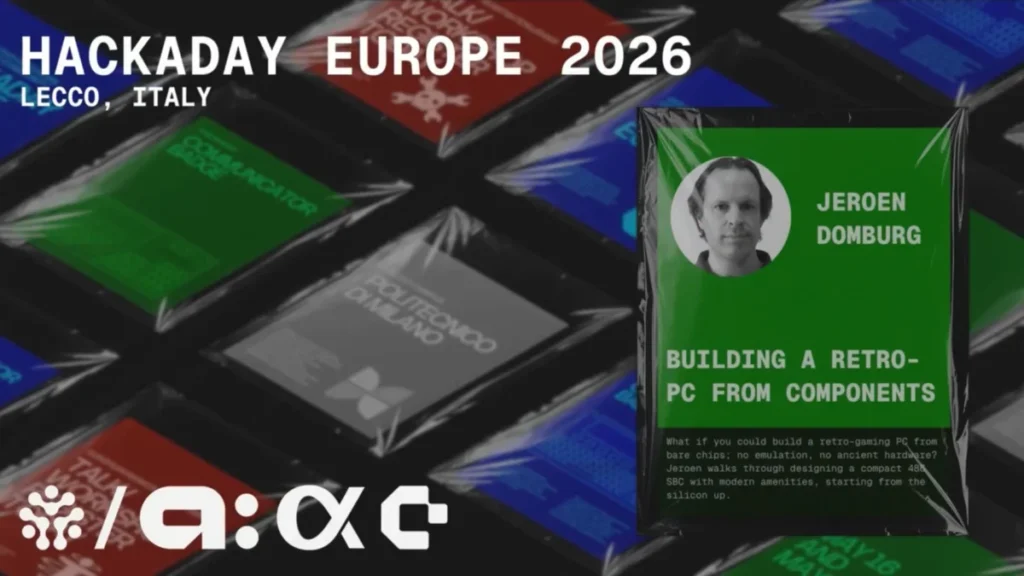
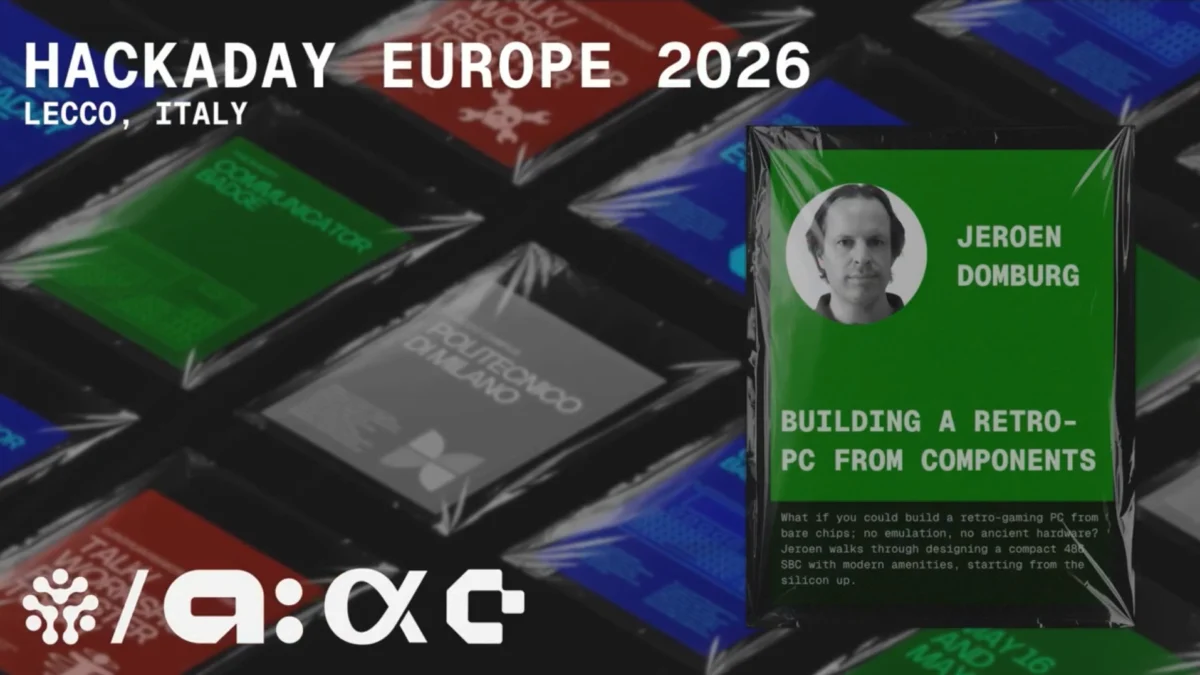
This audacious vision was brought to life by Jeroen Domburg, widely known by his influential alias, [sprite_tm]. A veteran of countless innovative projects—from miniaturizing iconic hardware to reverse-engineering undocumented commercial systems—Domburg recently captivated attendees at Hackaday Europe 2026. His presentation unveiled an extraordinary feat of engineering: the meticulous, component-level construction of a powerful retro gaming PC, a project that transcends mere emulation or assembly of vintage parts, offering an unparalleled deep dive into the very essence of computing history.
Domburg’s endeavor is not merely about recreating a past experience; it is about deconstructing, understanding, and then meticulously rebuilding that experience, piece by digital piece. His work signifies a profound shift in how the retrocomputing community might approach the preservation and enjoyment of vintage technology, emphasizing a hands-on, educational, and ultimately more sustainable pathway for future generations of enthusiasts.
The Genesis of a Modern Retro Vision
Jeroen Domburg’s journey began with a fundamental question: what if the pursuit of retrocomputing could bypass the unpredictable nature of the vintage hardware market entirely? For years, the community has grappled with the finite supply of original components, their inevitable degradation, and the often exorbitant prices commanded by rare finds. While software emulation offers a convenient pathway to experiencing old games and applications, it lacks the tactile, low-level engagement that many hardware enthusiasts crave. Hardware emulation, particularly through Field-Programmable Gate Arrays (FPGAs), has bridged this gap significantly, offering highly accurate recreations of vintage silicon logic. However, Domburg sought an even deeper connection, a true resurrection of a classic system from its constituent parts.
His project aimed to forge a fully functional, period-accurate retro PC not by assembling old motherboards and expansion cards, but by designing and fabricating a new motherboard, populating it with individual integrated circuits, and writing the necessary firmware and logic from scratch. This ambitious goal promised not only a functional machine but also an invaluable educational experience, unraveling the intricate complexities that underpinned the computing powerhouses of yesteryear.
A Chronology of Creation: From Concept to Vapourdeck
Domburg’s presentation at Hackaday Europe 2026 meticulously detailed the multi-stage evolution of his retro PC build, a testament to iterative design, problem-solving, and a deep understanding of computer architecture.
Defining the Era: The Golden Age of DOS Gaming (1995)
The first critical decision for Domburg was selecting a specific computing era to target. He settled on 1995, a year he deemed "personally relevant to his interests" and, more broadly, a pivotal moment in PC history. This period marked the zenith of MS-DOS gaming, a time before the widespread adoption of DirectX and the subsequent shift towards Windows-centric gaming, which saw 3D graphics begin their ascent to market dominance.
A quintessential 1995 gaming machine typically featured an Intel 486 or an early Pentium processor, complemented by 8 to 16 megabytes of RAM. Graphics were primarily handled by dedicated 2D video cards, optimized for the vibrant pixel art of the era. Sound was an equally crucial element, with Sound Blaster variants from Creative Labs or compatible alternatives dominating the market, delivering iconic digital audio and MIDI soundtracks. Domburg’s vision was to construct a machine embodying these specifications, using as much "real silicon" as possible, eschewing mere emulation in favor of a tangible hardware experience built from the component level.
Modern Sensibilities Meet Vintage Vision
While committed to replicating a vintage computing experience, Domburg was equally keen to integrate modern quality-of-life improvements. A primary focus was the elimination of mechanical parts, particularly the notoriously unreliable hard drives and floppy disk drives of the 1990s. These components, often past their operational lifespan, frequently present points of failure and frustration for retro enthusiasts. By leveraging contemporary, solid-state storage solutions, Domburg aimed to enhance system reliability and ease of use. Similarly, the decision to utilize modern peripherals, rather than relying on potentially temperamental 30-year-old keyboards and mice, ensured a smoother and more responsive user interaction without compromising the core retro experience.
The Initial Foray: An Ambitious System-on-Chip (Attempt One)
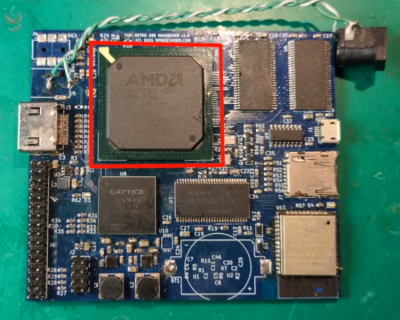
Domburg’s first attempt at realizing his vision centered around the AMD Elan SC520, a 133 MHz processor often described as a "souped-up 486." While released in 2000, well after Intel had largely phased out 486 production, the SC520 offered a compelling advantage: its system-on-chip (SoC) architecture. This design integrated numerous supporting low-level hardware components directly onto the CPU package, including the real-time clock (RTC) and programmable interval timer (PIT). This integration promised to simplify the overall board design, reducing the number of discrete chips required.
Domburg integrated the Elan SC520 onto a custom board alongside an FPGA (Field-Programmable Gate Array) and an ESP32 microcontroller, surrounded by a minimal array of supporting components. The result was a surprisingly compact, general-purpose machine, conceptually akin to a Raspberry Pi powered by a vintage-era processor. However, this initial build encountered significant hurdles. The Elan SC520 utilized a Ball Grid Array (BGA) package, a modern surface-mount technology where connections are made via solder balls on the underside of the chip. Soldering such a large BGA package accurately without specialized equipment proved exceptionally challenging. The difficulty in visually verifying proper solder joint integrity led to an arduous debugging process. As Domburg worked on developing the FPGA logic and other software components, it became nearly impossible to discern whether system malfunctions stemmed from his code, a faulty solder connection, or an electrical short. This diagnostic nightmare ultimately forced him back to the drawing board.
Back to the Drawing Board: A Purer Retro Approach (Attempt Two)
Learning from the complexities of the BGA package, Domburg pivoted his strategy for the second iteration. He opted for a more traditional approach, sourcing classic, pin-grid array (PGA) CPUs that were easier to work with. His choices included an i486 DX4-100 and an AM486DX5-133, both iconic processors from the mid-90s that offered the performance profile he desired.
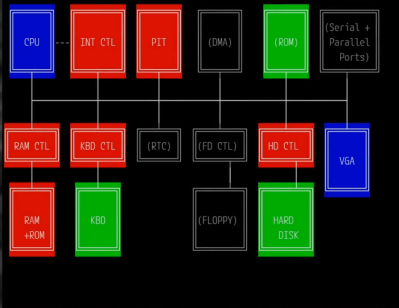
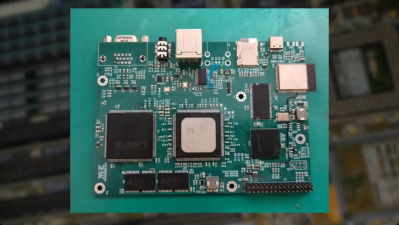
For graphical duties, Domburg enlisted the C&T F65545 VGA chip. This laptop chipset was particularly appealing due to its high level of integration, bundling many necessary support hardware functions into a single package, thereby simplifying the overall board design. The majority of the remaining "motherboard logic"—such as the programmable interrupt controller, direct memory access (DMA) controller, and keyboard controller—was cleverly offloaded to an ECP5 LFE5UM-45 FPGA chipset. This powerful, reconfigurable chip served as the custom-designed "chipset" of his retro motherboard, allowing him to precisely replicate the behavior of vintage support logic. An ESP32-S3 microcontroller was integrated to act as a modern peripheral interface, handling inputs and outputs.
A pragmatic choice was made regarding memory: SDRAM. While significantly newer than the Fast Page Mode (FPM) or Extended Data Out (EDO) DRAM typically associated with 486-era machines, SDRAM was selected for its ease of integration with the FPGA. This decision highlighted Domburg’s focus on achieving the core functionality and educational goals, even if it meant a slight deviation from absolute period accuracy in certain non-critical components.
With the goal of simply reaching a DOS prompt, Domburg meticulously designed a new PCB, systematically eliminating extraneous hardware to accelerate progress. His efforts involved a steep learning curve in the intricacies of bringing up a 486-based machine, coupled with extensive work on developing the FPGA-based chipset. He also drew inspiration and insights from existing MiSTer projects, which similarly leverage FPGAs to recreate vintage hardware. The painstaking work eventually bore fruit: the new old machine successfully displayed a basic BIOS, ran benchmarks, and, to the delight of the retrocomputing community, flawlessly executed classic games like Commander Keen.
Beyond the Core: Fleshing Out the System
The success of getting a DOS prompt and running early games marked a significant milestone, but Domburg’s ambition extended further. His presentation delved into the subsequent integration of essential functionalities that transform a basic system into a fully capable retro PC. This included implementing robust storage solutions, complete with modern interfaces, and incorporating MIDI support for authentic music playback. Sound capabilities were meticulously recreated, ensuring compatibility with the diverse audio landscape of the 90s. Furthermore, networking capabilities were added, opening up possibilities for vintage online experiences. The culmination of this intricate engineering was the integration of the single-board machine into a custom-designed portable gaming handheld, affectionately dubbed the "Vapourdeck," an impressive testament to miniaturization and functional integration.
Supporting Data: The Technical Underpinnings
Domburg’s project is a masterclass in several key areas, providing rich supporting data for its significance.
The "Why" of Component-Level Building
The educational value of building a PC from scratch is arguably the most profound aspect of Domburg’s work. Unlike software emulation, which abstracts away the underlying hardware, or even hardware emulation via FPGA cores, which still presents a black box to a degree, a component-level build forces the creator to confront every single detail. From signal integrity and timing diagrams to bus arbitration and memory addressing, Domburg had to understand and implement the foundational principles that make a computer function. This provides an unparalleled learning experience for electronics engineers, hobbyists, and computer science students interested in the low-level mechanics of computing. It bridges the gap between theoretical knowledge and practical application in a way that pre-assembled kits cannot.
Historical Context of 1995 PCs
The choice of 1995 as the target year is strategically significant. It represents a transitional period where the robust, mature 486 architecture coexisted with the nascent Pentium. This era was characterized by the dominance of the ISA bus, gradually giving way to the faster PCI standard. Graphics cards were evolving rapidly, moving from simple frame buffers to accelerated 2D engines. The "sound card wars" were at their peak, with Creative Labs’ Sound Blaster series setting the de facto standard, influencing game development and user expectations for audio fidelity. By recreating a machine from this specific time, Domburg not only built a computer but also a functional artifact that vividly demonstrates the technological landscape of the mid-90s.
FPGA’s Pivotal Role in Modern Retrocomputing
Field-Programmable Gate Arrays (FPGAs) are central to the success of Domburg’s second attempt. An FPGA is an integrated circuit designed to be configured by a customer or a designer after manufacturing. In the context of retrocomputing, FPGAs are incredibly powerful because they can be programmed to mimic the logic and behavior of virtually any vintage digital circuit. This is distinct from CPU-based software emulation, where a modern CPU runs code that simulates the vintage hardware. An FPGA, by contrast, physically reconfigures its internal gates to become the vintage hardware logic, leading to highly accurate timing and behavior that is crucial for complex interactions like those found in a motherboard’s chipset. For Domburg, the ECP5 FPGA acted as the "brain" of his custom motherboard, replacing numerous discrete chips that would have been required to manage the CPU, memory, and peripherals, offering flexibility and reducing complexity.
The Vapourdeck: A New Frontier for Retro Gaming
The transformation of the custom motherboard into the Vapourdeck handheld represents another layer of innovation. This mobile gaming station demonstrates the practical application of Domburg’s component-level build. It showcases how a deep understanding of hardware design can lead to not just functional replicas, but also novel form factors and user experiences. The Vapourdeck embodies the fusion of vintage computing spirit with modern portability, offering a compelling vision for the future of retro gaming on custom hardware.
Official Responses and Community Impact
While no official corporate "responses" are applicable to an independent project of this nature, the reception from the retrocomputing and hacking communities, as well as the platform provided by Hackaday, speaks volumes about the project’s significance.
Jeroen Domburg himself, reflecting on the arduous journey, likely expresses a profound sense of accomplishment. The debugging challenges of the first BGA-based attempt were, by his own admission, a source of "a lot of stress." Yet, the ultimate triumph of seeing Commander Keen run flawlessly on hardware he built from the ground up must have been immensely gratifying. His willingness to share the entire process, including the failures, exemplifies the open-source spirit that defines communities like Hackaday.
Hackaday’s decision to feature Domburg prominently at their Europe 2026 conference, and to subsequently publish an in-depth article, underscores the organization’s recognition of the project’s innovative nature and its potential impact. Hackaday, a hub for hardware hackers and makers, consistently champions projects that push boundaries, educate, and inspire. Domburg’s work perfectly aligns with this ethos, providing a tangible example of what’s possible with dedication, skill, and a deep passion for electronics.
The broader retrocomputing community has responded with widespread admiration and inspiration. For many, Domburg’s project serves as a powerful demonstration that the seemingly insurmountable task of building a PC from scratch is indeed achievable. It encourages enthusiasts to move beyond simply acquiring existing vintage hardware and to consider the profound learning opportunities presented by designing and constructing their own systems. This collective enthusiasm suggests a growing appetite for deeper engagement with the technological heritage of computing.
Implications: Shaping the Future of Retrocomputing and Beyond
Jeroen Domburg’s ambitious project carries significant implications for the future of retrocomputing, education, and the broader DIY electronics movement.
The Future of Retrocomputing
Domburg’s work offers a compelling blueprint for a new era of retrocomputing, one less reliant on the dwindling supply of original vintage parts. As classic hardware becomes increasingly scarce and expensive, the ability to build functional replicas from modern, readily available components provides a sustainable alternative. This approach ensures that future generations can continue to experience and interact with the authentic hardware behaviors of past computing eras, even if the original machines are no longer viable. Domburg even suggests that his methodology could be extended to build machines with processors up to the 500 MHz range, further expanding the possibilities.
Unparalleled Educational Value
The project serves as an exceptional educational tool. For aspiring electronics engineers, computer architects, and hobbyists, undertaking a similar endeavor offers an unparalleled hands-on education in digital logic, circuit design, low-level programming, and debugging. It demystifies the complex interactions within a computer system, transforming abstract concepts into tangible, working hardware. Universities and technical schools could leverage such projects to provide students with practical experience that goes far beyond theoretical classroom learning.
Preservation of Knowledge and Accessibility
Beyond mere recreation, building systems from scratch contributes significantly to the preservation of knowledge. By meticulously reverse-engineering and replicating the logic of vintage chipsets and architectures within an FPGA, or by interfacing directly with classic CPUs, engineers document and immortalize the design principles of these historical machines. This effort safeguards invaluable information that might otherwise be lost as original documentation fades and the engineers who designed them retire. Furthermore, by providing open-source project files, Domburg enhances accessibility, allowing a wider audience to learn from and build upon his pioneering work, fostering a collaborative environment for technological preservation.
Embodiment of the DIY Spirit
Domburg’s project is a powerful embodiment of the DIY, open-source spirit that thrives in communities like Hackaday. It encourages experimentation, problem-solving, and the sharing of knowledge. It demonstrates that with enough curiosity and persistence, even complex tasks like building a computer from the ground up are within reach for dedicated individuals. This ethos not only enriches the retrocomputing community but also inspires innovation across various fields of electronics and software development.
In conclusion, Jeroen Domburg’s achievement in building a retro PC from bare chips is more than just a personal triumph; it’s a beacon for the retrocomputing community. While emulation or purchasing vintage components remains the quickest path to experiencing old games, for those seeking a profound understanding of what truly makes a classic 486-era machine tick, this component-level approach is unmatched. The detailed talk from Hackaday Europe 2026 and the publicly available project files offer an invaluable resource for anyone inspired to embark on their own journey into the silicon heart of computing history. Happy hacking.