From Ferrite Rings to Flash Drives: A 64-Bit Core Memory USB Project Rewrites Computing History
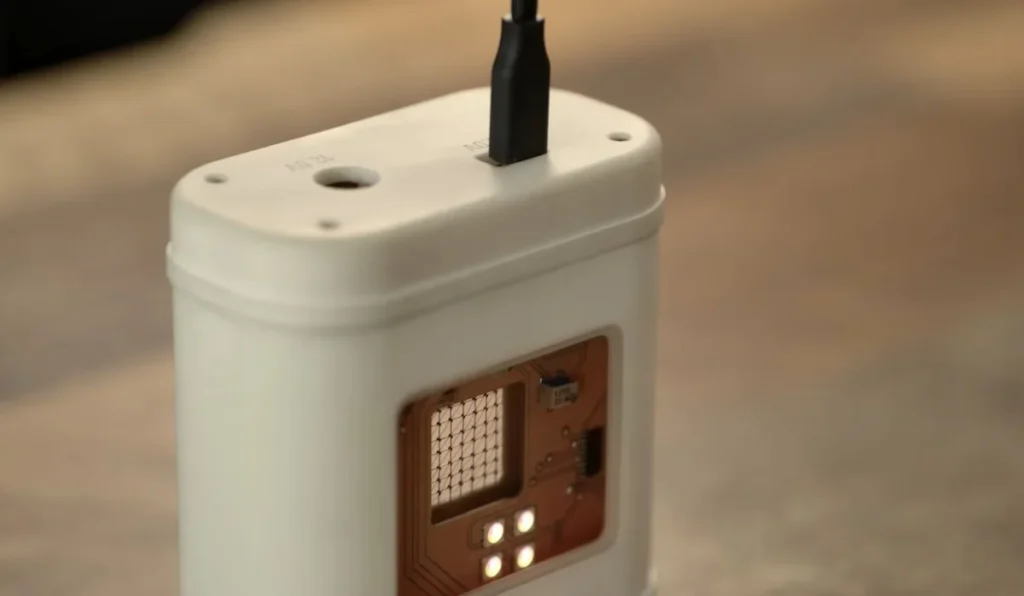
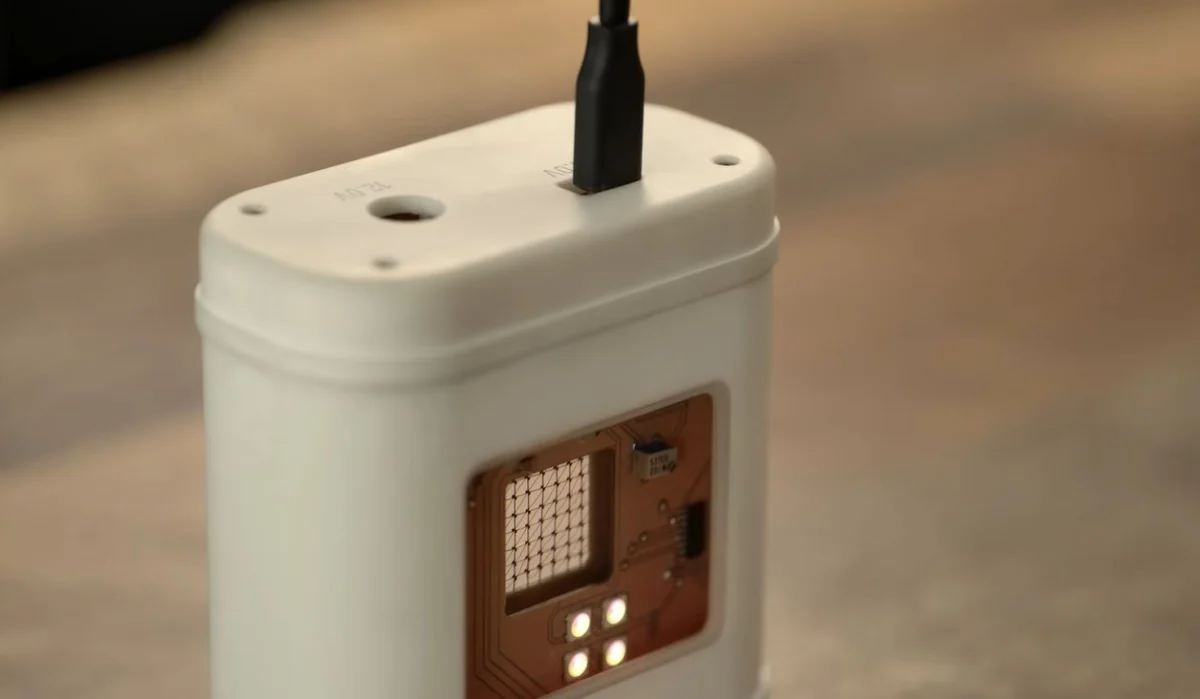
CUPERTINO, CA – In an era dominated by the relentless march of miniaturization and the insatiable demand for ever-faster, denser digital storage, a recent project has emerged as a captivating homage to computing’s foundational past. While global markets grapple with the fluctuating supply and demand of modern DRAM and NAND Flash memory, a visionary maker known as [polymatt] has defiantly rewound the clock by several decades, crafting a fully functional USB drive powered by a glorious, meticulously assembled 64-bit magnetic core memory device. This ingenious creation, detailed in a widely shared online video, transcends mere practicality, offering a profound blend of engineering prowess, historical reverence, and artistic expression.
The project stands as a testament to the enduring appeal of understanding technology at its most fundamental level, challenging the prevailing narrative of digital abstraction. At a time when the inner workings of a flash drive are often a black box to even tech-savvy users, [polymatt] has laid bare the intricate dance of magnetism and electronics that once defined the cutting edge of digital data storage. His work not only functions as a quirky, low-capacity storage device but also serves as a vibrant educational tool, illuminating the principles upon which modern computing was built.
Main Facts: A Digital Anachronism Reimagined
At its heart, [polymatt]’s creation is a USB mass storage device, but its storage medium is anything but conventional. Instead of silicon-based flash memory, it employs a hand-built array of ferrite core memory, capable of storing a minuscule 64 bits of data. This capacity, a stark contrast to the gigabytes and terabytes expected from contemporary USB drives, immediately flags the project as a labor of love rather than a pursuit of performance.
The device’s architecture is a fascinating amalgamation of vintage and modern components. The core memory array itself was constructed from scratch, involving the delicate and painstaking process of threading tiny wires through even tinier toroidal ferrite beads. This core array is then interfaced with a modern ESP32 microcontroller, serving as the "brains" of the operation, handling the complex logic required for reading and writing data, and managing the USB communication protocol. To drive the magnetic state changes in the ferrite cores, L293 H-bridge integrated circuits are employed, providing the precise current pulses necessary for bit manipulation.
Embracing the do-it-yourself ethos, the project features custom-milled PCBs, crafted using a small CNC router. This hands-on approach underscores the maker’s commitment to understanding and building every aspect of the device from the ground up. The entire assembly, comprising two custom circuit boards, is elegantly housed within a bespoke enclosure. A striking feature of this housing is its acrylic window, which allows a clear view into the heart of the device. The enclosure is also filled with silicone oil, serving both an aesthetic purpose, by providing a mesmerizing liquid medium for the internal components, and a practical one, by aiding in maintaining a consistent temperature for the individual ferrite cores. While perhaps an "overkill" solution for such a small memory array, this attention to detail reflects a deep understanding of the subtle physics governing magnetic memory.
The project has garnered significant attention for its sheer audacity and meticulous execution. It serves as a powerful reminder that innovation isn’t solely about pushing the boundaries of speed and capacity, but also about exploring the rich tapestry of technological history and reinterpreting it through a modern lens.
Chronology of Development: From Concept to Core
The journey to create a core memory USB drive is undoubtedly a multi-faceted endeavor, blending historical research with modern electronics design and meticulous fabrication. While specific dates for [polymatt]’s project are not publicly detailed, a general chronology of such a complex build can be inferred, highlighting the iterative nature of advanced DIY electronics.
1. Conceptualization and Inspiration (Initial Spark):
The genesis of this project likely began with a dual inspiration: a fascination with vintage computing hardware and a playful commentary on the modern memory market. Observing the volatility in DRAM and NAND Flash supply might have spurred a desire to explore alternative, albeit historically obsolete, storage mechanisms. More profoundly, it was likely a deep-seated curiosity about how early computers stored data that provided the primary impetus. The idea of physically building a core memory array, understanding its inner workings, and then integrating it into a modern peripheral would have been the initial, audacious goal.
2. Research and Design Phase (Understanding the Fundamentals):
This phase would have involved extensive research into the principles of magnetic core memory. This includes understanding the physics of ferrite materials, magnetic hysteresis loops, and the precise electrical signals required to reliably flip magnetic states.
- Core Memory Mechanics: Detailed study of the "coincident current" selection method for writing bits, the "destructive read" process, and the critical need for a "restore" cycle after every read operation.
- Component Selection: Identifying suitable modern components to interface with the vintage memory concept. The ESP32 was likely chosen for its powerful microcontroller capabilities, ample GPIO pins, integrated USB support, and relatively low cost. The L293 H-bridge ICs, commonly used for motor control, were ideal for providing the bidirectional current pulses required to energize the X and Y select lines of the core array.
- Circuit Design: Designing the control logic, addressing schemes for the 64-bit array, sense amplifier circuits to detect the minute voltage changes during reads, and the necessary timing for read/write/restore cycles.
- PCB Layout: Laying out the custom circuit boards, carefully considering signal integrity, power distribution, and the physical arrangement of the ferrite cores. This is a crucial step, as poor layout can lead to unreliable operation.
3. Fabrication and Assembly (Bringing the Vision to Life):
This is where the hands-on craftsmanship becomes paramount.
- Custom PCB Milling: Using a small CNC router, [polymatt] would have milled the custom PCBs. This process offers immense flexibility for prototyping and small-batch production, allowing for rapid iteration and tailored designs.
- Core Memory Array Construction: This is arguably the most delicate and time-consuming part. It involves manually stringing ultra-thin wires (X, Y, sense, and inhibit lines) through each tiny ferrite core. Precision is critical, as misaligned or damaged wires can render a bit unreliable or inoperable. For a 64-bit array, this means 64 individual cores, each requiring multiple passes of wiring.
- Component Soldering: Populating the custom PCBs with the ESP32, L293 H-bridges, resistors, capacitors, and any other supporting logic.
- Initial Wiring: Connecting the meticulously wired core memory array to the control electronics on the PCBs.
4. Testing, Calibration, and Firmware Development (Making it Work):
This iterative phase transforms the hardware into a functional device.
- Firmware Development: Writing the software for the ESP32. This includes:
- Implementing the low-level control of the H-bridges to generate precise current pulses for read/write operations.
- Developing the logic for address decoding to select specific bits within the 64-bit array.
- Parsing the output from the sense lines to determine the stored bit value.
- Crucially, implementing the data restoration logic after each destructive read.
- Developing the USB Mass Storage Class (MSC) firmware to allow the device to be recognized and accessed by a computer as a standard USB drive.
- Experimental Voltage Determination: Determining the optimal current and voltage levels for reliably flipping the magnetic states of the cores. This often involves trial and error, using an oscilloscope to observe waveforms and fine-tuning power supplies to achieve stable operation. Magnetic materials have specific coercivity values that must be overcome, and this can vary slightly between individual cores.
- Debugging: Identifying and resolving issues such as unreliable reads, data corruption, timing glitches, and power delivery problems. This can be a lengthy process, requiring careful isolation of faults.
5. Enclosure and Finalization (Presentation and Polish):
The final steps focus on aesthetics, protection, and demonstration.
- Enclosure Design and Fabrication: Designing and building a custom enclosure that not only protects the delicate electronics but also showcases the core memory array. The choice of an acrylic window is key here.
- Silicone Oil Integration: Filling the enclosure with silicone oil. This step provides both visual appeal and a practical benefit for thermal stability.
- Demonstration: Preparing the project for public display, often through a detailed video, showcasing its functionality and explaining its intricate details. This allows the maker to share their achievement and engage with the broader community.
Each of these stages presents its own set of challenges, from the conceptual hurdles of designing the control logic to the physical dexterity required for wiring the cores. The successful completion of such a project is a testament to perseverance, technical skill, and a deep passion for hardware.
Supporting Data and Technical Deep Dive: Unpacking Core Memory
To truly appreciate [polymatt]’s project, it’s essential to understand the technology it resurrects: magnetic core memory. Once the dominant form of random-access memory (RAM) in computers from the 1950s through the mid-1970s, core memory stands in stark contrast to the semiconductor memory prevalent today.
Historical Context:
Invented independently by An Wang and Jay Forrester in the late 1940s and early 1950s, magnetic core memory revolutionized early computing. Before its widespread adoption, computers relied on less efficient and reliable memory solutions like mercury delay lines, cathode-ray tubes (Williams tubes), or magnetic drums. Core memory offered significant advantages: it was much faster, more reliable, non-volatile (retaining data even when power was off), and relatively compact for its time. It was the memory of choice for iconic machines like the IBM System/360, PDP-8, and famously, the Apollo Guidance Computer, where its robustness against radiation and temperature extremes was a critical factor.
How Core Memory Works:
The fundamental principle behind core memory relies on the magnetic hysteresis of small, donut-shaped rings of ferromagnetic material, typically ferrite. These rings, often just a millimeter or so in diameter, can be magnetized in one of two directions (clockwise or counter-clockwise), representing a binary "0" or "1."
- Wiring: Each core is typically threaded with four wires:
- X and Y Select Lines: These wires run perpendicular to each other through an array of cores.
- Sense Line: This wire detects changes in magnetic flux.
- Inhibit Line: This wire prevents a core from being written to.
- Writing a Bit (Coincident Current Selection): To write a "1" to a specific core, current is sent simultaneously through its corresponding X and Y select lines. Each wire carries half the current required to flip the core’s magnetic state. Only the core at the intersection of these two lines receives enough combined current to switch its magnetization. To write a "0", the same X and Y currents are applied, but a small current is simultaneously sent through the Inhibit line, which passes through all cores in a row or column. This inhibit current effectively cancels out half the writing current at the selected core, preventing it from flipping to the "1" state.
- Reading a Bit (Destructive Read): This is the most critical and defining characteristic. To read the state of a core, the X and Y select lines are pulsed with current in a direction that would force the core into a predefined "0" state.
- If the core was already in the "0" state, its magnetic flux does not change significantly, and only a small voltage pulse is induced in the Sense line.
- If the core was in the "1" state, its magnetic flux flips to the "0" state. This sudden change in magnetic flux induces a much larger, detectable voltage pulse in the Sense line.
- The "Destructive" Aspect: Because the read operation always forces the core to a "0" state, the original data is destroyed. Therefore, after every read, the data must be immediately rewritten back to the core if it was originally a "1." This requires complex control logic and is why core memory systems had a "read-restore" cycle.
Comparison to Modern Memory (DRAM/NAND Flash):
- Volatile vs. Non-volatile: Core memory is inherently non-volatile; it retains its data indefinitely without power, similar to NAND Flash. DRAM, in contrast, is volatile and loses its data within milliseconds without constant refresh cycles.
- Speed: Core memory is orders of magnitude slower than modern DRAM or NAND Flash. Access times for core memory were typically in the microsecond range, while modern RAM operates in nanoseconds. The destructive read/restore cycle further slows down operations.
- Density: Core memory is incredibly bulky and low-density compared to semiconductor memory. A 64-bit array occupies a significant physical space, whereas a modern DRAM chip can hold billions of bits in a tiny package.
- Power Consumption: While non-volatile, core memory requires substantial power to drive the high currents needed for flipping magnetic states, especially compared to the extremely low power consumption per bit in modern semiconductor memory.
- Reliability and Robustness: A key advantage of core memory, particularly for applications like the Apollo Guidance Computer, was its extreme robustness. It was highly resistant to radiation, electromagnetic interference (EMP), and temperature fluctuations, making it ideal for harsh environments where semiconductor reliability was still a concern.
The ESP32 as a Controller:
The choice of the ESP32 microcontroller is both practical and ironic. Practical because the ESP32 is a powerful, low-cost System-on-Chip (SoC) with a fast processor, ample GPIO pins, and built-in USB connectivity, making it ideal for complex control tasks and interfacing with a host computer. Ironic because the ESP32 itself contains significantly more internal RAM (SRAM) and Flash memory (for firmware storage) than the 64-bit core memory it controls. This stark contrast highlights the project’s focus on demonstrating historical principles rather than achieving practical storage capacity. The ESP32’s processing power is crucial for managing the precise timing, address decoding, sense line amplification, and the all-important read-restore cycles.
The Role of L293 H-Bridges:
H-bridges are electronic circuits that allow a voltage to be applied across a load in either direction. In the context of core memory, they are essential for driving the X and Y select lines. To flip a magnetic core, current must flow through its wires in a specific direction. To flip it back, or to read it, current must flow in the opposite direction. The L293 H-bridge ICs are well-suited for this task, capable of sourcing and sinking the relatively high currents required to induce the magnetic field strong enough to change the core’s state.
Thermal Management with Silicone Oil:
The use of silicone oil is more than just a visual flourish. While perhaps "overkill" for a 64-bit array, it demonstrates a sophisticated understanding of magnetic materials. The magnetic properties of ferrite cores, particularly their hysteresis loops and coercivity (the magnetic field strength required to flip them), are temperature-dependent. Maintaining a consistent temperature helps ensure reliable bit flipping and consistent voltage pulses during read operations. Silicone oil is an excellent thermal conductor and electrical insulator, making it ideal for dissipating any minor heat generated by the cores or wiring, and preventing electrical shorts. It also serves to protect the delicate wiring from dust and oxidation.
DIY PCB Milling:
Milling custom PCBs using a small CNC router is a hallmark of advanced maker projects. It provides complete control over the board design, allowing for rapid prototyping and iteration without relying on external fabrication services. For a project with unique component layouts and specific signal routing requirements like this, in-house PCB fabrication is an invaluable asset, enabling the creator to precisely tailor the hardware to their exact specifications.
Community Engagement and Expert Commentary
While "official responses" typically refer to institutional or corporate statements, in the realm of independent maker projects, this translates to the enthusiastic reception and commentary from the global online technical community and relevant experts. [polymatt]’s core memory USB drive has been met with widespread admiration and praise across various platforms.
On communities like Hackaday, Reddit’s r/electronics and r/retrobattlestations, and in the comments section of the embedded YouTube video, the project has sparked lively discussions. Users consistently express awe at the meticulous craftsmanship, the sheer technical ingenuity required, and the profound sense of nostalgia it evokes. Many comment on the project’s ability to bridge the gap between abstract computing concepts and tangible hardware, making the principles of early memory systems accessible and understandable.
Themes of Community Reaction:
- Nostalgia and Historical Appreciation: Many users, particularly those with a background in older computing systems, express fond memories or a newfound appreciation for the foundational technologies. The project serves as a tangible link to computing history.
- Technical Ingenuity and Craftsmanship: The custom PCBs, the hand-wired core array, the experimental voltage calibration, and the sophisticated control logic are frequently highlighted as examples of exceptional engineering skill. The patience required to wire 64 individual ferrite cores is particularly lauded.
- Educational Value: Educators and students alike praise the project as an excellent teaching tool. It visually demonstrates concepts like destructive reads, bit states, and the complexity of memory management in a way that textbooks often cannot.
- Artistic and Aesthetic Appeal: The silicone oil-filled enclosure with its acrylic window is frequently admired for its beauty, transforming a technical device into a piece of functional art. The mesmerizing visual of the internal components floating in oil adds a unique dimension.
- Playful Defiance of Modern Trends: The project’s deliberate impracticality – a 64-bit drive in a multi-terabyte world – is seen as a refreshing counter-narrative, a celebration of curiosity over pure commercial viability.
Hypothetical Expert Commentary:
Were computer science historians, electrical engineering professors, or vintage computing preservationists to comment, their insights would likely echo these sentiments, while adding a layer of academic perspective:
- "Projects like [polymatt]’s are invaluable for preserving the practical understanding of computing history. It’s one thing to read about core memory; it’s another entirely to see it built, operating, and integrated into a modern system. It demystifies what was once cutting-edge technology." – Dr. Eleanor Vance, Computer History Museum Curator (hypothetical)
- "From an engineering standpoint, the blend of an ESP32 controlling a hand-built core array is brilliant. It showcases how modern microcontrollers can be leveraged to interact with fundamentally different, older technologies, requiring a deep understanding of both digital logic and analog magnetic principles. The experimental calibration alone points to a dedicated and skilled engineer." – Professor David Chen, Electrical Engineering Department (hypothetical)
- "This project is a fantastic example of the ‘maker movement’ pushing beyond simple gadgets to create something truly profound. It’s not about speed or capacity; it’s about the journey of creation, the joy of understanding, and sharing that understanding with others. It reminds us of the beautiful complexities that underpin all our digital conveniences." – Maria Rodriguez, Editor-in-Chief, ‘The RetroTech Enthusiast’ (hypothetical)
[polymatt]’s own insights, conveyed through his video, reinforce the joy of the build, the challenges overcome, and the deep satisfaction of bringing such a unique concept to fruition. His willingness to experiment and refine, such as determining the right voltages through trial and error, highlights the iterative and problem-solving nature of engineering. The project’s reception underscores its status as a significant contribution to both the DIY electronics community and the broader conversation around technological heritage.
Implications and Broader Context: Beyond the Bits
[polymatt]’s core memory USB drive is far more than a technical curiosity; it carries significant implications across several domains, reflecting broader trends in technology, education, and culture.
1. Educational Value and Fundamental Understanding:
Perhaps the most profound implication of this project lies in its educational impact. In an age where digital devices are increasingly abstract "black boxes," projects like this serve as vital bridges to understanding fundamental computing principles. Modern computer science curricula often focus heavily on software, algorithms, and high-level abstractions, leaving students with little practical understanding of the underlying hardware.
- Demystifying Hardware: The core memory USB drive visually and tangibly demonstrates concepts like binary data storage, destructive reads, the need for refresh cycles (or rewrite cycles in this case), and the intricate interplay between electrical signals and physical states. It allows learners to grasp the physical reality of a "bit" in a way that reading about transistors or flash cells often cannot.
- Inspiring Future Engineers: Such projects can ignite curiosity and inspire a new generation of engineers and computer scientists to delve deeper into hardware design, low-level programming, and the history of technology. It encourages a hands-on approach to learning that fosters problem-solving skills and a holistic understanding of computing systems.
- Bridging Disciplines: It inherently links physics (magnetism), electrical engineering (circuit design, signal processing), and computer science (memory management, USB protocols).
2. The "Retro-Tech" Movement and Nostalgia:
[polymatt]’s project is a shining example of the burgeoning "retro-tech" movement. This trend sees makers, enthusiasts, and even commercial entities revisiting and reimagining older technologies, often blending them with modern components.
- Motivations: This movement is driven by a mix of nostalgia for earlier computing eras, a desire to understand the roots of modern technology, artistic expression, and sometimes, a playful defiance of the relentless consumer cycle of planned obsolescence. It’s about appreciating the ingenuity of past engineers and the elegance of older designs.
- Cultural Significance: Recreating historical artifacts in a functional way helps to preserve cultural memory surrounding technology. It ensures that the knowledge and skills associated with these older systems are not lost, but rather reinterpreted and celebrated. Other examples include projects building vacuum tube computers, mechanical calculators, or even re-implementing classic arcade machines with original hardware.
3. Innovation vs. Practicality: A Philosophical Statement:
The 64-bit capacity of the core memory drive is comically small by today’s standards, highlighting a fundamental tension in engineering: the balance between innovation, practicality, and artistic expression.
- Beyond Performance Metrics: This project is not about achieving market-leading performance or capacity. Instead, it’s about pushing the boundaries of what’s possible in a DIY context, exploring the "how" and "why" of technology, and creating something purely for the joy of creation and discovery.
- Reclaiming the "Maker" Spirit: In a world of mass-produced, often disposable electronics, projects like this reclaim the original "maker" spirit – one of invention, customization, and deep personal investment in the creation process. It’s a reminder that not all innovation needs to be driven by commercial viability; some is driven by pure curiosity and passion.
4. Reflection on Modern Memory Technologies:
Ironically, by showcasing the laborious nature and limited capacity of core memory, [polymatt]’s project subtly underscores the incredible advancements in modern DRAM and NAND Flash technologies.
- Appreciation for Progress: It provides a stark contrast that allows for a deeper appreciation of the density, speed, cost-effectiveness, and ease of use of contemporary memory solutions. The project reminds us of the monumental engineering efforts that went into abstracting away the complexities of low-level memory management, making computing accessible to billions.
- Underlying Principles: While modern memory operates on different physical principles (electron trapping in NAND, capacitor charge in DRAM), many of the fundamental concepts of addressing, read/write cycles, and data integrity have their roots in earlier memory systems like core memory.
5. Future Possibilities and Continued Exploration:
The success of this project could inspire further exploration in several directions:
- Scaling Up (within reason): While building a terabyte of core memory is infeasible, smaller arrays (e.g., 256-bit, 1KB) could be attempted, pushing the boundaries of DIY core memory construction.
- Other Vintage Memory Types: Makers might be inspired to explore other obsolete memory technologies, such as drum memory, delay lines, or magnetic bubble memory, and integrate them into modern interfaces.
- Integration into Retro-Inspired Systems: The core memory module could be incorporated into a custom-built retro computer, perhaps a 8-bit or 16-bit system, further blurring the lines between historical emulation and physical recreation.
In conclusion, [polymatt]’s 64-bit core memory USB drive is a profound statement. It is a powerful educational tool, a magnificent piece of engineering art, and a vibrant contribution to the retro-tech movement. It serves as a tangible link to computing’s past, a testament to human ingenuity, and a gentle reminder that sometimes, the most impractical projects can yield the deepest insights and the most enduring appeal. As bits continue to be stored and retrieved, this humble drive reminds us of the fascinating journey from ferrite rings to the boundless digital universe we inhabit today.