Microsoft’s Quantum Computing Claims Face Renewed Skepticism Amid "Blistering" Peer Review
REDMOND, WA – The ambitious pursuit of topological quantum computing, a field often touted for its potential to revolutionize computation with inherent fault tolerance, is once again at the center of a heated scientific debate. Microsoft’s Azure Quantum division, a prominent player in this high-stakes arena, has faced persistent scrutiny over its claims of achieving significant milestones, particularly in the detection of Majorana Zero Modes (MZMs). The latest attempt by Microsoft to assert progress has now drawn a "blistering response" in the prestigious journal Nature from physicist Henry F. Legg, reigniting fundamental questions about measurement validation and the integrity of data analysis in cutting-edge quantum research.
The controversy highlights a central, ongoing challenge within the arguably overhyped quantum computing landscape: the inherent difficulty in objectively ascertaining performance and validating new developments, especially when much of the evidence relies on indirect measurements and complex theoretical interpretations. For topological quantum computing, which seeks to harness the exotic properties of Majorana fermions, this challenge is particularly acute.
A Contentious History: Microsoft’s Quantum Journey
Microsoft has for several years positioned itself at the forefront of topological quantum computing research, dedicating substantial resources and making bold pronouncements regarding its advancements. However, these claims have, with unsettling regularity, been met with significant pushback and refutations during the rigorous process of peer review. This pattern of assertion followed by academic critique has cast a long shadow over the company’s quantum endeavors.
The most recent episode follows a similar trajectory. In early 2025, this publication, among others, reported on Microsoft’s claims of detecting the crucial Majorana Zero Mode (MZM) anyons. This announcement was met with initial excitement, but soon after faced a torrent of criticisms from the scientific community. Peer review of that earlier work, which included contributions from Legg, was notably harsh, with some researchers employing academically unsparing language, even going so far as to label certain aspects as "essentially fraudulent." Such strong terminology underscores the immense pressure and high stakes involved in validating fundamental discoveries in quantum physics, where scientific integrity is paramount.
The repeated cycle of bold claims and subsequent peer-review rejections raises an awkward, yet critical, question: are Microsoft’s quantum researchers, perhaps under commercial or internal pressure, too eager to confirm a discovery, or are there more benign, albeit still problematic, reasons for these recurring misinterpretations? The scientific community demands clarity and reproducibility, especially when potential breakthroughs could reshape technological paradigms.
The Promise of Topological Quantum Computing
To understand the intensity of this debate, it’s essential to grasp the foundational appeal of topological quantum computing and its proposed advantages over conventional quantum architectures.
Beyond Dirac: The Allure of Anyons
Traditional approaches to quantum computing typically utilize "Dirac fermions" – such as electrons or photons – as qubits. While significant progress has been made, this path has been fraught with complications. Qubits based on Dirac fermions are notoriously fragile; they are highly susceptible to decoherence and noise intrusion from their environment. This environmental interaction can cause the quantum state to collapse prematurely, making long-running computations extremely difficult. To mitigate this, current quantum computers necessitate extensive error-correction algorithms, often requiring computations to be run multiple times and results compared, adding significant overhead and complexity.
This is precisely where topological quantum computing enters the picture, offering a tantalizing theoretical solution to the decoherence problem. While it may impose some limitations on its feature set compared to universal gate-based quantum computers, its inherent resilience to outside influences makes it uniquely appealing. The core concept involves encoding quantum information not in the fragile state of individual particles, but in the topological properties of "quasiparticles" – emergent phenomena that arise in certain condensed matter systems.
The specific quasiparticles referenced here are "Majorana anyons." It’s crucial to clarify that while the term "Majorana particles" might evoke fundamental particles like Majorana fermions, the context in topological quantum computing refers to these emergent quasiparticles. They are called Majorana anyons because they share a fascinating property with theoretical Majorana fermions: they are their own antiparticle. This self-conjugate nature is key to their stability.
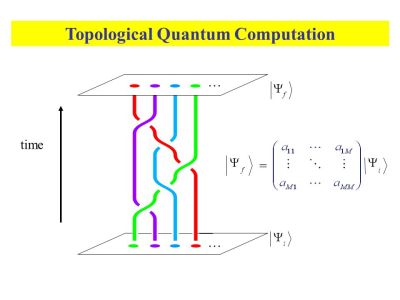
By combining these Majorana anyons with "braid theory," scientists envision a system where quantum operations are performed by physically exchanging or "braiding" the world lines of these anyons. The information is encoded in the topological configuration of these braids, which means it is robust against local perturbations. Imagine tying knots in a rope; the knot itself remains stable even if the rope is jostled or stretched. Similarly, the quantum information encoded in the braid topology would be far more resilient to noise than information stored in the delicate spin or energy states of individual particles.
Essentially, this approach swaps the very fickle, trapped quantum particles for significantly more stable, braided Majorana anyons. If successfully implemented and confirmed, this paradigm shift could herald a truly significant breakthrough, paving the way for fault-tolerant quantum computers that are less prone to errors and capable of much longer, more complex computations. The promise of such robust qubits fuels the intense competition and scrutiny surrounding any claims of their creation.
The Elusive Proof: Challenges in Quantum Validation
Even with the theoretical elegance of topological quantum computing, the journey from theory to tangible reality is fraught with immense practical challenges, particularly in the realm of experimental validation.
The Measurement Dilemma
A major hurdle for quantum computing, and especially for exotic concepts like Majorana anyons, is the difficulty in directly observing or measuring the quantum phenomena in question. Unlike classical physics, where phenomena can often be measured directly and unambiguously, the quantum realm often necessitates indirect measurements and complex inferential analysis. This, roughly speaking, has been the challenging point where Microsoft’s attempts over the past years have repeatedly foundered. The evidence for Majorana Zero Modes is determined indirectly, inferred from changes in electrical conductance or other physical properties, rather than through simple, direct observation.
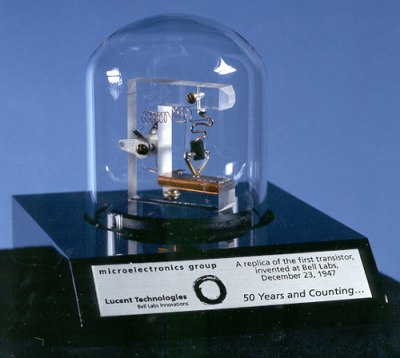
Consider the historical parallel of the first semiconductor transistor. When it was demonstrated at Bell Laboratories in 1947 – the world’s first point-contact transistor – it marked the culmination of many years of theorizing and failed attempts dating back to the 1920s. Crucially, the evidence of a working transistor was impossible to ignore. It demonstrably worked as an amplifier of current, and even the relatively simple current- and voltage-measuring devices of the era sufficed to establish this simple truth. This clear, unambiguous demonstration allowed for rapid commercialization and subsequent evolution into bipolar junction transistors and the vast array of semiconductor devices that followed.
In the case of quantum processors, whether traditional gate-based or topological, there is no obvious, simple, and universally accepted way to replicate such a basic, undeniable demonstration at this point in time. Even the comparatively simpler concept of quantum annealing, exemplified by D-Wave’s commercial offerings, remains mired in controversy regarding whether it truly offers any demonstrable "quantum advantage." This is territory where even mighty IBM has seen its quantum advantage claims publicly "trolled" and outperformed by researchers using conventional hardware, including, notably, a lowly Commodore 64 for certain specific problems. The quantum field currently lacks its "lightbulb moment" of undeniable, easily verifiable functionality.
Where it concerns Majorana anyons and evidence of MZMs, researchers face a critical choice: either build a finished, fully functional device that demonstrates a clear quantum advantage, or construct a more limited device where the existence of these fundamental elements is deduced based on what remain mostly theoretical assumptions and indirect signatures. Microsoft’s efforts have largely focused on the latter, attempting to deduce the presence of MZMs through careful experimental design and data analysis.
The Topological Gap Protocol (TGP): Microsoft’s Latest Approach
For its most recent attempt at proving the creation of Majorana anyons and, by extension, topological superconductors, Microsoft’s team employed a new procedure they termed the "Topological Gap Protocol (TGP)." This protocol was purportedly designed to perform a parity readout from their manufactured devices, which they then used to argue that they had finally achieved their goal of detecting topological qubits. Their findings were published in a Nature paper, presenting TGP as a critical advancement in their methodology for identifying these elusive quantum states.
A "Blistering Response": Legg’s Critique
Scrutiny in Science
The scientific method thrives on open discourse, rigorous peer review, and the ability of independent researchers to scrutinize, reproduce, and validate experimental results. It is within this crucible that Henry F. Legg’s most recent critique, published as a direct response in Nature to Microsoft Azure Quantum’s 2024 paper, takes on significant weight.
Microsoft’s paper claimed the detection of topological qubits in an improved test setup utilizing TGP, based once again on indirect measurements and a specific analysis of recorded data. Legg’s critique zeroes in on this analysis, arguing forcefully that it was performed incorrectly and that the conclusions drawn are not supported by the underlying data.
The main issue identified by Legg is a selective interpretation of the measurements. He contends that Microsoft’s researchers focused predominantly on data that supported the experiment’s assumptions, a pattern that strongly suggests "confirmation bias." In complex scientific endeavors, where expected outcomes are deeply desired, it can be challenging for researchers to remain entirely objective, inadvertently (or otherwise) privileging data that aligns with their hypothesis. Legg’s argument implies that Microsoft’s team may have fallen prey to this common human cognitive trap.
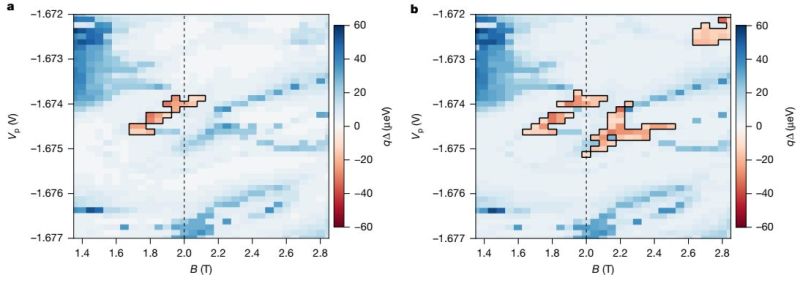
Furthermore, Legg brought to light a more concrete and potentially embarrassing flaw: he argued that Microsoft’s researchers made a number of fundamental errors in their Python code used for data analysis. Specifically, he highlighted instances where the code incorrectly used the array index rather than its actual value, leading to misinterpretations of the experimental data. This is a critical allegation, as coding errors in scientific analysis can profoundly alter results and conclusions. After adjusting for these alleged basic Python errors and re-analyzing the same raw measurement data, Legg reportedly obtained entirely different results, undermining Microsoft’s original claims.
Legg’s analysis also pointed out that the data signatures Microsoft presented as evidence for Majorana Zero Modes could, in fact, be very similar to signatures generated by other, non-topological sources, such as quantum dots. This observation further complicates Microsoft’s assertion, as it suggests that the observed phenomena are not uniquely indicative of topological qubits. If alternative, simpler explanations can account for the data, the burden of proof on Microsoft to unequivocally demonstrate MZMs becomes significantly higher. The accompanying figure from Legg’s Nature response, illustrating the "Impact of coding artefacts on transport based topological gap detection," visually underscores how these analytical discrepancies lead to vastly different interpretations of the experimental outcomes, profoundly questioning the proximity of the Microsoft team to having truly created these topological qubits.
Microsoft’s Counter-Arguments
Defending the Data
Following Legg’s broadside salvo, Microsoft’s team issued their own reply in Nature (though paywalled), aiming to defend their original findings and methodology. Their primary arguments revolved around discrediting Legg’s specific points of contention.
Microsoft contended that the Topological Gap Protocol (TGP) played no role in interpreting the Radio Frequency (RF) results, which formed the basis of their original conclusions. They characterized TGP as merely a "tune-up procedure" for optimizing their experimental setup, not a primary tool for data analysis leading to the MZM detection claim. Consequently, they argued that any issues Legg identified with TGP were irrelevant to the core findings. Furthermore, they rejected Legg’s indicated issues with TGP as being invalid in the first place.
Another point raised by Microsoft was that Legg did not offer an alternative physical model capable of reproducing both the capacitance signal and the Random Telegraph Signal (RTS) phenomenology observed in their experiments. This counter-argument, often employed in scientific debates, suggests that if a critic cannot provide a coherent alternative explanation for the observed data, their critique might be less robust. In essence, Microsoft’s response, stripped down, seemed to boil down to a curt "nuh-uh" – a dismissal of the criticism without necessarily offering a direct rebuttal to the re-analyzed data.
While largely rejecting Legg’s criticisms, Microsoft’s team did acknowledge one minor concession: an "off-by-one pixel bug" in their TGP processing. However, they insisted that this was a minor issue with negligible impact on their overall conclusions.
Effectively, Microsoft’s reply maintained that the criticism was largely unfounded, and their original 2025 paper remained valid. If their position holds, it would mean that topological qubits were indeed detected, and with this knowledge, a functional topological quantum processor could theoretically be constructed and integrated into a larger quantum computing system.
The Unfolding Narrative: Implications for Quantum Computing
The Crucible of Peer Review
The ongoing dispute between Microsoft and its critics, exemplified by Legg’s incisive review, serves as a stark reminder of the fundamental principles of the scientific method. At its heart, science demands transparency, reproducibility, and rigorous scrutiny. Results must be published with sufficient detail regarding experimental setups, methods, and data analysis so that other researchers can attempt to reproduce the findings independently. This process, while often appearing contentious, is essential for building robust scientific knowledge.
For companies like Microsoft, which have invested billions in quantum computing research, the stakes are incredibly high. The pressure to deliver breakthroughs, to justify massive investments, and to maintain a competitive edge can be immense. However, this commercial imperative must always be balanced with unwavering scientific rigor. If Microsoft’s researchers are indeed correct, then their discovery could be a "point-contact transistor moment" within the world of quantum computing – a foundational breakthrough that would rapidly be confirmed by other teams, becoming a historical fact and propelling the field forward dramatically. The absence of such independent confirmation, especially after repeated challenges, only fuels skepticism.
Echoes of Past Controversies
This ongoing saga in quantum computing is not without historical parallels in the annals of science. Just in the past few years, the scientific community witnessed the meteoric rise and subsequent dismal end of claims surrounding the Korean LK-99 room-temperature superconductor, and the controversial EmDrive, a purported propellantless space propulsion system. Both met their demise at the uncaring hands of peer review and the inability of independent teams to reproduce the initial claims. Similarly, "cold fusion," now often rebranded as "low-energy nuclear reactions" (LENR), has clung on in a continuous state of limbo for decades, perpetually failing to achieve widespread scientific acceptance despite pockets of persistent research. These serve as powerful cautionary tales, underscoring that extraordinary claims require extraordinary evidence, and that hype, no matter how intense, cannot substitute for reproducible scientific proof.
The quantum computing field, while undoubtedly promising, is still in its nascent stages, arguably akin to the early days of electronics before the transistor’s undeniable demonstration. It is a field grappling with immense complexity, pushing the boundaries of physics and engineering, and often requiring leaps of faith based on theoretical models.
The Path Forward
The path forward for topological quantum computing, and for Microsoft’s specific claims, will undoubtedly involve continued scrutiny and, ideally, attempts at independent reproduction of their results, or perhaps, Legg’s re-analysis. The scientific community will demand clearer, more unambiguous evidence that differentiates Majorana anyons from other quantum phenomena and demonstrates their unique topological properties.
Regardless of the immediate outcome of this specific dispute, the broader pursuit of topological quantum computing will continue. Perhaps the best part of science is that even if a particular research direction ultimately proves unfruitful, it still offers a fascinating opportunity to learn more about physics, mathematics, and the fundamental nature of reality. Just in the course of dissecting this article, one gains a deeper appreciation for the intricacies of quantum mechanics, condensed matter physics, and the demanding process of scientific validation. Ultimately, this makes even something as controversial as topological quantum computing a delightful and intellectually enriching topic to occasionally dive into, reminding us that the journey of discovery is often as valuable as the destination itself.