Tanmatsu: From Conference Badge to Cutting-Edge Handheld – A Deep Dive into the Hacker’s New Companion
The Tanmatsu, a compact and powerful handheld computer, has officially transitioned from a promising prototype born in the vibrant Dutch conference badge scene to a robust, commercially available device. After an initial sneak peek approximately 18 months ago, during which its software was still in nascent stages, the device now boasts a stable operating system and a rapidly expanding software library. This comprehensive review explores the Tanmatsu’s journey, its technical prowess, unique market positioning, and its potential to redefine portable computing for hackers, makers, and technology enthusiasts.
Main Facts: The Tanmatsu Unveiled
The Tanmatsu, a name derived from the Japanese word for "Terminal," represents a significant leap in the realm of open-source, general-purpose palmtop computers. Designed with the discerning hacker in mind, this device is far more than a simple gadget; it’s a versatile toolkit packed into a pocket-friendly form factor. Its evolution from a specialized conference badge underscores a commitment to community-driven development and open hardware principles, culminating in a product that is both accessible and immensely capable.
The Tanmatsu Unveiled: A Hacker’s Companion
At its core, the Tanmatsu is a meticulously engineered piece of hardware, presented as a durable PCB and PETG 3D-printed sandwich. This design choice not only ensures robustness but also facilitates customization and repair, aligning perfectly with its open-source ethos. The front face is dominated by an 800×480 MIPI DSI display, offering crisp visuals for its graphical user interface. Below the display, a familiar silicone QWERTY keyboard, utilizing the same molding as the popular Solder Party KeebDeck, provides tactile and responsive input, a crucial feature for any portable terminal. This combination of a clear display and a comfortable, albeit compact, keyboard sets the stage for productive on-the-go computing.
Hardware at a Glance: Powering the Portable Experience
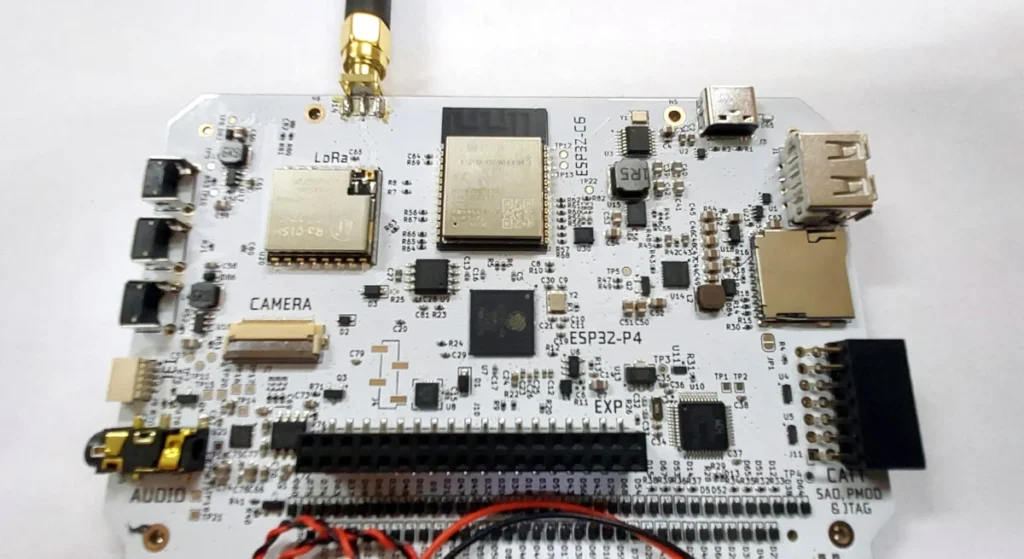
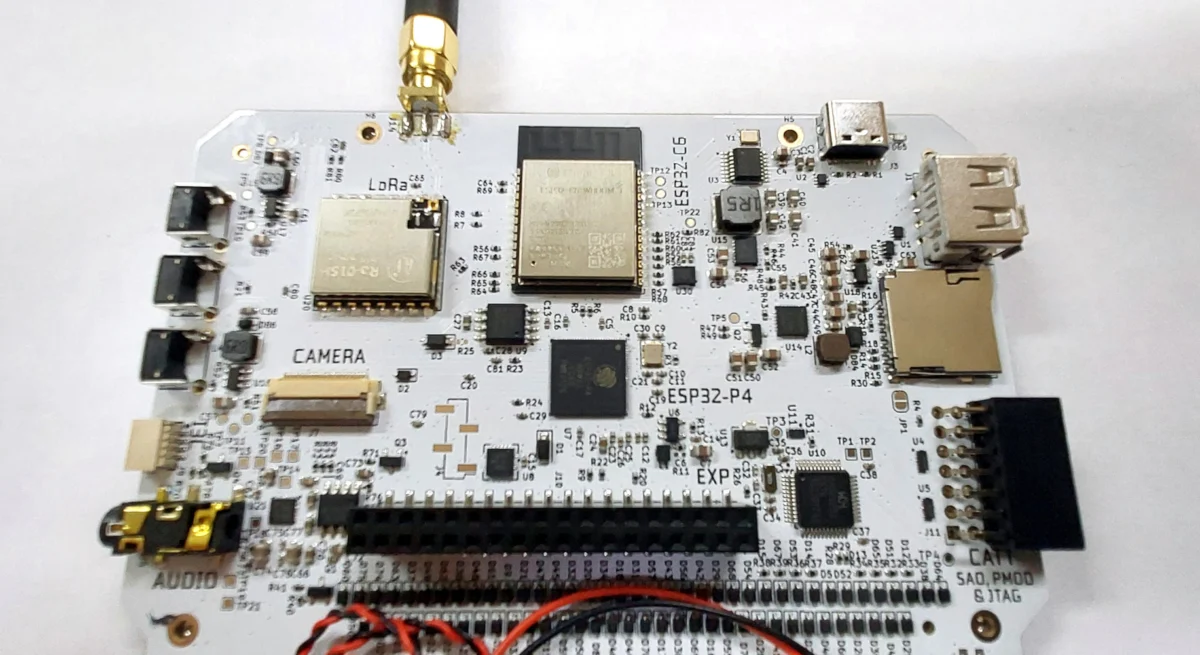
The true power of the Tanmatsu lies beneath its surface, driven by an Espressif ESP32-P4 application processor. This powerhouse features two 400MHz RISC-V cores, coupled with a generous 32MB of PSRAM and 16MB of Flash memory, providing ample resources for complex applications and multitasking (within its single-tasking launcher paradigm). Connectivity is a cornerstone of the Tanmatsu’s design, handled by an ESP32-C6 chip, enabling Wi-Fi, Bluetooth Low Energy (BLE), and IEEE 802.15.4 mesh networking. Furthermore, an integrated Ebyte LoRa module, available in 868MHz or 915MHz versions, complete with an SMA antenna, dramatically expands its communication capabilities, making it ideal for long-range, low-power applications critical in many hacking and IoT projects.
Interfacing options are abundant, catering to a wide array of peripherals and expansions. The device includes standard USB A and C ports, an SD card socket for expandable storage, and a 3.5mm jack for audio output. Beyond these common interfaces, the Tanmatsu truly shines with its dedicated expansion ports: a Qwiic-compatible socket on the right side, a PMOD and SAO-capable socket on the left, and a rear-mounted CSI camera connector (compatible with Raspberry Pi cameras). The most significant, however, is a larger, comprehensive expansion socket tucked under the rear cover, providing access to a multitude of signals for future add-ons and custom hardware integrations. Powering this robust ecosystem is a substantial 2500 mAh LiPo battery, conveniently rechargeable via the USB-C port, ensuring extended operational periods away from a power source.
Software Ecosystem: Intuitive, Expandable, Open
Upon activation, the Tanmatsu greets users with a synthwave-inspired splash screen before launching into a highly intuitive graphical menu. The user interface (UI) mirrors the familiarity of modern smartphone or desktop GUIs, featuring status icons for essentials like SD card, Wi-Fi, and battery, a central grid of app icons, and a bottom bar displaying keyboard shortcuts. Navigation is streamlined through arrow keys, a return key for selections, and colored function keys for special operations.
Crucially, the Tanmatsu distinguishes itself with a well-developed app repository—its very own "app store." While the device ships without pre-installed applications, connecting to Wi-Fi allows users to easily update the firmware across all its microcontrollers (P4, C6, and housekeeping MCU) and then access a curated library of apps. This repository, a hallmark feature inherited from the badge.team’s legacy, offers applications categorized for effortless browsing. Developers can create apps in interpreted scripting languages like MicroPython (available as a downloadable engine) or compile them directly for the P4, fostering a vibrant development community. Each app package includes a metadata file, an icon, and its executable components, all supported by a comprehensive online development guide.
Pricing and Availability: Bridging the Gap
Priced at 99 Euros (plus Dutch sales tax for EU residents and shipping), the Tanmatsu positions itself strategically in the market. Its creators have also announced plans for US warehouse shipping in the coming months, alleviating concerns about international tariffs and making it more accessible to a global audience. This pricing places it in an attractive middle ground, offering more than basic development boards (which often lack screens, batteries, or keyboards) but at a significantly lower cost than many fully-fledged Linux-based handheld cyberdecks.
Chronology: From Badge to Breakthrough
The journey of the Tanmatsu is a testament to the power of community, open-source development, and iterative design. Its origins are deeply rooted in a niche yet highly influential technological subculture: the Dutch conference badge scene.
From Badge to Breakthrough: The Tanmatsu’s Evolution
The story of the Tanmatsu truly began approximately 18 months prior to its current stable release, when early glimpses of the handheld surfaced. At that time, it was recognized for its potential, but its software was still undergoing rigorous development, making a comprehensive review premature. This initial preview, however, generated considerable excitement within the hacker community, keenly anticipating the maturation of its operating system and application ecosystem. The intervening period has seen dedicated development efforts transform that promise into a tangible reality, with robust software and a growing library of applications now readily available.
The MCH2022 Roots and Community Growth
The genesis of the Tanmatsu can be directly traced back to a souped-up version of the MCH2022 badge. MCH2022 (May Contain Hackers) is a prominent outdoor hacker camp in the Netherlands, renowned for its innovative and highly functional conference badges. These badges are not merely entry tokens; they are often sophisticated, open-source hardware devices designed to be hacked, programmed, and expanded upon by attendees. The badge.team, the collective behind these badges, has a long history of pushing the boundaries of what a conference badge can be, with offerings going back to their SHA2017 badge which featured downloadable apps.
The experience and lessons learned from developing such complex, community-focused hardware projects laid the foundation for the Tanmatsu. The MCH2022 badge proved to be a fertile ground for experimentation, allowing developers to test concepts related to portable computing, open-source integration, and user interaction within a vibrant hacker environment. This iterative process, fueled by feedback from a highly engaged technical community, was instrumental in refining the design principles and feature set that define the Tanmatsu today. The close ties to this community are further solidified by the existence of the Konsool, a community cousin of the Tanmatsu, explicitly supported by the badge.team, emphasizing its collaborative heritage.

Maturation of Software and Ecosystem
The period between the initial sneak peek and the current review has been crucial for the Tanmatsu’s software maturation. The developers focused on creating a stable, intuitive operating system that could support a diverse range of applications. This involved not just core OS development but also establishing a robust framework for application deployment and updates. The implementation of a multi-network Wi-Fi configuration, a significant quality-of-life improvement over previous badge-world devices, highlights the attention to user experience. Furthermore, the development of the app repository, which can host both interpreted MicroPython applications and compiled P4 executables, marks a pivotal step in fostering a sustainable and expandable software ecosystem, transforming the device from a mere hardware platform into a fully-fledged portable computing experience.
Supporting Data: A Deep Dive into Functionality and Market Position
To truly appreciate the Tanmatsu, one must delve deeper into its technical specifications, its user experience, and how it strategically positions itself within the broader landscape of portable computing devices for the hacker and maker community.
Deep Dive into the ESP32-P4 and Connectivity
The selection of the Espressif ESP32-P4 application processor is a deliberate and significant choice. Unlike previous ESP32 iterations primarily designed for IoT and microcontroller tasks, the P4 is a more powerful application processor, making it suitable for driving a full graphical interface and more complex computations. Its dual 400MHz RISC-V cores offer a compelling blend of performance and power efficiency, critical for a battery-operated handheld. The generous 32MB PSRAM provides ample working memory, enabling smoother UI experiences and larger application datasets, while 16MB of Flash stores the operating system and core applications.
The sophisticated connectivity suite further enhances the Tanmatsu’s utility. The ESP32-C6, a Wi-Fi 6, Bluetooth 5 (BLE), and 802.15.4 chip, offers modern, high-speed wireless communication crucial for internet access, device pairing, and robust mesh networking. The inclusion of an Ebyte LoRa module is particularly noteworthy for the hacker community. LoRa (Long Range) technology is ideal for projects requiring communication over significant distances with minimal power consumption, such as environmental monitoring, asset tracking, or creating independent communication networks – a staple in many advanced hardware projects and secure communications. The availability of 868MHz or 915MHz versions caters to different regional regulatory requirements, demonstrating thoughtful design for a global audience.
User Experience and App Development
The user interface of the Tanmatsu is designed for immediate accessibility. The graphical menu, with its grid of icons and clear status indicators, ensures that even those new to specialized hardware can quickly navigate. The physical input methods—a positive-click QWERTY keyboard and dedicated navigation keys—are robust and responsive, crucial for extended use. While the device is not designed for multitasking in the traditional sense, its launcher-based approach ensures a focused and efficient user experience. The quick blue flash upon loading an app, indicating the system’s readiness, is a small but appreciated detail.
For developers, the Tanmatsu represents an exciting platform. The dual nature of its app ecosystem—supporting both interpreted languages like MicroPython and compiled binaries—offers flexibility. MicroPython allows for rapid prototyping and easier entry for those familiar with Python, while compiled apps can leverage the full performance of the ESP32-P4 for more demanding tasks. The clear structure of app packages (metadata, icon, executable folder) simplifies development and deployment. Furthermore, the comprehensive online guide ensures that aspiring app developers have the necessary resources to contribute to the growing library, fostering a truly collaborative environment.
The Open-Source Ethos: Community-Driven Innovation
A cornerstone of the Tanmatsu’s identity is its unwavering commitment to open-source principles. Stemming directly from its origins in the Dutch badge team, the device embodies the spirit of transparency and collaborative innovation. The availability of its mechanical hardware, electronics schematics, and firmware on GitHub means that users are not just consumers but potential contributors. This level of openness empowers individuals to understand how their device works, repair it, modify it, and even build their own versions.
The commercial Tanmatsu, produced by its designer Renze Nicolai, coexists with the community-driven Konsool, a testament to this open-source philosophy. This dual approach ensures that the core technology remains accessible and adaptable, fostering a vibrant ecosystem where improvements and innovations can emerge from any corner of the global hacker community. This stands in stark contrast to many closed-source consumer electronics, offering a refreshing degree of control and empowerment to its users.
Market Analysis: Carving a Unique Niche
The Tanmatsu occupies a fascinating and largely underserved niche in the portable computing market. On one end of the spectrum, there are basic development boards (like standalone Raspberry Pis or ESP32 modules) which offer immense power but require significant effort and additional components (screen, keyboard, battery, case) to become a usable handheld. These projects can quickly escalate in cost and complexity.
On the other end are sophisticated Linux-based handheld cyberdecks, often custom-built or commercially produced, which typically command prices twice that of the Tanmatsu. While these devices offer the full power and flexibility of a Linux environment, they also come with higher power consumption, greater complexity, and a premium price tag.
The Tanmatsu precisely targets the middle ground. It provides a fully integrated, ready-to-use handheld experience—complete with screen, keyboard, battery, and case—at a significantly lower price point than Linux alternatives. While it doesn’t run Linux, its ESP32-P4 processor, robust operating system, and app repository offer substantial capabilities for a wide range of hacking, IoT, and communication tasks. Its focus on low power consumption, reliability, and ease of use for its specific application makes it an ideal "hacker’s communicator" or "general purpose toolkit" for those who value efficiency and targeted functionality over a full desktop OS.
Official Responses: The Vision and Its Advocates
While the article does not feature direct quotes from an interview, we can infer the official stance and vision behind the Tanmatsu through the actions and statements of its creator and the wider community.
The Vision Behind the Tanmatsu: Renze Nicolai’s Insight
Renze Nicolai, the designer and producer of the commercial Tanmatsu, embodies the dedication and expertise that brought this device to fruition. His decision to commercialize the Tanmatsu through Nicolai Electronics, while simultaneously supporting its open-source nature, speaks volumes about his vision. The Tanmatsu is not merely a product; it is a manifestation of the demand for a compact, powerful, and open platform for technological exploration.
One can infer that Nicolai’s intent was to create a device that streamlines the process of engaging with complex hardware and software projects. By offering a complete package—integrated display, keyboard, and power management—he removes many of the initial barriers that might deter newcomers or slow down experienced hackers. The ongoing development of the stable operating system and the app repository further highlights a commitment to long-term support and growth, ensuring the Tanmatsu remains relevant and useful for years to come. The emphasis on robust connectivity, from Wi-Fi to LoRa, suggests a focus on real-world utility in diverse scenarios, from simple data logging to advanced mesh networking.
Community Engagement: The Konsool and Badge.Team
The existence of the Konsool, explicitly referred to as the Tanmatsu’s "community cousin" and supported by the badge.team, serves as a powerful "official response" from the broader hacker community. It signifies an endorsement of the Tanmatsu’s design principles and its open-source foundation. The badge.team, a collective renowned for its contributions to hacker culture through innovative conference badges, actively fostering a parallel community-driven version ensures that the project remains rooted in its collaborative origins.
This dual approach—commercial product and community variant—allows for both professional manufacturing and grassroots innovation to thrive. The badge.team’s involvement provides a platform for shared development, troubleshooting, and expansion, ensuring that the device’s evolution is not solely dependent on a single commercial entity but is enriched by the collective intelligence and creativity of a global network of enthusiasts. This model strengthens the ecosystem, offering alternative pathways for users to engage with and contribute to the Tanmatsu project.
Addressing Global Availability
The announcement regarding forthcoming US warehouse shipping directly addresses a critical aspect of market accessibility. In an era of unpredictable tariffs and complex international logistics, providing local distribution channels significantly lowers the barrier to entry for potential users in key markets. This strategic move demonstrates an understanding of global market dynamics and a proactive approach to ensuring the Tanmatsu’s availability to a wider audience, thereby bolstering its commercial viability and expanding its user base beyond its European origins.
Implications: Redefining Portable Hacking
The Tanmatsu is more than just a new piece of hardware; it represents a potential shift in how hackers and makers approach portable computing and embedded development. Its implications could resonate across various segments of the technology community.
Redefining Portable Computing for Makers and Enthusiasts
The Tanmatsu’s most significant implication lies in its potential to redefine portable computing for makers, hobbyists, and professional hackers. By offering a robust, all-in-one solution that sits comfortably between basic development boards and expensive Linux cyberdecks, it democratizes access to advanced portable capabilities. Its low power consumption and reliable operation make it ideal for field work, off-grid projects, or simply as a dedicated, distraction-free terminal for coding and experimentation.
The device’s extensive expansion ports (Qwiic, PMOD, SAO, CSI camera, and the large general expansion socket) imply a future rich with add-ons and custom hardware integrations. This modularity encourages users to develop their own peripherals, transforming the Tanmatsu into a highly specialized tool for their specific needs. From environmental sensors to custom radio interfaces, the possibilities are vast, fostering a culture of innovation and practical application. It could become the go-to platform for rapid prototyping of IoT devices, field diagnostics, or secure communications.
The Future Landscape: Challenges and Opportunities
While the Tanmatsu currently stands alone in its carefully carved niche, its success will undoubtedly attract attention. The challenge for the Tanmatsu and its community will be to maintain its distinct identity and competitive edge as the market potentially evolves. This includes continuous software development, fostering a thriving app ecosystem, and ensuring the availability of documentation and support for both users and developers.
Opportunities abound in leveraging its unique features. The powerful mesh networking capabilities (via ESP32-C6 and LoRa) could lead to the development of sophisticated, decentralized communication tools, crucial for emergency preparedness or privacy-conscious users. The low power profile makes it an excellent candidate for long-duration data logging or remote monitoring applications. Furthermore, the open-source nature means that the device can evolve organically, adapting to new technologies and community demands, potentially spawning a whole family of compatible devices and peripherals.
A Beacon for Open Hardware and Software
Ultimately, the Tanmatsu serves as a beacon for the open-source hardware and software movement. Its journey from a community conference badge to a commercially viable, well-supported product demonstrates that transparency and collaboration can lead to successful and impactful technological innovations. It challenges the traditional closed-source model by proving that empowering users and developers through open access to design files and code can create a more resilient, adaptable, and ultimately more valuable product ecosystem.
As the Tanmatsu gains wider adoption, it has the potential to inspire a new generation of devices built on similar open principles, fostering greater innovation and accessibility in the world of portable computing. Only time will tell the full extent of its impact, but for now, the Tanmatsu confidently strides into its unique niche, ready to empower hackers and makers across the globe.