Empowering the Autonomous Enterprise: AWS Launches S3 Annotations for Massive-Scale Data Context
In an era defined by the rapid proliferation of AI agents and autonomous data pipelines, the ability to store, retrieve, and query context alongside raw data has become a critical bottleneck for modern engineering teams. Today, Amazon Web Services (AWS) announced a significant evolution in its storage portfolio with the introduction of Amazon S3 Annotations, a new metadata capability that allows organizations to attach rich, large-scale business context directly to their S3 objects.
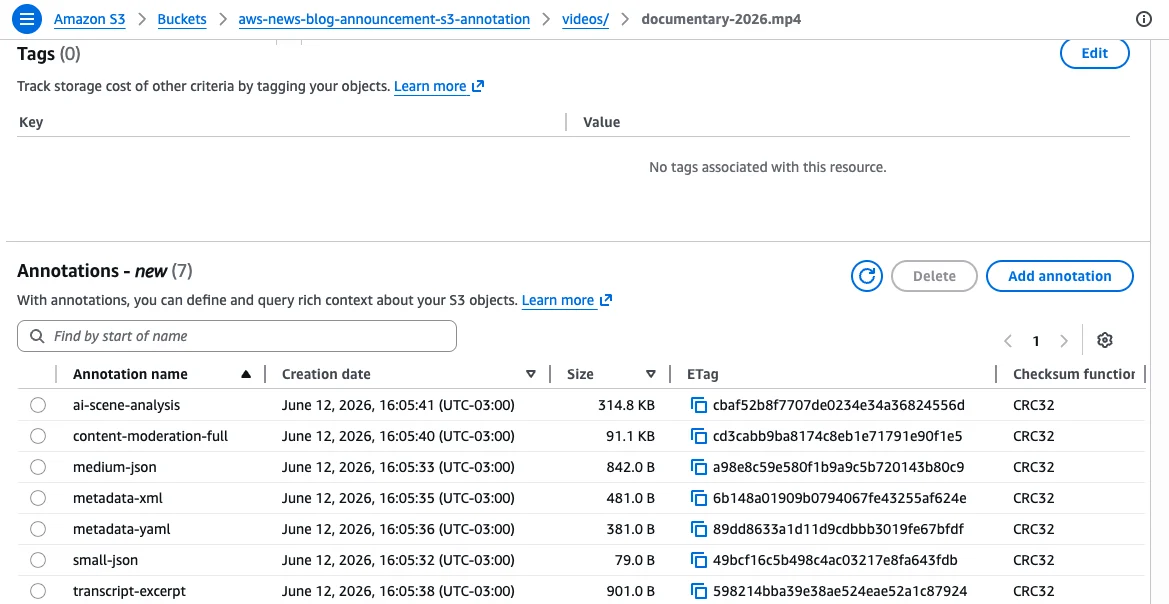
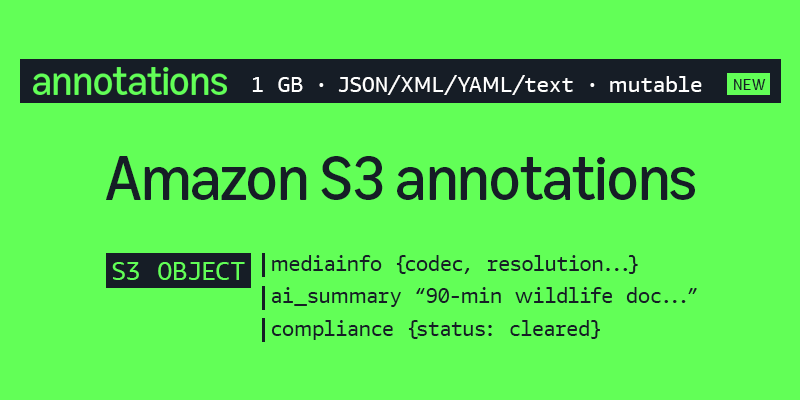
By enabling up to 1,000 named annotations per object—with each annotation reaching up to 1 MB in size—this release marks a departure from traditional, restrictive metadata limits. For data-heavy industries, this means the ability to store up to 1 GB of contextual information per object, including complex formats like JSON, XML, YAML, or plain text, without the overhead of maintaining external sidecar databases.
Main Facts: The New Frontier of Metadata
The core value proposition of S3 Annotations lies in its flexibility and scalability. Unlike previous iterations of object metadata, which were designed for static, operational use, S3 Annotations are mutable and designed to evolve alongside the data they describe.
Technical Specifications at a Glance
- Scale: Up to 1,000 named annotations per individual object.
- Capacity: Each annotation supports up to 1 MB, allowing for up to 1 GB of metadata per object.
- Format Flexibility: Native support for structured and unstructured data, including JSON, XML, YAML, and plain text.
- Lifecycle Integration: Annotations are intrinsically linked to the object. They migrate during cross-region replication and are automatically purged when the parent object is deleted.
- Queryability: Through integration with S3 Metadata, annotations are indexed into Apache Iceberg-compatible tables, enabling seamless SQL querying via Amazon Athena.
For organizations managing petabytes of data, this capability eliminates the "metadata tax"—the cost and complexity associated with keeping an external database synchronized with a massive object store.
The Chronology of Metadata Evolution
To understand the significance of this launch, one must look at the historical constraints of cloud storage metadata.
The Legacy Limitations
Historically, S3 users relied on three primary mechanisms for object description:
- System-defined metadata: Immutable properties like storage class, size, and creation timestamps.
- User-defined metadata: Small, static headers limited to 2 KB, set only at the time of upload.
- Object tags: Limited to 10 tags with a character cap of 128/256, best suited for lifecycle management and basic access control.
As the industry moved toward Big Data and AI-driven workflows, these tools proved insufficient. Developers were forced to build "sidecar" architectures—external databases (like DynamoDB or RDS) that stored metadata pointers to S3 objects. This created massive synchronization challenges: what happens if an object is deleted but the database entry remains? Or if the object moves, but the metadata doesn’t?
The Shift to "Object-Centric" Context
The introduction of S3 Annotations addresses these friction points by bringing the context "home" to the object itself. By allowing developers to modify or delete annotations without re-writing the underlying object, AWS has shifted the paradigm from static headers to dynamic, living metadata.
Supporting Data: Why Scale Matters
The necessity for this feature is underscored by the rise of AI agents. Modern autonomous workflows require more than just a file name and a size; they require a "knowledge graph" of the data.
Comparison Table: Metadata Capabilities
| Capability | Max Size | Mutable? | Best For |
|---|---|---|---|
| System Metadata | Fixed | No | Internal tracking |
| User Metadata | 2 KB | No | Initial identification |
| Object Tags | 10 tags | Yes | Lifecycle/Access Control |
| S3 Annotations | 1 GB | Yes | AI context, ML features, Business logic |
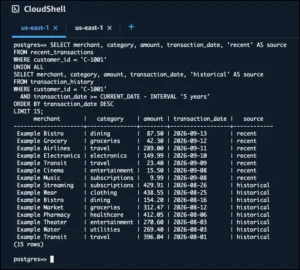
The ability to query these annotations using Amazon Athena and the S3 Tables MCP (Model Context Protocol) server allows AI models to perform "discovery" without expensive retrieval operations. An AI agent can now query an entire bucket to find specific assets based on their metadata content—such as identifying every 4K video file with a specific frame rate or an English-language transcript—without ever needing to download the actual video files.
Implications for Industry and AI
The implications of S3 Annotations extend far beyond simple storage optimization; they represent a fundamental change in how enterprises manage their digital assets.
AI Agentic Workflows
For companies building Retrieval-Augmented Generation (RAG) pipelines, S3 Annotations provide a native "vector-adjacent" storage solution. By attaching embeddings or summaries directly to objects, developers can create searchable, intelligent data lakes. When using the S3 Tables MCP server, developers can enable LLMs to "see" the entire dataset, facilitating complex, natural-language queries against massive archives.

Media and Entertainment
A media house can now attach high-fidelity technical specifications (codec, resolution, bit rate) alongside AI-generated summaries and sentiment analysis scores directly to their video assets. Because this metadata travels with the object, it remains consistent throughout the asset’s lifecycle, from production to archival in S3 Glacier.
Compliance and Governance
In regulated industries, provenance is key. By using annotations to track compliance flags, audit logs, or PII (Personally Identifiable Information) markers, organizations can ensure that the "reasoning" behind data classification is always attached to the data itself, ensuring that auditors have an immutable record that is as easy to query as the data it describes.
Official Responses and Strategic Vision
In the announcement, Daniel Abib of AWS emphasized that the core mission is to remove the burden of building custom metadata synchronization systems. "Organizations are building AI agents and autonomous workflows that need to find, understand, and act on data without human intervention," Abib noted. "To support these agentic workflows, you need metadata that can evolve alongside the data."
By leveraging Apache Iceberg, the industry standard for open table formats, AWS has ensured that S3 Annotations are not a "walled garden." Data stored in annotation tables remains accessible to any engine that supports Iceberg, providing customers with long-term vendor portability—a critical factor for enterprises prioritizing data sovereignty.
Implementation: How to Get Started
Getting started with S3 Annotations is a straightforward process requiring only basic AWS IAM permissions (s3:PutObjectAnnotation and s3:GetObjectAnnotation).
For developers, the workflow follows a familiar pattern:
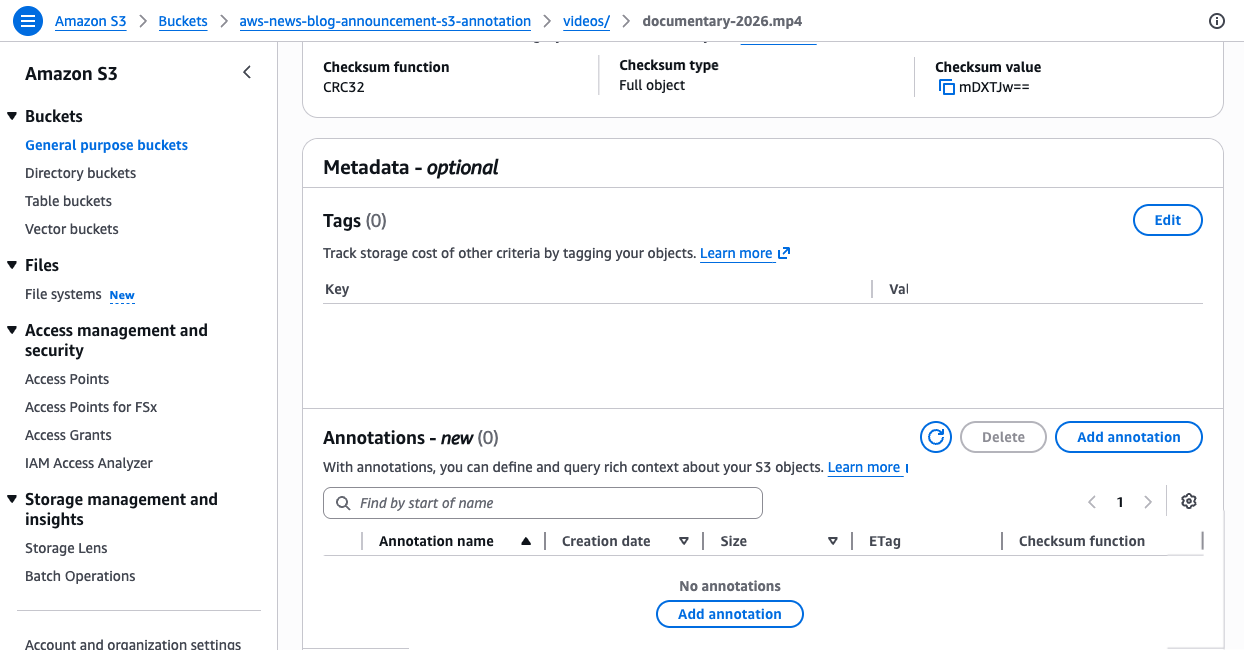
- Preparation: Define the annotation structure (JSON/YAML/Text).
- Deployment: Use the
PutObjectAnnotationAPI to attach the data to the target object. - Indexing: Enable the "Annotation Table" via the bucket configuration.
- Querying: Utilize Amazon Athena to execute SQL queries across the entire bucket’s annotations.
The use of the s3api via the AWS CLI allows for rapid integration into existing CI/CD pipelines. For example, a Lambda function could automatically trigger upon an object upload to analyze the content, generate a summary, and immediately commit that summary as an annotation, completing the loop between "data creation" and "data discoverability."
Conclusion
Amazon S3 Annotations represent a pivotal maturation of cloud storage. By bridging the gap between raw object storage and complex, queryable metadata, AWS has provided a foundation for the next generation of AI-driven enterprise applications. Whether it is a global media corporation managing vast libraries or a financial services firm needing granular audit trails, the ability to store 1 GB of dynamic context per object transforms the object store from a static bucket into a dynamic, intelligent repository.
As the industry continues to move toward autonomous systems, the "intelligence" of the storage layer will define the speed and accuracy of the AI models built on top of it. With S3 Annotations, AWS has ensured that the data lake of tomorrow will be as smart as the agents that navigate it.