Revolutionizing Simulation: How Open-Source Ingenuity Transforms Sony Headphones into Head-Tracking Peripherals
FOR IMMEDIATE RELEASE
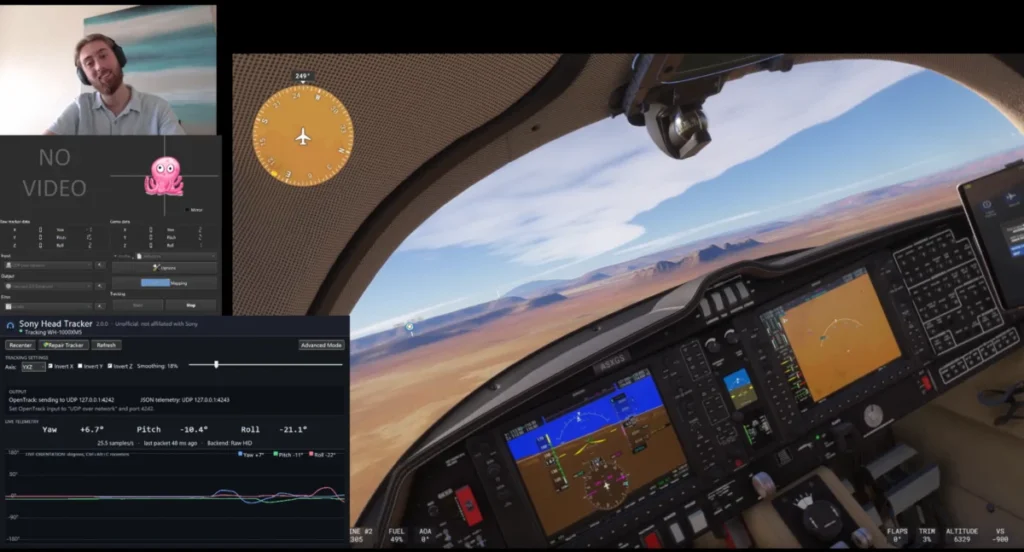
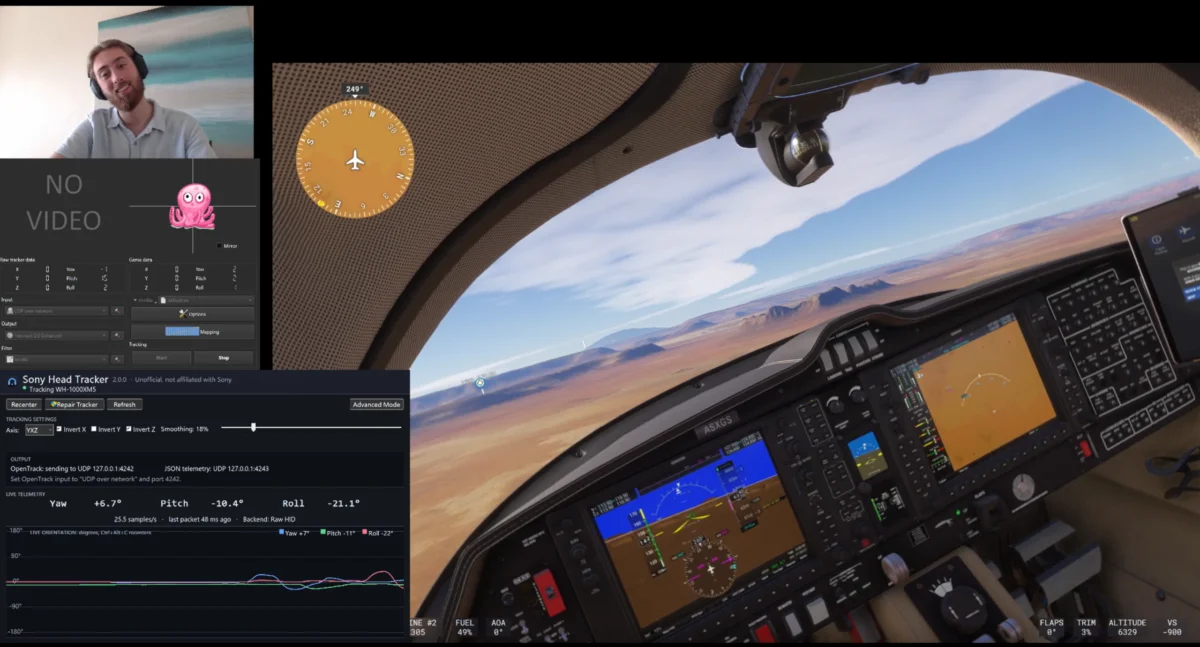
[City, State/Country] – [Date] – In a significant stride towards democrat democratizing access to high-fidelity simulation experiences, an independent developer, Nicholas Slattery, has unveiled an innovative open-source application that repurposes select Sony headphones into fully functional head-tracking devices for flight and racing simulators. This ingenious solution leverages the advanced sensor technology already embedded in many modern headphones for spatial audio, offering a cost-effective alternative to dedicated head-tracking hardware and significantly lowering the barrier to entry for aspiring virtual pilots and racers.
The project, hosted on GitHub, taps into a commonly supported protocol known as the Android Head Tracker HID protocol, allowing a range of Sony headphones to seamlessly integrate with popular simulation platforms via OpenTrack, a widely used open-source head-tracking interface. This development not only highlights the power of open-source collaboration but also underscores a growing trend of repurposing existing consumer electronics for novel and impactful applications within niche communities.
The Enduring Allure of Simulation: A Quest for Immersion
For decades, flight and racing simulators have captivated enthusiasts with their promise of replicating the intricate mechanics and exhilarating sensations of real-world aviation and motorsport. These digital environments offer a unique blend of escapism, skill development, and technical challenge, allowing users to pilot complex aircraft, navigate treacherous race tracks, and master sophisticated machinery from the comfort of their homes. The core appeal lies in the profound sense of immersion they provide, transporting players into a cockpit or driver’s seat with unparalleled realism.
However, achieving this coveted level of immersion traditionally comes at a substantial financial cost. A comprehensive simulation setup often requires a significant investment in specialized hardware: high-performance joysticks, throttles, rudder pedals for flight; force-feedback steering wheels, gear shifters, and pedal sets for racing. Beyond these primary controls, accessories like virtual reality (VR) headsets, ultra-wide monitors, and dedicated head-tracking devices—such as those utilizing infrared cameras and reflective markers—are often deemed essential to truly "feel" present in the virtual world. These additional peripherals, while enhancing the experience, add hundreds, if not thousands, of dollars to an already considerable expenditure, making the pursuit of ultimate realism an exclusive endeavor for many.
The ability to look around freely within the virtual cockpit or car interior, independent of the camera’s movement, is a cornerstone of this immersive experience. Traditional methods often involve mapping camera controls to a hat switch on a joystick or keyboard, which can feel clunky and unnatural. Dedicated head trackers, by contrast, offer a seamless, one-to-one translation of real-world head movements into the virtual environment, allowing pilots to scan their instruments, check their six, or racers to peer through corners with intuitive ease. It is precisely this critical piece of the immersion puzzle that Nicholas Slattery’s project now makes accessible to a much broader audience, leveraging hardware many already own.
The Genesis of an Idea: Nicholas Slattery’s Ingenious Solution
The inspiration for this groundbreaking project emerged from a simple yet profound observation: modern consumer headphones, particularly those designed for advanced spatial audio experiences, contain sophisticated inertial measurement units (IMUs). These tiny sensors, comprising gyroscopes and accelerometers, are constantly tracking the wearer’s head movements in three-dimensional space to accurately position virtual sound sources, creating a truly immersive audio landscape. Nicholas Slattery recognized the inherent potential of this existing, often underutilized, hardware. If headphones could track head movements for audio, why couldn’t they do the same for visual input in simulation games?
Slattery embarked on an open-source development journey, driven by the desire to bridge the gap between readily available consumer technology and specialized gaming peripherals. His vision was to create a lightweight, efficient application that could tap into this rich stream of head-tracking data from Sony headphones and translate it into a format usable by popular simulation software. This endeavor required a deep dive into the technical specifications and communication protocols employed by these devices, transforming a proprietary audio feature into a universal gaming utility.
The project’s success hinges on identifying and interfacing with a standardized communication method. Slattery discovered that many of these headsets utilize a known protocol: the Android Head Tracker HID protocol. This protocol, designed to standardize how head-tracking data is communicated from devices (like headphones) to an Android system for spatial audio applications, proved to be the key. By understanding and implementing this protocol, Slattery was able to develop an application that effectively "listens" to the head-tracking data broadcast by the Sony headphones.
Crucially, the application maintains the headphones’ primary function, allowing users to continue enjoying their audio playback via Bluetooth while simultaneously transmitting head-tracking data. This dual functionality underscores the elegance and user-friendliness of Slattery’s design, removing any compromise between audio quality and simulation immersion. The developed software then outputs this head-tracking data in a format compatible with OpenTrack, a free and open-source head-tracking interface that acts as a bridge between various tracking inputs and a wide array of simulation titles.
Unpacking the Technology: Spatial Audio, IMUs, and OpenTrack Integration
At the heart of Slattery’s innovation lies a sophisticated interplay of existing technologies: spatial audio, inertial measurement units (IMUs), and open-source software like OpenTrack. Understanding these components is crucial to appreciating the technical prowess of this project.
Spatial Audio Explained: Spatial audio, often marketed as 3D audio or immersive audio, aims to create a perception of sound coming from specific directions and distances around the listener. Unlike traditional stereo sound, which is limited to left and right channels, spatial audio processes sound to simulate a three-dimensional soundscape. This effect is achieved by manipulating audio signals based on head movements, environmental acoustics, and psychoacoustic principles. For this to work effectively, the audio system needs to know precisely where the listener’s head is oriented in real-time. This is where IMUs come into play.
The Role of Inertial Measurement Units (IMUs): An IMU is an electronic device that measures and reports a body’s specific force, angular rate, and sometimes the magnetic field surrounding the body, using a combination of accelerometers, gyroscopes, and sometimes magnetometers.
- Accelerometers: Measure linear acceleration (changes in speed or direction). In the context of head tracking, they detect movements like tilting the head forward, backward, or side to side.
- Gyroscopes: Measure angular velocity (rotational speed and direction). These are critical for detecting head rotations along the pitch (up/down), yaw (left/right), and roll (tilting side to side) axes.
- Magnetometers (optional but often included): Measure magnetic field strength, which can help determine absolute orientation relative to the Earth’s magnetic poles, thus compensating for drift that can accumulate from gyroscopes alone.
These sensors work in conjunction to provide a continuous stream of data about the headphone wearer’s head orientation and movement. The accuracy and low latency of these IMUs, refined for spatial audio applications, make them ideal candidates for head tracking in simulation.
The Android Head Tracker HID Protocol: The "HID" in this protocol stands for Human Interface Device. It’s a class of communication protocols designed for devices that primarily interact with humans, like keyboards, mice, and game controllers. The Android Head Tracker HID protocol is a specific extension designed to standardize the communication of head-tracking data from peripherals to an Android operating system. This standardization is vital because it allows different manufacturers to produce compatible devices, fostering interoperability. Nicholas Slattery’s key insight was recognizing that even though these Sony headphones are primarily marketed for spatial audio on mobile devices, they transmit their head-tracking data using this established, accessible protocol. This eliminated the need for complex reverse-engineering of proprietary communication methods, streamlining the development process.
OpenTrack Integration: Once the head-tracking data is captured from the Sony headphones via Slattery’s application, it needs to be fed into the simulation software. This is where OpenTrack becomes indispensable. OpenTrack is a free, open-source application specifically designed to translate various head-tracking inputs into a format that simulation games can understand. It supports a wide range of input devices, from webcams (for face tracking) to dedicated IR trackers, and now, thanks to Slattery, spatial audio headphones. OpenTrack then outputs this processed data using protocols like FreeTrack or TrackIR, which are natively supported by most modern flight and racing simulators. This integration makes Slattery’s project immediately compatible with a vast library of existing simulation titles without requiring any modifications to the games themselves.
The "family of Sony headphones" mentioned in the original article refers to models that incorporate this advanced spatial audio technology and adhere to the Android Head Tracker HID protocol. This broad compatibility means that many users already own the necessary hardware, transforming their premium audio devices into powerful simulation peripherals with a simple software installation.
The Economic Barrier to Entry: A Persistent Challenge in Simulation
The cost of entry into serious flight and racing simulation has long been a significant hurdle for many enthusiasts. While basic setups can be achieved with a standard gamepad, true immersion and precision demand specialized equipment, which often comes with a premium price tag.
- Flight Simulators: A good quality joystick can range from $50 to $200. Add a separate throttle quadrant and rudder pedals, and the cost quickly climbs to $300-$600. High-fidelity hotas (hands-on throttle and stick) systems or full cockpit replicas can easily exceed $1,000.
- Racing Simulators: Entry-level force-feedback wheels and pedal sets start around $200-$400. Direct drive wheels, load-cell pedals, and dedicated racing seats can push the total well into the thousands of dollars.
- Visual Immersion: A large, high-refresh-rate monitor might cost $300-$500, while a VR headset, offering unparalleled immersion, can range from $300 to over $1,000.
- Dedicated Head Tracking: Traditional infrared head trackers like TrackIR, while highly effective, typically retail for $150-$200, requiring additional reflective clips or hats.
When all these components are added up, constructing a truly immersive simulation rig can easily cost upwards of $1,000 to $3,000, not including the powerful PC required to run the demanding software. This financial commitment often relegates advanced simulation to a niche hobby for those with disposable income.
Nicholas Slattery’s project directly addresses this economic barrier. By allowing users to repurpose an item they likely already own – a pair of high-quality Sony headphones – it effectively eliminates the need to purchase a dedicated head-tracking device. For someone already invested in the audio ecosystem of Sony, this represents a saving of $150-$200, a significant sum that can be reallocated to other components or simply saved. This democratizing effect has the potential to broaden the appeal of simulation gaming, making it accessible to a wider demographic of casual enthusiasts and budget-conscious gamers who previously might have been deterred by the cumulative cost of peripherals.
The Open-Source Ethos: A Catalyst for Innovation and Community
The development and release of this head-tracking solution as an open-source project on GitHub is not merely a technical decision but a philosophical statement that profoundly impacts its reach and potential. The open-source ethos, characterized by collaborative development, transparency, and free distribution, is a powerful engine for innovation, especially within niche and enthusiast communities.
Community-Driven Innovation: Unlike proprietary software, where development is confined to a single company, open-source projects thrive on collective intelligence. Nicholas Slattery’s initial contribution provides a robust foundation, but the nature of open-source invites others to inspect, modify, and improve the code. This collaborative model means that bugs can be identified and fixed more rapidly, new features can be proposed and integrated by skilled contributors worldwide, and compatibility with a broader range of headphones or simulation platforms can be expanded by the community itself. The "official response" here isn’t from a corporate entity, but from the vibrant community of developers and users who embrace and build upon such projects.
Transparency and Trust: The availability of the source code ensures transparency. Users can verify what the software does, how it handles data, and that it doesn’t contain any malicious elements. This fosters trust within the community, encouraging wider adoption. For technical users, the ability to understand the underlying mechanics is often as valuable as the functionality itself.
Lowering Barriers Beyond Cost: Open-source also lowers barriers beyond just financial cost. It lowers the barrier to entry for aspiring developers who want to learn how such systems work, offering a real-world project to study and contribute to. It empowers users with agency, allowing them to tailor the software to their specific needs rather than being limited by a manufacturer’s feature set.
Sustainability and Longevity: Proprietary software can become obsolete if a company ceases support or goes out of business. Open-source projects, however, often enjoy a longer lifespan because the community can continue maintaining and developing them independently. This ensures that Slattery’s head-tracking solution, and the headphones it supports, will remain viable for simulation enthusiasts for years to come, regardless of future product cycles from Sony or other manufacturers.
The "response" from the open-source community to projects like Slattery’s is typically one of enthusiastic engagement. GitHub repositories gather stars, forks, and pull requests, indicating active interest and collaboration. Forums and online communities buzz with discussions about compatibility, setup guides, and potential enhancements. This collective energy is a testament to the power of sharing knowledge and tools freely, accelerating progress and empowering individuals.
Beyond the Headphones: A Glimpse into the DIY Sim Community
Nicholas Slattery’s project is not an isolated incident but rather a shining example of the ingenuity and "can-do" spirit prevalent within the broader DIY (Do It Yourself) simulation and maker communities. These communities constantly push the boundaries of what’s possible with off-the-shelf components, salvaged parts, and a healthy dose of programming know-how.
Hackaday, the platform that originally featured Slattery’s work, is a hub for such innovations, regularly showcasing projects that aim to enhance experiences or solve common problems through creative engineering. The mention of other DIY sim projects within the original article underscores this vibrant ecosystem:
- Force-Feedback Joysticks: While commercial force-feedback joysticks exist, they are often expensive or have limited features. The DIY community has reverse-engineered existing mechanisms or built custom designs from scratch, often integrating powerful motors and sophisticated control electronics to provide a more realistic tactile experience for flight simulation. This might involve using stepper motors, servo motors, or even repurposed industrial actuators to simulate the forces experienced in an aircraft’s controls.
- Driving Sim Handbrakes Based on Load Cells: In racing simulators, a realistic handbrake is crucial for rally, drifting, or even precise cornering in certain track disciplines. Commercial solutions can be costly. DIY enthusiasts have constructed handbrakes using load cells (sensors that convert force into an electrical signal) to provide a progressive, pressure-sensitive input, mimicking the feel of a hydraulic handbrake in a real car far more accurately than a simple on/off button or potentiometer-based lever.
These examples, much like Slattery’s headphone tracker, illustrate a collective desire to overcome the financial and technical limitations of commercial products. They represent a culture of problem-solving, skill development, and sharing knowledge, where individuals are empowered to create bespoke solutions tailored to their specific needs and budgets. The resources available through platforms like GitHub, Hackaday, and various enthusiast forums foster an environment where complex projects can be tackled by individuals or small teams, leading to innovations that might otherwise never see the light of day. This collaborative spirit ensures that the pursuit of simulation realism remains dynamic and accessible, driven by the passion of its community members rather than solely by corporate product cycles.
Implications for the Future of Simulation and Consumer Technology
The implications of Nicholas Slattery’s open-source head-tracking solution extend far beyond simply saving sim enthusiasts a few dollars. This project offers a glimpse into a future where consumer electronics are more versatile, innovation is more democratized, and our approach to technology is more sustainable.
Democratization of Sim Gaming: The most immediate and tangible impact is the lowering of the entry barrier for simulation gaming. By transforming an existing, high-quality audio device into a core simulation peripheral, Slattery’s work makes the immersive experience of head tracking accessible to a broader audience. This could lead to an influx of new players into flight and racing sims, fostering community growth and potentially even influencing future game development to cater to a larger, more diverse player base.
Innovation in Peripheral Repurposing: This project serves as a powerful proof-of-concept for repurposing existing consumer hardware. It challenges manufacturers and users alike to think creatively about the latent capabilities within devices we already own. Why buy a new specialized gadget when your existing smartphone, smartwatch, or indeed, headphones, might contain the necessary sensors for a novel application? This could spur further innovation in leveraging integrated sensors for new uses across various domains, from gaming to accessibility tools.
The Future of Integrated Sensors: As sensors become increasingly sophisticated, miniaturized, and ubiquitous in everyday devices, their potential applications will only multiply. Slattery’s project foreshadows a future where a single device, like a pair of premium headphones, could seamlessly transition between multiple roles: delivering high-fidelity audio, facilitating communication, providing spatial awareness for augmented reality applications, and serving as a precise input device for virtual environments. This integration could lead to a convergence of functionalities, making our devices more versatile and our digital interactions more intuitive.
Sustainability and Reduced E-Waste: In an era of increasing environmental consciousness, the ability to extend the utility of electronic devices has significant sustainability implications. By repurposing headphones for a new function, the project contributes to reducing electronic waste. Instead of discarding an old pair of headphones when upgrading, or buying a separate head tracker, users can give their existing hardware a new lease on life. This aligns with principles of a circular economy, maximizing the value and lifespan of consumer goods.
Potential for Further Development: The open-source nature of the project also implies a vibrant future for its evolution. The community could explore:
- Broader Headphone Compatibility: Expanding support to other brands or models of headphones with similar spatial audio capabilities.
- Enhanced Features: Integrating additional functionalities like voice commands, gaze tracking (if camera integration becomes possible), or even haptic feedback through headphone vibrations.
- Cross-Platform Support: While currently focused on Windows and OpenTrack, future developments could explore compatibility with Linux or even macOS, broadening its reach.
- Direct Game Integration: While OpenTrack is a robust solution, direct integration into game engines or specific titles could offer even lower latency and tighter control.
Conclusion
Nicholas Slattery’s open-source application for utilizing Sony headphones as head trackers is a remarkable testament to individual ingenuity and the transformative power of the open-source community. By creatively repurposing existing consumer technology, the project not only provides a highly effective and affordable solution for immersive simulation gaming but also champions the principles of accessibility, sustainability, and collaborative innovation.
This development marks a significant step towards democratizing the high-fidelity simulation experience, inviting more enthusiasts to explore the thrilling worlds of virtual aviation and motorsport without the prohibitive cost of dedicated hardware. It serves as a powerful reminder that sometimes, the most revolutionary solutions don’t require inventing something entirely new, but rather finding novel ways to leverage the incredible technology already at our fingertips. As the digital and physical realms continue to intertwine, projects like Slattery’s illuminate a path towards a more interconnected, versatile, and user-empowered technological future.
Enthusiasts eager to experience this innovation can find Nicholas Slattery’s project and contribute to its ongoing development on GitHub: https://github.com/NicholasSlattery/sony-head-tracker.