Bridging the Digital Divide: How the LEAP Node is Revolutionizing Remote Education Through Edge Computing
In an era defined by lightning-fast 5G networks and satellite-linked internet, it is easy to succumb to the illusion that the world is entirely connected. However, for millions of students residing in the "last mile" of the global south, the digital revolution remains a distant rumor. Geography, economic disparity, and infrastructure deficits continue to wall off remote communities from the vast educational resources available online.
To address this systemic inequality, the technical team at T4EQ, in partnership with the non-profit organization AID India, has unveiled a groundbreaking solution: the Low-bandwidth Educational Access Platform, or LEAP. By leveraging low-cost edge computing hardware and sophisticated content-management software, LEAP provides high-quality educational video content to classrooms that have little to no internet connectivity.
Main Facts: The LEAP Framework
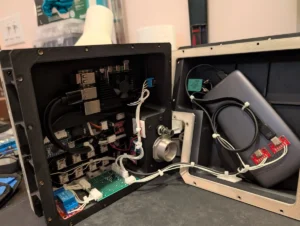
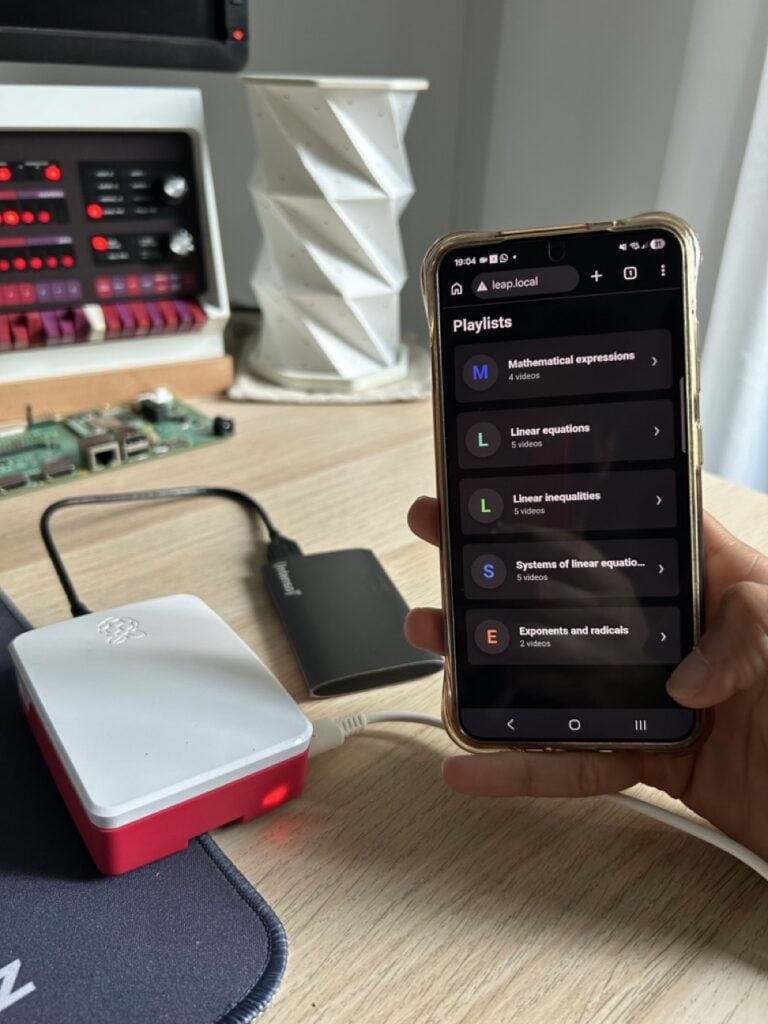
At its core, LEAP is a localized content distribution system designed to bypass the traditional requirements of a stable, high-speed internet connection. The system relies on a "LEAP Node"—a compact, high-performance computing unit placed directly within a village or school.
The primary objective of the LEAP Node is to act as a local repository and server. Instead of 40 individual students attempting to stream high-definition video from a distant server over a fragile 2G or 3G connection, the LEAP Node fetches the data once, caches it, and then distributes it locally.
Key Components of the LEAP System:
- Hardware: The system is built around the Raspberry Pi 4 (1GB model), chosen for its balance of cost-efficiency and technical specifications, including Gigabit Ethernet and USB 3.0 support.
- Local Networking: A standard router connects the LEAP Node to up to 40 "thin clients" or mobile devices simultaneously.
- Content Management: Educational materials are managed via Amazon S3 (Simple Storage Service) using "manifest files" that dictate what content should be downloaded and displayed.
- Dual-Mode Connectivity: The system is designed for "Low-Bandwidth" environments (using intermittent internet to sync) and "Zero-Bandwidth" environments (using physical USB drives for updates).
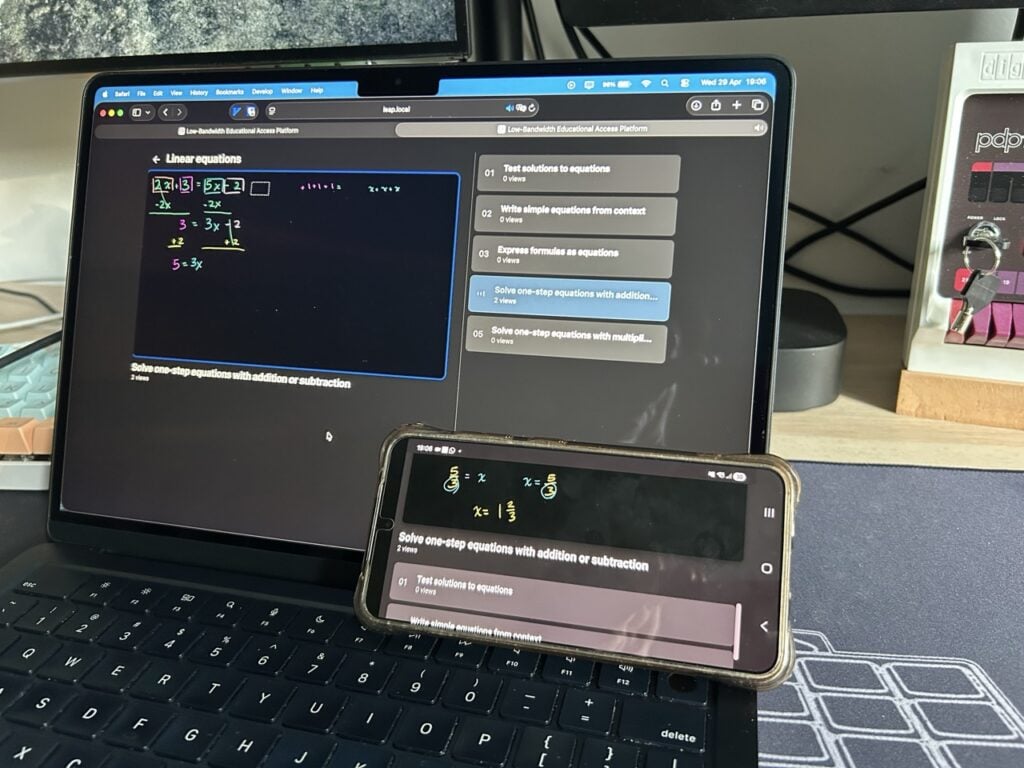
- Accessibility: Students access the content through a standard web browser, meaning the system is device-agnostic—working on everything from refurbished smartphones to dedicated tablets.
Chronology: From Problem Identification to Deployment
The development of LEAP followed a distinct trajectory, moving from the identification of a massive educational gap in rural India to a scalable, open-source technological solution.
Phase 1: Identifying the Barrier (The "Buffer" Problem)
For years, AID India and other NGOs noticed that even when remote schools were gifted tablets or laptops, they remained "paperweights" because the local cellular towers could not handle the bandwidth required for modern educational apps and video streaming. The traditional model of "streaming-on-demand" was fundamentally broken for the rural context.
Phase 2: The Prototype Phase
The T4EQ team recognized that the solution lay in "Edge Computing"—moving the data storage as close to the end-user as possible. Initial designs looked at pre-loading SD cards with static content. However, the team quickly realized that educational curricula are dynamic; they need updates, bug fixes, and new modules. A static system would become obsolete within months.
Phase 3: Developing the LEAP Node (2024–2025)
The team pivoted to a "Sync-and-Serve" model. They began developing custom software that could run on a Raspberry Pi 4. This software needed to be "smart" enough to handle "dirty" internet—connections that drop out frequently. They implemented logic that allowed interrupted downloads to resume exactly where they left off, ensuring no data (or time) was wasted.
Phase 4: Field Testing and Current Status (2026)
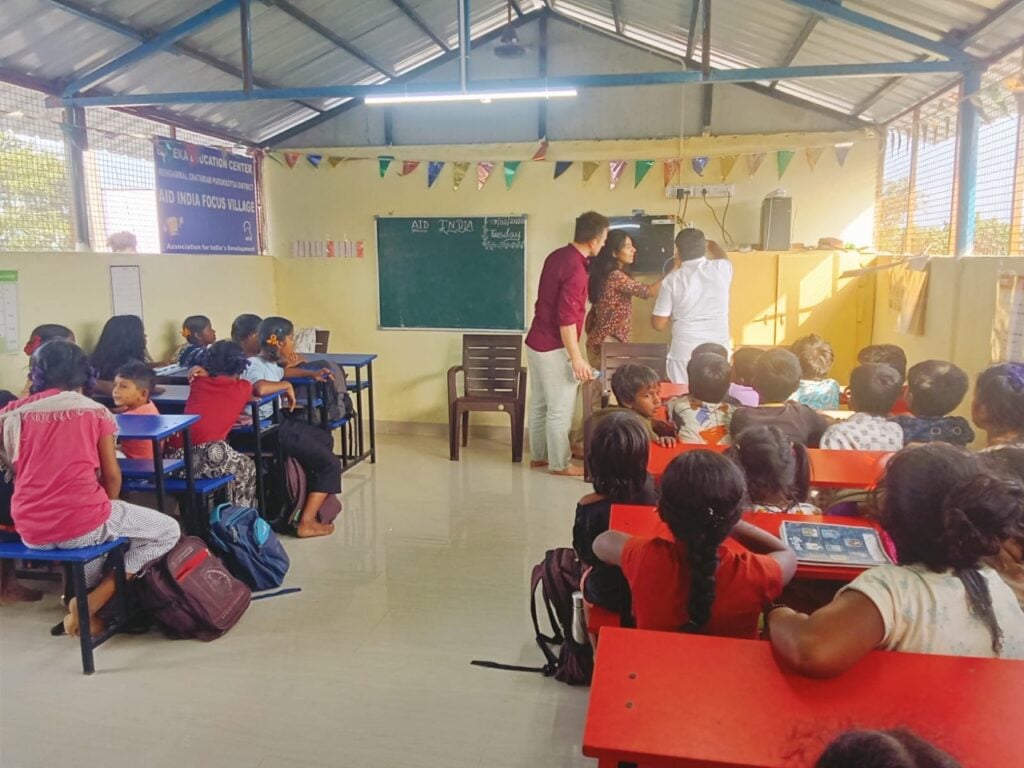
As of mid-2026, LEAP has entered its early deployment phase. T4EQ and AID India are currently conducting live trials in the state of Tamil Nadu, India. These trials are focusing on the stability of the hardware in high-temperature environments and the ease of use for local teachers who may not have a background in IT.
Supporting Data: Technical Specifications and Scalability
The success of LEAP is rooted in its pragmatic hardware choices and intelligent software architecture.
Why Raspberry Pi 4?
While many single-board computers (SBCs) exist, the T4EQ team specifically selected the Raspberry Pi 4 1GB for several data-driven reasons:
- Throughput: The Gigabit Ethernet port allows for rapid distribution of data to the router, which is essential when 40 devices are pulling video files simultaneously.
- USB 3.0: High-speed USB ports are critical for the "Zero-Bandwidth" mode, allowing teachers to upload gigabytes of new video content from a thumb drive in minutes rather than hours.
- Power Consumption: The Pi 4 can be powered by simple solar-charged battery packs, a necessity in villages with unreliable power grids.
- Cost: At its price point, the Pi 4 allows NGOs to scale the project to hundreds of villages without the prohibitive costs of traditional server hardware.
The Manifest System
The "intelligence" of the LEAP Node lies in its use of manifest files stored on AWS S3. A manifest file acts as a digital inventory. When the LEAP Node detects even a momentary internet connection, it pings the S3 server to check the manifest. If the manifest shows a new video titled "Intro to Algebra," the Node automatically begins a background download.
Performance Metrics
In internal testing, a single LEAP Node was able to serve 40 individual video streams to 40 different devices without significant latency. This is achieved because the traffic remains entirely within the local Wi-Fi network created by the classroom router, requiring 0kbps of external internet during the actual viewing session.
Official Responses: Insights from the Developers
The visionaries behind the project emphasize that LEAP is more than just a hardware stack; it is a philosophy of "appropriate technology."
Dr. Preethi Padmanabhan of T4EQ highlights the necessity of localizing the computing power. "In order to serve all 40 clients in a village, a computing node local to the village would host and cache the video content," she explained. "This ensures that, once the content is present in the LEAP Node, there is no further dependency on the network connectivity."
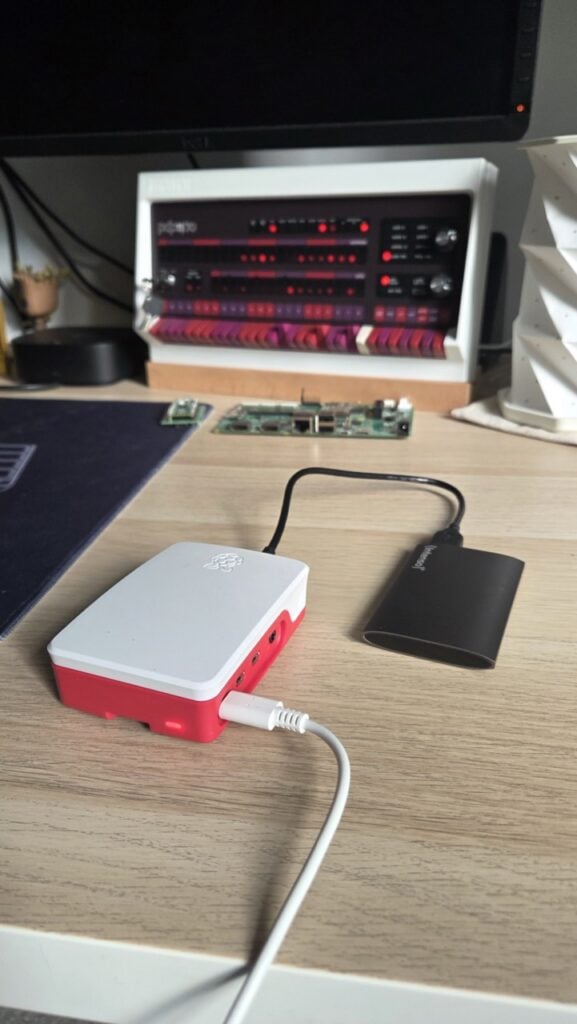
The team also addressed the reality of areas with absolutely no connectivity—the "Zero-Bandwidth" zones. "The LEAP Node will also be able to fetch manifest and content updates from an external USB drive," the team stated. "This will allow the teacher traveling to the school to take the content with them and to upload it to the LEAP Node by simply plugging in an external USB drive."
Regarding the choice of platform, the T4EQ team noted, "We selected [Raspberry Pi] because it serves as an ideal, low-cost, single-board computer to host our custom application. [It allows] us to cache and serve educational content locally in classrooms without requiring an active internet connection."
Implications: A Global Blueprint for Educational Equity
The deployment of LEAP in Tamil Nadu is being viewed by international observers as a potential blueprint for remote education worldwide. The implications of this technology extend far beyond the borders of India.
1. Democratizing High-Quality Content
For too long, high-quality video education (like Khan Academy or specialized STEM modules) has been the privilege of the urban elite. LEAP levels the playing field, ensuring that a child in a remote mountain village has the same access to visual learning as a child in a metropolitan private school.
2. The Power of Open Source
By making the LEAP code open source on GitHub, T4EQ has invited a global community of developers to improve the platform. This means that an NGO in Sub-Saharan Africa or a rural school district in the Appalachian Mountains could adapt the LEAP Node for their own local languages and curricula.
3. Sustainability and "Sneakernet" 2.0
The inclusion of the USB-update feature (often colloquially called a "Sneakernet") acknowledges the reality of infrastructure lag. It provides a fail-safe that ensures education never stops, even if the local cellular network fails for weeks at a time.
4. Future-Proofing Rural Schools
As the LEAP Node is built on the Raspberry Pi 4, it is inherently modular. In the future, these nodes could be upgraded to handle interactive quizzes, local file submissions, or even basic AI-driven tutoring—all hosted locally on the "Edge."
Conclusion
LEAP is a testament to the fact that the digital divide cannot be closed by hardware alone; it requires "smart" software designed with empathy for the end-user’s environment. As AID India continues to roll out these nodes, the metrics gathered will likely provide a compelling case for governments and international bodies to invest in edge-computing solutions as a primary tool for global literacy. The message from T4EQ is clear: if the student cannot get to the internet, the LEAP Node will bring the internet to the student.