Empowering the Edge: Exploring the New MINIESP32LP Low-Power Module
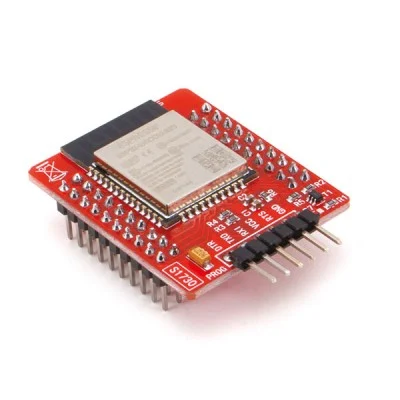
The landscape of the Internet of Things (IoT) is undergoing a significant shift. As we move away from power-hungry, always-on devices toward a future defined by sustainable, battery-operated, and "set-it-and-forget-it" sensors, the hardware requirements for developers have evolved. Addressing this critical need, the new MINIESP32LP (Low Power) module has emerged as a specialized iteration of the ubiquitous ESP32 architecture, designed specifically for developers who prioritize efficiency and longevity over onboard convenience features.
Main Facts: The Core of the MINIESP32LP
At its heart, the MINIESP32LP is built upon the robust Espressif Systems System-on-Chip (SoC) architecture, providing full pin and software compatibility with the standard MINI ESP32 module. However, the "LP" designation is not merely a branding exercise; it represents a fundamental design philosophy.
The most notable departure from the standard MINI ESP32 is the deliberate exclusion of the dedicated USB-to-Serial programming interface. While this may initially seem like a setback for beginners, it is a strategic choice for industrial and professional deployment. By removing the power-hungry USB controller, the module eliminates a major source of quiescent current draw, effectively lowering the power floor of the device. This makes the MINIESP32LP an ideal candidate for battery-powered environmental monitors, remote data loggers, and wearable technologies where every microampere saved extends the operational life of the product by weeks or even months.
Despite its stripped-down approach to power management, the module retains the flagship connectivity options that made the ESP32 a global standard:
- WiFi 802.11 b/g/n: Offering robust wireless connectivity for cloud-integrated applications.
- Dual-Mode Bluetooth: Supporting both Bluetooth Classic and Bluetooth Low Energy (BLE), ensuring broad compatibility with legacy hardware and modern mobile devices.
- Arduino IDE Compatibility: Lowering the barrier to entry by allowing developers to leverage the vast library of existing code, drivers, and community-driven tutorials.
Chronology: The Evolution of ESP32 Power Optimization
To understand why the MINIESP32LP is a significant release, one must look at the history of Espressif’s silicon strategy.
The Dawn of the ESP32 (2016)
When the ESP32 was first introduced, it revolutionized the maker movement by offering a dual-core processor with integrated WiFi and Bluetooth for a fraction of the cost of existing microcontrollers. However, the initial focus was on performance and ease of development. The "MINI" modules that followed provided a compact footprint, but they were largely targeted at rapid prototyping, often including USB interfaces for "plug-and-play" capability.
The Rise of Edge Intelligence (2020–2023)
As IoT deployments shifted from home automation to industrial agriculture and remote sensing, the limitation of current modules became apparent. The "always-on" nature of USB bridge chips meant that even when the processor was in a deep-sleep state, the bridge chip remained a "vampire" load on the battery.

The MINIESP32LP Arrival (2024)
The launch of the MINIESP32LP represents the "Maturation Phase" of the ESP32 ecosystem. By stripping away the auxiliary hardware required for development convenience, the industry has signaled that it is ready to transition from hobbyist prototyping to professional, highly optimized mass production.
Supporting Data: Why "Low Power" Matters
In the world of embedded systems, power consumption is a multi-dimensional challenge. The MINIESP32LP is designed to minimize what engineers call "quiescent current"—the current consumed by a device when it is not actively performing a task.
| Feature | Standard MINI ESP32 | MINIESP32LP |
|---|---|---|
| USB Interface | Integrated | Removed |
| Quiescent Current | Moderate (Bridge overhead) | Ultra-Low |
| Target Application | Prototyping/Development | Battery-Operated Deployment |
| Form Factor | Compact | Minimalist |
The Power Budget Calculation
Consider a device powered by a 2000mAh LiPo battery. If a standard module draws 10mA in a low-power mode due to the USB bridge, the device will exhaust its battery in approximately 200 hours, or about 8 days. By utilizing the MINIESP32LP, which can significantly reduce that idle current, developers can potentially extend that runtime to months or even years, depending on the sleep-cycle duty cycle. This shift is what enables the deployment of sensors in remote locations where changing batteries is physically or economically impractical.
Official Responses and Engineering Perspectives
Industry experts and developers at Open Electronics have highlighted that the MINIESP32LP is not intended to replace the standard ESP32 in all scenarios. Rather, it fills a gap in the hardware "ladder" of production.
"The MINIESP32LP is a surgical tool," says one embedded systems architect. "When we build products that need to last through a winter season in a remote field, we don’t need a USB port. We need the lowest possible leakage current. By removing the USB-to-UART bridge, we are saving the developer the work of having to desolder or bypass components on a production PCB. It is a ‘production-ready’ module from day one."
Furthermore, the full compatibility with the Arduino IDE ensures that the development experience remains familiar. Developers can write code using the standard ESP32 boards manager, flash the device via an external FTDI adapter or a programming jig during production, and then deploy the module into the field. This maintains the "software agility" of the ESP32 while providing the "hardware efficiency" required for professional applications.
Implications for the Future of IoT
The introduction of this module carries several profound implications for the industry:

1. Sustainability in Hardware
By reducing the power requirements of individual IoT devices, the industry moves closer to a truly sustainable model. Millions of devices running on smaller, more efficient batteries lead to less e-waste and reduced logistical burdens for maintenance crews.
2. Streamlined Manufacturing
For hardware manufacturers, the absence of the USB chip simplifies the Bill of Materials (BOM). Fewer components mean fewer points of failure, lower procurement costs, and a more straightforward assembly process. The MINIESP32LP effectively reduces the hardware complexity of the end-product by offloading the interface requirements to the development phase.
3. Expansion of the "Edge"
With better power efficiency, the geographic and environmental boundaries of the Internet of Things expand. We can now deploy sensors in environments previously deemed too difficult to reach, such as deep-forest environmental monitoring stations, structural health monitors on bridges, or precision agricultural sensors that require long-term autonomy.
Final Considerations: Choosing the Right Module
Choosing between a standard MINI ESP32 and the new MINIESP32LP comes down to the phase of the project:
- Choose the Standard MINI ESP32 if: You are currently in the R&D or prototyping phase. You need to frequently update firmware, debug code via serial monitors, and test functionality on your desk without external programming hardware.
- Choose the MINIESP32LP if: You have finalized your firmware and are moving toward mass production or long-term deployment. If your device is going to be sealed in an enclosure and powered by a battery, the MINIESP32LP is objectively the superior engineering choice.
In conclusion, the MINIESP32LP is a testament to the maturation of the Espressif ecosystem. By listening to the demands of the industry for cleaner, more efficient, and more reliable hardware, the developers have provided a vital link between the flexibility of open-source prototyping and the rigor of industrial-grade IoT deployment. As we look toward the future, it is specialized hardware like this that will define the success of the next generation of connected devices.
For those interested in exploring the technical specifications or integrating this module into their next design, the module is currently available through official distribution channels like the Open-Electronics store, which provides the necessary documentation and support to transition from initial concept to a low-power, field-deployed reality.