High-Fidelity Imaging in Compact Form: The Evolution of the 700 TVL SONY CCD Camera Module
Introduction
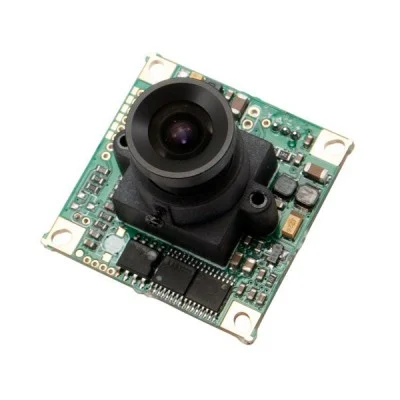
In the rapidly evolving landscape of machine vision, security surveillance, and First-Person View (FPV) robotics, the demand for reliable, high-resolution analog imaging remains steadfast. While the industry has shifted significantly toward digital high-definition standards, specific sectors—ranging from industrial monitoring to hobbyist drone racing—continue to prioritize the unique characteristics of Charge-Coupled Device (CCD) sensors. The recently highlighted SONY-powered color camera module, offering a resolution of 700 TV lines (TVL), represents a pinnacle of this specialized technology. By combining a 1/3-inch CCD sensor with high-performance Digital Signal Processing (DSP), this module offers a balance of sensitivity, color accuracy, and real-time processing that remains highly relevant in today’s hardware ecosystem.
Main Facts: The Anatomy of a High-Resolution Module
The core of this imaging solution lies in its architectural synergy. At the heart of the module is a 1/3-inch CCD sensor. Unlike CMOS sensors, which have largely taken over the consumer market due to cost and integration efficiency, CCDs are historically lauded for their global shutter characteristics and superior noise performance in variable lighting.
Key Specifications:
- Sensor Technology: 1/3-inch CCD, providing a larger light-gathering area than many sub-inch CMOS equivalents.
- Resolution: 700 TV Lines, a standard that provides crisp, high-definition analog output suitable for CRT displays and modern digital converters alike.
- Integrated DSP: A SONY-engineered Digital Signal Processor handles essential tasks such as automatic gain control (AGC), white balance, and noise reduction in real-time.
- Optical Specs: A fixed f3.6 mm lens, optimized for a wide field of view (FOV), catering to applications where situational awareness is critical.
- Low-Light Performance: A sensitivity rating of 0.1 Lux, allowing for operation in environments where ambient light is minimal, such as twilight conditions or dimly lit industrial corridors.
The primary appeal of this module is its "plug-and-play" reliability. By offloading complex image processing to the dedicated SONY DSP, the module ensures that the output is consistently balanced, requiring minimal intervention from the host controller.
Chronology of Imaging Technology: From CCD to Modern Standards
To understand the significance of this 700 TVL module, one must view it within the broader historical trajectory of imaging sensors.
The Rise of CCD (1970s–2000s)
The CCD was invented in 1969 at Bell Labs. For decades, it was the gold standard for high-end photography and surveillance. Its ability to convert light into electrical charge with high fidelity made it the preferred choice for broadcast television and security systems.
The CMOS Revolution (2010–Present)
As semiconductor fabrication advanced, CMOS (Complementary Metal-Oxide-Semiconductor) sensors caught up in quality while vastly improving in power efficiency and cost. This led to the dominance of CMOS in smartphones and consumer cameras.
The Persistence of Specialized Analog
Despite the ubiquity of CMOS, the "700 TVL era" marked the peak of analog surveillance technology. Before the industry fully transitioned to HD-SDI or IP-based cameras, the 700 TVL SONY-based modules became the benchmark for FPV enthusiasts. The low latency associated with analog signal transmission—critical for piloting drones—kept these modules in high demand long after digital alternatives arrived. Today, this module serves as a bridge between classic, robust hardware and modern application requirements.

Supporting Data: Why 700 TVL Still Matters
In technical terms, "TV Lines" (TVL) refers to the horizontal resolution of the camera. A 700 TVL rating implies that the system can resolve 700 vertical lines across the image frame.
Resolution vs. Bitrate
While digital cameras advertise in megapixels, analog modules operate on bandwidth. 700 TVL provides enough visual fidelity for identification, navigation, and obstacle avoidance without the overhead of heavy compression algorithms that cause "ghosting" or "lag" in digital systems.
Sensitivity Analysis
The 0.1 Lux sensitivity is a crucial performance metric. In security applications, the ability to discern movement in low-light environments without triggering infrared illumination—which can sometimes wash out images or reveal the camera’s location—is highly valued. The SONY DSP works in tandem with the CCD’s inherent sensitivity to produce images that maintain color integrity even when photon counts are low.
Optical Considerations
The choice of an f3.6 mm lens is strategic. In a 1/3-inch sensor format, an f3.6 mm lens provides a wide-angle perspective that captures a broad field of view. This is ideal for security cameras covering entire rooms or for FPV drones that need to see the "horizon" and the ground simultaneously during high-speed maneuvers.
Official Perspectives and Operational Context
Industry experts often point to the SONY-based CCD modules as the "workhorses" of the industry. The integration of SONY’s proprietary DSP is the defining factor here. While many generic modules exist on the market, the inclusion of authentic SONY processing ensures that color reproduction, edge enhancement, and dynamic range are managed according to high-quality standards.
From a maintenance and reliability standpoint, these units are often encased in compact housings that protect the sensitive electronics from vibration and dust. This makes them particularly well-suited for mounting on vibrating platforms, such as robotic arms or unmanned aerial vehicles (UAVs).
Implications: The Future of Analog Integration
What does the availability of such a module mean for the current market?

1. Retrofitting and Maintenance
Many legacy industrial systems rely on analog cabling. Replacing an entire system with IP-based cameras often involves replacing miles of cabling and networking infrastructure. A 700 TVL module provides a cost-effective way to refresh the imaging component of an existing system without a full-scale digital overhaul.
2. The FPV and Robotics Hobbyist
For the hobbyist market, the "analog feel" remains unmatched. The lack of compression latency is a vital safety feature for high-speed drone racing. These modules remain a staple for those who prioritize immediate, raw visual data over high-definition storage.
3. Educational and Prototyping Utility
For students and engineers prototyping computer vision systems, this module provides a clean, standard NTSC/PAL signal that is easy to interface with capture cards or microcontrollers. It removes the complexity of dealing with proprietary digital protocols, allowing the user to focus on the software-side image processing or navigation logic.
Conclusion: A Benchmark of Reliability
The 1/3-inch CCD SONY color camera module stands as a testament to the longevity of well-engineered hardware. By focusing on high resolution, low latency, and dependable low-light performance, it fulfills a specific niche that high-resolution digital systems often complicate.
Whether it is being deployed to secure a facility, navigate a drone through a complex obstacle course, or serve as the "eye" for a new robotic invention, this module proves that quality is not always about the latest buzzword. Sometimes, it is about the reliability of a sensor that has been perfected over decades. For those looking to bridge the gap between legacy reliability and modern project needs, this 700 TVL module remains an indispensable tool in the electronics arsenal.
For those interested in integrating this technology into their own projects, further technical documentation and purchasing information can be found at the Open-Electronics Store.