The Evolution of Memory Safety: Rust Unveils "Polonius Alpha"
In a significant milestone for the Rust programming language, the development team has officially announced that the next iteration of the language’s borrow checker, dubbed "Polonius Alpha," is now available for testing on the nightly compiler channel. This release marks the culmination of years of research, iterative design, and architectural refinement aimed at resolving one of the most persistent pain points in the Rust ecosystem: the rigidity of borrow checking in complex, branch-heavy code.
For developers, this is not merely a backend update; it is a fundamental shift in how the compiler reasons about memory safety. By introducing flow-sensitive analysis to the borrow checker, the Rust team is paving the way for more ergonomic code patterns, effectively reducing the friction that often forces developers to resort to workarounds or unsafe blocks.
A Chronology of Borrow Checking
To understand the significance of Polonius, one must look back at the history of Rust’s "secret sauce." The borrow checker is the mechanism that enforces memory safety without a garbage collector, ensuring that references do not outlive the data they point to.
The AST Era (Pre-2019)
The original borrow checker, often referred to as "AST borrowck," was the foundation of early Rust. However, it was notoriously restrictive. It relied on a syntax-based analysis that struggled with common patterns, often rejecting perfectly safe code simply because the compiler could not mathematically prove its safety under the strict, legacy rules.
The NLL Revolution (2019–2022)
In 2019, the Rust team introduced "Non-Lexical Lifetimes" (NLL). This replaced the rigid, scope-based rules with a model based on the actual flow of data. NLL was a transformative success, allowing developers to write more natural code. The legacy AST borrow checker was kept in a "migrate mode" to assist with transition errors until its final removal in 2022.
The Polonius Saga (2018–Present)
Parallel to the NLL effort, the Polonius project was initiated in 2018 to further enhance the borrow checker’s capabilities. While the initial formulation proved that a more powerful checker was possible, it was hampered by performance issues. Early implementations were drastically slower than NLL, making them impractical for production use. After several years of experimental attempts that failed to strike the right balance between power and speed, the team pivoted in 2023 to a new, leaner formulation. This "Polonius Alpha" represents a pragmatic middle ground: it provides the requested flow-sensitive analysis while remaining performant enough for modern software development.
The Technical Breakthrough: Flow-Sensitivity
The primary limitation of the current NLL implementation is that it is "flow-insensitive." It treats lifetimes as a static set of rules that apply regardless of the specific execution path taken through a function.

The "Get or Default" Problem
A classic example of where NLL fails is the get_mut_or_default pattern. In a standard HashMap operation, if a key is missing, a developer might insert a new value and return a mutable reference to it. Under NLL, the borrow checker often perceives the reference returned from the "found" branch as living for the entire duration of the function, even if the code enters the "not found" branch.
Polonius Alpha resolves this by being "flow-sensitive." It understands that if the execution path follows the None branch, the borrow from the Some branch is no longer live. This allows the compiler to narrow the lifetime of the borrow to only the paths where it is actually used, permitting code that previously triggered a "borrow checker error" to compile seamlessly.
Supporting Data: Performance and Impact
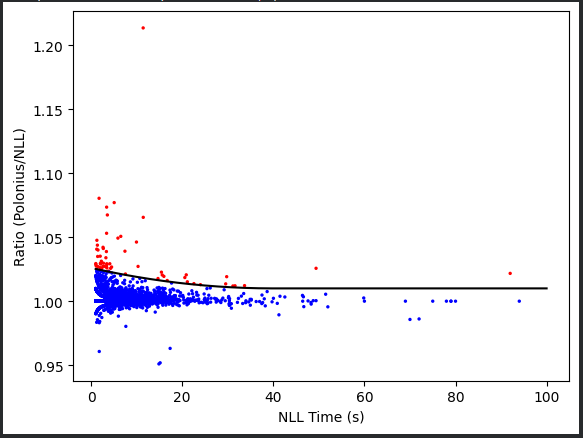
A major concern for the Rust compiler team has been the potential for compile-time regressions. Since the goal is to stabilize Polonius Alpha, the team has been rigorously benchmarking the tool against the top 10,000 crates on crates.io.
Benchmarking the Nightly Build
The data suggests that for the vast majority of real-world projects, the impact on compilation time is negligible. The team plotted the compile-time ratio of Polonius Alpha versus NLL, utilizing an arbitrary threshold of significance at a 1% regression. While a small subset of crates—specifically those containing an exceptionally high number of complex borrows—showed a 2x to 3x increase in compile time, these cases are identified as outliers.
The team has expressed that these regressions are "fairly reasonable" given the increased power of the new checker. Furthermore, because these performance issues are being identified now, the compiler team has the opportunity to optimize the implementation before the final stabilization occurs later this year.
Official Responses and Developer Guidance
The Rust project maintains a highly collaborative culture, and the release of Polonius Alpha is no exception. The team has explicitly requested feedback from the community, providing channels on both GitHub and the project’s official Zulip chat.
Opting Out
While the team encourages testing, they acknowledge that early-adopter bugs are inevitable. For those who find that their nightly builds are impacted by the new checker, an opt-out mechanism has been provided. Developers can disable Polonius Alpha by setting the RUSTFLAGS environment variable to -Zpolonius=off or by configuring their project’s .cargo/config.toml file.
The team has requested that anyone who chooses to disable the feature provides feedback on the specific reasons for doing so. This data is critical for the "pre-stabilization" phase, ensuring that the final product meets the high standard of usability that Rust users expect.
Implications for the Future of Rust
The transition to Polonius Alpha is a testament to the maturation of the Rust language. Instead of attempting a "perfect" rewrite that might never see the light of day, the team has focused on a "good enough" solution that solves the most painful, frequently encountered issues.
The Path to Stabilization
The roadmap for the next few months is clear:
- Monitoring: Actively tracking GitHub and Zulip for bug reports.
- Refinement: Addressing known performance regressions in high-borrowing scenarios.
- Documentation: Creating internal documentation to ensure the compiler codebase remains maintainable for future contributors.
- Stabilization: Releasing the feature as part of the stable Rust compiler before the end of the year.
Shifting Priorities
Perhaps the most surprising takeaway from the announcement is the team’s stated intent to move on to other priorities after Polonius Alpha is stabilized. While the current implementation does not solve every single borrow-checking edge case, it addresses the most common ones. By acknowledging that "feature-work" on the borrow checker may pause, the Rust team is signaling a strategic shift toward other high-priority initiatives, such as improving compilation speed, enhancing error diagnostics, and expanding language ergonomics in other areas.
In conclusion, Polonius Alpha is a victory for pragmatic engineering. It brings the power of advanced lifetime analysis to the fingertips of every Rust developer, reducing the need for "fighting the borrow checker" and allowing the focus to return to what matters most: building robust, memory-safe software. As the nightly testing phase progresses, the community will be watching closely, but the consensus is clear: the next generation of Rust’s core technology has officially arrived.