Mastering the CSTE Software Testing Certification Exam: A Comprehensive Preparation and Practice Guide
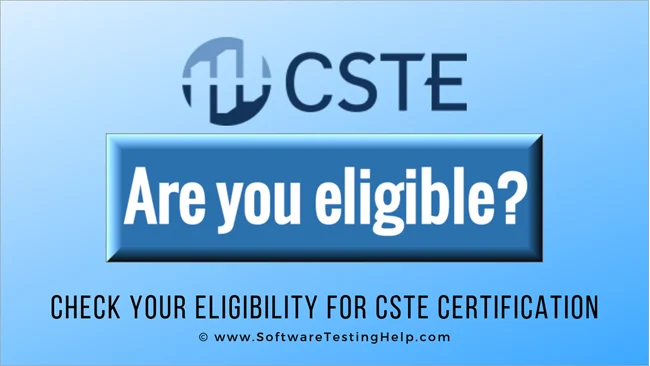
Introduction to the Certified Software Tester (CSTE) Designation
In the fast-evolving landscape of software development and quality assurance, professional credentials serve as the gold standard for validating a practitioner’s expertise. Among the most respected global designations is the Certified Software Tester (CSTE) credential. Administered to evaluate a candidate’s comprehensive understanding of software testing theory, practical methodologies, and industry-standard frameworks, the CSTE exam is a rigorous milestone for aspiring and seasoned quality assurance professionals alike.
Preparing for this demanding assessment requires more than casual familiarity with testing terminology; it necessitates a deep, practical grasp of both objective concepts and subjective, scenario-based problem-solving. This guide provides an enriched look into the CSTE exam structure, complete with sample essay questions, detailed answers, and a 20-question multiple-choice eligibility assessment designed to test your readiness for the real examination.
The Anatomy of the CSTE Examination
The CSTE testing process is famously thorough, reflecting the high stakes of software quality in enterprise environments. Spanning four and a half hours, the examination evaluates candidates across roughly ten distinct skill categories outlined in the Common Body of Knowledge (CBOK).
Exam Structure Overview
- Part I & II (Multiple-Choice Sections): Designed to test foundational knowledge, terminology, technical concepts, and standard practices across the breadth of software quality assurance and testing.
- Part III & IV (Descriptive / Essay Sections): Designed to evaluate higher-order cognitive skills, including analytical reasoning, management capability, risk assessment, and the ability to articulate structured solutions to complex testing scenarios.
To gauge whether you possess the foundational knowledge required to tackle this challenging exam, industry experts recommend that candidates should be able to score a minimum of 75% on comprehensive practice assessments before sitting for the official test.
CSTE Descriptive and Essay-Type Sample Questions with Detailed Answers
Descriptive questions form a critical backbone of the CSTE exam, requiring candidates to demonstrate practical application, managerial insight, and deep technical comprehension. Below is an exclusive review of high-level sample essay questions, complete with comprehensive expert answers.
Q1: Define the Following Testing Concepts Along with Practical Examples [25 Marks]
-
a) Boundary Value Analysis (BVA):
- Definition: A black-box test design technique based on testing the values at the extremes (boundaries) of input or output domains. Because bugs frequently lurk at boundary transitions, BVA focuses on selecting test data that lie directly on, just above, and just below the edge of valid and invalid conditions. Values typically include maximums, minimums, and nominal values.
- Example: For an input field accepting valid integer values from 1 to 10, test cases should include boundary inputs such as
0,1,2(lower boundary), and9,10,11(upper boundary).
-
b) Equivalence Testing (Equivalence Partitioning):
- Definition: A black-box testing method that divides the input domain of a software application into distinct classes (or partitions) of data from which test cases can be derived. The underlying assumption is that if a test case in a partition passes, all other items in that partition will likely pass as well, drastically reducing the total number of required test cases.
- Example: If a system accepts valid numerical data ranging from 1 to 10, the input domain is split into three partitions: invalid low (
< 1), valid (1-10), and invalid high (> 10). Representative test data chosen might be-2(invalid),5(valid), and14(invalid).
-
c) Error Guessing:
- Definition: A test data selection technique heavily reliant on the tester’s intuition, skill, and past experience. The tester anticipates where errors are most likely to occur in a specific codebase—such as division by zero, null pointers, or improper resource deallocation—and designs bespoke test cases to expose them.
- Example: In software that dynamically allocates system memory or database connections during execution, an error-guessing strategy would specifically target the de-allocation phase to verify whether memory leaks occur or if resources are cleanly released.
-
d) Desk Checking:
- Definition: A traditional, manual white-box review technique performed by the developer or code author. The individual systematically reads through the source code line-by-line, tracing variables and logic flows to ensure the program is structurally sound, adheres to coding standards, and meets functional requirements before formal compilation or execution.
-
e) Control Flow Analysis:
- Definition: A structural analysis method based on the graphical representation of a program’s execution path. Program graphs consist of nodes (representing statements or blocks) and directed links (representing control branches). The primary objective is to analyze logical branching paths to uncover potential defects, such as infinite loops, dead code, or improper processing conditions.
Q2: Managing Underperforming Senior Testers via Constructive Criticism [10 Marks]
Scenario: You discover that a senior tester is making significantly more errors than the junior testers on your team. You need to address this performance gap constructively while ensuring you retain the valuable institutional knowledge and presence of the senior tester.
Answer:
Within a robust quality management framework, a supervisor’s primary responsibility is to clear roadblocks and cultivate success among subordinates. Criticism must never be used as a punitive tool; rather, it should function as a strategic instrument for performance enhancement.
When delivering constructive feedback to a senior team member, managers should incorporate the following tactics:
- Private and Professional Setting: Schedule a one-on-one meeting in a confidential environment to preserve the employee’s dignity.
- Data-Driven Feedback: Focus the conversation on objective metrics, concrete examples, and specific behavioral patterns rather than broad generalizations.
- Inquire Before Accusing: Ask open-ended questions to understand if external factors—such as burnout, shifting priorities, or unclear requirements—are contributing to the drop in performance.
- Collaborative Action Planning: Co-create a remediation plan that provides support, refresher training, or temporary workload adjustments while reaffirming their value to the organization.
Q3: Key Risk Factors in Web-Based Application Testing Plans [20 Marks]
Scenario: As a newly appointed Test Lead for an enterprise web-based application, your manager requests a comprehensive breakdown of the risk factors that must be addressed within the master test plan.
Answer:
Testing web applications introduces unique challenges due to distributed architectures, diverse user environments, and continuous deployment cycles. Primary and secondary risk factors must be categorized and addressed as follows:
-
Primary Web-Based Application Risk Factors:
- Cross-Browser and Device Compatibility: Variations in how browsers (Chrome, Safari, Firefox, Edge) render JavaScript, CSS, and HTML5.
- Network Latency and Bandwidth Fluctuations: Unpredictable user connection speeds affecting application responsiveness and transaction timeouts.
- Security and Vulnerabilities: Exposure to common web threats such as SQL injection, Cross-Site Scripting (XSS), and broken authentication mechanisms.
- Scalability and Concurrency: Inability of the backend architecture to handle sudden spikes in user traffic.
-
General and Secondary Risks:
- Resource attrition or lack of specialized testing tools.
- Incomplete or rapidly changing business requirements.
- Unrealistic project timelines and compression of the execution phase.
Q4: User Roles and Acceptance Requirement Categories in Safety-Critical Systems [10 Marks]
Scenario: You are drafting a contractual proposal for safety-critical software. Your director asks you to define the user’s role during Acceptance Testing and outline the categories of acceptance requirements.
Answer:
In safety-critical systems (e.g., medical devices, aerospace control software), user involvement during acceptance testing is vital to ensure operational safety and regulatory compliance.
-
Key User Roles During Acceptance Testing:
- Defining real-world operational scenarios and use cases.
- Executing independent validation tests to ensure the system meets business and safety expectations.
- Participating in formal sign-off reviews and risk assessments.
- Providing domain expertise to evaluate edge-case system behavior.
-
Categories of Acceptance Requirements:
- Functional Acceptance: Verifying that core business rules and safety protocols operate precisely as specified.
- Operational Acceptance: Ensuring the system can be maintained, monitored, and supported within the production environment.
- Compliance/Regulatory Acceptance: Confirming adherence to industry standards, legal mandates, and safety certifications.
Q5: Parallel Testing – Definition, Use Cases, and Example [5 Marks]
- Definition: Parallel testing involves running the same source data through two separate versions of an application simultaneously (or running a new/altered system alongside an established legacy benchmark) and comparing the resulting outputs to verify accuracy.
- When to Use: It is deployed when there is significant uncertainty regarding the correctness of data processing within a newly developed application or major system upgrade.
- Example: A financial institution upgrading its core interest-calculation engine runs both the legacy system and the newly developed system using identical end-of-day transaction logs. The outputs are systematically cross-referenced to ensure the new system introduces zero calculation discrepancies.
Q6: Distinguishing Between Testing Techniques and Testing Tools [5 Marks]
- Testing Technique: A structured methodological process or strategy used to verify specific aspects of an application (e.g., Boundary Value Analysis, Equivalence Partitioning). Techniques define how you think about testing.
- Testing Tool: A software application or utility used to automate, support, or execute aspects of the testing process (e.g., Selenium, LoadRunner, Postman). Tools provide the mechanical vehicle to execute testing tasks.
- Analogy: If testing is carpentry, the technique is the specific method of swinging a hammer to drive a nail, whereas the hammer itself is the tool. Tools are useless without a foundational understanding of testing techniques.
Q7: Quality Assurance (QA) vs. Quality Control (QC) [10 Marks]
While often used interchangeably, QA and QC represent distinct organizational responsibilities:

- Quality Assurance (QA):
- Focus: Process-oriented and proactive.
- Objective: Defect prevention. QA establishes standards, reviews development workflows, conducts process audits, and ensures that the methodologies used to build the product will prevent errors before they occur.
- Quality Control (QC):
- Focus: Product-oriented and reactive.
- Objective: Defect identification. QC activities involve executing the actual software, identifying bugs, verifying deliverables against requirements, and logging defects in the built product.
Q8: Differentiating System Modeling Approaches [10 Marks]
- Transaction Flow Modeling: Nodes represent distinct steps within a business transaction; links represent the logical connections between those sequential steps.
- Finite State Modeling: Nodes represent user-observable system states; links represent state transitions triggered by specific events or inputs.
- Data Flow Modeling: Nodes represent data objects; links represent transformations applied as data moves through the system.
- Timing Modeling: Nodes represent program objects; links denote sequential execution paths, with link weights specifying required execution time constraints.
Q9: The Two Primary Goals of Software Testing [5 Marks]
- To uncover and uncover defects: Finding bugs, logic flaws, and deviations from requirements before the product reaches the end-user.
- To build confidence in product quality: Providing stakeholders with empirical data regarding the reliability, performance, and operational readiness of the software system.
CSTE Multiple-Choice Eligibility Assessment
Test your baseline knowledge by answering the following 20 multiple-choice questions spanning the 10 core skill categories of the CSTE Common Body of Knowledge. Record your answers to evaluate your score at the end.
-
The customer’s view of quality means:
- a. Meeting requirements
- b. Doing it the right way
- c. Doing it right the first time
- d. Fit for use
- e. Doing it on time
-
Testing of a single program or function, usually performed by the developer, is called:
- a. Unit Testing
- b. Integration Testing
- c. System Testing
- d. Regression Testing
- e. Acceptance Testing
-
The measure used to evaluate the correctness of a product is called the product:
- a. Policy
- b. Standard
- c. Procedure to do work
- d. Procedure to check work
- e. Guideline
-
Which of the four components of the test environment is considered to be the most important component?
- a. Management support
- b. Tester competency
- c. Test work processes
- d. Testing techniques and tools
-
Effective test managers are effective listeners. The type of listening in which the tester performs an analytical evaluation of what the speaker is saying is called:
- a. Discriminative listening
- b. Comprehensive listening
- c. Therapeutic listening
- d. Critical listening
- e. Appreciative listening
-
To become a CSTE, an individual accepts the standards of conduct defined by the certification board. These standards are called:
- a. Code of ethics
- b. Continuing professional education requirements
- c. Obtaining references to support experience
- d. Joining a professional testing chapter
- e. Following the common body of knowledge
-
Which of the following are risks that testers face in performing their test activities?
- a. Not enough training
- b. Lack of test tools
- c. Not enough time for testing
- d. Rapid change
- e. All of the above
-
All of the following are methods to minimize loss due to risk EXCEPT:
- a. Reduce the opportunity for error
- b. Identify any errors prior to the loss
- c. Quantify loss
- d. Minimize loss
- e. Recover loss
-
Defect prevention involves which of the following steps?
- a. Identify critical tasks
- b. Estimate expected impact
- c. Minimize expected impact
- d. a, b, and c
- e. a and b
-
The first step in designing a use case is to:
- a. Build a system boundary diagram
- b. Define acceptance criteria
- c. Define use cases
- d. Involve users
- e. Develop use cases
-
The defect attribute that helps management determine the importance of a defect is called:
- a. Defect Type
- b. Defect Severity
- c. Defect Name
- d. Defect Location
- e. Phase in which a defect occurred
-
The system test report is normally written at what point in the software development lifecycle?
- a. After Unit Testing
- b. After Integration Testing
- c. After System Testing
- d. After Acceptance Testing
-
The primary objective of User Acceptance Testing (UAT) is to:
- a. Identify requirements defects
- b. Identify missing requirements
- c. Determine if the software is fit for use
- d. Validate correctness of interfaces to other software systems
- e. Verify that software is maintainable
-
If IT establishes a measurement team to create metrics for status reporting, that team should include individuals with:
- a. Working knowledge of measures
- b. Knowledge of statistical process control tools
- c. Understanding of benchmarking techniques
- d. Knowledge of organization goals and objectives
- e. All of the above
-
What is a notable operational difference when testing software developed by an offshore contractor versus an in-house team?
- a. Does not meet people’s needs
- b. Cultural differences and communication hurdles
- c. Loss of control over resource allocation
- d. Relinquishment of oversight
- e. Contains extra unrequested features
-
What is the definition of a critical success factor?
- a. The specified requirement
- b. Software Quality Factor
- c. Factors that must be present for success
- d. Software Metrics
- e. High cost to implement the requirement
-
The condition that represents a potential for loss to an organization is called:
- a. Risk
- b. Exposure
- c. Threat
- d. Control
- e. Vulnerability
-
A flaw in a software system that may be exploited by an individual for personal advantage is called:
- a. Risk
- b. Risk analysis
- c. Threat
- d. Vulnerability
- e. Control
-
The conduct of business transactions over the Internet is broadly termed:
- a. e-commerce
- b. e-business
- c. Wireless applications
- d. Client-server systems
- e. Web-based applications
-
The "People-Dependent technology" level in maturing a new technology is equivalent to which level in SEI’s Capability Maturity Model (CMM)?
- a. Level 1
- b. Level 2
- c. Level 3
- d. Level 4
- e. Level 5
Conclusion and Next Steps
Preparing for the CSTE certification exam is a rewarding endeavor that solidifies your standing as a dedicated quality professional. By mastering both the theoretical multiple-choice concepts and the nuanced, scenario-driven essay questions outlined in this guide, you can approach the examination hall with confidence. Evaluate your performance against the sample questions, review foundational texts in the CSTE Common Body of Knowledge, and take the next step toward validating your software testing expertise.