Re-Engineering PostgreSQL Workflows: How PgQue Eliminates Kafka Complexity Without Sacrificing Scale
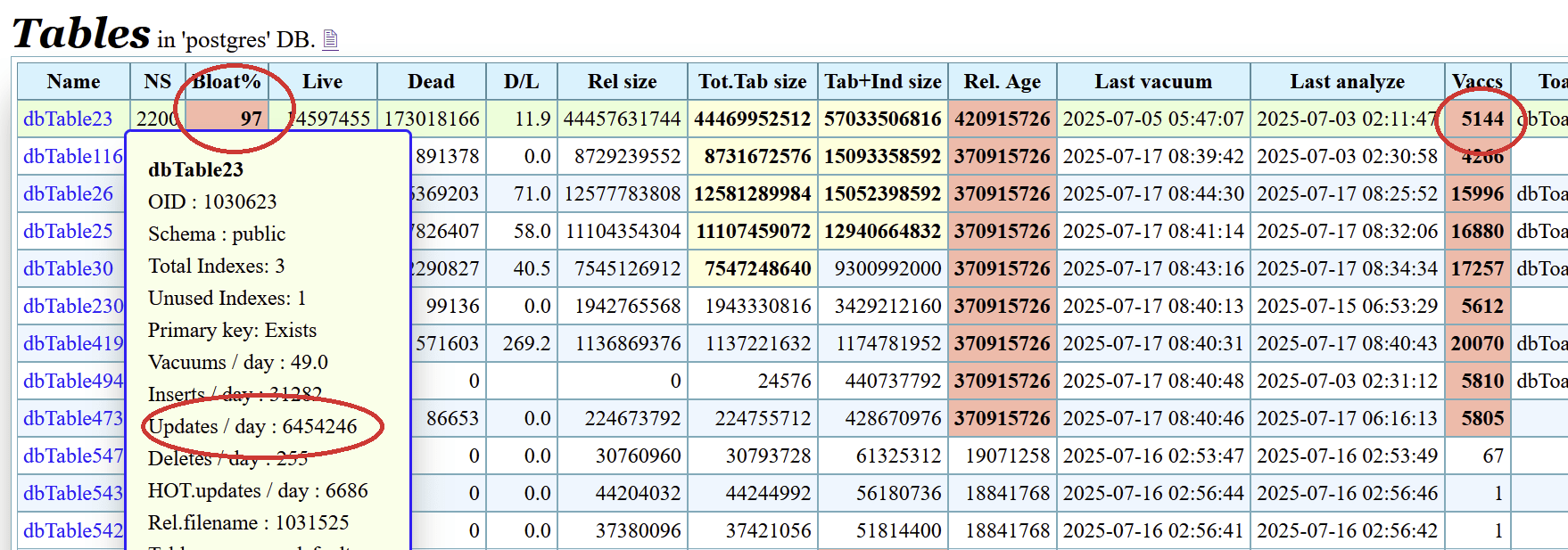
Database administrators running production environments are intimately familiar with a recurring operational pain point. High-frequency update tables—often processing millions of modifications daily—frequently trigger hundreds of autovacuum cycles per day. Over time, these tables succumb to heavy bloat, precipitating a cascading decline in system performance, concurrency bottlenecks, and an unmanageable database footprint.
When diagnosing such anomalies using diagnostic toolkits like pg_gather, the symptoms are immediately recognizable. Sorting by table headers instantly highlights these hot spots. A closer inspection usually exposes status-update workloads driven by application queues, tasks, or event buckets. For years, the default architectural reflex has been to offload these high-throughput workflows to external event brokers like Apache Kafka.
However, a counter-movement is gaining momentum under the banner: "Just use PostgreSQL." System designers and architects increasingly seek to minimize architectural sprawl, reduce the complexity of maintaining multi-component infrastructures, and mitigate the failure domains inherent in distributed systems. A recent exploration by Chandan Shukla, titled “PostgreSQL as a Workflow Engine: Building Reliable Long-Running AI Jobs Without Kafka,” highlights the growing appetite for simpler, database-native paradigms.
Yet, building traditional queues directly inside PostgreSQL using native primitives like FOR UPDATE SKIP LOCKED has historically introduced its own set of trade-offs, including table bloat and concurrency degradation. Enter PgQue: a modern modernization of a time-tested community architecture designed to bring reliable, zero-bloat queueing and workflow management entirely inside PostgreSQL.
Main Facts: The Architecture of PgQue
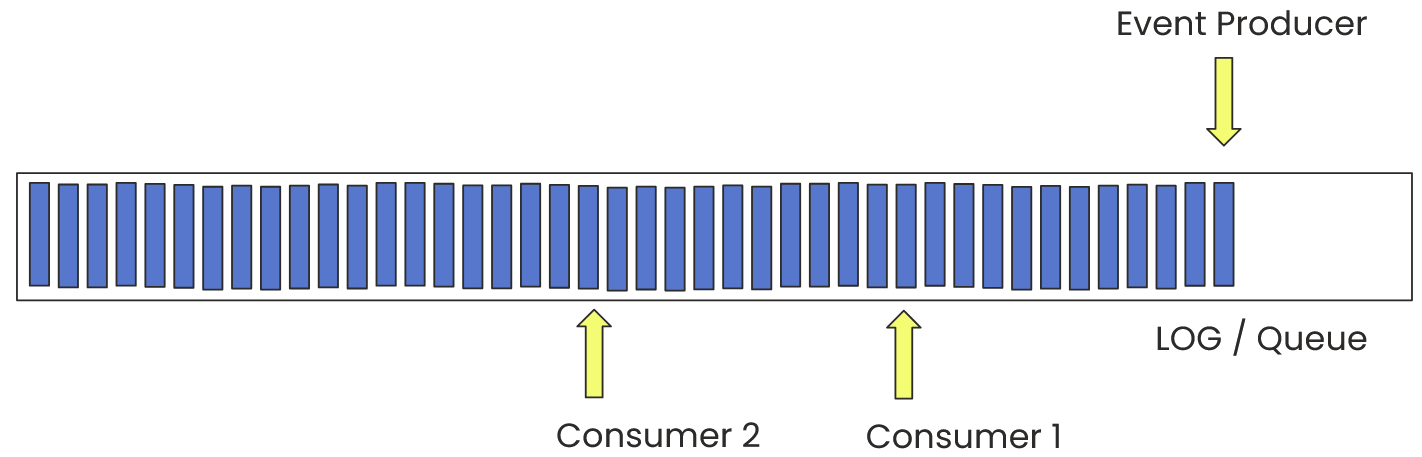
At its core, PgQue is not a traditional message queue where events are destroyed upon consumption. Instead, it operates as a shared, append-only event log—conceptually close to a Kafka topic and structurally aligned with Apache Pulsar’s subscription model.
Events are written once to a partitioned table serving as an append-only log. Rather than updating status flags in-place—which triggers heavy write-amplification and autovacuum thrashing—PgQue shifts the responsibility of tracking consumption position to the consumer via a cursor. Multiple independent consumers can read the same event stream without duplicating data.
Key Architectural Differentiators:
- Zero In-Place Updates: By leveraging an append-only log, PgQue eliminates the table bloat and concurrency bottlenecks associated with traditional status-flag updates.
- Snapshot-Based Batching: Events are batched via clock "tickers" that evaluate transactions completed between time slices (e.g., every 100 milliseconds).
- Consumer Cursors, Not Offsets: Acknowledging a batch simply advances that specific consumer’s cursor. Cursors point to time ticks rather than individual message offsets.
- Built-in Resiliency: Unlike Kafka, which leaves advanced queue semantics to client applications, PgQue provides per-consumer redelivery, negative acknowledgments (
nack), built-in Dead Letter Queues (DLQ), and competing consumers via cooperative consumption models.
Chronology: The Evolution of PostgreSQL Queueing
To understand how PgQue arrived at its current form, it is necessary to retrace the lineage of PostgreSQL queueing mechanisms over the past two decades.
1. The Genesis: Original PgQ (2007)
Long before modern cloud-native messaging frameworks dominated the landscape, Marko Kreen developed PgQ as a core component of Skytools. Designed to handle high-throughput asynchronous replication and event processing, PgQ pioneered snapshot-based batching, tick generation, and TRUNCATE-based table rotation. However, despite its robust engineering, PgQ largely faded from mainstream adoption over the next 20 years, largely hindered by sparse documentation and a steep learning curve.
2. Community Revival (POSETTE 2026)
In recent years, community advocates spearheaded efforts to re-introduce native PostgreSQL queueing patterns to modern enterprise architects. Discussions and technical deep dives—such as Alexander Kukushkin’s presentation “PostgreSQL queues done right with PgQ” at POSETTE 2026—brought the underlying architectural principles back into the spotlight.
3. Modernization and Refinement: PgQue
Recognizing that the original PgQ implementation suffered from deployment hurdles—such as heavy C extensions, external daemons, and rigid configuration requirements—Nikolay Samokhvalov undertook a complete modernization effort. Rebranded as PgQue, the framework was rewritten to eliminate binary extension requirements, streamline configuration, improve documentation, and introduce native client support across major programming languages.
Supporting Data: Performance and Mechanics
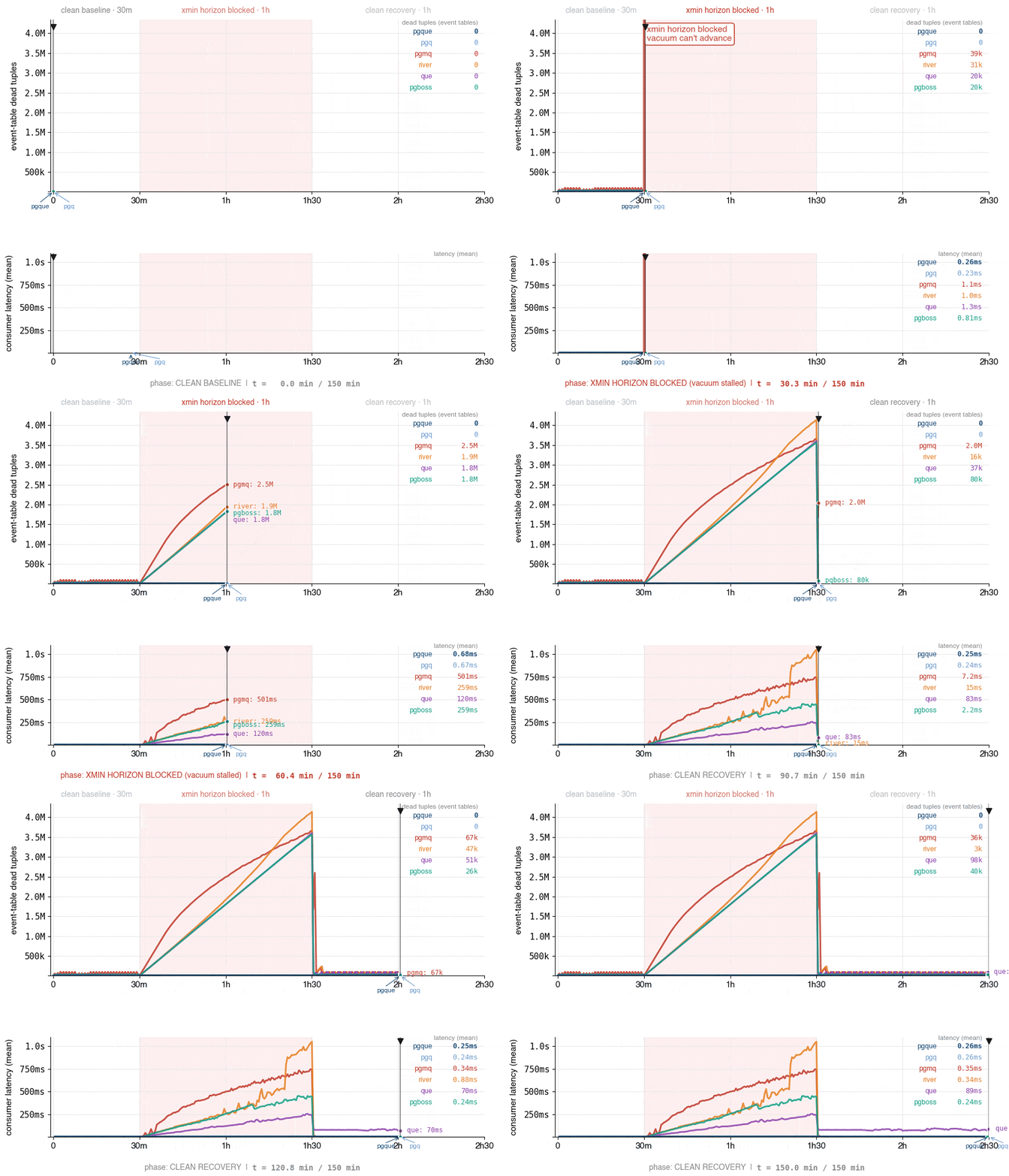
System performance and stability under heavy loads depend entirely on how a queue manages database transactions and transaction ID (XID) horizons. Traditional queue implementations suffer from "death spirals" where constant updates to queue metadata inflate the XID counter and degrade read/write throughput.
+-----------------------------------------------------------------+
|                  Traditional Table-Based Queue                  |
|  [Updates in place] ---> [Table Bloat] ---> [Autovacuum Thrash] |
+-----------------------------------------------------------------+

+-----------------------------------------------------------------+
|                            PgQue                                |
|  [Append-Only Log] ---> [Snapshot Batches] ---> [Flat XID/Lat.] |
+-----------------------------------------------------------------+
As demonstrated in comparative benchmarks and telemetry data from the PgQue project, running high-frequency workloads through PgQue yields flat, stable metric curves. Neither XID transaction horizons nor consumer latencies exhibit the runaway spikes typical of naive SQL queue designs.
Operational Mechanics in Action
Interacting with PgQue is designed to feel native to database developers.
1. Publishing an Event (Producer):
Producers publish events using simple PL/pgSQL functions. For instance, sending an order payload to an 'orders' queue is executed as:
SELECT pgque.send('orders', '"order_id": 43, "total": 10.00'::jsonb);On lower-activity queues where automated ticking is throttled to conserve resources, administrators can manually force a tick:
SELECT pgque.force_next_tick('orders');2. Consuming Events (Consumer):
Consumers fetch batches of events using the receive() function, specifying the queue name, consumer group identifier, and batch size:
SELECT * FROM pgque.receive('orders', 'processor', 100);3. Handling Failures and Acknowledgment:
If a batch contains mixed results—where some messages succeed and others fail—developers must negative-acknowledge (nack) the failing messages before committing the batch:
SELECT pgque.nack(8, m, '30 seconds', 'downstream 503')
FROM pgque.receive('orders', 'processor', 100) AS m
WHERE m.msg_id = 2004;
Once failed messages are safely routed to retry channels, the remaining batch is acknowledged, advancing the consumer cursor:
SELECT pgque.batch_ack(8);If an event exceeds the configured maximum retry threshold (managed via pgque.set_queue_config), PgQue automatically routes it to a Dead Letter Queue (DLQ), preventing infinite processing loops.
Official Responses and Ecosystem Integration
The PgQue project bridges the gap between raw SQL logic and modern application architectures by providing official client libraries for Python, Go, TypeScript, and Ruby. These clients live directly within the repository structure, serving as standardized reference implementations for engineering teams integrating PostgreSQL-based eventing into microservices.
Community feedback highlights that PgQue successfully removes the operational friction that traditionally plagued database-backed queues. By packaging background ticker loops as PostgreSQL procedures (pgque.ticker_loop()) that integrate seamlessly with extensions like pg_cron, PgQue runs autonomously without requiring external orchestrators or system daemons.
Implications for Enterprise Architecture
The mainstream acceptance of tools like PgQue signals a broader philosophical shift in backend engineering. For decades, the prevailing dogma dictated that messaging systems must run on dedicated infrastructure like Apache Kafka or RabbitMQ. While distributed brokers remain essential for massive, multi-datacenter event meshes, many enterprise applications operate at a scale where introducing an external streaming platform adds unwarranted operational overhead.
By consolidating workflow orchestration, event logging, and transactional persistence inside a single PostgreSQL instance, organizations gain several distinct advantages:
- Simplified Infrastructure: Fewer moving parts translate to fewer potential points of failure, simplified disaster recovery pipelines, and reduced cloud infrastructure costs.
- Transactional Consistency: Because events and business state mutations reside in the same database engine, applications can leverage ACID guarantees across workflow steps without relying on complex distributed sagas or two-phase commits.
- Operational Familiarity: Database administrators can monitor queue health, retention policies, and consumer lag using standard SQL queries and existing PostgreSQL monitoring toolchains.
Ultimately, PgQue proves that with careful architectural design—leveraging snapshot isolation, append-only logs, and cursor tracking—PostgreSQL can serve as a high-performance, zero-bloat workflow engine capable of handling modern, event-driven enterprise workloads with elegance and reliability.