Bridging the Digital Divide: The Firehat Open-Source HAT Brings Native IEEE 1394 FireWire to Modern Single-Board Computers
By Tech & Archival Archive Desk
Published: September 2026
Main Facts
For millions of families, independent filmmakers, and institutional archivists, the late 1990s and 2000s analog-to-digital transition left behind a ticking cultural time bomb: millions of MiniDV, Digital8, DVCAM, DVCPRO, and HDV tapes sitting in boxes and storage lockers. These cassettes hold invaluable home movies, historical recordings, and independent cinematic projects. However, they are currently trapped behind an obsolete hardware wall.
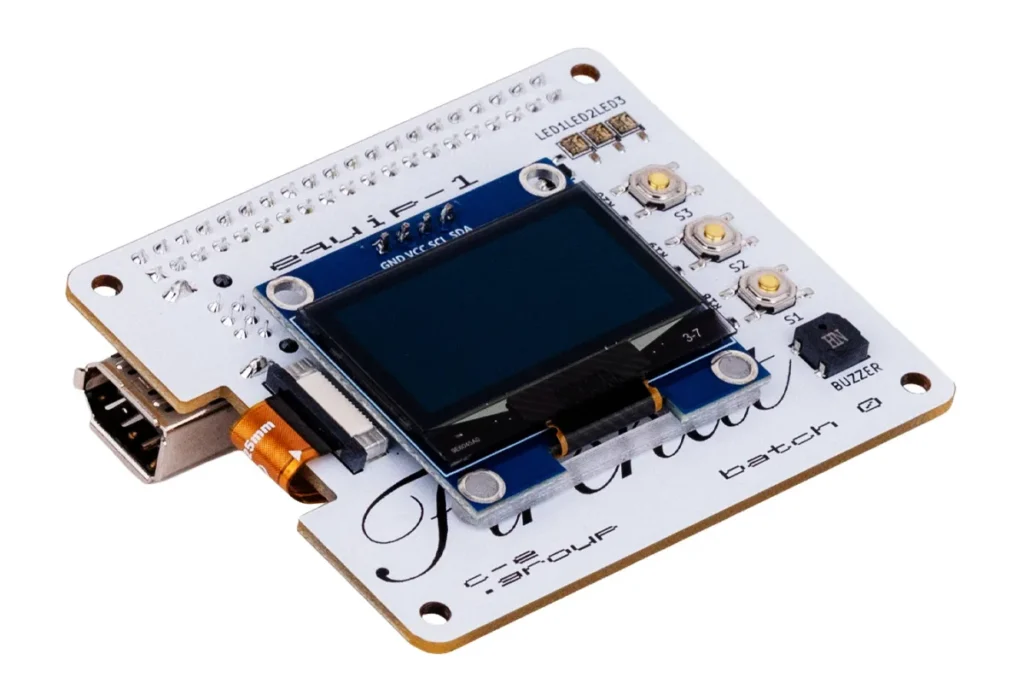
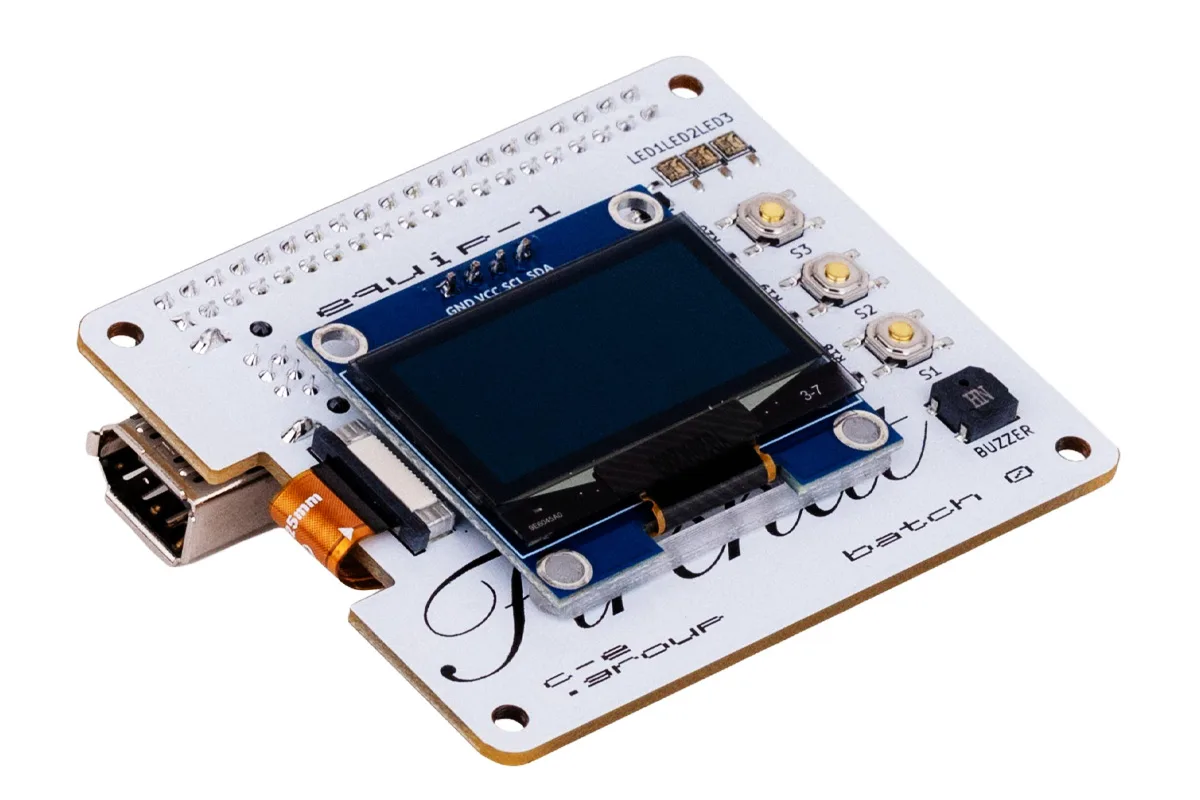
Enter Firehat: an open-source hardware-attached-on-top (HAT) designed to solve this exact problem by bringing native IEEE 1394 (FireWire/i.LINK) capabilities directly to modern single-board computers (SBCs) like the Raspberry Pi 5 and the Radxa ROCK 2F.
Priced at $79 and weighing a mere 25 grams with dimensions of 56 x 70 x 12 mm, Firehat bridges the technological chasm between legacy DV camcorders and modern, high-capacity digital storage arrays. By utilizing a proven VIA VT6315N controller chip, Firehat interfaces directly with host SBCs via a dual-connection architecture—utilizing both the standard 40-pin GPIO header and a high-speed PCIe Flexible Flat Cable (FFC) connector.
The result is a fully functional, native PCIe FireWire controller that operates natively on standard Linux kernels without the need to hunt down aging, unsupported computer hardware from two decades ago.
Chronology: The Evolution of FireWire and the Birth of Firehat
The Golden Age of DV (Late 1990s–2000s)
During the peak of the digital tape revolution, IEEE 1394 (commercially branded as FireWire by Apple, i.LINK by Sony, and Lynx by Texas Instruments) was the gold standard for high-bandwidth peripheral connectivity. Unlike USB ports of the era, which lacked the necessary bandwidth and deterministic data delivery for sustained uncompressed or lightly compressed video transfers, FireWire allowed for bit-perfect, lossless digital cloning of DV and HDV streams directly from camcorder tape to computer editing software.
The Phasing Out of Legacy Ports (2010s)
As USB 3.0, Thunderbolt, and native solid-state storage evolved, motherboard manufacturers systematically dropped legacy ports. FireWire was deprecated by Apple, abandoned by PC builders, and rendered entirely absent from modern consumer computing architectures. For nearly a decade, anyone wishing to digitize a MiniDV tape faced an agonizing choice: maintain an aging, unreliable Windows XP or Windows 7 PC with a legacy PCI FireWire card, or buy expensive, highly specialized commercial ingestion decks that frequently cost thousands of dollars.
The Maker Movement Steps In (2024–2026)
Recognizing the widening gulf between aging magnetic media and modern computing, the Computer Equipment Group developed Firehat. Moving away from clunky USB-to-FireWire conversion pipe-dreams—which historically failed because USB protocols cannot properly translate low-level isochronous IEEE 1394 device commands—the developers targeted modern SBC architectures that feature high-speed PCIe interfaces. Following rigorous testing on the Raspberry Pi 5 and Radxa ROCK 2F, the open-source project debuted publicly, offering a standardized blueprint and retail board for archivists worldwide.
Supporting Data & Technical Architecture
Understanding why Firehat succeeds where cheap USB adapters fail requires a deep dive into its hardware and software architecture.
Dual-Connection SBC Integration
Firehat does not rely on a single-point connection. Instead, it ingeniously splits its duties across two physical interfaces on the host SBC:
- The PCIe FFC Connection: This high-speed ribbon cable routes the core IEEE 1394 data lanes between the VIA VT6315N controller and the SBC’s native PCI Express root complex. To the Linux kernel, Firehat does not look like a clumsy translation layer; it appears as a genuine, hardware-level PCIe FireWire controller.
- The 40-Pin GPIO Header: This handles auxiliary hardware integration, supplying necessary power management while driving an onboard 1.3-inch OLED display, status LEDs, tactile control buttons, and an alert buzzer.
Hardware Specifications At-a-Glance
- Core Controller: VIA VT6315N IEEE 1394 host controller
- Supported Host SBCs: Raspberry Pi 5, Radxa ROCK 2F (any SBC with a compatible PCIe FFC slot)
- Form Factor: 56 x 70 x 12 mm HAT layout
- Weight: 25 grams
- Display Integration: 1.3-inch onboard OLED (with support for expanded SPI 256×64 panels)
- Status Indicators: SK6812 programmable RGB LEDs
- Price: $79 USD
- Licensing: Fully open-source hardware and software design
The Software Stack: Linux, dvgrab, and libavc1394
Because Firehat interfaces with the Linux kernel’s native FireWire subsystem (firewire-ohci), users have immediate access to mature, battle-tested open-source ingestion tools.

dvgrabanddvcont: These command-line utilities allow operators to capture raw DV streams directly to local solid-state storage without generational quality loss. Because MiniDV and HDV streams are already digital packets stored on magnetic tape, Firehat performs a direct digital clone—no error-prone analog-to-digital conversion is required.libavc1394: This library handles advanced AV/C (Audio/Video Control) digital interface commands, permitting precise software control over connected camcorders. Users can script commands to play, stop, fast-forward, rewind, and programmatically trigger capture sessions down to the exact timecode.- Equip-1 Software Stack: For non-technical users or dedicated archival stations, the project offers the Equip-1 software suite, transforming the SBC-Firehat combination into a standalone, push-button capture appliance.
Official Responses and Developer Insights
The Computer Equipment Group has emphasized that Firehat was built out of necessity rather than mere hobbyist experimentation.
"We were facing a ticking clock," notes documentation released via the project’s official GitHub repository. "Magnetic tape degrades over time, and the machines capable of playing them back are breaking down faster than replacement parts can be found. Relying on twenty-year-old desktop towers running legacy operating systems is no longer a viable preservation strategy for museums, libraries, or families. We needed something modern, modular, open-source, and utterly reliable."
Early feedback from beta testers within the digital archiving community has praised the board’s stability during marathon ingestion sessions. Unlike vintage PCI cards that frequently suffered from IRQ conflicts or driver instability on modern operating systems, Firehat leverages modern Linux kernel optimizations, ensuring dropped frames are virtually nonexistent during standard DV and HDV streams.
Furthermore, because the schematics, board layouts, and firmware are entirely open-source, institutional libraries with strict compliance and custom auditing requirements can independently inspect, modify, or manufacture variants of the hardware to suit bespoke archival workflows.
Implications: Saving History Before the Tapes Fade
The commercial and cultural implications of Firehat extend far beyond the maker community.
1. Democratization of Media Archiving
Historically, professional tape ingestion required specialized hardware setups managed by trained AV technicians using proprietary, high-end broadcast decks. At $79, Firehat dramatically lowers the financial barrier to entry. Local historical societies, school districts, small-town libraries, and individual families can now build a professional-grade archival ingestion station for a fraction of the cost of legacy hardware.
2. Combating Magnetic Media Degradation
Magnetic tape has a finite lifespan. Binder hydrolysis (commonly known as "sticky shed syndrome") and magnetic particle shedding mean that every year tapes sit unplayed brings them closer to unrecoverable degradation. By providing a cheap, accessible pathway to stream raw digital footage directly to modern NVMe or SSD storage arrays, Firehat accelerates global preservation efforts before these historic windows close permanently.
3. The Power of Open-Source Longevity
Proprietary hardware solutions inevitably die when corporate support ceases. By anchoring Firehat to open-source standards—the Linux kernel, standard PCIe buses, and accessible Python and C-based capture utilities—the project ensures that future developers can maintain, update, and patch the software stack for decades to come, independent of any single manufacturer’s commercial roadmap.
Getting Started: What You Need
For those looking to assemble their own Firehat archiving station, the barrier to entry is minimal. The essential bill of materials includes:
- A compatible Single-Board Computer: The Raspberry Pi 5 or Radxa ROCK 2F (equipped with a PCIe FFC connector).
- The Firehat Board: Available for purchase at $79.
- A PCIe FFC Cable: Typically supplied with the kit (standard 30 cm length offers flexible case mounting).
- A Legacy Camcorder or Deck: Any working MiniDV, Digital8, DVCAM, DVCPRO, or HDV device featuring an IEEE 1394 / i.LINK port.
- Storage Media: A high-capacity microSD card or external SSD connected to the SBC for storing raw video files.
Assembly and Operation
Installation requires no soldering or modifications to your legacy camcorder. Simply mount the Firehat to the SBC, secure the 40-pin GPIO connection, route the PCIe FFC cable into the SBC’s expansion slot, and boot up a modern Linux distribution. The operating system will automatically recognize the VIA VT6315N controller. From there, launching dvgrab initiates bit-perfect digital capture.
As physical media continues its inevitable march toward obsolescence, tools like Firehat prove that open-source ingenuity can successfully bridge the gap between yesterday’s forgotten formats and tomorrow’s digital archives.