The Laser-Disc Renaissance: How One Maker’s DIY Console is Defying the Digital-Only Future
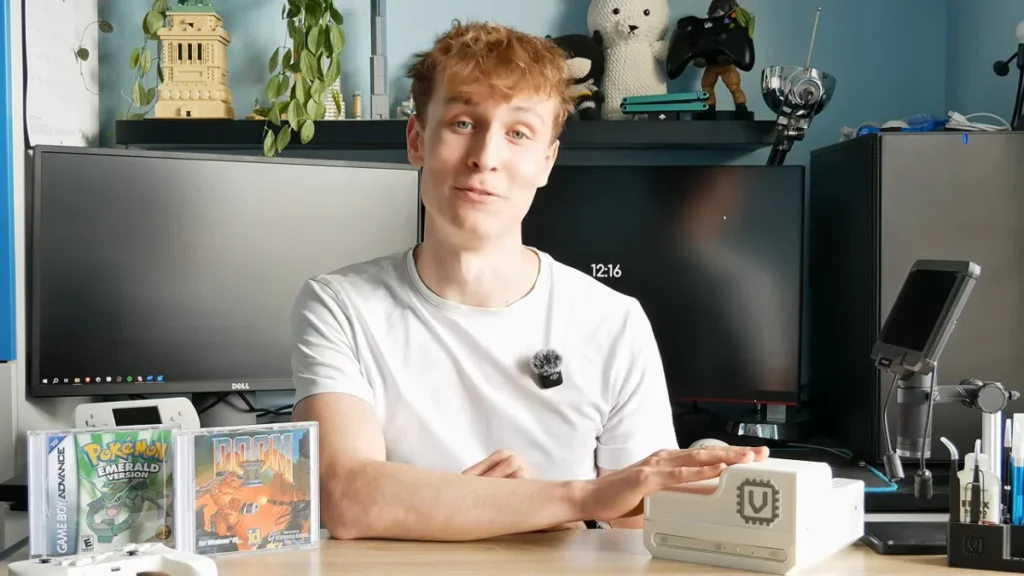
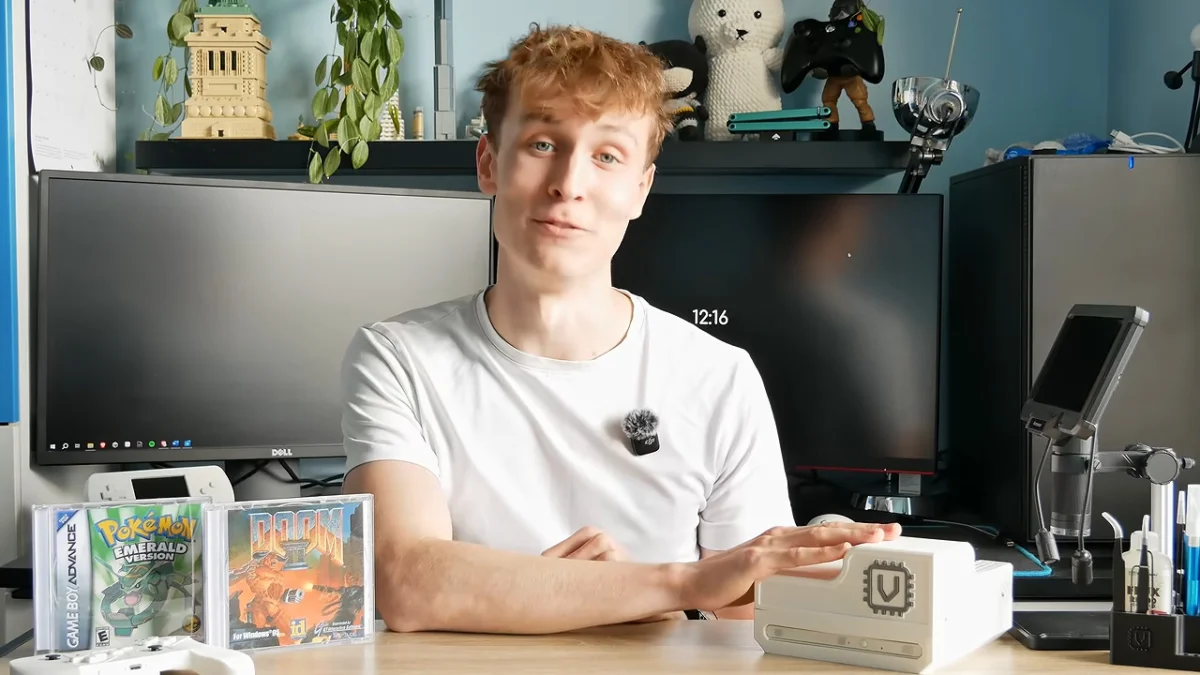
In an era defined by ephemeral cloud gaming, day-one patches, and the total abandonment of physical media by major console manufacturers, the concept of a "game disc" feels increasingly like a relic of the past. Yet, for maker and enthusiast Emmet, the tactile ritual of popping a disc into a drive remains the pinnacle of the gaming experience. In a defiant act of retro-futurism, Emmet has engineered a fully functional, custom-built game console that eschews the convenience of modern solid-state storage in favor of the humble, 30-year-old compact disc.
The Main Facts: A Physical Rebuttal to Digital Hegemony
Emmet’s custom console is more than just a novelty; it is a meticulously crafted bridge between the golden age of optical media and modern emulation technology. At its heart, the machine is powered by an Intel N150 single-board computer, a modest but capable platform chosen not for high-fidelity 4K rendering, but for its perfect suitability for running the Batocera Linux distribution.
Batocera, a specialized OS built for the express purpose of retro-gaming emulation, allows the machine to traverse decades of gaming history, from the early 8-bit era to the more complex 32-bit consoles that famously relied on the "Orange Book" CD standards. Unlike modern consoles that treat physical media as nothing more than a license key for a massive digital download, Emmet’s console treats the disc as the repository itself. Each CD contains the ROM files necessary to play the game, accompanied by a custom shell script that directs the Batocera environment to mount and execute the software.
To complete the experience, Emmet has designed bespoke wireless gamepads using the ESP32-S3 microcontroller. These controllers communicate via Bluetooth Low Energy (BLE), offering a modern, responsive interface that ironically packs more raw processing power than the original hardware they are emulating. The entire assembly is housed within a custom 3D-printed chassis, transforming a collection of off-the-shelf electronics into a cohesive, consumer-ready aesthetic piece.
Chronology of the Project: From Concept to CD
The genesis of the project began with a fundamental question: Can the charm of the 1990s physical gaming experience be replicated with modern hardware?
- Phase I: Architecture Selection. Emmet identified the Intel N150 as the ideal candidate, balancing power consumption with the x86 architecture required for a stable Batocera implementation.
- Phase II: Optical Integration. The decision to use CDs—specifically those adhering to the Orange Book standard—was driven by a desire for authenticity. Emmet opted for standard CD-ROMs rather than DVDs or Blu-rays, acknowledging that the target library of games would fit comfortably within the 700MB capacity.
- Phase III: Firmware and Logic. The most significant hurdle was the "disc-to-emulator" pipeline. Emmet spent weeks developing the automation scripts that allow the system to recognize a disc insertion, identify the game content, and trigger the appropriate emulator library automatically.
- Phase IV: Industrial Design. The final weeks were spent on the physical presentation. Emmet prioritized the "toy" factor, 3D printing a custom shell and, perhaps most impressively, designing professional-grade disc labels and physical jewel cases for each game. This attention to detail is what elevates the project from a messy prototype to a curated experience.
Supporting Data: Why Optical Media Still Matters
While critics may point to the superior speed of NVMe SSDs, optical media offers a psychological and logistical advantage that has been largely ignored by the industry.
The current landscape of digital-only consoles relies on server availability. When a company shuts down a digital storefront, the library becomes inaccessible. By storing game data on CDs, Emmet has created a "dead-switch" proof library. According to data regarding long-term storage, high-quality archival-grade CDs can last for several decades if stored properly, effectively making this console a "time capsule" of digital culture.
Furthermore, the hardware specifications of the project provide a compelling case for "right-sized" computing. The Intel N150 is energy-efficient, drawing a fraction of the power required by a modern flagship console like the PlayStation 5 or Xbox Series X. By focusing on emulation of older titles, Emmet has created a system that is sustainable, repairable, and entirely independent of external server connections.
Official Perspectives and Community Discourse
The broader maker community, particularly those active on platforms like Hackaday, has reacted with significant enthusiasm. The project serves as a lightning rod for a growing sentiment: that the industry has sacrificed "ownership" for "access."
"We are seeing a trend where users want to reclaim their hardware," says one independent hardware analyst. "Projects like Emmet’s are a form of protest. They are showing that even with modern tools, we can—and should—maintain the ability to own our media, hold it in our hands, and use it without needing an internet connection or a corporate authentication server."
While corporate manufacturers argue that optical media is a bottleneck to development—citing slow read speeds and physical wear—the community response suggests that these "limitations" are exactly what users crave. They represent a tangible limit to a game’s scope, encouraging developers to fit their vision into a finished, complete state, rather than relying on the "ship now, fix later" mentality that plagues modern software development.
The Broader Implications: A Shift in Gaming Culture
The success of this project raises profound questions about the direction of the gaming industry. As major publishers push for a subscription-based, streaming-only future, the "optical moment" seen in projects like this one suggests a widening gap between what companies want to sell and what enthusiasts want to play.
1. The Death of the "Day One" Patch
By forcing the game to reside on the disc, the project forces a return to the era of the "complete game." There is no room for a 50GB day-one update on a 700MB CD. This encourages a return to rigorous quality assurance before the disc is burned, a practice that has largely fallen out of favor in the modern AAA landscape.
2. The Rise of "Archival Gaming"
Emmet’s work aligns with the archival gaming movement, which seeks to preserve software in formats that do not rely on proprietary, online-only account systems. By building a hardware platform that treats the disc as the primary source of truth, Emmet has created a machine that will be as playable in 2040 as it is today.
3. The Aesthetic of Tangibility
The most overlooked aspect of this project is the effort put into the jewel cases and labels. Digital gaming is sterile; it lacks the sensory feedback of browsing a shelf or admiring cover art. Emmet’s console proves that the "experience" of gaming is just as important as the mechanics of the game itself. The act of selecting a game, reading the back of the case, and inserting the disc is an essential part of the ritual that the industry has carelessly discarded.
Conclusion: A Nostalgic Future
As we look toward a future where cloud-based gaming and digital-only hardware threaten to erase the history of the medium, the efforts of individual makers like Emmet provide a necessary counter-narrative. It is a reminder that technology does not always need to be faster, more connected, or more powerful to be meaningful.
Sometimes, the most revolutionary step forward is a deliberate step back. By embracing the constraints of the CD, Emmet has not only built a functional console but has also preserved the spirit of ownership and the joy of a physical collection. In a world that is increasingly intangible, the weight of a CD in one’s hand is, perhaps, the most powerful tool a gamer can have. Whether this "optical moment" will influence the mainstream remains to be seen, but for those who value the sanctity of their digital libraries, the message is clear: the disc is not dead—it has simply found a new home.