Engineering the Impossible: Inside the High-Stakes World of DIY Jet Turbine Development
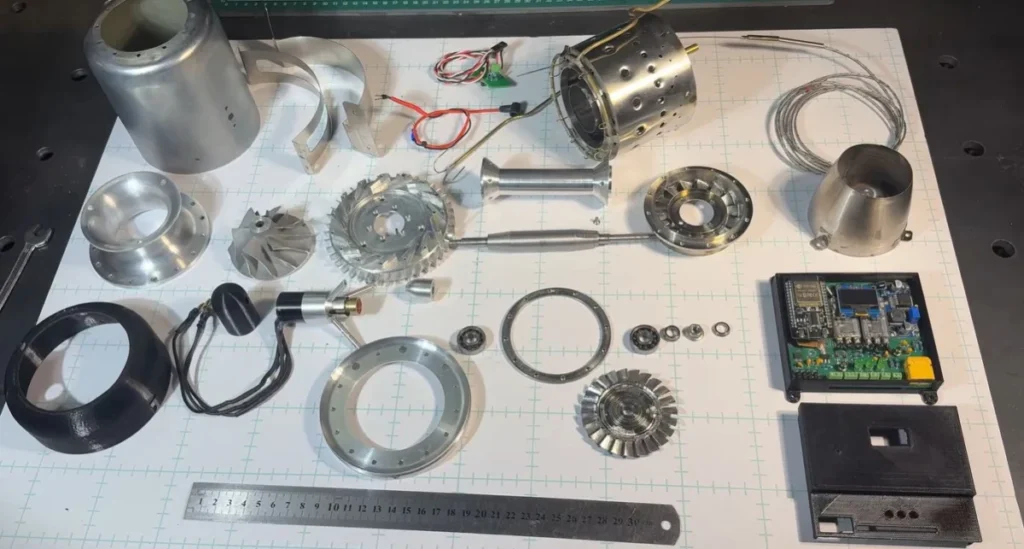
In the landscape of amateur engineering, few projects command the same level of respect, technical rigor, and sheer audacity as the construction of a functional jet turbine. For the past several months, the YouTube channel AlfMart CNC Garage has been documenting a journey that pushes the boundaries of the home workshop. With the recent release of a comprehensive assembly video, the project has reached a critical milestone: the transition from individual component fabrication to a fully integrated, operational prototype.
For the uninitiated, a jet turbine is not merely a mechanical curiosity; it is a high-speed, high-temperature thermodynamic machine that operates at the razor’s edge of physical failure. When a rotor spins at tens of thousands of revolutions per minute (RPM), the centrifugal forces exerted on the blades are immense. AlfMart CNC Garage has spent the better part of a year navigating these complexities, demonstrating that with enough patience and precision machining, the realm of aerospace-grade propulsion is no longer the exclusive domain of state-sponsored laboratories or multinational defense contractors.
Main Facts: The Anatomy of a Homegrown Engine
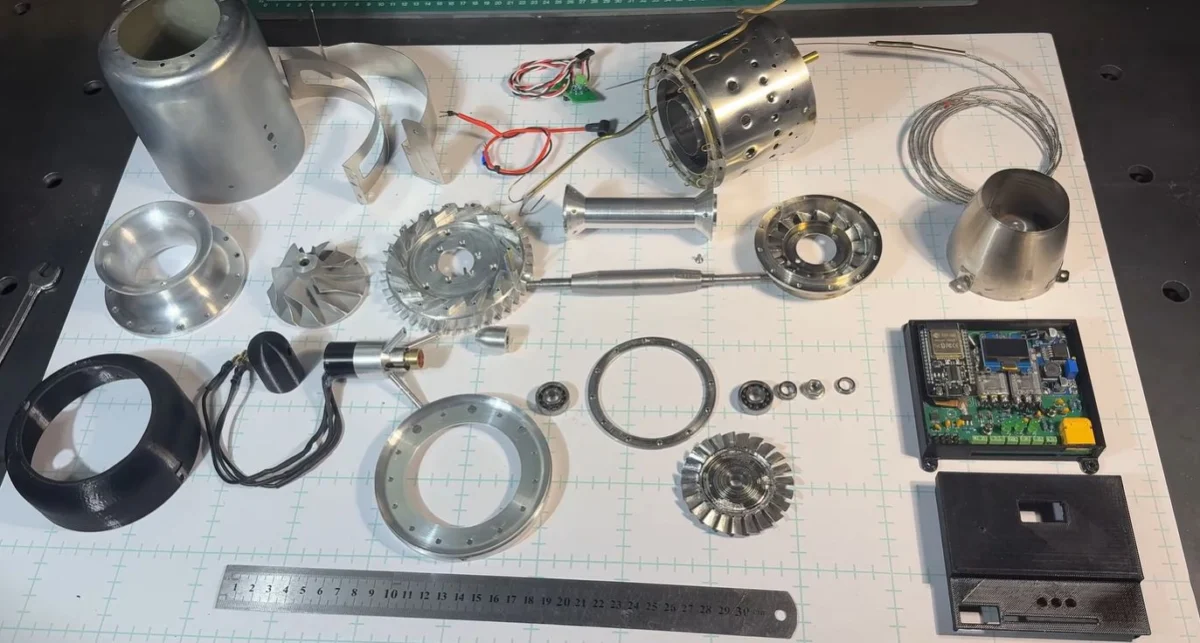
The AlfMart CNC Garage turbine is a testament to the versatility of modern CNC machining and resourcefulness in material sourcing. At its core, the project balances high-end technical requirements with ingenious, "off-the-shelf" repurposing.
The outer housing, which must withstand significant thermal expansion and pressure, is a study in creative engineering. Rather than sourcing expensive, specialized aerospace alloys for the exterior, the builder utilized a repurposed commercial gas cylinder paired with a steel children’s drinking bottle. This juxtaposition highlights the essence of the "hacker" ethos: identifying materials that meet specific structural requirements—such as diameter, wall thickness, and metallurgical properties—and adapting them for a purpose far beyond their original design.
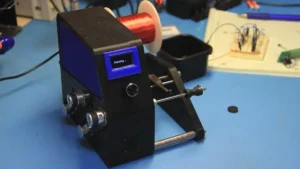
However, the internal components tell a different story. Unlike the casing, the internal rotor assembly requires extreme precision. The project has relied heavily on previous, well-documented work, including the creation of a dynamic balancing rig capable of measuring mass imbalances to within one milligram. This is not a luxury; it is a necessity. At the high RPMs required for jet propulsion, even a microscopic imbalance can lead to catastrophic harmonic resonance, turning a delicate piece of machinery into a projectile of shrapnel within seconds.
Chronology: From Concept to Calibration
The development timeline of this turbine has been a long, iterative process characterized by incremental improvements and frequent setbacks.
- Phase I: The Foundation (Early 2026): The project began with the conceptual design and the procurement of raw materials. This phase focused on defining the turbine’s cycle—calculating mass flow rates and identifying the optimal compression ratio.
- Phase II: Rotor Precision (January 2026): As documented in earlier updates, the builder shifted focus to the rotor assembly. Achieving a balance of 1mg was a turning point, proving that the home-shop environment could rival industrial balancing equipment if the operator possessed sufficient technical acumen.
- Phase III: Structural Assembly (Mid-2026): During the summer months, the focus shifted to integrating the compressor and turbine wheels with the combustion chamber. The assembly process involved aligning the shaft with tolerances measured in microns.
- Phase IV: Systems Integration (September 2026): The most recent milestone involves the installation of the RPM sensor circuit and the electrical starter. These systems are the "nervous system" of the engine, responsible for the critical spin-up phase required to achieve enough airflow for ignition.
- Phase V: The Road to Ignition (Current): Following initial tests of the starter motor and clutch mechanism, the project is currently in a state of refinement. The discovery of mechanical resistance issues in the starter has necessitated a design revision, pushing the first full-throttle ignition test further into the future.
Supporting Data: The Physics of High-Performance Tinkering
The challenges inherent in this project revolve around three primary variables: heat, vibration, and fuel-air ratio.
Heat Management
Jet turbines operate by compressing air, heating it via the combustion of fuel, and exhausting it through a nozzle. The temperature inside the combustion chamber can easily exceed 800°C. AlfMart CNC Garage has had to carefully select materials for the combustion liner that can maintain structural integrity at these temperatures without warping. The use of high-grade stainless steels and, in some cases, heat-resistant coatings, is critical to ensuring the engine doesn’t melt during its first sustained run.
Vibration and Balancing
The most significant data-driven hurdle is the balancing rig. Traditional static balancing—where an object is placed on a level surface to see which way it tips—is insufficient for a turbine. The dynamic balancing rig developed for this project employs sensitive piezoelectric sensors to detect vibration at operational speeds. By recording the frequency and amplitude of these vibrations, the builder can identify the exact location of mass excesses and remove them via precision grinding.
Electrical Controls
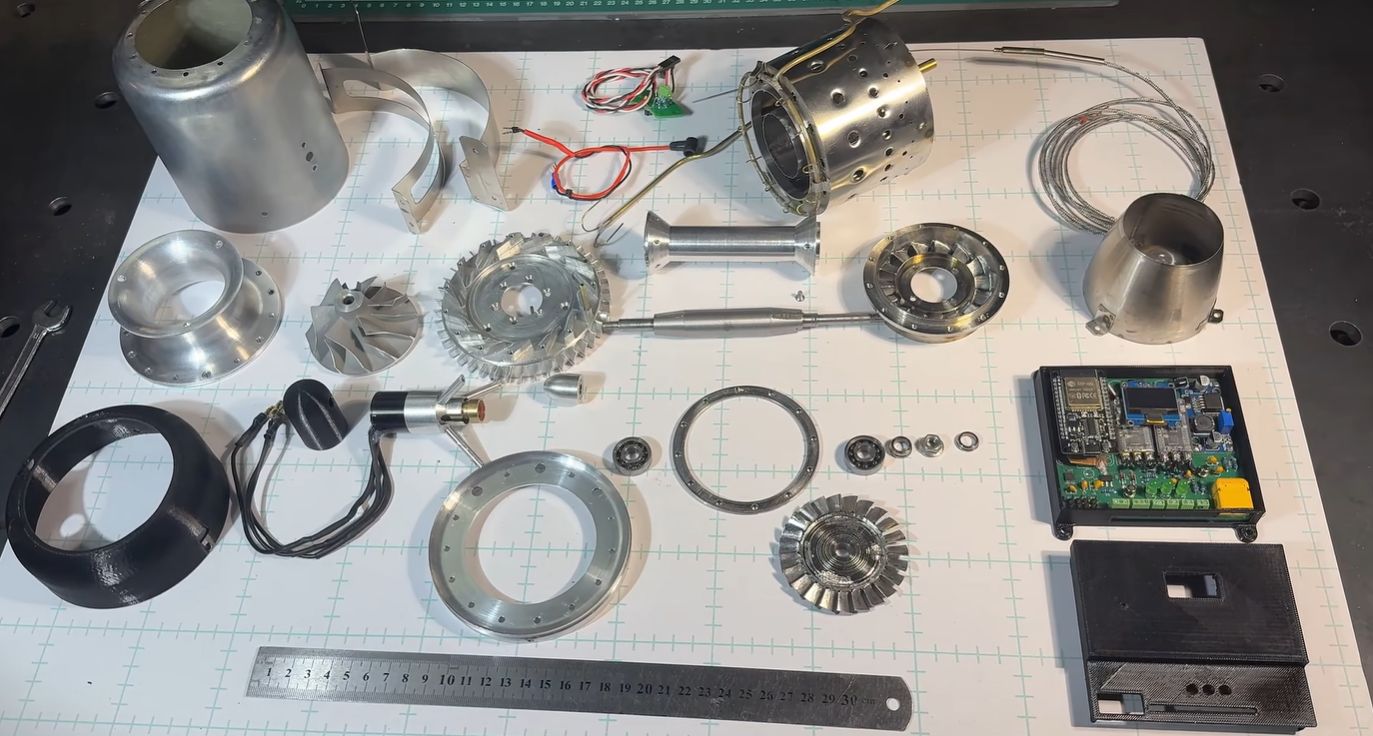
The addition of an RPM sensor is a leap forward for the project. Modern jet engines are controlled by FADEC (Full Authority Digital Engine Control) systems. While the DIY version is far simpler, the integration of a microcontroller to monitor RPM ensures that the user can safely control the start-up sequence, preventing a "hot start" where fuel is introduced before sufficient airflow exists to push the flame through the turbine stages.
Official Responses and Peer Observations
The engineering community’s response to the AlfMart CNC Garage project has been overwhelmingly positive, though marked by a healthy dose of caution. Veteran turbine builders in the amateur aerospace community have noted that the project is remarkably well-documented.
"The level of detail regarding the balancing process is what sets this project apart," says a long-time contributor to amateur jet propulsion forums. "Most builders jump straight to the ‘fire’ aspect. Seeing someone take the time to refine their starter and build a custom, advanced balancing rig tells me that they are prioritizing safety and long-term viability over the ‘wow’ factor of a quick ignition."
AlfMart CNC Garage has maintained a transparent dialogue with their audience, acknowledging that the delay caused by the starter motor failure is a deliberate choice. In their latest update, they emphasized, "We are not building a firework; we are building an engine. If the starter clutch slips or the bearings show resistance, we fix it now, or we deal with the aftermath in the field."
Implications: The Democratization of Aerospace Engineering
The success—or even the attempted success—of this project has profound implications for the maker movement. A decade ago, building a jet engine was considered a "billionaire’s hobby" or a task for professional mechanical engineers with access to multi-million dollar test cells. Today, the convergence of affordable 5-axis CNC machines, open-source microcontroller platforms like Arduino and ESP32, and high-fidelity simulation software has lowered the barrier to entry.
However, there is a serious side to this democratization. The construction of a DIY turbine carries inherent risks. The energy stored in a spinning rotor is immense, and the potential for a catastrophic failure is real. The project serves as a case study in responsible amateur engineering—showing that while the tools are more accessible, the physics of the project remains as unforgiving as ever.
Furthermore, the documentation provided by AlfMart CNC Garage serves as an open-source textbook for aspiring engineers. By making their balancing rig designs and assembly methodologies available, they are contributing to a growing library of knowledge that allows the next generation of engineers to stand on the shoulders of those who came before them.
Conclusion: A Slow Burn Toward Success
As the project enters its next phase—the construction of a more advanced dynamic balancing rig—the community waits with bated breath. The delay in the first ignition is not a sign of failure, but a testament to the discipline required to master such a complex machine.
For AlfMart CNC Garage, the destination is not just the sound of a turbine roaring to life; it is the satisfaction of knowing that every component, every bearing, and every line of code was engineered with precision. When that day comes, it will represent the pinnacle of what a single individual, armed with knowledge and the right tools, can achieve in a garage. Until then, the project continues to be a masterclass in the patience of true engineering.