The Art of the Interface: How the ESP32 ‘Universal Timer’ Redefines DIY Utility
While the maker community is frequently celebrated for pushing hardware far beyond its original specifications—transforming repurposed server racks into home clusters or converting vintage calculators into portable gaming consoles—there is a distinct, quiet satisfaction in witnessing hardware perform its intended function with absolute, elegant precision.
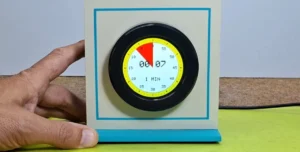
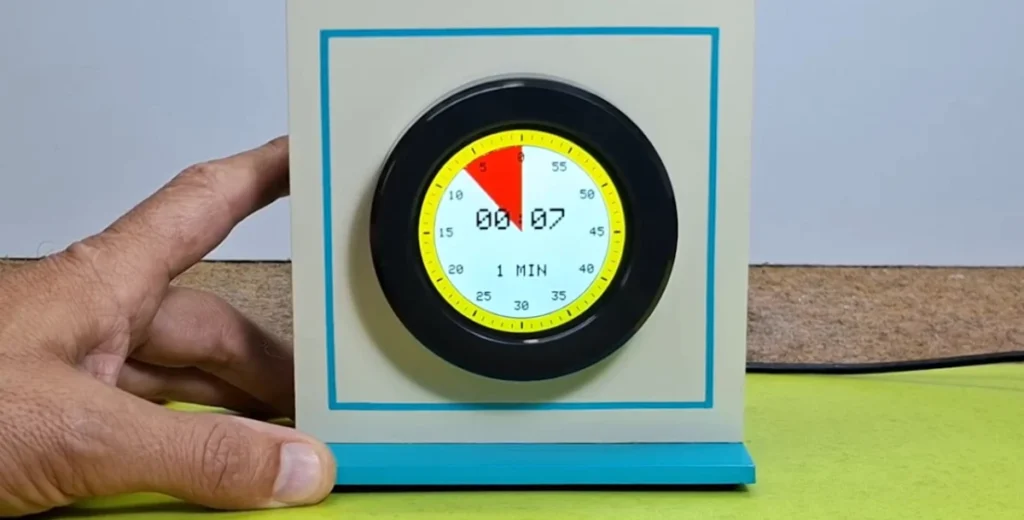
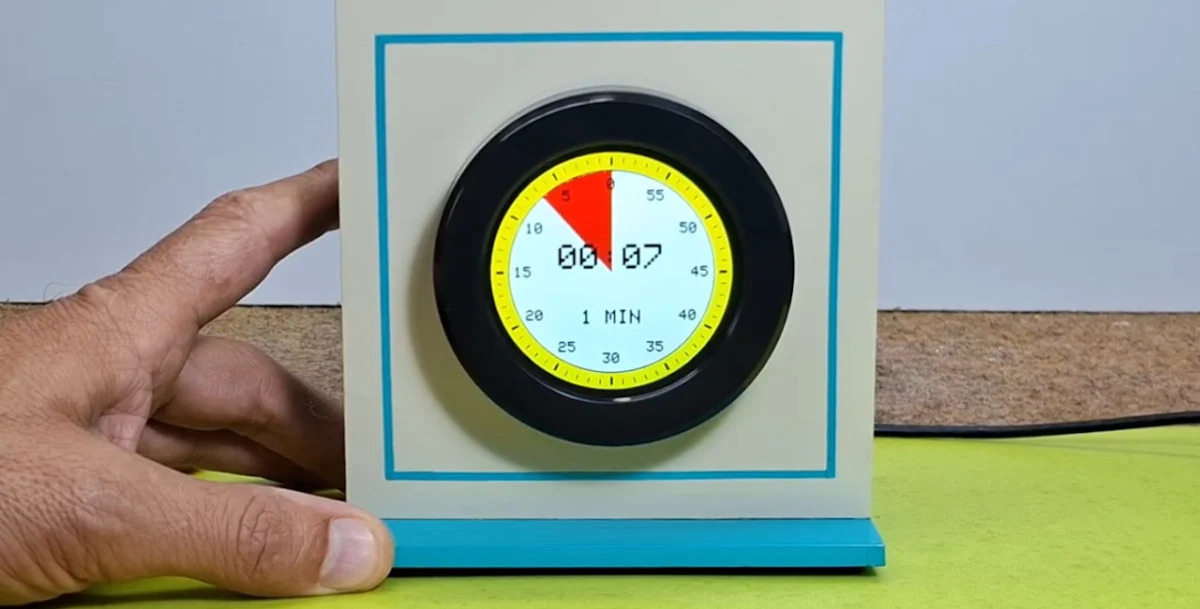
The recent "Universal Timer" project, spearheaded by the prolific maker known as [mircemk], serves as a masterclass in modern embedded design. By utilizing the 2.1-inch CrowPanel "Rotary Display," [mircemk] has crafted a device that feels less like a cobbled-together hobbyist project and more like a high-end, commercial-grade smart home peripheral.
The Core Hardware: Powering the Circular Revolution
At the heart of this project lies the ESP32-S3-powered CrowPanel. This specific module has become a darling of the maker scene, primarily because it consolidates several high-end components into a single, cohesive form factor. The unit features a vibrant, high-resolution 480×480 round touchscreen display, providing a pixel-dense canvas for sophisticated user interface (UI) design.
However, the standout feature is the integrated rotary encoder ring that encircles the display. This physical interface element—reminiscent of the iconic aesthetic popularized by the Nest Learning Thermostat—bridges the gap between the digital and physical worlds. The encoder allows for tactile, precise input, transforming the act of setting a timer from a tedious series of screen taps into an intuitive, satisfying physical gesture.
To round out the hardware, [mircemk] integrated a PCF8574 I2C I/O expander. While the CrowPanel is a formidable piece of hardware on its own, this additional chip facilitates the integration of a physical buzzer. This seemingly minor addition provides the critical audio feedback loop necessary for a functional timer, ensuring that the device captures the user’s attention exactly when the countdown reaches zero.
Chronology of the Build: From Concept to Polished UI
The development of the Universal Timer reflects a growing trend in DIY electronics: the shift toward software-driven, user-centric design. The project’s timeline began with the sourcing of the CrowPanel, a component that has seen its price plummet due to the mass production of smartwatches and IoT wearables.
- Phase One (Conceptualization): The creator identified the need for a desk-based timer that combined the aesthetic appeal of a smart thermostat with the functional simplicity of a traditional kitchen timer.
- Phase Two (Prototyping): Initial firmware development focused on mapping the rotary encoder’s rotational data to the visual output on the display. By leveraging the ESP32-S3’s processing capabilities, [mircemk] was able to create fluid, real-time graphical transitions.
- Phase Three (Integration): The addition of the PCF8574 I2C expander allowed for external peripheral control. This stage ensured that the visual countdown was synchronized with auditory cues, creating a multimodal notification system.
- Phase Four (Refinement): The final stage involved optimizing the UI code to include dynamic color shifting. As the timer approaches zero, the display transitions through a color spectrum, providing a clear, at-a-glance status update that is visible even from across a room.
Supporting Data: Why Circular Displays are Winning
The popularity of circular displays in the maker community is not merely a stylistic choice; it is a response to a rapidly changing market. As global manufacturing output for smartwatches has scaled, the availability of these specialized displays has reached a tipping point.
- Resolution Density: The 480×480 resolution on a 2.1-inch panel results in a high Pixels Per Inch (PPI) count, making text and graphical elements appear crisp and professional.
- Cost Efficiency: Five years ago, such a display would have cost a prohibitive amount for an average hobbyist. Today, these panels are available for a fraction of the cost, often bundled with capable microcontrollers like the ESP32-S3.
- Versatility: Beyond simple timers, these displays are being repurposed for a variety of tasks, ranging from real-time stock tickers and cryptocurrency trackers to desktop "radar" displays that visualize local flight traffic, as documented in previous community projects.
The ESP32-S3 itself remains the industry standard for such projects, offering the necessary dual-core performance to handle both the graphical rendering and the I/O interrupt handling without stuttering or latency.
Official Responses and Community Reception
The reaction within the maker community to [mircemk]’s project has been overwhelmingly positive. On platforms like Hackaday, where the project was recently featured, users have lauded the project for its "clean code" and "polished UI."
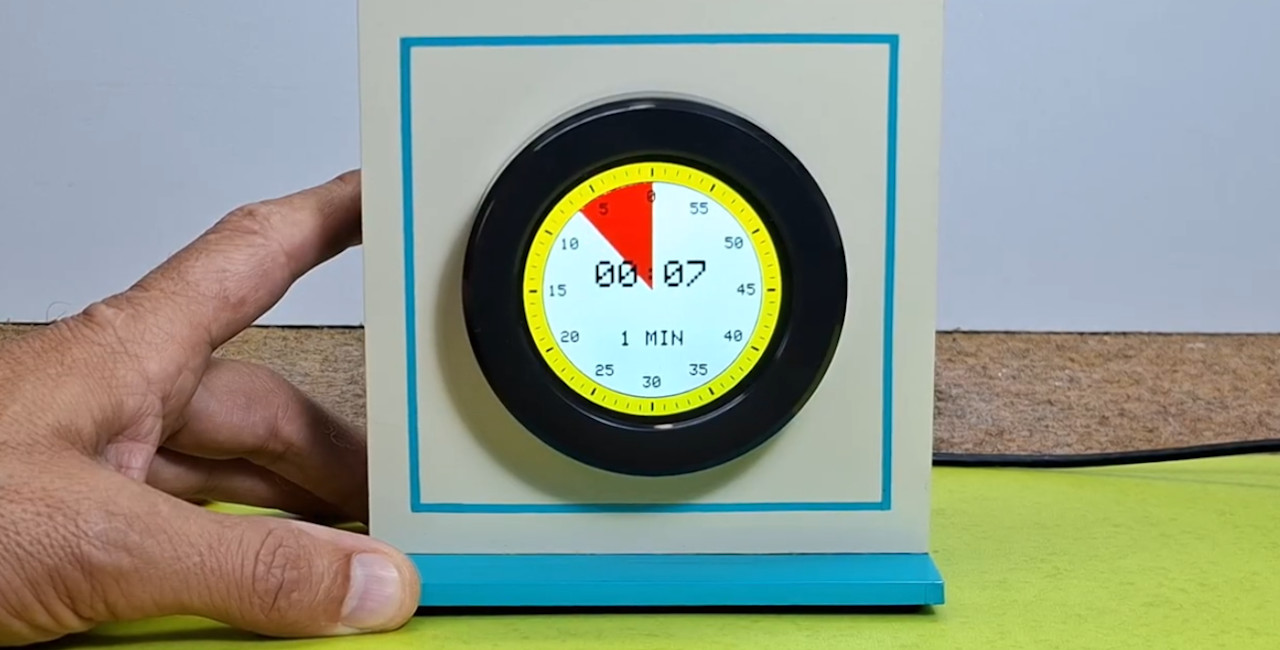
Professional engineers and casual hobbyists alike have noted that the project succeeds where many others fail: it prioritizes the user experience (UX) over raw technical complexity. By providing the source code freely, [mircemk] has invited the community to iterate on the design, with many users already suggesting additions like Wi-Fi synchronization for NTP (Network Time Protocol) timekeeping or integration with Home Assistant via MQTT.
"The beauty of this project," one community member commented, "is that it takes an expensive-looking piece of hardware and makes it accessible through open-source software. You aren’t just buying a timer; you’re building a platform that can be whatever you need it to be."
The Implications for the Future of DIY Home Automation
The Universal Timer project is a microcosm of a larger shift in the DIY landscape. We are moving away from the era of "exposed wires and breadboards" toward an era of "integrated, aesthetic, and functional hardware."
The Rise of "Prosumer" DIY
As tools like 3D printing and accessible PCB design become more refined, projects are beginning to rival consumer products in both build quality and ease of use. The Universal Timer demonstrates that with a $30–$50 investment in hardware and a well-thought-out software stack, a single developer can create a tool that is arguably more useful than proprietary, closed-source kitchen timers found in retail stores.
The Role of Intuitive Interfaces
The emphasis on the rotary encoder as the primary input mechanism highlights a fundamental truth in human-computer interaction (HCI): physical controls often trump touchscreens for specific tasks. The act of "twisting" a ring is faster, more precise, and more satisfying than tapping a capacitive surface, particularly when the user is busy in the kitchen or the workshop.
Future Scalability
The inclusion of the ESP32-S3 means the device is "future-proofed." Because the hardware is inherently connected, the transition from a simple local timer to a network-connected smart device is trivial. Future iterations could easily allow the device to:
- Sync with a user’s Google Calendar to provide visual alerts for upcoming meetings.
- Display live weather data or local environmental sensor readings.
- Function as a remote control node for other smart home devices, using the rotary ring to dim lights or adjust thermostat temperatures.
Conclusion: A New Standard for Hobbyist Projects
[mircemk]’s Universal Timer is more than just a countdown clock; it is a statement of intent. It proves that hobbyist electronics have matured to a level where the line between "fun project" and "useful tool" is entirely blurred.
By leveraging the power of the ESP32-S3, the high fidelity of circular touch displays, and the intuitive nature of physical rotary inputs, the project provides a blueprint for future developers. It invites us to consider not just what we can build, but how we interact with the devices we create. In the landscape of DIY electronics, the Universal Timer stands as a reminder that the most sophisticated projects are often the ones that perform their core task with the most grace. As the community continues to refine these designs, we can expect to see an increasing number of "universal" devices that bring professional-grade utility to the home desktop, all powered by open-source ingenuity.