Accelerating AI: TensorFlow Lite and XNNPack Unlock Dynamic Range Quantization for On-Device Inference
In the rapidly evolving landscape of artificial intelligence, the divide between cloud-based processing and on-device execution remains a critical frontier. For software engineers and developers, the goal is clear: deliver high-performance machine learning (ML) models that run efficiently on local hardware—without compromising on accuracy. Today, the TensorFlow team has taken a significant leap forward in this mission.
Google has announced that XNNPack, the highly optimized CPU backend for TensorFlow Lite, now provides robust support for dynamic range quantization for Fully Connected and Convolution 2D operators. This development represents a transformative shift in how mobile and edge devices handle complex neural network workloads. By quadrupling inference performance compared to single-precision (fp32) baselines, this update ensures that sophisticated AI features can now run fluidly on older or lower-tier hardware, democratizing access to high-end machine learning.
The Evolution of On-Device Inference: A Chronology
To understand the magnitude of this update, one must look at the progression of TensorFlow Lite’s optimization strategies.
Historically, developers were forced into a binary choice regarding model precision. They could opt for full integer quantization—where weights and activations are stored as signed 8-bit integers—which is highly efficient but complex to implement. Alternatively, they could rely on floating-point inference (fp16 or fp32), which offers higher precision but demands significantly more computational resources.

The journey to the current breakthrough can be tracked through these milestones:
- The Era of Floating Point: Initially, TensorFlow Lite relied heavily on fp32. While reliable, the sheer computational cost limited the deployment of complex models on consumer-grade mobile hardware.
- The Rise of Full Integer Quantization: Developers introduced 8-bit quantization to shrink model sizes and improve speed. However, this process proved notoriously difficult, requiring a "representative dataset" to calibrate quantization parameters, which often led to accuracy degradation if the data was not perfectly aligned with real-world usage.
- The Half-Precision (fp16) Breakthrough: In late 2023, the TensorFlow team unveiled massive performance gains via half-precision inference. By utilizing the fp16 hardware support found in most modern smartphones, they demonstrated that computational throughput could effectively double.
- The XNNPack Integration: The current phase marks the convergence of these techniques. By bringing dynamic range quantization into the XNNPack backend, Google has unified the ease of use of dynamic approaches with the blistering speed of architecture-specific optimizations for ARM, x86, and WebAssembly.
Unpacking Dynamic Range Quantization
At its core, dynamic range quantization (DRQ) is an optimization technique that balances performance with implementation simplicity. Unlike full integer quantization, where parameters are static and determined during conversion based on a calibration set, DRQ takes a more flexible approach.
The Mechanics of Efficiency
When a model is converted with DRQ, the weights for specific operators (Fully Connected and Convolution 2D) are compressed into 8-bit integers. Crucially, the activation tensors remain in their native float32 format until the moment of inference.
As the model runs, it calculates the quantization parameters—specifically the zero-point and scale—in real-time based on the observed range of activations. This "on-the-fly" calculation allows the model to utilize the full dynamic range of the 8-bit integer space, resulting in higher precision compared to fixed-parameter quantization. Furthermore, because the output of these operators returns to a 32-bit floating-point format, the integration with the rest of the neural network is seamless.

Why This Matters for Developers
The primary barrier to entry for full integer quantization has always been the "representative dataset." If a developer lacks a perfectly curated set of data that mirrors the distribution of the final application’s input, the model’s accuracy can suffer catastrophic drops. DRQ bypasses this entire requirement. It is more accessible to the non-expert developer, requires no special calibration data, and does not fail when encountering unsupported operators, making it a "plug-and-play" optimization for most use cases.
Supporting Data: Benchmarking the Speedup
The performance gains offered by this update are not merely theoretical; they are empirical and stark. The TensorFlow team conducted extensive benchmarks across four public models, comparing full-float, full-integer, and dynamic range quantization paths.
Performance Highlights
The results were compelling, particularly regarding the Stable Diffusion model. Because this model contains complex operations that often crash during standard full-integer quantization, it served as the perfect testbed for DRQ. The data shows that:
- Stable Diffusion runs up to 6.2 times faster than the original float32 model when using the new XNNPack-optimized dynamic range quantization.
- In several test scenarios, DRQ outperformed full-integer quantization. This counter-intuitive result is explained by "quantization artifacts." When the ratio of input and output scales falls outside of an optimal range, full-integer models may be forced into slower execution paths. DRQ, by maintaining floating-point outputs and calculating parameters dynamically, avoids these bottlenecks.
The "Mixed Precision" Advantage
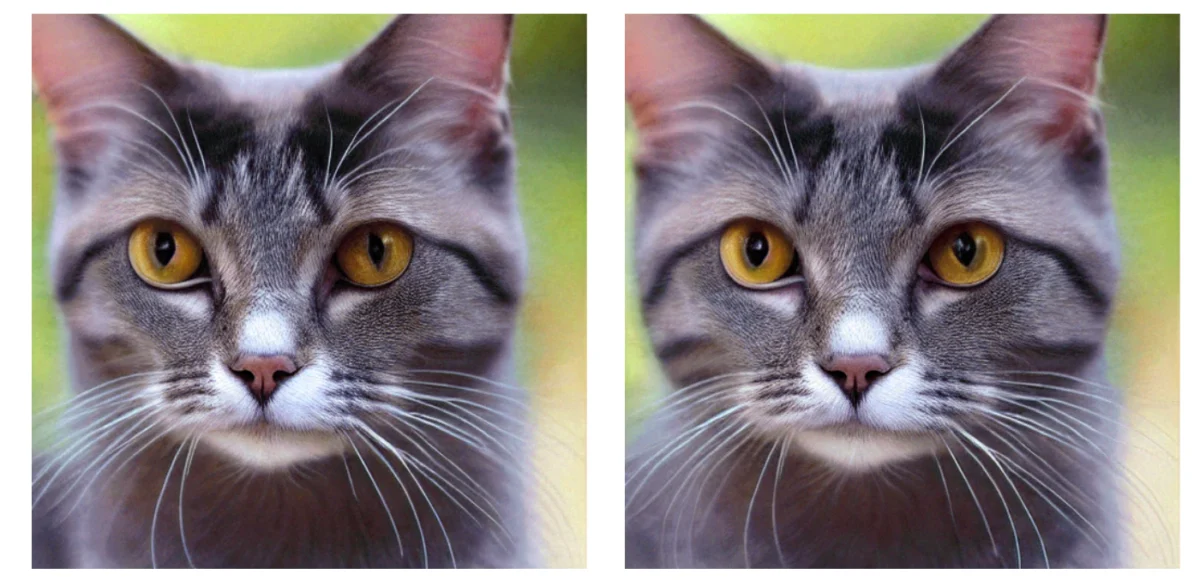
For devices equipped with hardware-level fp16 support—a category that includes nearly every smartphone released since 2018, such as the Pixel 3 and later—developers can now combine DRQ with fp16 inference. By outputting fp16 data instead of fp32, the CPU can process twice as much data per instruction cycle. Visual proof of this is seen in side-by-side image generation tests: the output from a model using fp16 activations is virtually indistinguishable from an fp32 output, confirming that for many computer vision tasks, the reduction in mantissa bits does not result in a perceptible loss of quality.

Official Responses and Industry Implications
The implementation of this technology is already having a tangible impact on the Google ecosystem. According to the development team, XNNPack’s dynamic range quantization is currently the engine powering major features in Gemini, Google Meet, and Chrome OS audio denoising.
"Full integer quantization is hard; converting models is difficult, error-prone, and accuracy is not guaranteed," the team noted in their official release. "Dynamic range quantization offers a compromise… giving game-changing performance improvements."
Implications for the Future
The implications for the broader developer community are profound:
- Extended Lifecycle for Hardware: By optimizing for older architectures, developers can extend the life of applications on legacy devices, ensuring that users with budget-friendly phones can still experience high-quality AI features.
- Faster Prototyping: The removal of the "representative dataset" requirement significantly shortens the development cycle. Developers can move from training to deployment without the heavy overhead of quantization calibration.
- Unified Optimization: With XNNPack supporting ARM, x86, and WebAssembly, developers can write once and optimize everywhere. Whether it is a browser-based AI tool or a high-end mobile application, the performance gains are consistent.
How to Get Started
For developers eager to leverage these improvements, the process is straightforward. Starting with TensorFlow 2.17, dynamically quantized XNNPack inference is enabled by default in prebuilt binaries. For those who cannot wait, the nightly TensorFlow builds include these optimizations immediately.

To enable the feature, simply use the following flag during the model conversion process:
converter.optimizations = [tf.lite.Optimize.DEFAULT]
Existing models already converted using dynamic range quantization do not require any further action; simply updating the TensorFlow Lite runtime will automatically unlock these optimizations.
Conclusion
The integration of dynamic range quantization into XNNPack is a masterclass in pragmatic engineering. By focusing on where models actually spend their time—the compute-heavy Fully Connected and Convolution layers—Google has delivered a massive boost to the efficiency of on-device AI.
As we move toward a future where large language models and generative AI become standard on mobile devices, the ability to squeeze every ounce of performance out of the CPU will be the difference between a sluggish, battery-draining experience and a seamless, high-performance application. With this update, that future is now significantly closer for every developer in the TensorFlow ecosystem.