Empowering Global Maternal Healthcare: How Google Research Uses TensorFlow Lite to Bring AI-Powered Ultrasound to Underserved Communities
By the Global Health Technology Desk
Introduction: The Global Maternal Health Crisis
Every year, an estimated 287,000 women worldwide lose their lives due to preventable complications arising from pregnancy and childbirth, while neonatal deaths reach a staggering 2.4 million annually. According to data compiled by the World Health Organization (WHO), an overwhelming 95% of these tragic losses occur in low-resource and under-resourced settings.
Crucially, many of these deaths could be entirely avoided if medical practitioners had access to early diagnostic tools. Obstetric diagnostics—such as determining gestational age and identifying fetal presentation (whether the baby is positioned correctly for delivery)—are foundational components of effective prenatal care. They allow healthcare providers to monitor the health of both the pregnant parent and the developing fetus, anticipate complications, and schedule timely interventions.
Traditionally, these critical metrics rely heavily on obstetric ultrasound examinations. While recent advancements in sensor and hardware technology have successfully lowered the cost of ultrasound devices and enabled integration directly with smartphones, a massive operational bottleneck remains: expertise. Operating traditional ultrasound equipment and interpreting scans require years of rigorous clinical training. In many rural, remote, and developing regions, there is an acute shortage of trained sonographers.
Consequently, epidemiological studies published in journals such as The Lancet Global Health estimate that up to two-thirds of pregnant individuals in underserved settings never receive a single ultrasound screening throughout their entire pregnancy. Bridging this care gap requires more than just affordable hardware; it demands innovative software solutions that can empower non-specialist healthcare workers to capture diagnostic-grade imaging.

Main Facts: Bringing AI to the Point of Care
In response to this global disparity, a multidisciplinary team of researchers at Google Research has developed a breakthrough mobile-optimized artificial intelligence system. Detailed in their landmark paper, “A mobile-optimized artificial intelligence system for gestational age and fetal malpresentation assessment”—published in Nature Communications Medicine—the research demonstrates how artificial intelligence can democratize obstetric ultrasound.
The core components of this technological leap include:
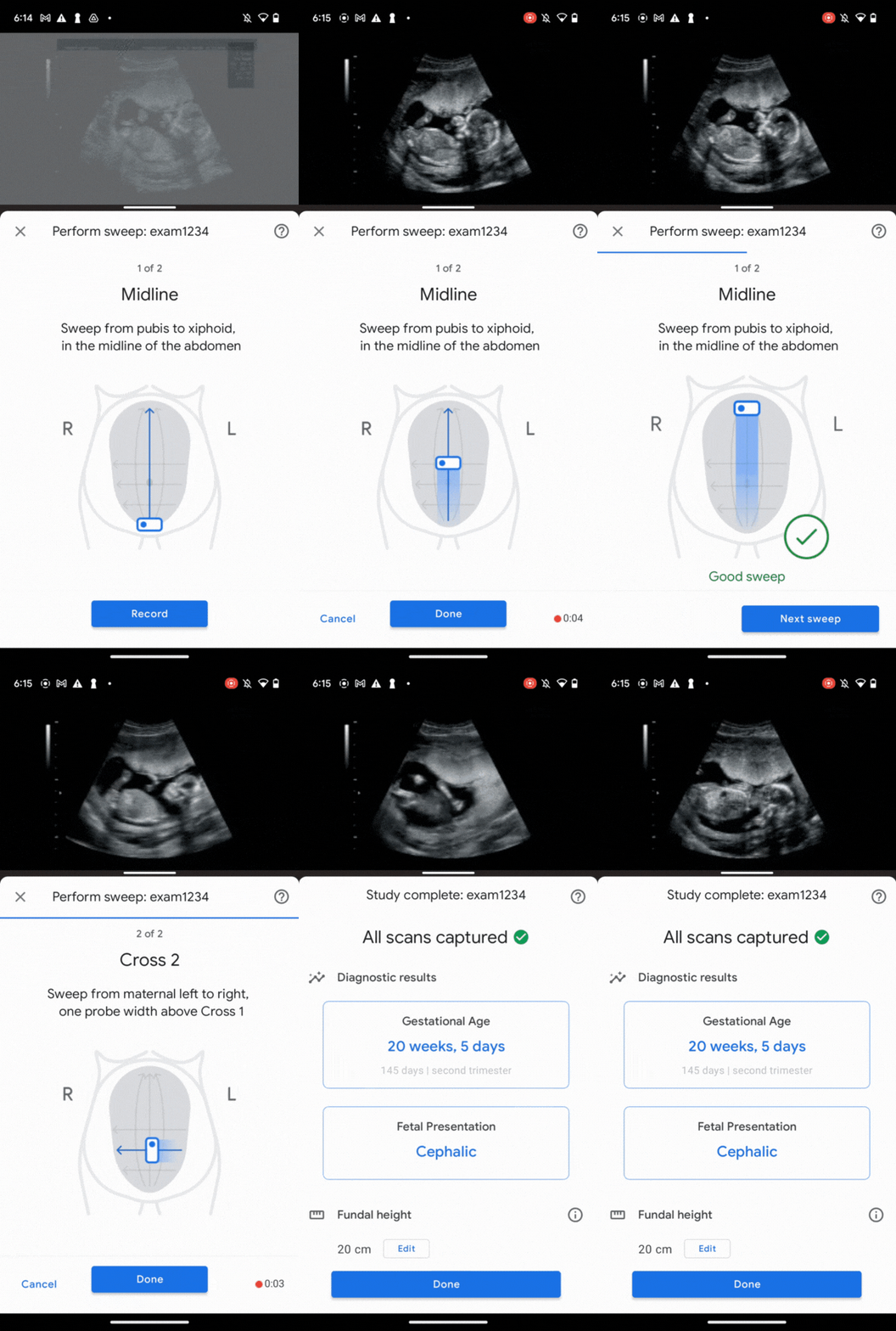
- The "Blind Sweep" Protocol: A simplified, intuitive operating procedure that allows healthcare workers with no background in ultrasonography to collect clinically useful data by simply moving an ultrasound probe in a sweeping motion across a patient’s abdomen.
- On-Device Machine Learning via TensorFlow Lite: The implementation of lightweight, mobile-optimized AI models capable of running directly on standard smartphones (such as Google Pixel devices) without requiring cloud connectivity.
- Real-Time Inference: Running multiple complex neural networks simultaneously at over 30 frames per second, delivering instant feedback on both gestational age and fetal presentation.
- Immediate Quality Control: Providing frontline health workers with instant, automated feedback on the quality of their scan, allowing them to adjust their technique (such as applying more ultrasound gel or pressure) on the spot.
By decentralizing diagnostics and shifting capabilities to mobile edge devices, Google’s Health AI team is laying the groundwork for a future where high-quality prenatal screening is accessible regardless of geographic location or socioeconomic status.
Chronology of Innovation: From Research Concept to Real-World Mobile Deployment
The path toward bringing on-device artificial intelligence into the realm of maternal healthcare was systematic, rigorous, and collaborative.
Phase 1: Conceptualization and the Need for Simplification
Google’s Health AI Team recognized early on that deploying advanced AI models to rural clinics meant designing for worst-case infrastructure scenarios—environments frequently plagued by intermittent power supplies and zero internet connectivity. Standard cloud-based AI models were immediately ruled out due to privacy concerns, latency issues, and bandwidth dependencies. The team pivoted toward on-device processing.

Concurrently, researchers tackled the operational bottleneck of ultrasound acquisition. Standard obstetric scanning requires precise anatomical positioning and adjustments that take years to master. To bypass this, the team embraced the "blind sweep protocol," an established academic concept where a practitioner performs a continuous, generalized sweep of the probe across the abdomen rather than hunting for specific, isolated anatomical planes.
Phase 2: Architectural Design and Model Optimization
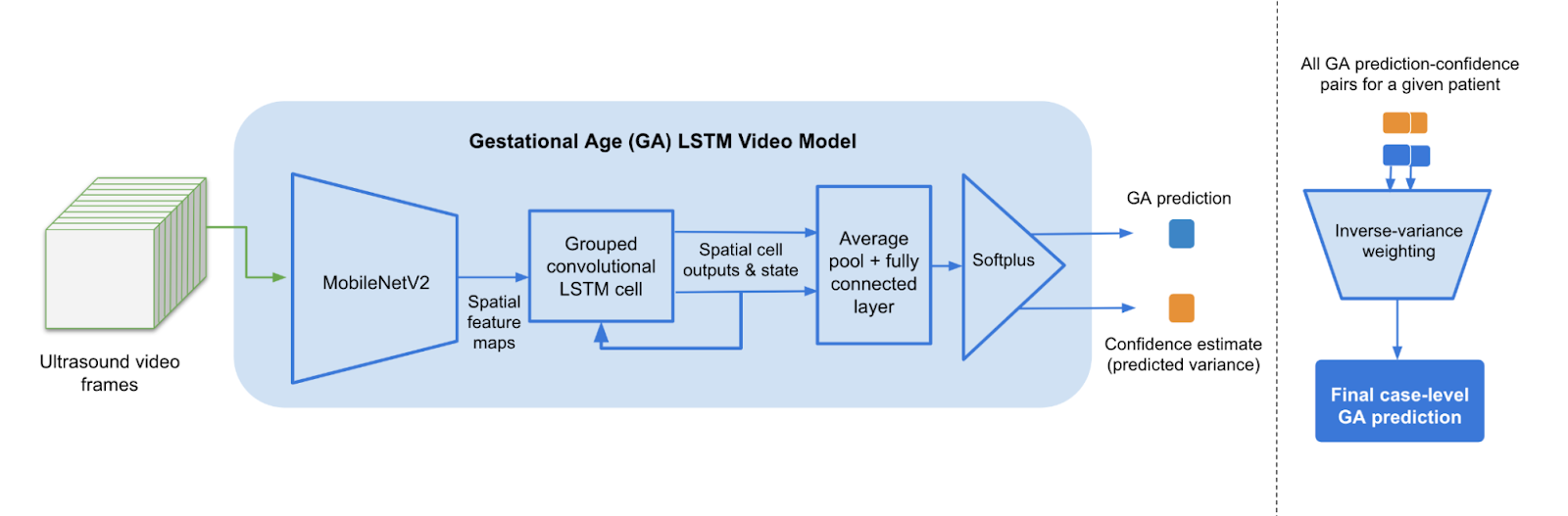
To process dynamic video feeds rather than static images, the team engineered a grouped convolutional Long Short-Term Memory (LSTM) architecture. They integrated MobileNetV2 for feature extraction on each incoming video frame. Because recurrent connections operate solely on lightweight image embeddings rather than raw high-resolution video data, the model achieves high computational efficiency.
However, running heavy video models on mobile hardware presented speed and memory hurdles. The team turned to TensorFlow Lite, an open-source framework designed for machine learning on mobile and edge devices. Utilizing the TensorFlow Lite converter API, researchers applied post-harvest optimization strategies. The game-changing breakthrough arrived when they integrated the TensorFlow Lite GPU delegate, which is optimized for sustained inference speeds. This adjustment yielded a twofold execution speed improvement with zero loss in model accuracy, achieving real-time processing of over 30 frames per second while running gestational age and fetal presentation models in parallel.
Phase 3: Clinical Validation and Prototype App Development
With optimized models in hand, the team built a demonstration mobile application capable of interfacing directly with portable, smartphone-compatible ultrasound hardware. This app allowed researchers to evaluate model performance in realistic field conditions.
Clinical validation studies were conducted across diverse international cohorts. Partnering with prestigious institutions such as Northwestern Medicine in the United States, Jacaranda Health in Kenya, the University of Zambia School of Medicine, and the University of North Carolina School of Medicine, the team tested the blind sweep AI system against clinical gold standards. The findings confirmed that non-experts guided by the AI tool could achieve diagnostic accuracy comparable to standard-of-care measurements performed by expert sonographers.

Supporting Data and Technical Architecture
The technical rigor behind Google’s research is supported by extensive empirical testing across hundreds of study participants.
How the Gestational Age and Fetal Presentation Models Work
The AI pipeline processes video frames sequentially as they are captured during a blind sweep:
- Feature Extraction: MobileNetV2 processes each incoming video frame, generating image embeddings.
- Sequence Processing: A convolutional LSTM cell state evaluates the sequence of embeddings over time.
- Clip-Level Predictions: The model generates diagnostic outputs for subsequences of the video. For gestational age, it calculates both a predicted age and a model confidence estimate (represented as predicted variance).
- Case-Level Aggregation: Clip-level predictions are synthesized using inverse variance weighting to arrive at a final, highly accurate case-level prediction.
[Ultrasound Video Feed]
         │
         ▼
[MobileNetV2 Feature Extraction (per frame)]
         │
         ▼
[Convolutional LSTM Cell State (Sequence Processing)]
         │
         ▼
[Clip-Level Diagnostic Results & Confidence Variance]
         │
         ▼
[Inverse Variance Weighting Aggregation]
         │
         ▼
[Final Case-Level Prediction & Instant User Feedback]
Performance Metrics
- Gestational Age: The regression model was benchmarked against the clinical standard of care—fetal biometry measurements taken by expert sonographers. Across study cohorts ($n=407$ participants), the absolute error rates of non-experts using the blind sweep AI system closely mirrored expert performance percentiles.
- Fetal Malpresentation: Receiver Operating Characteristic (ROC) curves evaluated the classification model’s ability to detect abnormal presentations ($n=623$ participants). The results demonstrated high sensitivity and specificity regardless of whether the sweep was conducted by an expert or a trained novice.
The Power of TensorFlow Lite
By keeping computation local, TensorFlow Lite delivers two indispensable benefits:
- Enhanced Privacy: Sensitive medical imaging data never leaves the patient’s local device, eliminating cloud-storage vulnerabilities and complying with strict health data privacy standards.
- Offline Functionality: Healthcare workers in remote clinics can run diagnostics entirely offline, completely decoupling advanced healthcare delivery from local internet infrastructure constraints.
Official Responses and Collaborative Partnerships
Scaling a technology of this magnitude requires deep institutional trust and cross-border collaboration. Google Research developed this framework via an interdisciplinary effort involving prominent machine learning engineers, clinical researchers, and global health experts.
The core research collective included Ryan G. Gomes, Chace Lee, Angelica Willis, Marcin Sieniek, Christina Chen, James A. Taylor, Scott Mayer McKinney, George E. Dahl, Justin Gilmer, Charles Lau, Terry Spitz, T. Saensuksopa, Kris Liu, Tiya Tiyasirichokchai, Jonny Wong, Rory Pilgrim, Akib Uddin, Greg Corrado, Lily Peng, Katherine Chou, Daniel Tse, and Shravya Shetty.

Crucially, the technology was shaped through field-testing partnerships with frontline medical organizations:
- Jacaranda Health (Kenya): A leading maternal health organization focused on scaling innovative, low-cost solutions across East Africa to ensure mothers receive quality care.
- Northwestern Medicine (United States): Providing clinical oversight, validation methodologies, and obstetric expertise.
- Academic Institutions: Collaborations with the Department of Obstetrics and Gynaecology at the University of Zambia School of Medicine, the University of North Carolina School of Medicine, and UNC Global Projects–Zambia ensured that the tool was built with a deep understanding of resource-constrained clinical realities.
Google representatives emphasized that the project is guided strictly by the company’s corporate AI Principles, which mandate social benefit, safety assurance, and accountability in high-stakes domains like healthcare.
Implications: The Future of Global Maternal Health
The intersection of edge computing, open-source frameworks like TensorFlow Lite, and clinical obstetrics points toward a transformative shift in global medicine.
1. Democratizing Specialist-Level Care
By lowering the barrier to entry for diagnostic procedures, AI-assisted ultrasound redefines the role of community health workers. A nurse or midwife in a remote rural clinic can be trained within hours to perform effective blind sweeps, instantly shifting rural healthcare from reactive emergency responses to proactive preventative management.
2. A Blueprint for Edge AI in Medicine
While this initiative focuses on maternal health, the technical blueprint—combining lightweight convolutional LSTMs, GPU-accelerated TensorFlow Lite optimization, and offline-first mobile design—serves as a template for other medical specialties. Similar frameworks could eventually be deployed for point-of-care cardiac ultrasound, lung imaging in remote areas, or trauma diagnostics in disaster zones.
3. Current Limitations and Regulatory Horizons
Google Research has been transparent about the current exploratory nature of the work. As noted in official documentation, TensorFlow Lite has not been certified or validated for clinical, medical, or diagnostic purposes. Developers and healthcare institutions utilizing the framework remain solely responsible for independent clinical validation, regulatory compliance (such as FDA or CE mark approvals), and safety oversight before deploying any derived tool into active clinical workflows.
Nevertheless, the progress demonstrated by the Health AI team offers profound hope. By pairing world-class machine learning engineering with the practical needs of under-resourced communities, this initiative brings humanity one step closer to ensuring that no mother or child loses their life simply because geography denied them access to a basic ultrasound scan.
Disclaimer: TensorFlow Lite is an open-source framework provided under permissive licensing. The applications described herein represent early-stage academic research and require rigorous independent clinical validation prior to any diagnostic deployment.