The Renaissance of CSS-Tricks: A Deep Dive into the Future of Front-End Development
The digital landscape is shifting, and for the front-end community, the return of CSS-Tricks is more than just a comeback—it is a signal that the web platform is entering an era of unprecedented capability. After a period of silence, the iconic publication has re-emerged under new stewardship, bringing with it a renewed focus on the technical craftsmanship that defines modern web development.
As the industry pivots toward more expressive, native CSS capabilities, the latest dispatch from CSS-Tricks—the "What’s !important" roundup—serves as a masterclass in current front-end trends. From the maturation of container queries to the creative use of CSS variables for animation, this article breaks down the technical advancements and the implications for developers worldwide.
Main Facts: The New Era of CSS-Tricks
The most significant development is the revitalization of CSS-Tricks as a hub for high-level web engineering. With the transition to a new owner, the editorial direction has sharpened, focusing on "all killer, no filler" content. Central to this new chapter is the relaunch of the CSS-Tricks newsletter, set to become the primary distribution channel for bi-weekly deep dives starting November 10th.
This resurgence is timed perfectly with a flurry of activity in the web standards space. Browsers are shipping new features at a cadence of every two weeks, and the industry is finally moving toward a "Baseline" of compatibility across Chrome, Firefox, and Safari, reducing the need for the polyfills and hacks that defined the previous decade.
Chronology of Technical Advancement
The evolution of the web is rarely linear, but looking back at the past few months of CSS developments reveals a clear trend: we are moving away from JavaScript-heavy solutions and toward declarative, CSS-native architecture.
The Shift Toward Native Complexity
- Early September 2026: Experts like Preethi Sam and Bramus began demonstrating how to replace complex JavaScript logic with native CSS. Preethi’s work on background image refraction demonstrated that stunning, animated visual effects could be achieved without a single line of JavaScript.
- Mid-September 2026: The conversation shifted toward "how to build" rather than "what to build." Brecht De Ruyte’s exploration of container style queries and the advanced use of
attr()highlighted a new paradigm for component architecture. By allowing components to react to their own internal styles, developers are now able to create more modular, reusable codebases. - Late September 2026: The discourse around the
previewsrcattribute and the potential for new browser-level image loading strategies marked a maturation in performance engineering. Patrick Brosset’s proposal for this HTML attribute suggests a future where browsers handle image loading states natively, rather than requiring the "blurry image" hacks currently prevalent in the React/Vue ecosystems.
Supporting Data: Innovations in CSS and HTML
The recent technical documentation shared by the CSS-Tricks team highlights a series of "hacks" that have now become standard engineering patterns.
Scroll-State and Anchor Positioning
Dan Holloran’s exploration of scroll-state() queries—including stuck, snapped, and scrolled—is perhaps the most vital update for UI developers. By utilizing the following syntax, developers can finally trigger styles based on the scroll container’s state without expensive scroll event listeners:
@container scroll-state(stuck: top)
  /* Trigger styles when an element hits the top of the viewport */
Similarly, Bramus’s deep dive into animating CSS grids via anchor positioning provides a solution to one of the most notoriously difficult problems in web design: animating layout reflows. By anchoring content to grid cells, the content moves naturally with the grid, providing a fluid user experience that was previously impossible without complex animation libraries.
The "Impossible" Animation
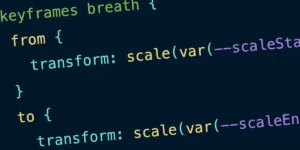
One of the most exciting technical takeaways is the breakthrough by Leon Arnott regarding ::selection. For years, the inability to animate the background color of highlighted text was a frustration for designers. By utilizing CSS variables and the @property rule to make colors animatable, developers can now achieve effects that were previously thought to be hard-coded into browser engines. This demonstrates a wider trend: the "CSS properties" revolution is allowing developers to hook into the browser’s paint cycle with a level of control that was once the exclusive domain of canvas-based graphics.
Implications for the Developer Ecosystem
The implications of these developments are profound. We are witnessing the death of the "JavaScript-for-everything" era.
Performance and Accessibility
By offloading animation, state management, and layout logic to the browser engine, developers are inadvertently creating faster, more accessible sites. When CSS handles the interaction (such as touch-action: manipulation preventing double-tap zoom), the main thread remains clear, leading to better performance on low-end mobile devices—a segment of the market that is often ignored in Silicon Valley-centric development cycles.
The End of "Hack-Heavy" Development
Declan Chidlow’s documentation of "the craziest CSS to ever exist"—remnants of the Internet Explorer era like -ms-filter—serves as a cautionary tale. The industry is finally moving toward a standard, cohesive platform. As Victor Ayomipo pointed out, the slow adoption of container queries was not due to a lack of utility, but due to a misalignment in how developers were conceptualizing responsive design. By treating containers as independent units rather than global breakpoints, the community is shifting toward a more scalable, "component-first" mindset.
Official Perspectives and Industry Response
The consensus among the contributors featured in the CSS-Tricks update is one of cautious optimism. There is a palpable sense of relief that the "browser wars" have settled into a period of cooperative innovation. With Safari 27 and recent versions of Firefox and Chrome achieving parity on critical features, the "cross-browser testing" burden is slowly lifting.
However, challenges remain. The bug-ridden implementation of anchor positioning in Firefox serves as a reminder that even with "Baseline" standards, inconsistencies persist. The community is calling for more rigorous browser compliance and for the W3C to prioritize features that offer tangible quality-of-life improvements, such as the aforementioned previewsrc attribute.
Looking Forward: A Call to Action
The return of CSS-Tricks coincides with a moment where the web platform is finally catching up to the ambitions of its creators. For developers, the message is clear: stop relying on the crutch of third-party dependencies for standard UI behaviors.
As the industry moves toward the November 10th relaunch of the full newsletter, we are entering a phase where the "trick" in CSS-Tricks is no longer about clever workarounds, but about mastering the native language of the web.
Key Takeaways for Developers:
- Adopt Native Queries: Move away from global media queries in favor of container and scroll-state queries.
- Audit Your Stack: If you are using JavaScript to animate layout or state, check if native CSS (like anchor positioning or
@property) can do it more efficiently. - Optimize for the Platform: Use
touch-actionand native HTML attributes to improve the UX of mobile browsers. - Stay Informed: The rate of change is accelerating. Subscribing to authoritative sources is no longer optional for those who wish to remain competitive.
As we look toward 2027, the barrier to entry for creating high-performance, beautiful web interfaces is lowering. The tools are there; it is now up to the development community to wield them with the precision and creativity that the modern web demands. CSS-Tricks is back, and it appears the web is just getting started.