The Invisible Arteries: Why America’s Bridge Infrastructure is at a Critical Crossroads
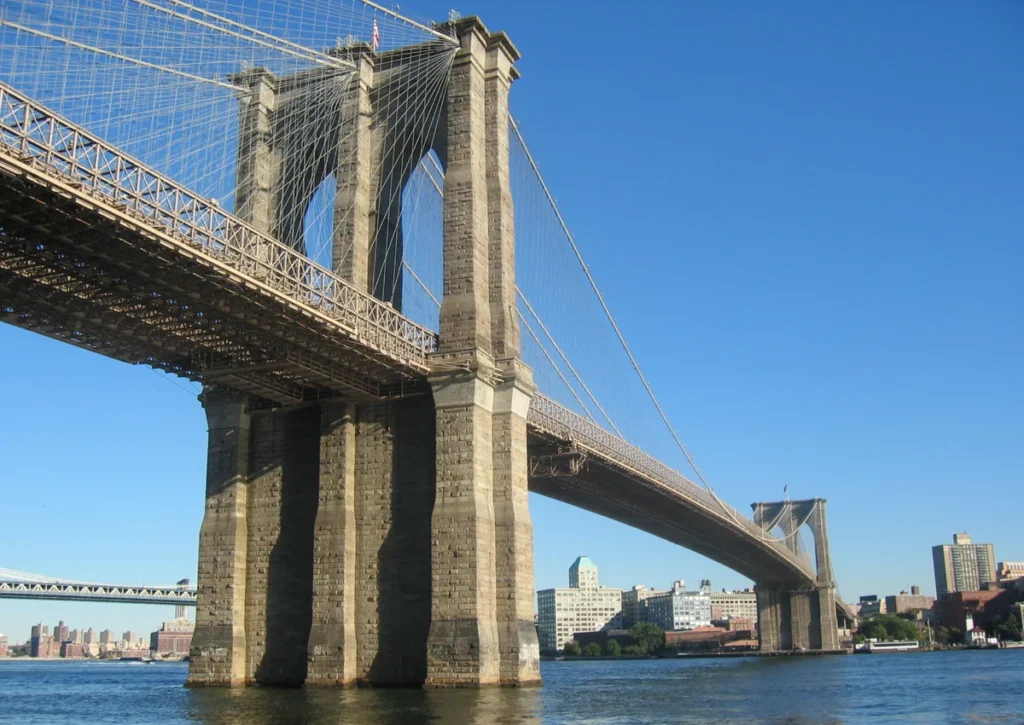
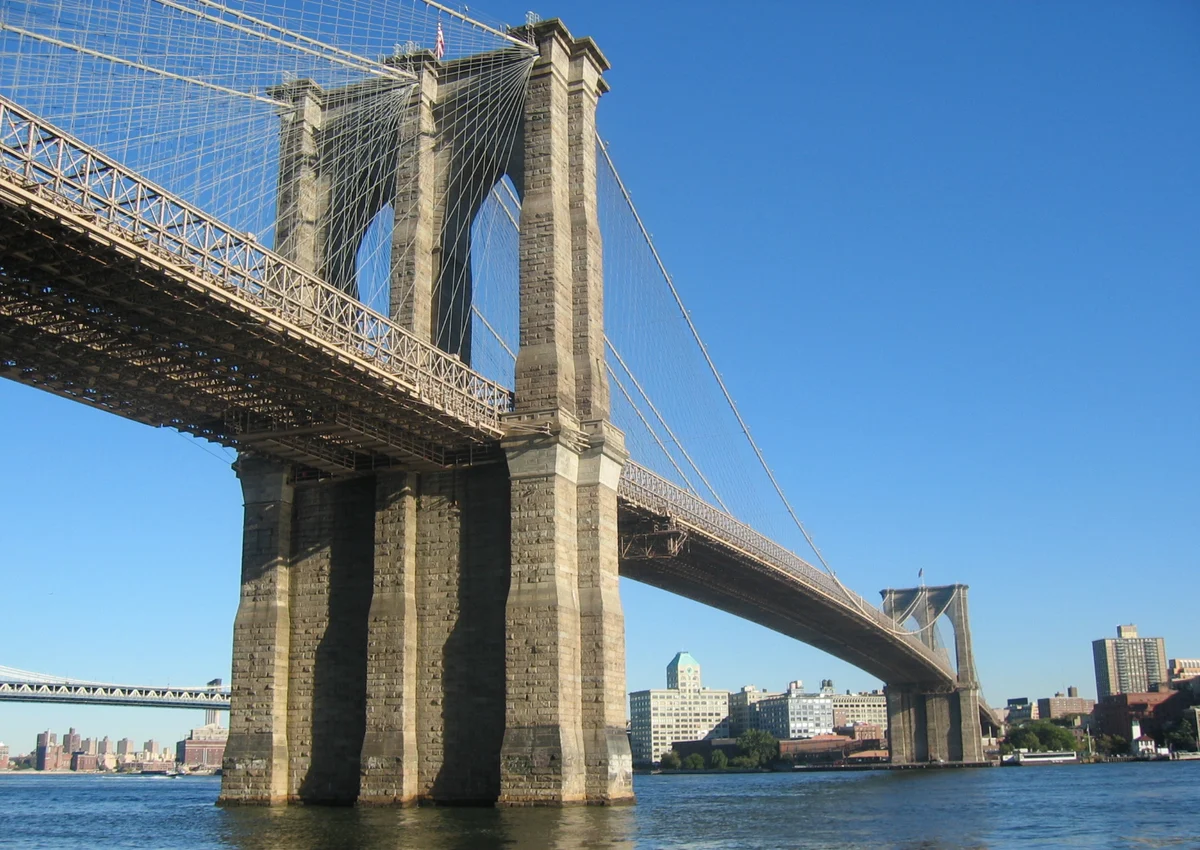
Bridges are the silent workhorses of modern civilization. We cross them during our morning commutes, rely on them to transport the food on our tables, and trust them to connect our communities without a second thought. They are the fixed constants in a rapidly changing landscape, so seamlessly integrated into our daily routines that we often forget they are there. Yet, as any civil engineer will tell you, a bridge is not a static monolith; it is a living, breathing mechanical entity. It is subject to the relentless assault of weather, the fatigue of constant vibration, and the wear of millions of tons of steel and rubber moving across its surface every year.
To ensure these structures remain standing, they require a regime of constant monitoring, maintenance, and structural assessment. In the United States, this responsibility falls to a complex network of federal and state agencies, all of which now contribute to an unprecedented transparency effort: the publicly accessible register of bridge health reports maintained by the U.S. Department of Transportation.
The High Cost of Neglect: Why Infrastructure Matters
Bridges are the literal arteries of commerce. When a bridge is closed for emergency repairs or due to a catastrophic structural failure, the logistical shockwaves are immediate. Entire supply chains are rerouted, commutes are extended by hours, and local economies can face significant downturns.
The strategy in the U.S. has historically been to keep bridges in service as long as possible. While this is an admirable goal for fiscal and environmental reasons, it carries an inherent risk. If the pursuit of longevity results in deferred maintenance, the risk of structural failure skyrockets. When a bridge fails, the consequences are rarely just financial; they are often measured in human lives. The cost of replacing a bridge after a collapse is exponentially higher—not just in dollars, but in the trauma caused to the community—than the proactive, incremental cost of maintaining it while it is still sound.
A Legacy of Aging: The Data Behind the Crisis
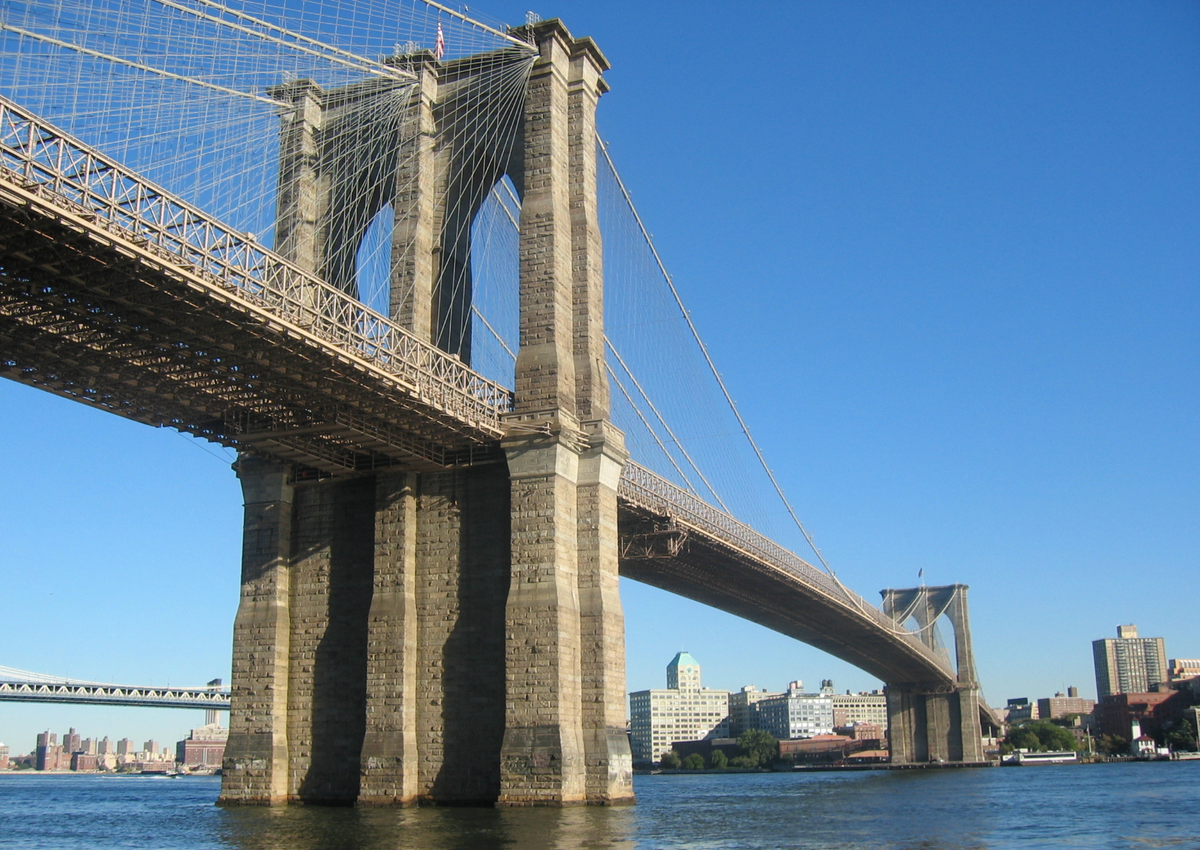
The United States is currently grappling with a sobering reality: our infrastructure is aging rapidly. According to data from the American Road & Transportation Builders Association (ARTBA), the average age of a bridge in the U.S. is 44 years old. This is uncomfortably close to the 50-year service life that many of these structures were originally engineered to support.
Because "average" is a statistical midpoint, it obscures a more dangerous reality: thousands of bridges have long since passed their half-century mark. While age is not a perfect indicator of structural integrity—a well-maintained 70-year-old bridge can be safer than a neglected 20-year-old one—it is a strong indicator of impending maintenance requirements.
A 2024 report by the ARTBA highlighted that 36 percent of all U.S. bridges are in need of repair or replacement. That equates to 221,800 spans. Of those, 42,067 are currently classified as being in "poor" condition. To put that number into perspective, these 42,067 bridges carry 168.5 million motorists every single day. This figure is not merely a data point; it is a wake-up call regarding the potential for disaster if these structures are not brought up to modern safety standards.
The Birth of InfoBridge: A Tool for Accountability
In response to the growing need for transparency, the Federal Highway Administration (FHWA) developed the Long Term Bridge Performance (LTBP) program. At the heart of this initiative is "InfoBridge," a comprehensive, publicly accessible database that acts as a digital repository for bridge health across the nation.
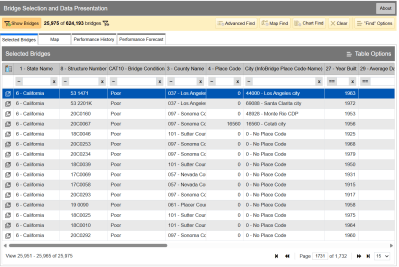
The objective of InfoBridge is twofold: to serve as a high-level research tool for university faculty and civil engineering professionals, and to provide a window into infrastructure health for the general public. By democratizing access to this information, the FHWA is fostering a culture of accountability.
What Does the Data Include?
The database is a massive aggregation of diverse information sources. It pulls from:
- National Bridge Inventory (NBI): The foundational data on bridge geometry, age, and location.
- National Bridge Element (NBE) Data: Granular reports on the specific components of a bridge, such as the deck, superstructure, and substructure.
- Climatic Data: NASA’s MERRA-2 database provides insight into how regional climate patterns—such as freeze-thaw cycles or extreme heat—impact structural materials over time.
- Specialized Research: Data from FHWA projects studying specific materials, such as timber bridges, weathering steel, and the performance of ultra-high-performance concrete (UHPC).
Case Study: The Vincent Thomas Bridge
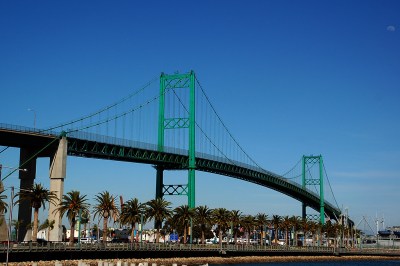
To understand how these tools work in practice, one need only look at the Vincent Thomas Bridge in Los Angeles, California. A suspension bridge of significant scale, spanning 6,060 feet with a 1,500-foot main span, it has been a fixture of the local landscape since 1963.
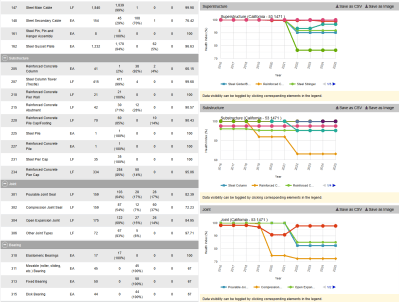
By querying the InfoBridge database (National Bridge Inventory number 53 1471), we can see the story of a structure showing its age. The bridge is currently classified as being in "Poor" condition. By drilling down into the NBE data, engineers can see a clear trend: the health index of the bridge’s steel cables and concrete columns has been in a steady decline since 2019. This data-driven insight was instrumental in the decision-making process for the California Department of Transportation (Caltrans), which recently allocated $706 million for a massive deck replacement project to ensure the bridge remains functional for the 2028 Olympic Games. Without such a transparent record of degradation, securing funding for such an immense, preemptive task would be significantly more difficult.
Forecasting the Future: Machine Learning and Infrastructure
One of the most impressive features of InfoBridge is its predictive modeling. It does not just show the current state of a bridge; it provides "condition forecasts."
For example, a bridge currently in "Good" condition, such as the 24th Street Bridge over Rio Linda Creek, can be analyzed using base, survival, and machine-learning models. These algorithms predict how the structural integrity of the deck and superstructure will evolve over the next 20 to 30 years. By identifying the exact decade in which a bridge is likely to drop from "Good" to "Fair" or "Poor," local authorities can better plan their budget cycles, ensuring that maintenance funds are allocated years before a crisis occurs.
The Role of Official Oversight and Public Scrutiny
The shift toward digital, open-access bridge monitoring represents a significant evolution in how the government manages public safety. Historically, if a citizen wanted to know the structural integrity of their local bridge, they would have to file formal requests, visit records offices, and sift through dusty, paper-based inspection logs.
Today, that information is available at the click of a button. This shift serves three major purposes:
- Public Trust: By being transparent about the condition of bridges, the government can foster trust, even when the news is not good.
- Accountability: Having this data available in a public, time-stamped format means that local authorities have less room to claim ignorance if a bridge begins to deteriorate rapidly.
- Citizen Engagement: Encouraging the public to interact with infrastructure data creates a more informed electorate, one that is more likely to support infrastructure bills and tax levies when they understand the genuine need for repairs.
Implications for the Future
The state of America’s bridges is a direct reflection of our willingness to invest in the future. We are currently living in an era where the decisions made in the 1950s and 60s—the height of the U.S. highway construction boom—are coming due.
The transition to predictive, data-driven maintenance is not a luxury; it is a necessity. As the population grows and climate change places new, unpredictable stresses on our built environment, the ability to monitor the health of our infrastructure in real-time will determine the safety of the next generation.
InfoBridge and similar initiatives are a critical step forward. They transform the abstract concept of "infrastructure" into a tangible, measurable, and manageable asset. However, the data is only as good as the action it inspires. As we look toward the 2030s and beyond, the challenge will be to ensure that these predictive models are matched with the political will and the financial capital necessary to perform the work.
We can no longer afford to view our bridges as invisible, permanent fixtures of our geography. They are complex engineering feats that require our constant attention. Through tools like the FHWA’s InfoBridge, we have finally moved the needle from reactive "fire-fighting" maintenance to proactive, data-informed stewardship. Now, it is up to policymakers and the public to ensure that these arteries remain clear, safe, and open for the traffic of tomorrow.