The Future of DevSecOps: AWS Security Agent Evolves into a Unified Lifecycle Guardian
In an era where software supply chain attacks and sophisticated vulnerabilities threaten the very bedrock of enterprise infrastructure, Amazon Web Services (AWS) is fundamentally shifting the paradigm of security. Since its initial preview at re:Invent 2025, the AWS Security Agent—a cornerstone component of the broader AWS Continuum ecosystem—has matured from a specialized testing tool into a comprehensive, agentic platform.
This evolution marks a transition from reactive security scanning to proactive, intelligent, and context-aware defense. By bridging the gap between design, development, and deployment, the AWS Security Agent provides a unified fabric that ensures applications remain secure from the very first line of code to the final production push.
The Core Transformation: From Point-Solution to Lifecycle Guardian
The fundamental problem with traditional security tools has long been fragmentation. Developers use one tool for static analysis (SAST), another for dependency scanning, and a third for penetration testing. These silos create "security friction," leading to delays, context switching, and missed vulnerabilities.

AWS Security Agent solves this by acting as a "frontier agent"—an AI-driven system capable of reasoning, analysis, and autonomous action. It doesn’t just report vulnerabilities; it understands the intent behind the code, the architecture of the system, and the compliance requirements of the organization.
Chronology of Innovation
- November 2025 (re:Invent): AWS announces the preview of AWS Security Agent, introducing the concept of an agent-driven, proactive security lifecycle.
- March 2026: General Availability (GA) of on-demand, exploitability-verified penetration testing.
- May 2026: Preview launch of full repository code reviews, moving beyond simple line-by-line scanning to deep, context-aware analysis.
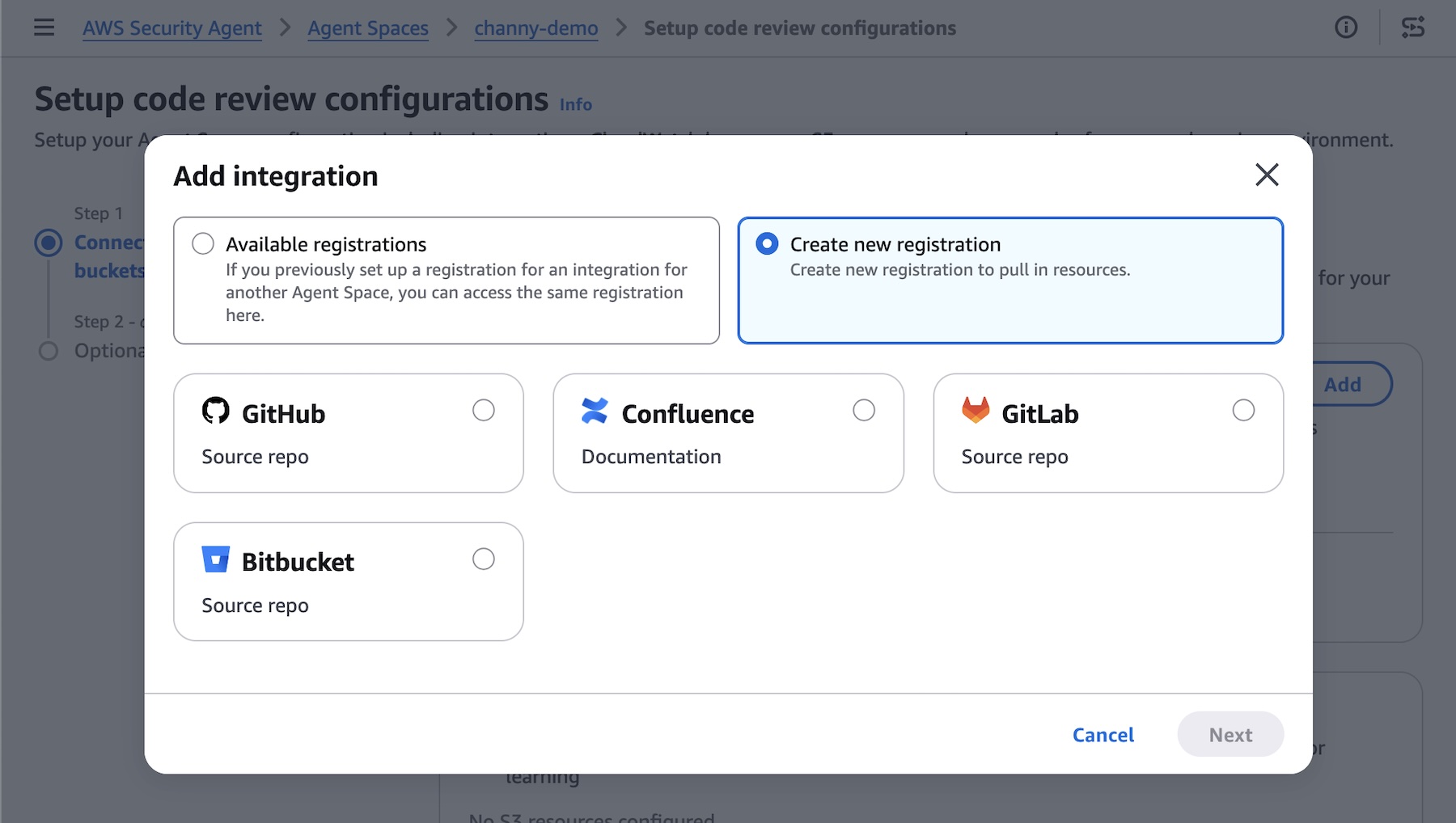
- June 2026: Major expansion of the platform, including multi-repository support (GitLab/Bitbucket), Confluence integration for policy enforcement, and the launch of the Kiro power and Claude Code plugins.
Deep-Dive: Expanded Capabilities and Technical Breakthroughs
The latest updates to the AWS Security Agent reflect a commitment to meeting developers where they work, rather than forcing them into proprietary interfaces.
1. Unified Code Analysis and Repository Integration
The most significant hurdle for security adoption is integration. Developers rarely work solely in GitHub. By extending support to GitLab and Bitbucket (including both SaaS and self-hosted instances), AWS has effectively democratized the agent’s reach.

The introduction of Confluence integration is equally transformative. By allowing the Security Agent to "read" internal documentation, the tool can now understand the specific business context of an application. For example, if a team documents a specific data-handling policy in Confluence, the Security Agent can flag code that deviates from that policy during a review, ensuring that security isn’t just about syntax—it’s about organizational intent.
2. Intelligent Threat Modeling
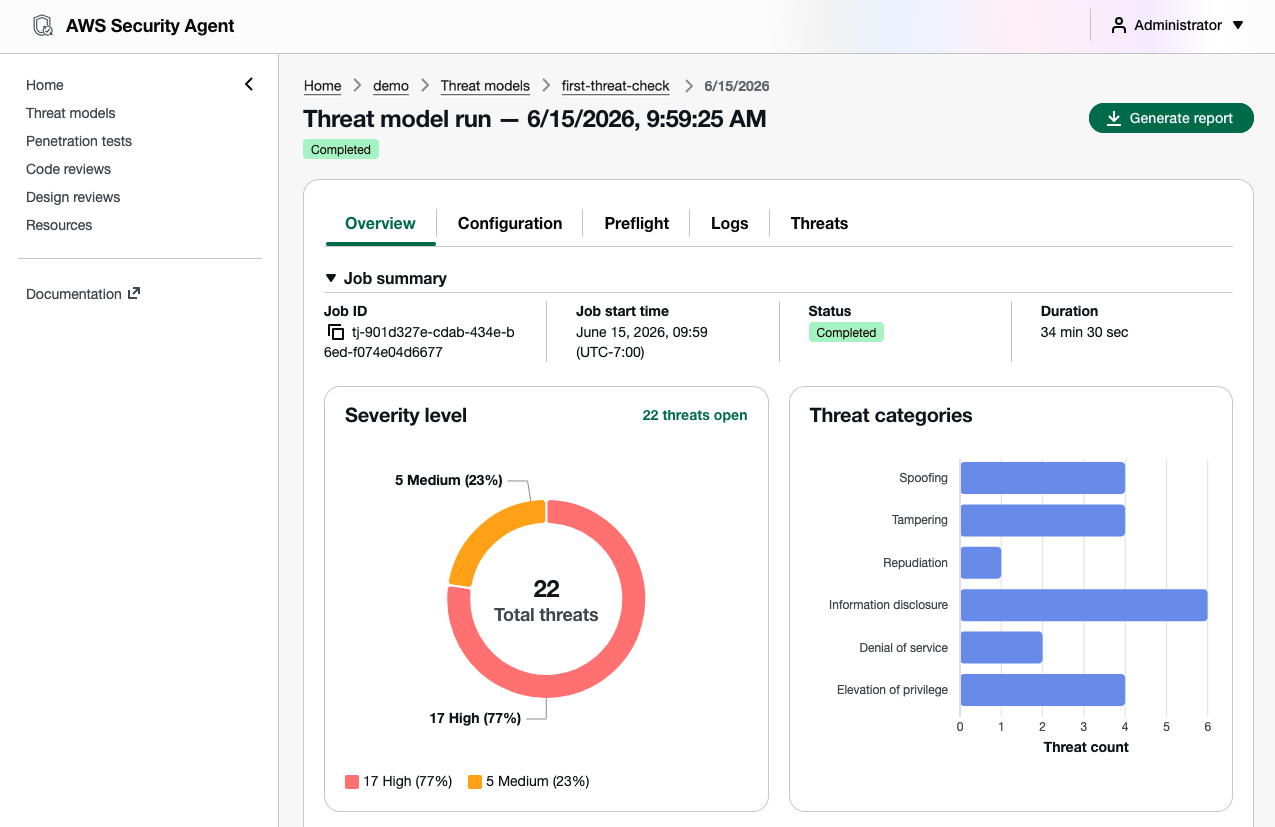
Threat modeling has historically been a manual, time-intensive process that often gets bypassed in the heat of a sprint. AWS Security Agent automates this by generating threat models directly from design documentation and source code repositories.
The agent maps data flows, identifies trust boundaries, and highlights potential attack vectors before a single line of production code is written. By prioritizing threats based on risk and exploitability, the agent allows engineering teams to focus on the vulnerabilities that actually matter, significantly reducing the "noise" that plagues traditional security dashboards.
3. Compliance as Code
For highly regulated industries (Finance, Healthcare, Defense), maintaining compliance is an ongoing battle. The new Managed Compliance Packs allow teams to enforce industry standards—such as NIST CSF, PCI DSS, and the AWS Well-Architected Framework—automatically. Because the agent maps every finding back to these compliance frameworks, audit-readiness is no longer a quarterly panic; it is a continuous, automated byproduct of the development process.
The Developer Experience: Kiro Power and IDE Integration
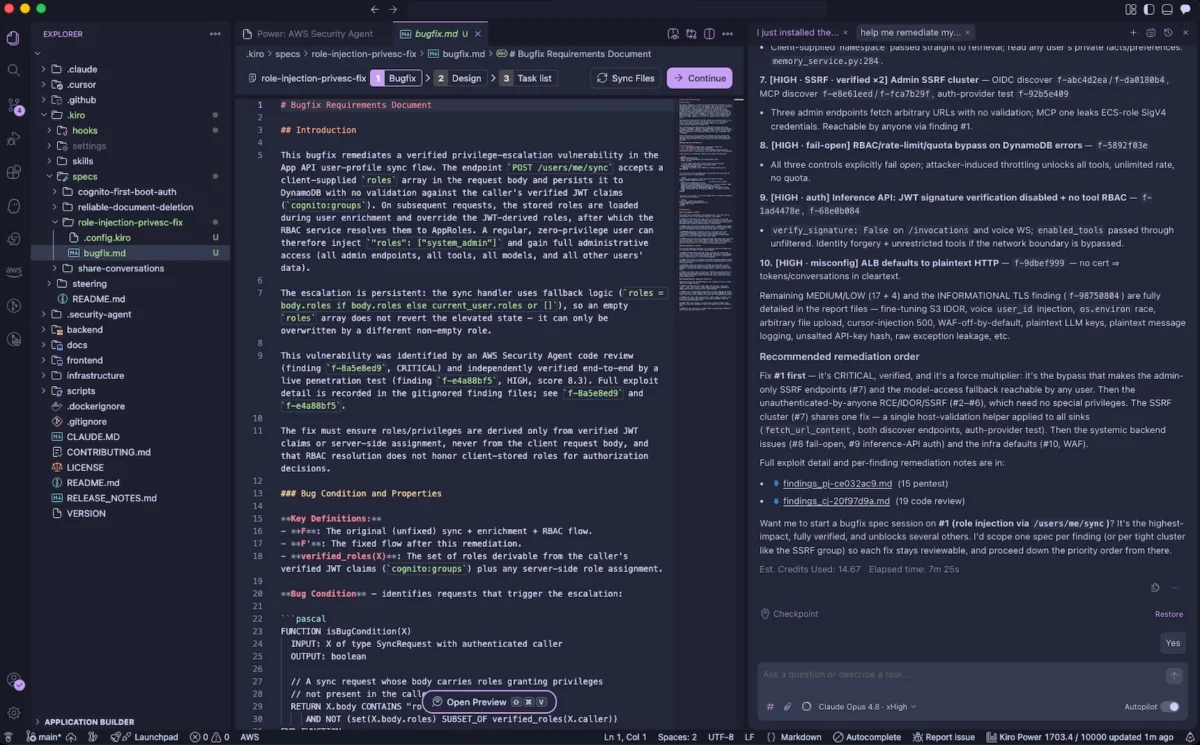
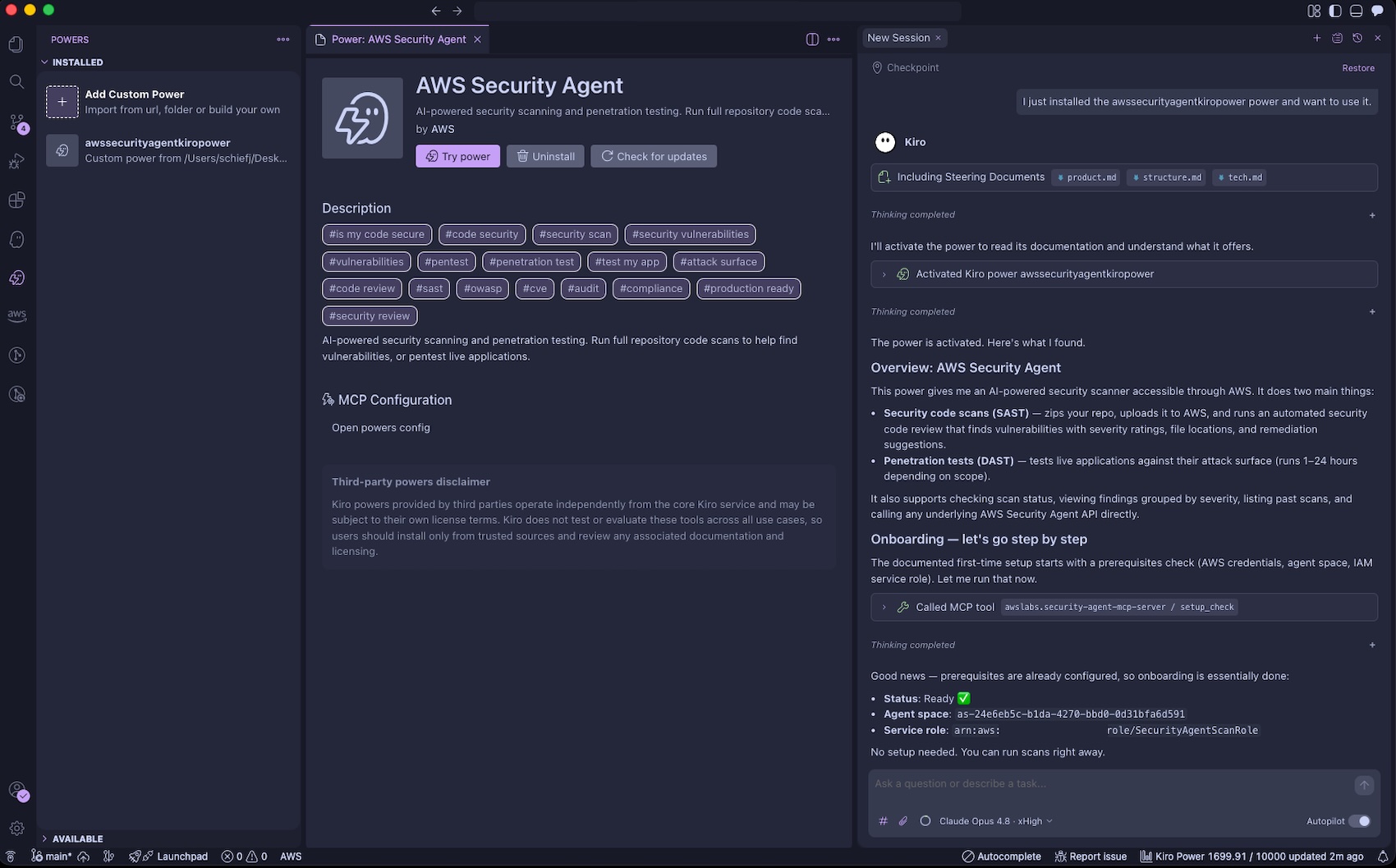
The most compelling aspect of the June 2026 update is the launch of the Kiro power and the Claude Code plugin. AWS is betting that if security isn’t convenient, it won’t be used. By integrating the Security Agent directly into the IDE via Model Context Protocol (MCP), AWS has removed the "context-switching tax."
Inline Remediation
Developers can now ask the agent to "Run a full security scan on this repo" or "Help me remediate my findings" directly within their IDE. The agent doesn’t just point out a bug; it:
- Downloads the findings to the local workspace.
- Prioritizes the most critical vulnerabilities.
- Offers to start a "bugfix spec session."
- Generates the actual code fixes, which the developer can then review and commit.
This "Agent-in-the-Loop" workflow turns the security team into an enabler rather than a gatekeeper. Security professionals can now configure policies and oversee the platform, while developers receive expert-level guidance as they code.
Implications for the Industry
The shift toward agentic security has profound implications for the software development landscape:
Eliminating the "Security Gap"
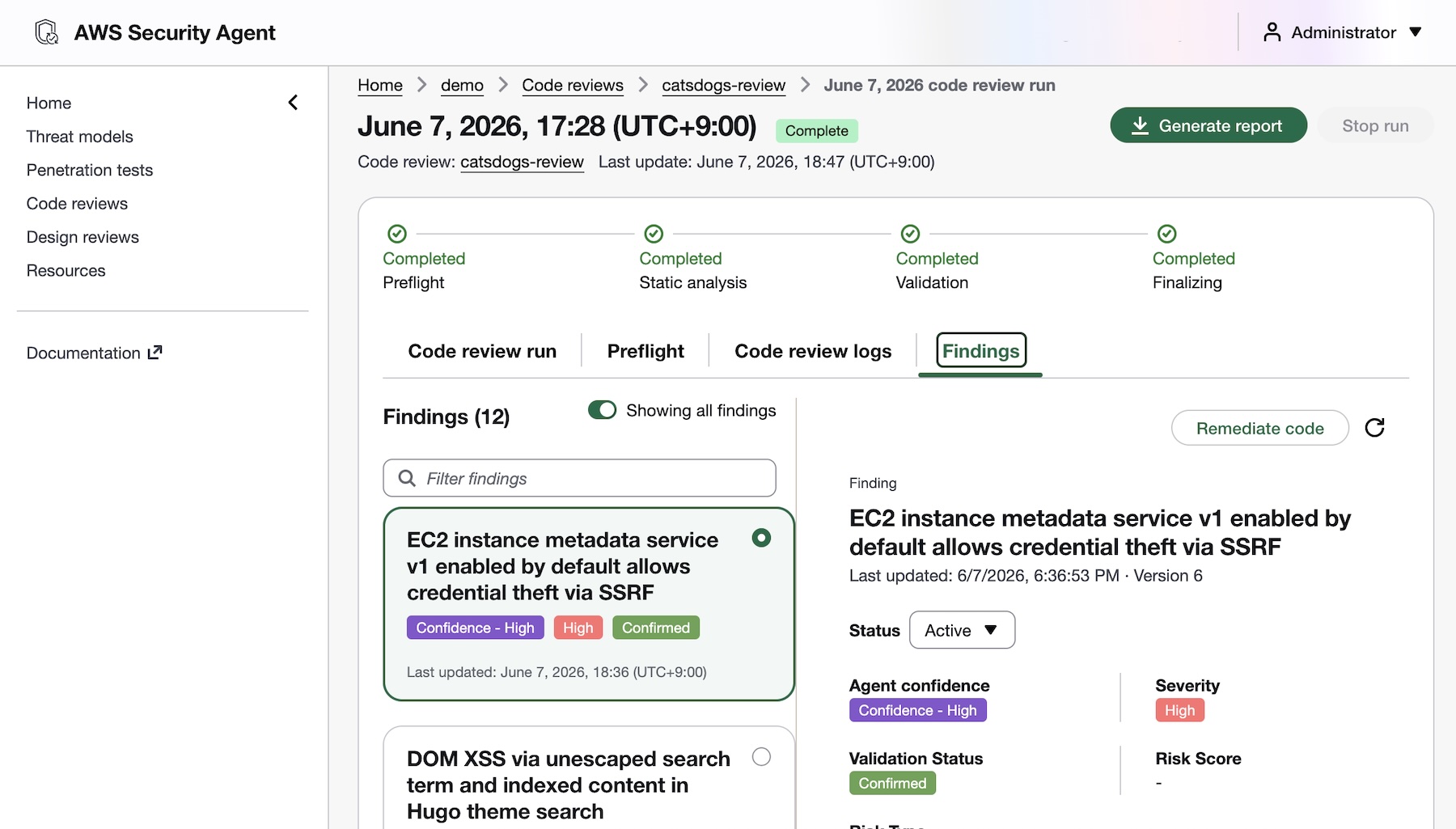
Many security tools fail because they report vulnerabilities that cannot actually be exploited in the user’s specific environment. AWS Security Agent differentiates itself by performing exploitability testing. By simulating attacks in a controlled environment, it validates whether a vulnerability is a genuine threat or a false positive. This level of verification is a game-changer for developer morale, as it ensures that when they are asked to fix something, it is because that "something" is a real, measurable risk.
Shifting Security "Left" and "Deep"
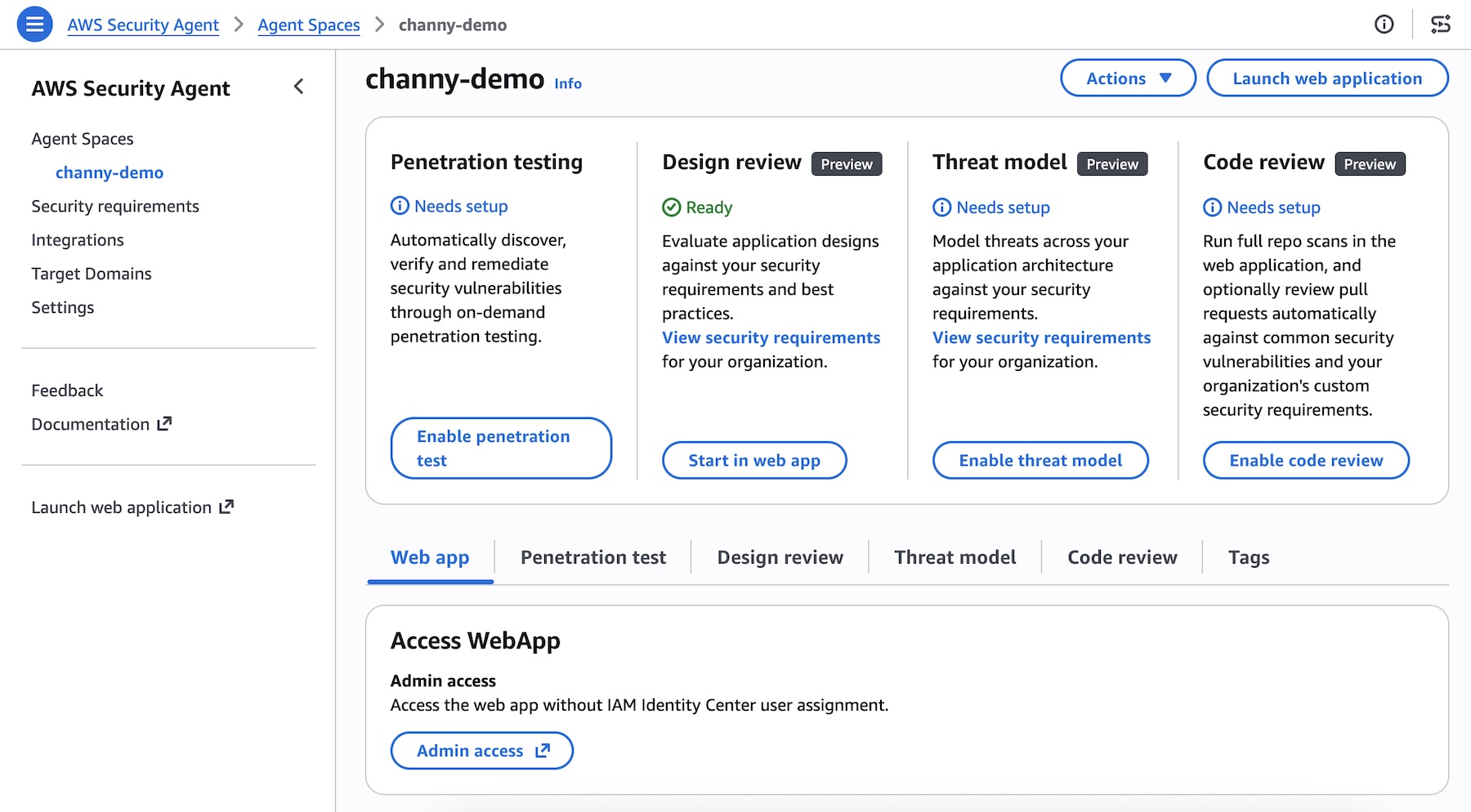
"Shifting left" has been the industry mantra for a decade, but AWS is moving toward "shifting deep." It’s not just about finding bugs earlier; it’s about understanding the entire application lifecycle. By covering the design phase (threat modeling), the coding phase (repository analysis), and the deployment phase (penetration testing), the AWS Security Agent creates a closed-loop system.
The Rise of the "Security Engineer-Agent"
This technology does not replace human security expertise; it scales it. A single security architect can now oversee the security posture of hundreds of repositories by setting the "guardrails" within the Security Agent. The agent handles the routine, repetitive, and complex pattern-matching tasks, freeing human experts to focus on strategic threat hunting and complex architectural reviews.
Looking Ahead: A Roadmap for Resilient Architecture
As organizations continue to scale their cloud-native infrastructure, the complexity of managing security grows exponentially. The integration of the Claude Code plugin and the expansion of the MCP server ecosystem suggest that AWS is building a platform designed for the future of AI-assisted development.
For teams currently struggling with the friction of modern DevSecOps, the path forward is clear. By leveraging the AWS Security Agent, organizations can:
- Reduce Lead Time: By catching vulnerabilities before they reach the build pipeline.
- Improve Posture: By enforcing compliance across every line of code.
- Empower Teams: By providing developers with the tools to fix their own security issues in real-time.
As we move through the second half of 2026, the AWS Security Agent stands as a testament to the power of integrating security into the DNA of the development process. It is no longer enough to be "secure by design"; in the modern era, one must be "secure by agent."
How to Get Started
AWS has made it remarkably easy to integrate these new features. Teams can enable code reviews or threat modeling directly through the AWS Security Agent console. For those who want to experience the power of the Kiro plugin, the documentation is hosted on GitHub, and the 2-month free trial provides a low-risk environment to test the agent’s capabilities against your existing codebase.
As the digital landscape becomes increasingly hostile, the tools we use to defend our applications must become as intelligent and adaptable as the threats they aim to mitigate. With the latest updates to the AWS Security Agent, that future is not just on the horizon—it is ready for deployment today.