Tackling the Silent Crisis: AWS Launches Autonomous Modernization to Combat Technical Debt
In an era where software development speed is accelerating at an unprecedented rate—driven largely by the proliferation of AI-assisted coding agents—a silent crisis is brewing within enterprise IT departments. Technical debt, the byproduct of outdated dependencies, deprecated frameworks, and neglected security patches, is accumulating faster than engineering teams can address it. Today, Amazon Web Services (AWS) is taking a decisive step to address this bottleneck with the announcement of AWS Transform – continuous modernization (preview).
This new capability, integrated directly into the broader AWS Transform suite, marks a shift from reactive, manual maintenance to an autonomous, continuous lifecycle for software health. By automating the detection, prioritization, and remediation of technical debt across thousands of repositories, AWS aims to reclaim the estimated 30% of IT budgets currently squandered on maintaining "undifferentiated" code.
The Core Challenge: Why Technical Debt is Outpacing Innovation
For years, engineering organizations have relied on a fragmented ecosystem of point tools to manage their codebases. One tool might identify security vulnerabilities, another might flag outdated Java versions, and a third might track code quality. This "Frankenstein" approach to tooling creates a visibility gap that forces leaders to rely on subjective, self-reported status updates from team leads—reports that are often outdated the moment they are filed.
The problem is compounded by the "AI coding boom." As generative AI tools allow developers to write code at ten times their previous speed, they are also inadvertently producing technical debt at a proportional rate. The industry has reached a breaking point where the manual, application-by-application cycle of updating runtimes and libraries is no longer sustainable. Without a systemic, automated way to enforce standards and remediate vulnerabilities, organizations are finding that their engineering capacity is perpetually tied up in maintenance rather than innovation.
Chronology of the Transformation: From Migration to Autonomy
AWS Transform has historically focused on the heavy lifting of enterprise migrations—moving workloads out of on-premises data centers and into the cloud. As cloud adoption matured, the focus shifted toward the modernization of legacy applications, such as Windows-based software and mainframe-to-cloud transitions.
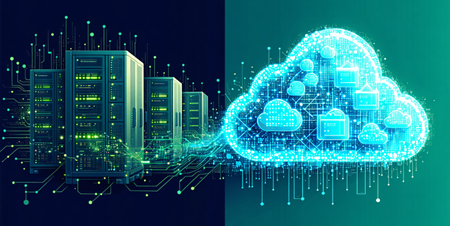
With the introduction of the continuous modernization capability, AWS is evolving its value proposition. The development timeline can be viewed in three distinct phases:
- The Migration Era: AWS provided tools to lift and shift, focusing on infrastructure parity.
- The Modernization Era: AWS introduced services to refactor applications for cloud-native performance, including automated upgrades for Java and Lambda runtimes.
- The Autonomous Era: The current launch represents the transition to autonomous lifecycle management. By moving beyond one-off projects, AWS is enabling organizations to treat code health as a "continuous state" rather than a periodic "project."
By shifting the model from manual intervention to an autonomous, policy-driven approach, AWS is providing a mechanism for platform teams to define a "gold standard" for their code and ensure that every repository in the organization adheres to it in real-time.
Technical Mechanics: How Continuous Modernization Works
The new capability operates through a closed-loop system of analysis and remediation, functioning as a "force multiplier" for platform engineering teams.
Continuous Analysis: Defining the Baseline
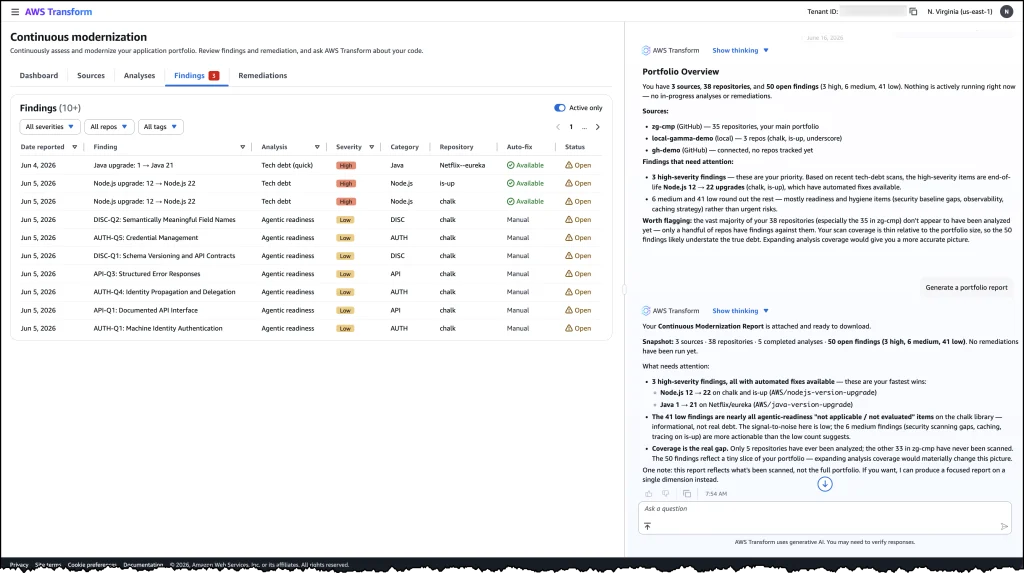
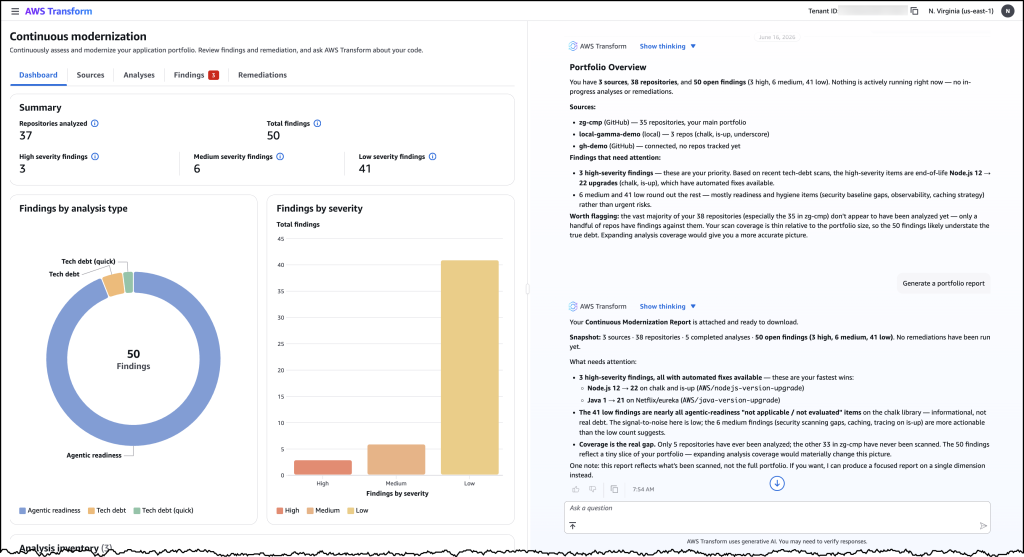
The process begins with the establishment of configurable baselines. Organizations can define policies—such as requiring specific Java versions, deprecating internal libraries, or enforcing updated security headers—and apply them globally across thousands of repositories. Unlike static analysis tools that generate a one-time report, AWS Transform continuously scans these repositories. Findings are typically generated within hours, providing an accurate, objective view of the organization’s "technical debt landscape."
Autonomous Remediation at Scale
Once findings are prioritized, the system does not merely notify developers; it acts. Through the "remediation campaign" feature, AWS Transform automatically generates pull requests (PRs) for affected repositories. These PRs are not just generic notifications; they contain the actual code changes required to bring the repository back into compliance.

If a team has deprecated an internal logging library, for example, the tool can identify every instance of that library across the organization and propose the necessary updates. Developers then retain the agency to review, test, and merge these PRs, ensuring that the human-in-the-loop requirement is maintained without forcing developers to manually perform the "grunt work" of identification and implementation.
Supporting Data: The Cost of Stagnation
To understand the necessity of this tool, one must look at the data surrounding modern enterprise engineering:
- 30% of IT Budgets: This is the average allocation toward maintaining existing systems. By automating these tasks, AWS aims to shift a significant portion of this spend toward new product features and innovation.
- The Velocity Gap: As AI agents increase the volume of code, the complexity of dependency management increases exponentially. A project that took a week to upgrade a year ago might now take three weeks due to the sheer volume of new, interconnected code.
- Security at the Source: Through integration with the AWS Security Agent, vulnerabilities are no longer siloed in security dashboards. They are treated as a form of technical debt, prioritized alongside library upgrades, and pushed through the same automated PR workflow.
Official Perspective: The Shift to "Always-Current" Code
AWS leadership emphasizes that this tool is not intended to replace the developer, but to liberate them. "Engineering organizations are struggling to keep up with the sheer pace of change," a spokesperson noted during the briefing. "We are moving away from a model where technical debt is a ‘project’ that teams dread, and toward a model where it is a background process that just happens."
The integration of campaign mode versus continuous mode is a key differentiator. In continuous mode, the tool acts as a "janitor" for the codebase, keeping libraries updated and standards enforced daily. In campaign mode, the tool acts as a "project manager," allowing teams to roll out massive, organization-wide changes—like migrating from a legacy framework to a modern one—across hundreds of repositories simultaneously.
Implications: The Future of the Platform Team
The arrival of autonomous modernization has profound implications for the structure of IT organizations.
1. The Elevation of Platform Engineering
Platform teams have long been tasked with enforcing standards that developers often find cumbersome. With automated, autonomous remediation, these teams can move from being "policy enforcers" to "policy architects." They define the standard in the tool, and the tool ensures compliance.
2. Security as a Default State
By baking security remediation into the same workflow as dependency updates, AWS is essentially democratizing security. When a critical CVE is detected, the platform team can trigger a campaign that updates the vulnerable dependency across the entire company in a fraction of the time it would take to notify individual teams.
3. The End of "Technical Debt" as a Dirty Word
In many organizations, technical debt is a source of cultural friction. By turning remediation into a routine, automated process, AWS is helping to remove the stigma—and the manual burden—associated with keeping software up to date.
Conclusion: A New Standard for Enterprise Software
AWS Transform – continuous modernization (preview) is more than just a new feature; it is an acknowledgment that the traditional model of software maintenance is obsolete. In a world where AI writes code at an exponential rate, the only way to manage that code is through equally scalable, automated systems.
By providing a clear, dashboard-driven view of technical health and the ability to act upon that data with automated pull requests, AWS is providing a bridge to a more efficient, secure, and productive future for enterprise development. As the preview phase begins, the industry will be watching to see how quickly organizations can pivot from managing their technical debt to effectively eliminating it.
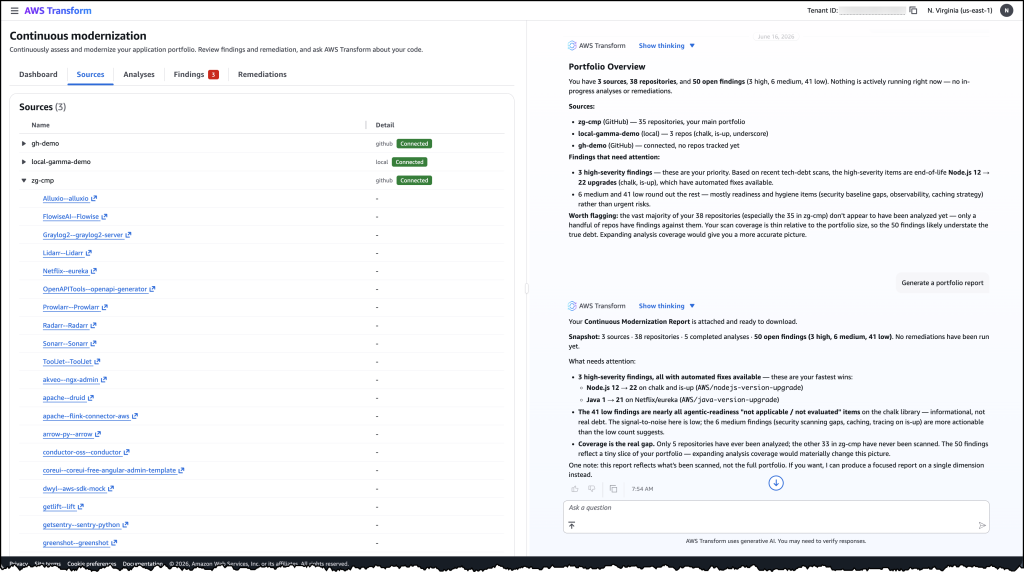
For those looking to get started, the tool is available now via the AWS Transform web application, and supports integration with existing coding agents via MCP (Model Context Protocol), ensuring that this new capability fits seamlessly into the developer’s existing workflow.