Securing the Software Supply Chain: A Deep Dive into the Evolution of AWS Security Agent
The modern software development lifecycle (SDLC) has become increasingly complex. As organizations accelerate their release cadences, the "shift-left" security philosophy—once a buzzword—has become an operational necessity. At re:Invent 2025, Amazon Web Services (AWS) fundamentally changed the landscape of automated security by previewing the AWS Security Agent. Now, as part of the broader AWS Continuum initiative, this frontier agent has matured into a sophisticated, multi-faceted security powerhouse that proactively protects applications from the initial design phase through to production deployment.
With recent updates announced in June 2026, AWS has significantly expanded the agent’s capabilities, introducing deep repository code reviews, advanced threat modeling, and seamless IDE integration. This evolution marks a transition from simple vulnerability scanning to an intelligent, agentic security partner that understands the context of an entire architecture.
1. The Core Evolution: From Preview to Powerhouse
The primary mission of the AWS Security Agent is to provide "continuous, context-aware security." Unlike traditional static analysis security testing (SAST) tools that rely on brittle pattern matching, the AWS Security Agent utilizes advanced reasoning models to identify vulnerabilities that are often invisible to legacy scanners.

The Chronology of Development
- December 2025 (re:Invent): AWS introduces the AWS Security Agent in preview. It was designed to provide on-demand penetration testing and security verification.
- March 2026: General Availability (GA) is announced for the agent’s on-demand penetration testing capabilities, allowing developers to simulate real-world exploit attempts.
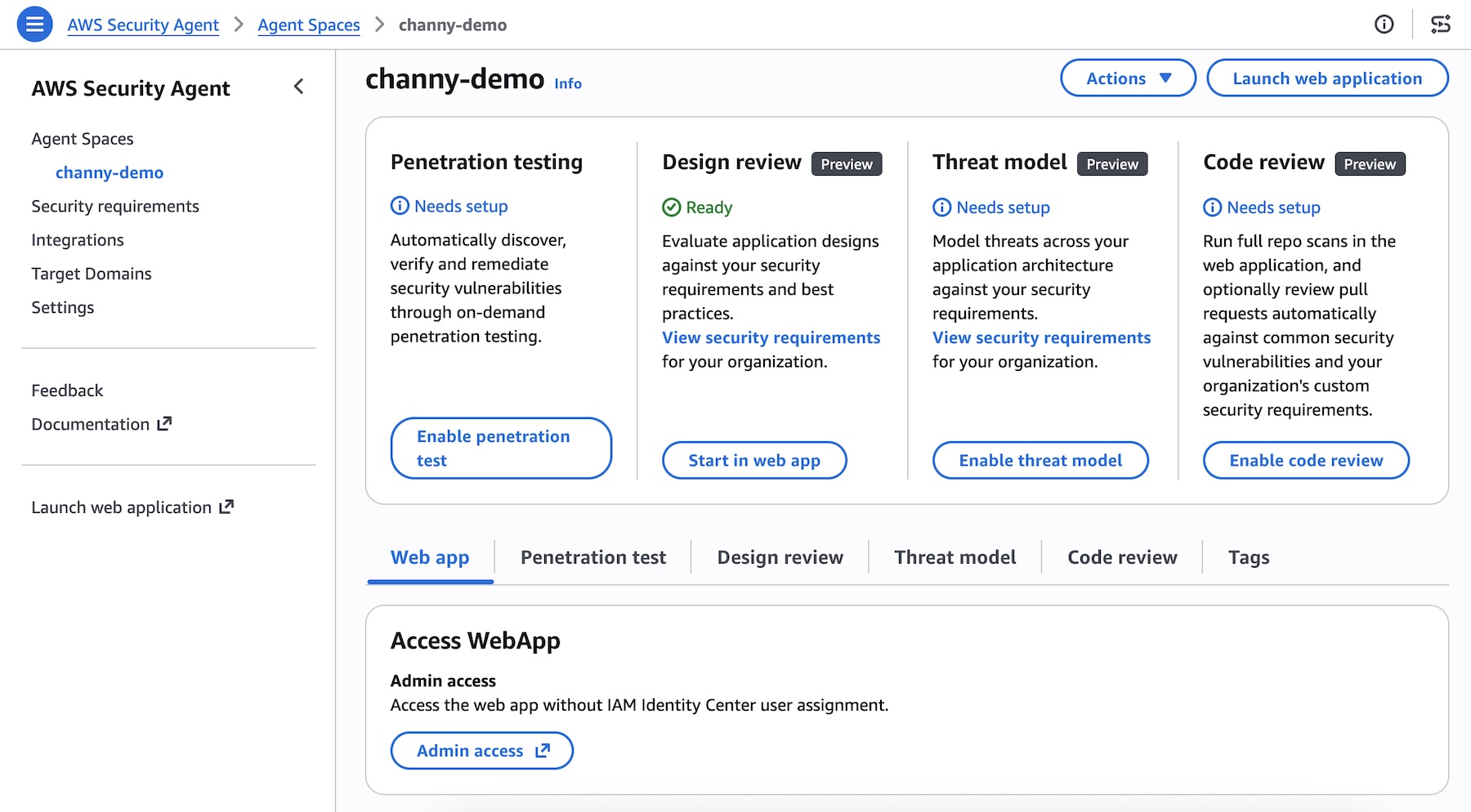
- May 2026: AWS releases the preview of "Full Repository Code Review," moving beyond single-file analysis to evaluate entire codebases.
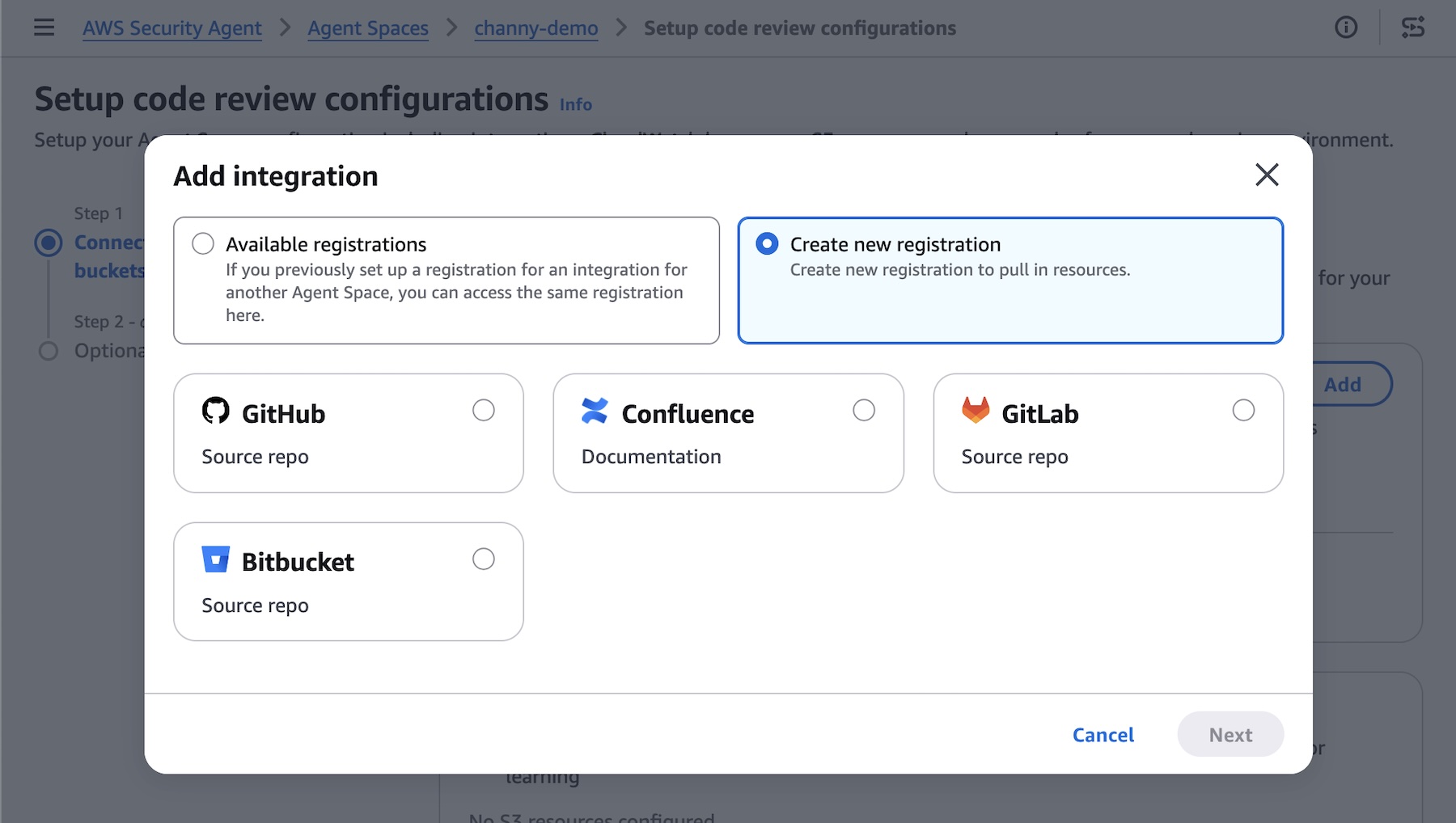
- June 2026: A massive expansion of features is released, including support for GitLab and Bitbucket, Confluence integration, and the launch of the "Kiro Power" and Claude Code plugin for IDE-native workflows.
2. Advanced Security Features: A Technical Breakdown
The latest suite of updates addresses the most common friction points in DevSecOps: context-switching, siloed documentation, and the limitations of repository-specific tooling.
Expanding the Ecosystem: GitLab, Bitbucket, and Confluence
Security is only as good as its coverage. By extending support beyond GitHub to include GitLab and Bitbucket (both SaaS and self-hosted), AWS has ensured that the Security Agent can be deployed in virtually any enterprise environment.
Furthermore, the integration with Confluence represents a significant leap forward in "contextual security." By allowing the agent to reference internal documentation and architectural design documents, the system can distinguish between a potential vulnerability and an intentional design choice, drastically reducing the "false positive" noise that plagues security teams.

Deep, Reasoning-Based Code Reviews
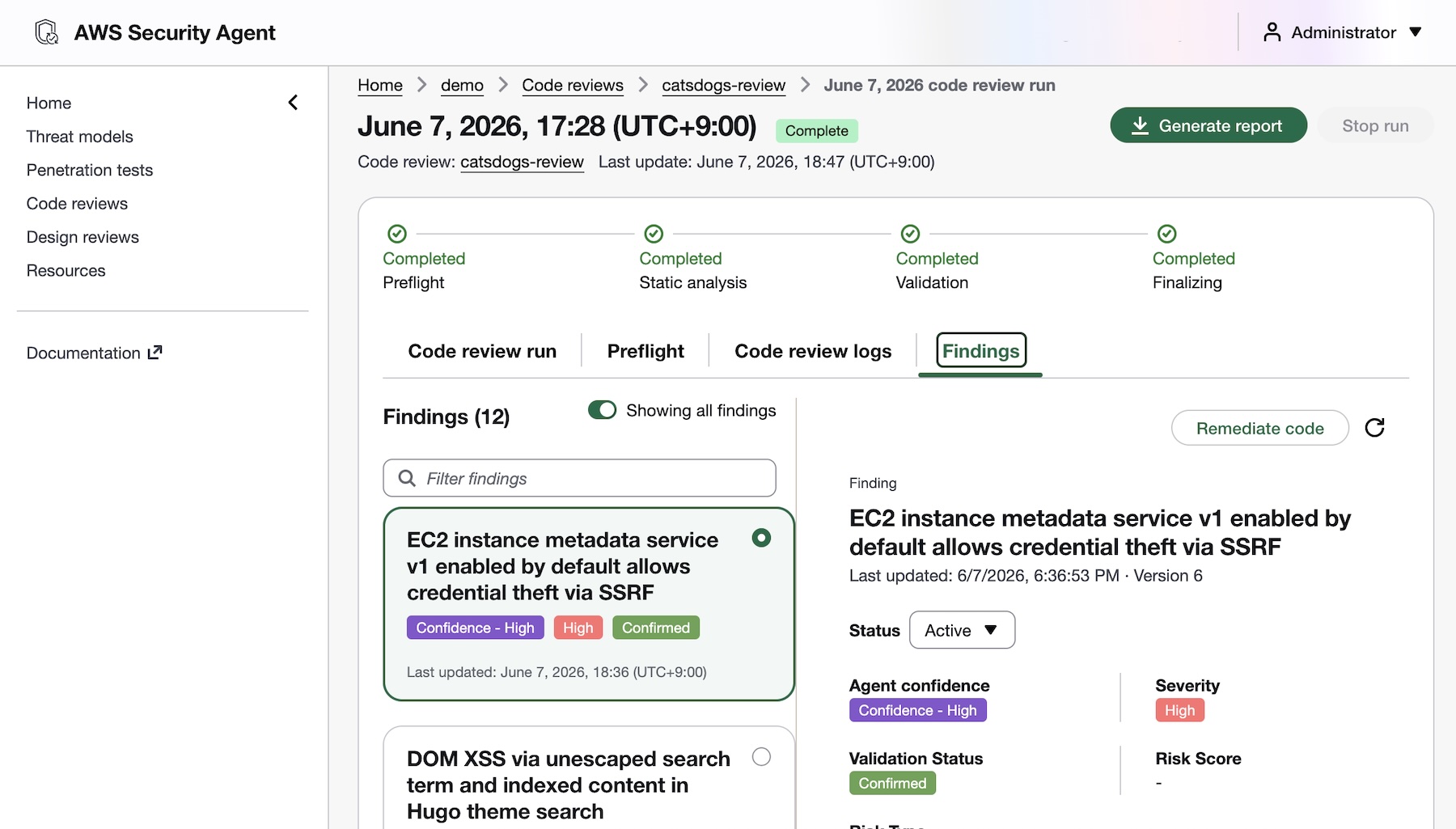
The agent’s code review functionality is no longer just looking for syntax errors or known insecure functions. By employing deep reasoning, the agent evaluates pull requests against an organization’s specific security policies. When a vulnerability is detected, the agent doesn’t just flag the issue; it provides fix commits. This transforms the security team from a "bottleneck" that blocks deployments to a "facilitator" that provides pre-validated, secure code solutions directly in the developer’s workflow.
Proactive Threat Modeling
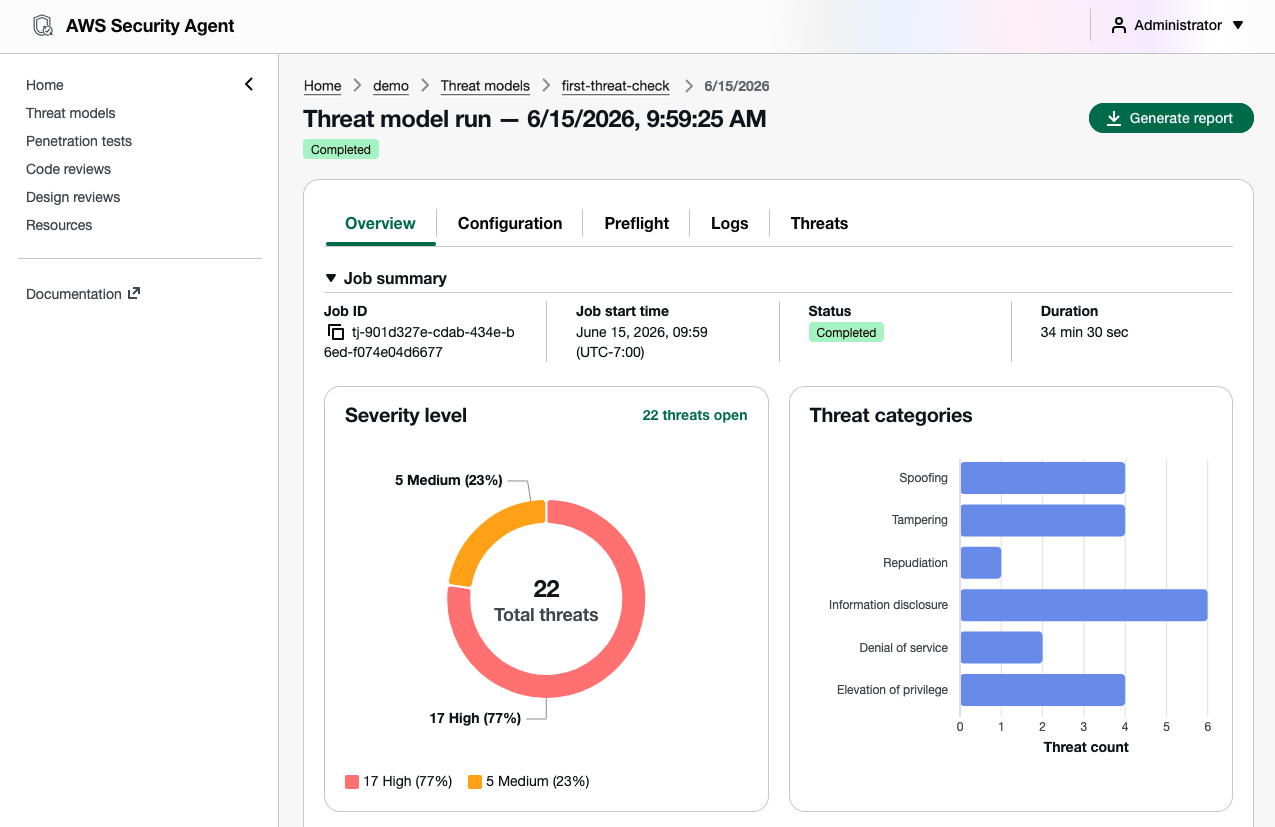
Threat modeling is notoriously difficult to scale. Historically, it required hours of manual whiteboarding and architectural reviews. The AWS Security Agent automates this by analyzing code repositories and design documents to:
- Map data flows and identify trust boundaries.
- Pinpoint potential threat actors.
- Prioritize remediation efforts based on actual risk, not just theoretical danger.
3. The "Kiro Power" and Claude Code Integration: Security at the Fingertips
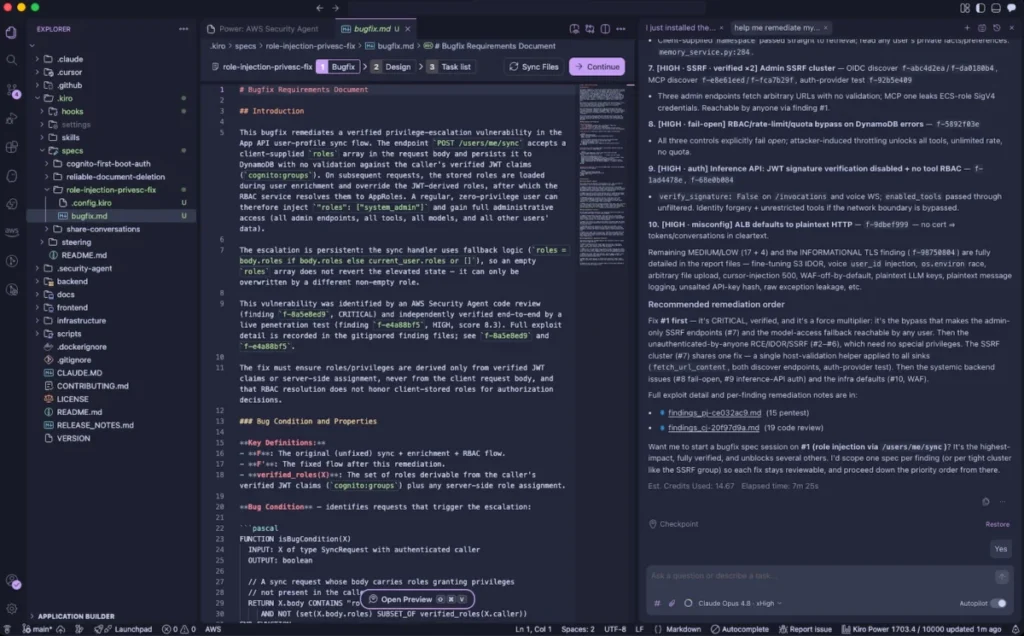
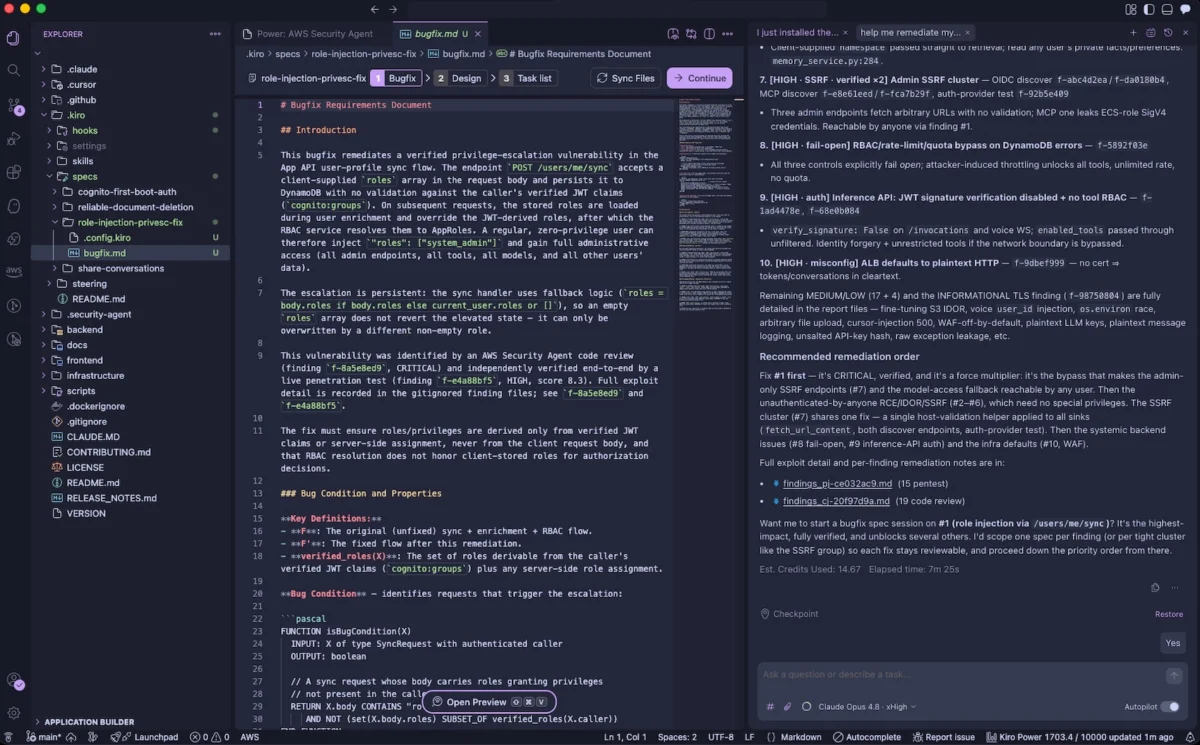
Perhaps the most disruptive update is the introduction of Kiro Power and the Claude Code plugin. By leveraging the Model Context Protocol (MCP), AWS has brought the power of the Security Agent directly into the IDE (Integrated Development Environment).
Developers can now interact with their security posture using natural language. For instance, a developer can simply ask:
"Run a full security scan on this repo" or "Help me remediate my findings."
The agent then downloads the findings to the local workspace, prioritizes the most critical issues, and offers to launch a "bugfix spec session." This removes the need for developers to leave their IDE, log into a dashboard, or manually translate security reports into actionable code. By "closing the loop," the agent significantly lowers the barrier to entry for secure coding.
4. Implications for the Enterprise
Reducing "Security Debt"
Organizations have long struggled with the accumulation of "security debt"—a backlog of vulnerabilities that are never fixed because they are deemed "too complex" or "low priority." The AWS Security Agent mitigates this by providing automated remediation guidance. When the agent validates a finding through a simulated exploit, it provides a concrete proof-of-concept, which helps security teams justify the resources required to fix the issue.
Audit Readiness
With the inclusion of managed compliance packs—including the AWS Well-Architected Framework, NIST CSF, and PCI DSS—the agent acts as an ongoing compliance auditor. Because every security finding is mapped back to the relevant compliance requirement, teams can generate real-time reports on their security posture, effectively turning the "audit period" into a continuous, non-event.
Bridging the Gap Between Design and Deployment
The "unified agentic offering" mentioned by AWS leadership reflects a strategic shift. By covering the entire spectrum—from design-time reviews to development-time code scanning and deployment-time penetration testing—AWS is creating a "single pane of glass" for application security. This reduces the fragmentation that occurs when teams use a different tool for each stage of the lifecycle.
5. Official Perspectives and Future Outlook
In his recent update, Channy Yun, AWS’s chief developer advocate, emphasized that the goal is to make security an "invisible, yet omnipresent" component of the development process. By launching the Claude Code plugin for the AWS DevOps Agent and the AWS Security Agent, the company is signaling that the future of development is deeply intertwined with AI-assisted security.
Addressing Concerns
While some critics might argue that relying on an automated agent could lead to developer complacency, AWS has designed the system to be collaborative. Security teams retain the ability to configure monitored repositories and intervene on critical issues. The goal is not to replace human security engineers but to scale their expertise. By automating the "low-hanging fruit" and providing deep analysis on complex issues, the Security Agent allows human experts to focus on the high-level architectural decisions that truly matter.
Pricing and Accessibility
AWS is incentivizing adoption through a 2-month free trial, allowing organizations to integrate the agent into their existing CI/CD pipelines without immediate cost pressure. As the agent continues to evolve, the roadmap suggests further expansion into hybrid and multi-cloud environments, ensuring that even organizations with complex, distributed infrastructure can maintain a unified security posture.
6. Conclusion: The New Standard for DevSecOps
The evolution of the AWS Security Agent is a bellwether for the software industry. As codebases grow larger and the threat landscape becomes more sophisticated, manual security reviews are no longer sustainable.
By integrating AI-driven reasoning, automated penetration testing, and IDE-native remediation, AWS has set a new standard for what developers and security teams should expect from their tooling. For organizations looking to secure their applications from "design to deployment," the AWS Security Agent is no longer just a luxury—it is becoming a fundamental requirement for building robust, audit-ready, and secure software at scale.
For those ready to integrate these features, the AWS Security Agent console is the starting point, with detailed documentation available through the AWS User Guide. As we move further into 2026, the convergence of AI agents and DevSecOps will undoubtedly continue to reshape how we build, deploy, and protect the digital infrastructure of the future.