AWS Weekly Roundup: OpenAI’s GPT-6 Astra Lands on Amazon Bedrock, Transforming Enterprise AI Workflows
NEW YORK — As mid-September ushers in crisp autumn weather and a vibrant, high-energy return to full operational speed across New York City, the Amazon Web Services (AWS) launch calendar is matching that accelerated momentum. This week, the tech landscape experienced a major shift with the arrival of a cutting-edge frontier model on Amazon Bedrock, alongside a suite of productivity tools designed to fundamentally alter how developers and enterprise teams interact with artificial intelligence.
Far beyond the routine deployment of newer software, industry analysts note a deeper cultural and structural shift in how organizations leverage technology. The developers reaping the most exponential gains from AI agents are not merely utilizing superior tools; they are fundamentally redefining their working methodologies.
Main Facts: OpenAI GPT-6 Astra General Availability on Amazon Bedrock
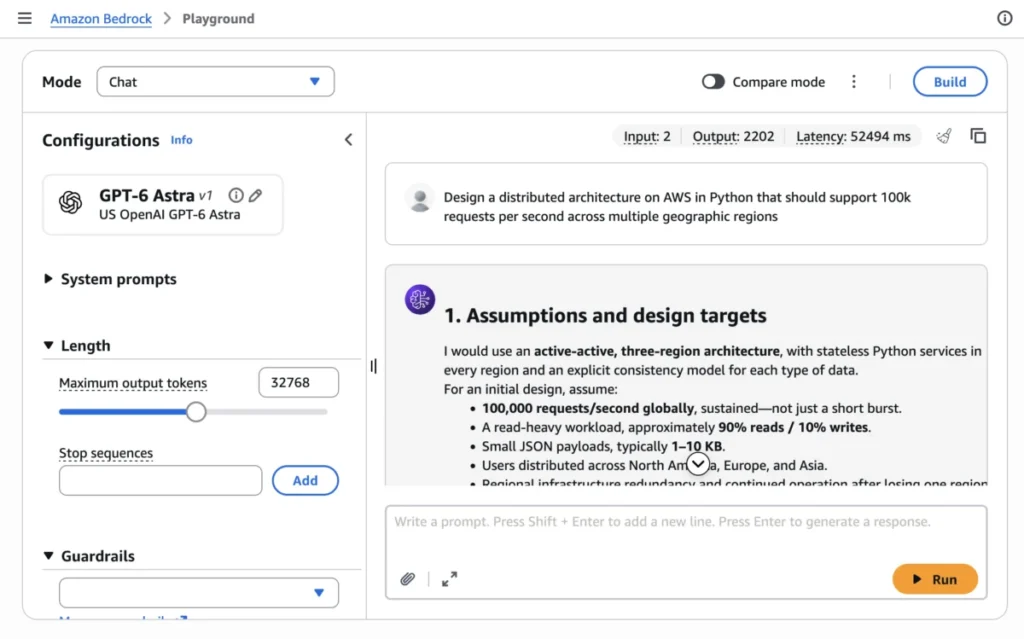
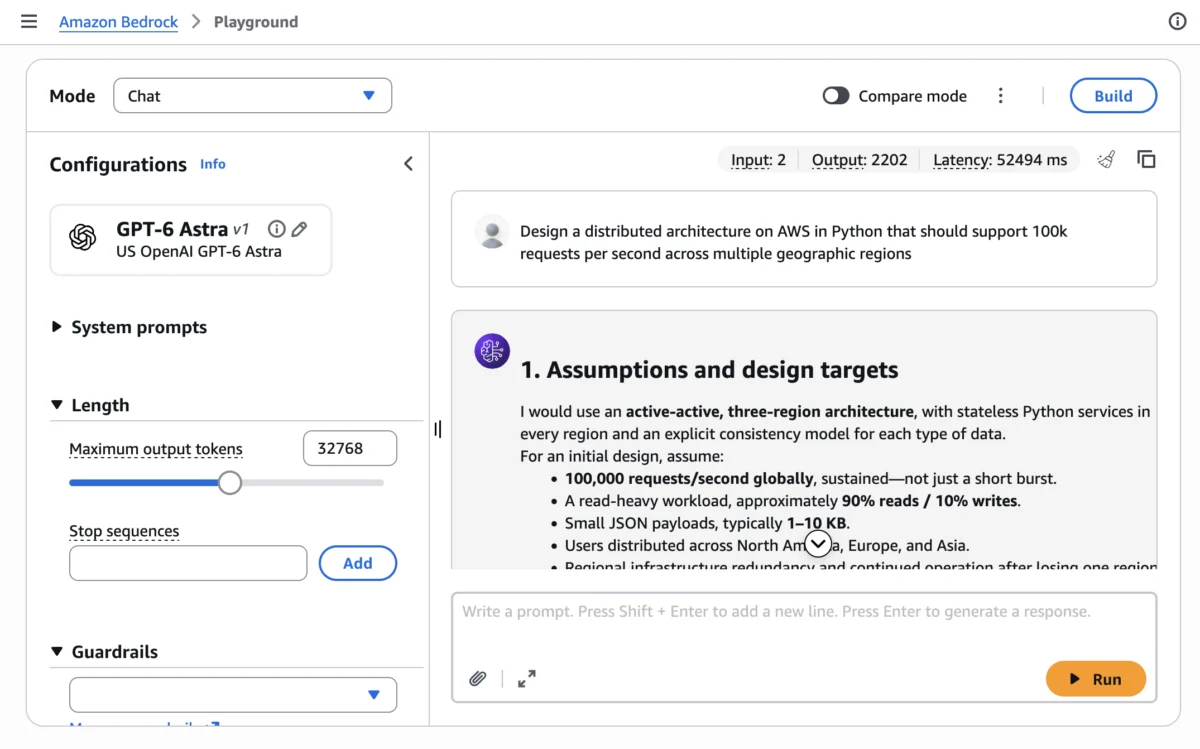
The centerpiece of this week’s announcements is the official general availability of OpenAI GPT-6 Astra on Amazon Bedrock. Representing OpenAI’s most capable and advanced model to date, GPT-6 Astra brings a massive leap in raw intelligence, context handling, and autonomous execution to corporate ecosystems.
Designed for demanding business workflows, GPT-6 Astra introduces several groundbreaking capabilities:
- Advanced Reasoning and Judgment: The model is optimized for complex problem-solving, capable of handling multifaceted decision-making processes that previously required human intervention.
- Professional-Quality Output: It delivers high-grade writing, analytical formatting, and advanced design generation suited for corporate communications and product development.
- Computer and Browser Use: Astra possesses native capabilities to interact with desktop interfaces and execute tasks within standard browser environments, bridging the gap between passive text generation and active digital execution.
- Massive 1-Million Token Context Window: Users can ingest entire software codebases, multi-volume legal contracts, or sprawling document archives in a single prompt. The model can cross-reference, analyze, and reconcile competing inputs across these massive datasets instantly.
Integration into existing enterprise architecture is streamlined. Developers can invoke GPT-6 Astra directly through standard, supported Amazon Bedrock APIs, or configure productivity environments like ChatGPT Work and Codex to run on top of the Bedrock infrastructure.
Crucially, the deployment is backed by AWS’s rigorous enterprise security and governance framework. Organizations can leverage established AWS security controls to govern user access, secure sensitive workloads, and audit all model invocation activities. Furthermore, AWS and OpenAI have reaffirmed their strict privacy commitment: customer inference data is never utilized to train underlying foundation models.
Chronology of the Integration and Ecosystem Expansion
The path to bringing OpenAI’s flagship frontier model into the AWS ecosystem represents a calculated evolution in cloud-AI partnerships.
- Early Development Phases: As enterprise demand shifted toward multimodal models capable of autonomous desktop navigation, developers increasingly sought unified platforms that could host frontier models without compromising on data sovereignty or enterprise security protocols.
- Pre-Announcement Testing: Select enterprise partners participated in private previews over the summer, stress-testing GPT-6 Astra’s 1-million-token context window against legacy infrastructure and legacy text-generation models.
- Mid-September Launch Window: Aligning with the bustling autumn business season in major technology hubs like New York City, AWS officially integrated the model into Amazon Bedrock.
- Simultaneous Plugin Rollout: Alongside the Bedrock deployment, OpenAI introduced a new suite of enterprise plugins for ChatGPT Work. These plugins specifically extend Astra’s browser-use capabilities, allowing smooth interaction across standard business applications such as CRM software, spreadsheet suites, and collaborative project management tools.
- Ongoing Developer Enablement: AWS continues to anchor these releases through community channels, directing builders to the AWS Builder Center for collaborative problem-solving and technical documentation.
Supporting Data and Technical Architecture
To understand the scope of GPT-6 Astra on Amazon Bedrock, it is helpful to examine the underlying technical metrics and operational boundaries enabled by the platform:
| Feature / Metric | Specification | Operational Benefit |
|---|---|---|
| Context Window | Up to 1,000,000 input tokens | Enables end-to-end processing of massive code repositories and legal documents. |
| API Integration | Supported Amazon Bedrock APIs | Simplifies integration into existing cloud-native microservices and workflows. |
| Data Privacy | Zero-retention for training | Guarantees proprietary enterprise data remains confidential and un-ingested by base models. |
| Execution Environment | Browser & Computer Use agents | Automates multi-step digital workflows across disparate software platforms. |
| Security Controls | AWS Identity and Access Management (IAM) & CloudTrail | Provides comprehensive governance, permissioning, and auditability. |
These metrics highlight a fundamental shift in how cloud providers approach generative AI. Rather than forcing enterprises to choose between proprietary frontier intelligence and enterprise-grade cloud security, platforms like Amazon Bedrock act as secure bridges, delivering high-end capabilities within trusted corporate perimeters.
Official Responses and Industry Reactions
The release has drawn significant commentary from enterprise technology leaders, cloud architects, and security officers who view the integration as a watershed moment for generative AI adoption.
"Enterprises are no longer asking whether AI can write a simple email or summarize a short article," noted an enterprise cloud solutions architect close to the AWS ecosystem. "They are asking if AI can navigate complex, legacy software environments, reconcile conflicting directives across thousands of pages of documentation, and execute multi-step business processes securely. GPT-6 Astra on Bedrock answers that call."
OpenAI representatives emphasized the strategic importance of meeting enterprise users within their preferred cloud environments. By launching Astra on Amazon Bedrock, organizations that have invested heavily in AWS infrastructure can access bleeding-edge reasoning capabilities without having to migrate or fragment their security perimeters.
AWS leadership, speaking through developer community updates this week, underscored the importance of workflow transformation. Micah, writing in the weekly AWS roundup, pointed out that the true beneficiaries of the AI revolution are not merely the ones collecting new software tools, but those who are fundamentally rethinking their operational workflows to harness autonomous agents effectively.
Furthermore, compliance officers have welcomed the deployment model. The assurance that inference data is strictly segregated from model training alleviates the primary hurdle that previously prevented financial institutions, healthcare providers, and legal enterprises from adopting external frontier models.

Implications for the Enterprise and Developer Ecosystems
The general availability of GPT-6 Astra on Amazon Bedrock carries profound implications for multiple sectors of the tech industry:
1. The Rise of Autonomous Knowledge Work
With a 1-million-token context window coupled with advanced computer and browser use, AI is transitioning from an advisory assistant to an active participant in digital workflows. Developers can now task an agent with auditing an entire legacy software stack, identifying vulnerabilities, drafting patches, and testing them within a sandboxed environment—all from a single prompt. Similarly, legal and financial analysts can feed years of transactional data and multi-party contracts into the system to perform automated risk assessments and reconciliation tasks that previously required weeks of manual labor.
2. Deepening Convergence of Cloud and Frontier AI
The partnership model demonstrated by OpenAI and AWS points to a future where foundational model developers and hyperscale cloud providers operate in deep symbiosis. Enterprises increasingly demand flexibility; they want access to the absolute best models on the market, but they require them to run inside secure, compliant cloud environments equipped with granular identity management and logging. Amazon Bedrock continues to position itself as the premier hub for this multi-model strategy.
3. Workflow Evolution Over Tool Accumulation
As highlighted in this week’s launch notes, the differentiator for high-performing development teams is no longer tool access—it is methodology. Organizations that successfully integrate agents like Astra into their daily routines are dismantling traditional departmental silos. When an AI can autonomously bridge the gap between design software, code repositories, and project management tools, cross-functional collaboration accelerates dramatically.
Looking Ahead
As autumn progresses and the AWS event calendar fills up with virtual and in-person developer workshops, the tech community will be closely monitoring early case studies of GPT-6 Astra deployments. Developers are encouraged to explore the AWS Builder Center to share initial implementations, exchange architectural patterns, and stay updated on forthcoming capabilities.
For more information on the technical specifications, pricing tiers, and API documentation for GPT-6 Astra, visit the official Amazon Bedrock product page and keep a close eye on the What’s New with AWS portal for continuous updates as the Q4 launch season gathers steam.