Bridging the Digital Chasm: How the LEAP Platform is Revolutionizing Rural Education via Raspberry Pi
In an era defined by the rapid expansion of 5G networks and satellite-linked internet, it is easy to succumb to the illusion that the world is universally connected. However, for millions of students in remote geographical pockets, the "Digital Divide" remains a stark reality. In these regions, where economic constraints and rugged terrain render traditional internet infrastructure unfeasible, the promise of digital learning often halts at the edge of the village.
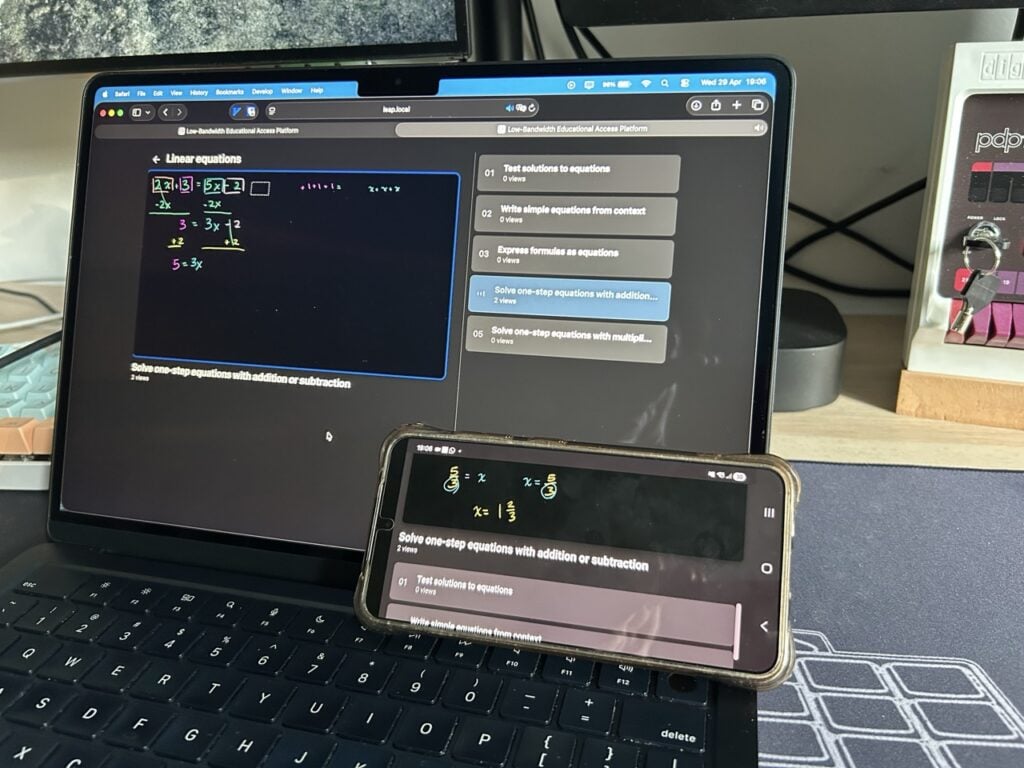
To address this systemic inequality, the technology collective T4EQ, in collaboration with the non-profit organization AID India, has developed a pioneering solution: the Low-bandwidth Educational Access Platform, or LEAP. By leveraging the versatility of the Raspberry Pi 4, LEAP provides a robust, localized server environment capable of delivering high-quality educational video content to dozens of students simultaneously, regardless of whether a stable internet connection exists.
I. Main Facts: A Localized Architecture for Global Knowledge
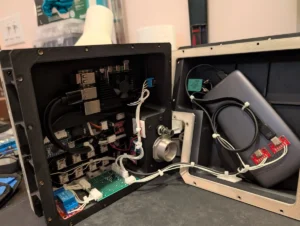
The LEAP system is built on a fundamental premise: if the student cannot reach the internet, the "internet"—or at least the curated educational portion of it—must be brought to the student. At the heart of this initiative is the LEAP Node, a compact, low-cost computing hub designed to cache and distribute content within a localized environment.
The Hardware Ecosystem
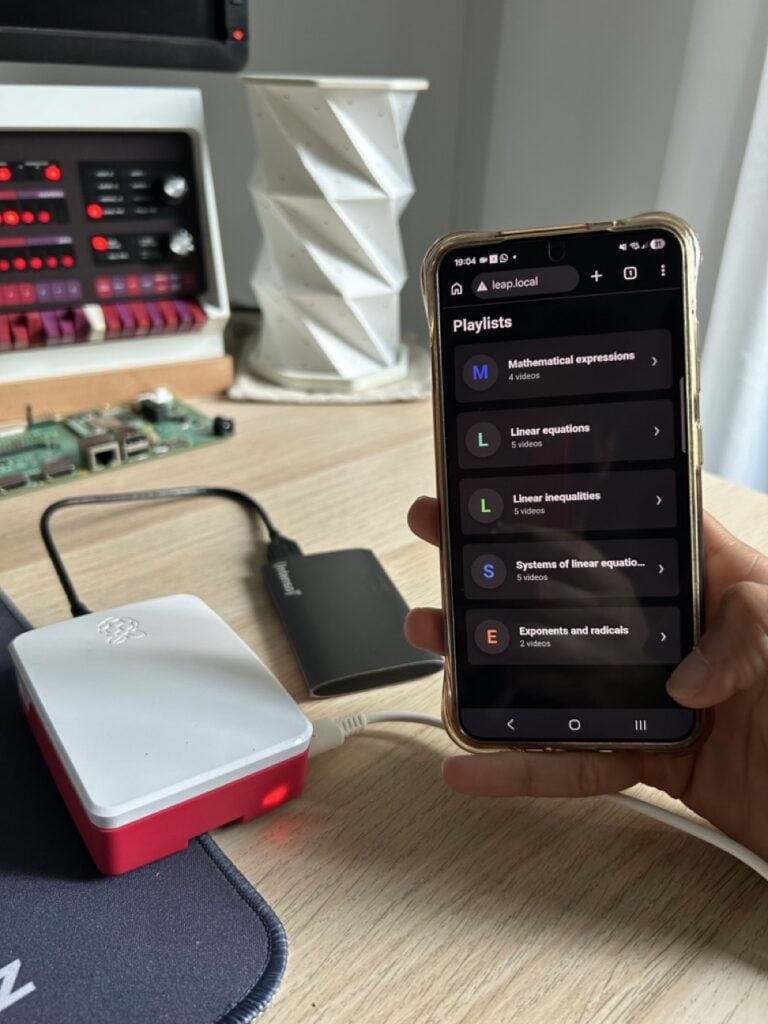
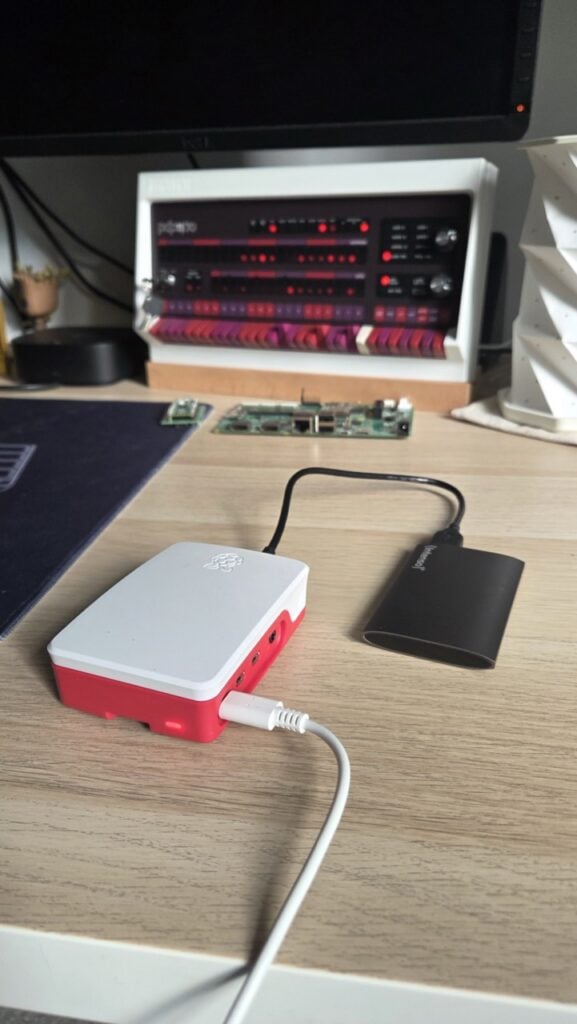
The hardware configuration of a LEAP Node is intentionally minimalist to ensure cost-effectiveness and ease of maintenance in field conditions. The core components include:
- Raspberry Pi 4 (1GB Model): Selected for its balance of processing power, low energy consumption, and affordability.
- External USB Storage: Used to house a vast library of educational videos and documents.
- Local Router: Creates a village-wide or classroom-wide Wi-Fi network that requires no external backhaul to function.
- Client Devices: "Thin clients" or refurbished mobile devices provided to students, which connect to the LEAP Node via a standard web browser.
Scaling for the Classroom
A single LEAP Node is engineered to support approximately 40 individual devices. This capacity is critical, as most rural education centers in the AID India network host classes of roughly that size. By utilizing the Raspberry Pi 4’s Gigabit Ethernet and USB 3.0 capabilities, the system can stream high-definition video content to 40 students at once without the lag or buffering typically associated with low-bandwidth environments.
The Content Delivery Mechanism
The platform operates through a "curated repository" model. Educational materials are hosted on an Amazon S3 server. The LEAP Node is programmed to periodically check for updates using "manifest files"—lightweight documents that list available content, metadata, and versioning information. This ensures that the local cache is always aligned with the latest pedagogical standards set by AID India.
II. Chronology: From Concept to Field Deployment
The development of LEAP followed a structured timeline focused on iterative problem-solving and field-testing.
Phase 1: Identifying the Infrastructure Gap (2023-Early 2024)
The partnership between T4EQ and AID India began with a situational analysis of schools in Tamil Nadu. The team observed that while some schools had intermittent 2G or 3G access, it was insufficient for video-based learning. Other schools were in "black zones" with zero connectivity. The team realized that existing solutions—either requiring constant internet or being static, pre-loaded "black boxes"—were insufficient.
Phase 2: Prototyping and Hardware Selection (Mid-2024)
The T4EQ team evaluated several single-board computers (SBCs). The Raspberry Pi 4 was ultimately chosen due to its extensive community support, reliability, and the specific technical requirements of serving 40 concurrent video streams. During this phase, the software architecture was developed to prioritize "interrupted download" logic, ensuring that if a weak internet signal was lost mid-update, the LEAP Node could resume exactly where it left off once the connection returned.
Phase 3: Software Optimization and Open Sourcing (Late 2024)
Recognizing that different villages have different educational needs based on the age and background of the students, T4EQ developed a tool to manage manifest files. This allowed AID India to customize the content for specific LEAP Nodes. In the spirit of global cooperation, the team also prepared the code for public release on GitHub, ensuring other NGOs could replicate the model.
Phase 4: Pilot Testing and Deployment (Present Day)
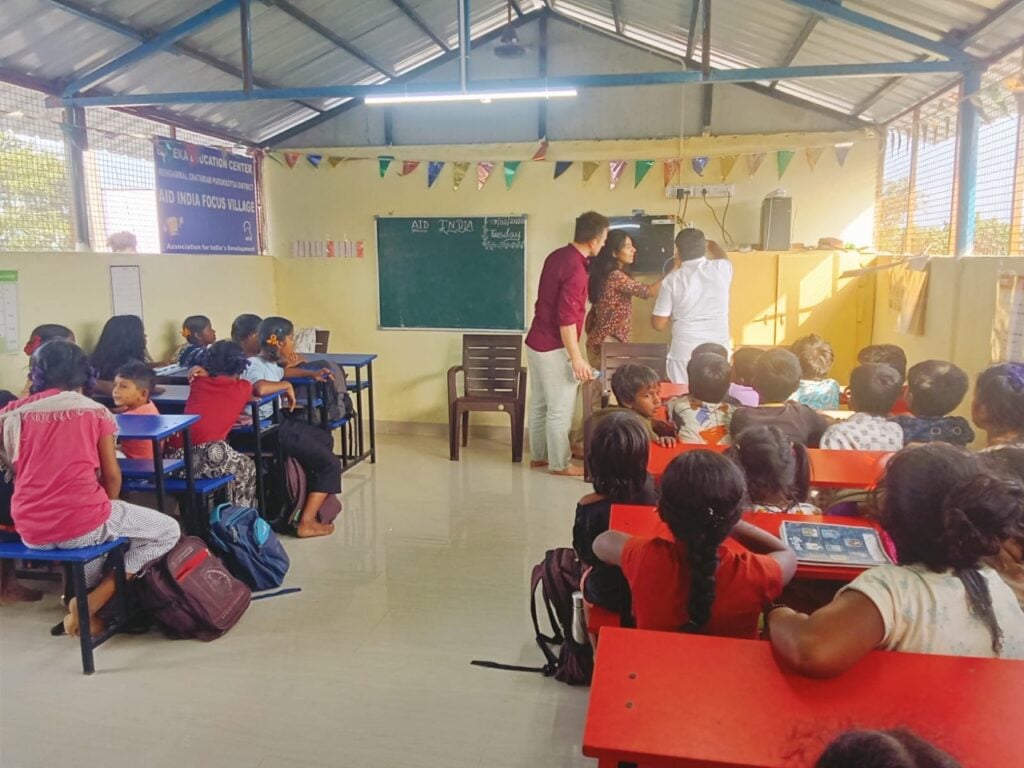
LEAP is currently in its early deployment phase. AID India is actively installing these nodes in schools across Tamil Nadu. This phase focuses on gathering user metrics, monitoring hardware durability in tropical climates, and refining the browser-based user interface for younger students.
III. Supporting Data: Technical Efficiency and Resource Management
The success of LEAP is rooted in its technical efficiency. To maintain a seamless experience for 40 users on a single Raspberry Pi, T4EQ implemented several data-management strategies.
The "Manifest" System
Rather than forcing a node to scan thousands of files, the system uses a structured JSON-based manifest. This file acts as a roadmap. When the LEAP Node connects to the Amazon S3 server, it only downloads the manifest first. By comparing the new manifest with its local version, the node identifies exactly which videos are new or updated. This drastically reduces data usage, making the system viable even on expensive or capped cellular hotspots.
Bandwidth-Agnostic Updates
The system is uniquely designed to handle two distinct connectivity scenarios:
- Low-Bandwidth Mode: The node uses whatever trickle of internet is available to sync with the S3 server in the background.
- Zero-Bandwidth ("Sneakernet") Mode: In areas with no connectivity, a teacher or administrator can download the updates onto a USB drive at a regional hub. When the drive is plugged into the LEAP Node at the school, the system automatically detects the manifest and updates the local repository.
Hardware Performance Metrics
The choice of the 1GB Raspberry Pi 4 was a strategic decision driven by data. While higher-RAM models exist, testing showed that 1GB was sufficient for the lightweight Linux distribution and the custom caching application used by LEAP. This kept the per-unit cost low, allowing AID India to deploy more units with the same budget. The use of USB 3.0 was equally vital; the high data transfer rates from the external storage to the Pi’s processor are what enable the simultaneous streaming of 40 video feeds.
IV. Official Responses: The Vision Behind the Tech
Leaders from both the technical and social sectors have underscored the importance of the LEAP project as a template for future humanitarian technology.
Dr. Preethi Padmanabhan of T4EQ emphasized the importance of autonomy in the design. "The solution needs to scale to provide video content for approximately 40 individual devices," she noted. "In order to serve all 40 clients in a village, a computing node local to the village would host and cache the video content. This ensures that, once the content is present in the LEAP Node, there is no further dependency on the network connectivity."
The T4EQ team further elaborated on the flexibility of the platform: "Because different centres might need different content, based on the background and age of the kids attending the classes, the LEAP Node can be configured to track different manifest files in the AWS S3 server." This level of customization ensures that the technology remains a tool for teachers, rather than a replacement for them.
Representatives from AID India have highlighted the "Zero-Bandwidth" feature as a game-changer. By allowing teachers to carry "the internet in their pocket" via a USB drive, the project bypasses the need for multi-million dollar infrastructure projects that may take decades to reach the most remote hamlets.
V. Implications: A Blueprint for the Future of Global Education
The implications of the LEAP platform extend far beyond the borders of Tamil Nadu. By open-sourcing the code and utilizing off-the-shelf hardware, T4EQ has created a replicable model for educational equity.
1. Democratizing Educational Technology
Historically, high-tech educational tools were reserved for affluent urban schools. LEAP proves that with "smart logic" and affordable hardware, the most advanced pedagogical methods—such as interactive video learning—can be delivered to the most impoverished areas. This shifts the focus from buying connectivity to managing content.
2. The "Sneakernet" as a Valid Infrastructure
LEAP legitimizes the use of physical data transport (the "Sneakernet") as a modern technological bridge. In the rush to digitize everything, many developers overlook the reliability of physical storage. LEAP’s dual-update system acknowledges the reality of the field, making the platform resilient against infrastructure failures.
3. Sustainability and Scalability
The use of Raspberry Pi 4 ensures that the system is easy to repair and replace. Furthermore, as the LEAP software is browser-based, it does not require expensive laptops for students. It can run on low-end smartphones, tablets, or "thin clients," many of which can be sourced through corporate e-waste donation programs.
4. A Call for Global Adoption
The T4EQ team is now looking toward the future, inviting organizations worldwide to adapt the LEAP platform for their own needs. Whether it is a rural school in the Andes, a refugee camp in the Middle East, or a remote community in Sub-Saharan Africa, the LEAP Node offers a localized, scalable, and sustainable path forward.
As the deployment continues and user metrics begin to flow in, the world will be watching. LEAP is not just a piece of software or a collection of hardware; it is a testament to the idea that in the 21st century, the right to education should not be determined by the strength of one’s Wi-Fi signal. Through the LEAP initiative, the "Digital Divide" is finally beginning to narrow, one Raspberry Pi at a time.