Unleashing the Undead: How the Raspberry Pi Pico is Revolutionizing DIY Halloween Tech


October brings not only falling leaves and cooler temperatures, but also the annual return of ghoulish creativity from the makers and tinkerers of the tech world.
Welcome, foolish mortals, to another year of haunted hacks courtesy of Raspberry Pi Official Magazine. This season, the publication’s latest edition shines a spotlight on an unassuming yet remarkably powerful dark driver of foul festivities: the tiny, versatile Raspberry Pi Pico.
While commercial Halloween decorations often rely on static plastic, repetitive audio tracks, and dull incandescent bulbs, the maker community is proving that a micro-controller and a bit of programming sorcery can transform bargain-bin seasonal items into genuinely terrifying, interactive marvels.
Main Facts: The Pico Powers a New Wave of Haunting
The core narrative of this year’s Halloween maker movement centers on accessibility, affordability, and ingenuity. Rather than requiring complex, industrial-grade automation setups, makers are turning to the Raspberry Pi Pico and its wireless iterations to inject smart-home capabilities into basic holiday decor.
Key elements of this year’s haunted showcase include:
- The Pico Ecosystem: Compact, highly programmable, and inexpensive, the Pico family—including the Plasma 2350 W—serves as the brains behind customized lighting, motion-activated animatronics, and sensor-driven props.
- Smart Upgrades for Store-Bought Finds: Supermarket decorations are getting sophisticated makeovers using programmable LED strips, PIR motion sensors, and ultrasonic distance detectors.
- Community Innovation: Creators from across the globe have documented open-source builds ranging from motion-tracking portraits to writhing skeletal displays, democratizing advanced animatronics for hobbyists of all skill levels.
Chronology: From Supermarket Aisle to Automated Nightmare
The evolution of modern Halloween decorating has shifted dramatically over the past decade. Understanding how these spooky projects come to life highlights a clear timeline of conceptualization, hardware selection, and final deployment.
Phase 1: The Hunt (Early October)
The process typically begins in local supermarkets and hardware stores. Makers comb through seasonal aisles looking for "Halloween tat"—inexpensive plastic skulls, generic tombstones, and bagged skeletons. While these commercial items are reasonably priced, they generally lack interactive elements. This is where the maker steps in.
Phase 2: Hardware Integration (Mid-October)
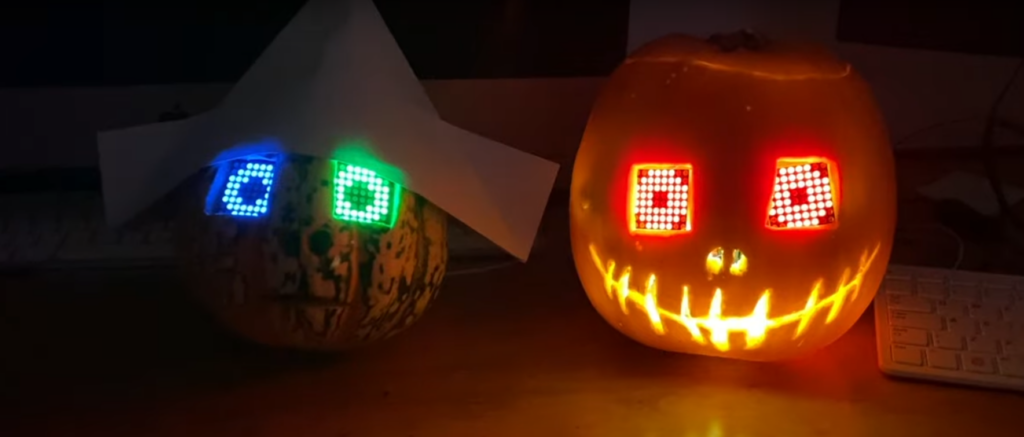
Once the baseline prop is selected, creators determine the necessary electronics. For simple visual upgrades, components like the Pico Unicorn Pack or the Wireless Plasma Kit (paired with a Plasma 2350 W) are introduced. These kits allow makers to bypass complex wiring, slipping programmable LEDs directly inside translucent skulls or pumpkins.
Phase 3: Behavioral Programming (The Witching Hour)
For more advanced builds, mechanical components are added. Makers integrate ultrasonic sensors (frequently repurposed eye-shaped distance sensors) or Passive Infrared (PIR) motion detectors. Using MicroPython or C/C++, the Raspberry Pi Pico is programmed to wait in a low-power state until a "foolish mortal" crosses its path, instantly triggering a chain reaction of lights, servos, and sound.
Supporting Data: Hardware Arsenal for the Paranormal
To understand how these builds achieve their supernatural effects, it helps to examine the specific hardware components highlighted by Raspberry Pi Official Magazine.
1. The Pico Unicorn Pack
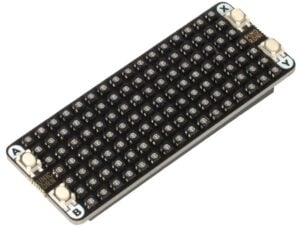
- Dimensions & Form Factor: Barely larger than the Raspberry Pi Pico itself.
- Functionality: A compact, programmable LED strip featuring integrated buttons.
- Halloween Application: Easily slipped inside hollow decorations and programmed to cycle through eerie greens, haunting oranges, and necrotic purples.
2. The Wireless Plasma Kit & Plasma 2350 W
- Core Component: Powered by a custom Raspberry Pi Pico 2 W variant specifically engineered to handle intensive LED control.
- Functionality: Wireless lighting control paired with robust addressable LED strips.
- Halloween Application: Pimoroni offers bundles that include a translucent skull bottle, providing an instant, glowing prop right out of the box (though Dan Aykroyd’s signature crystal skull persona is notably not included).
3. Sensors and Servos
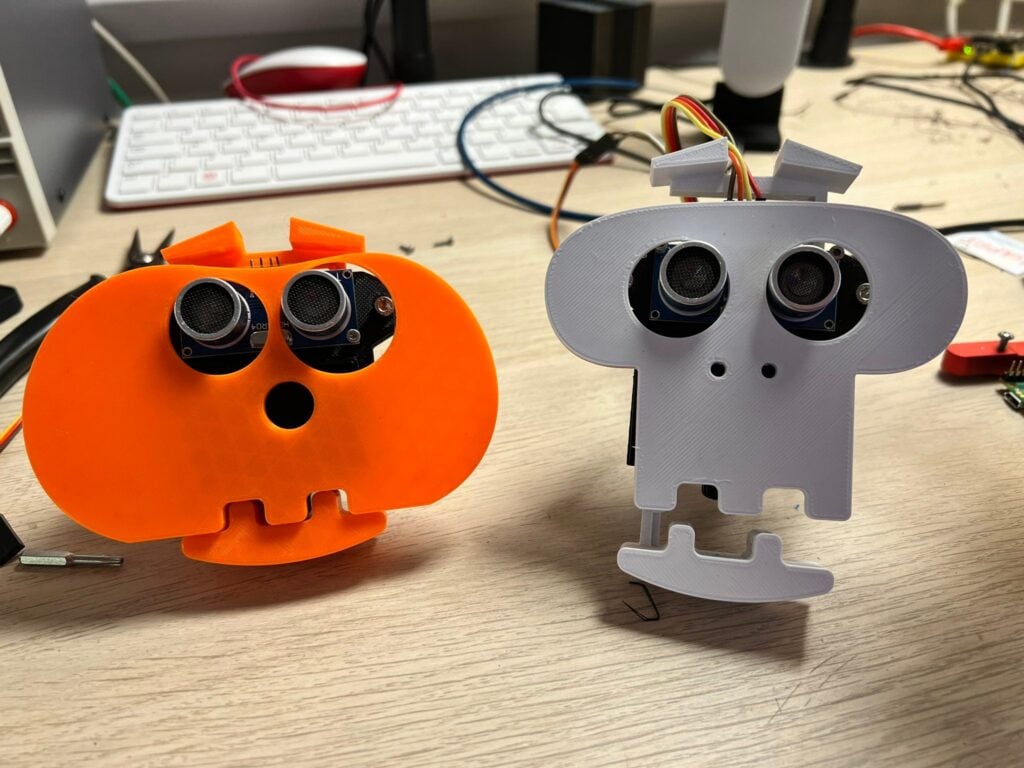
- Ultrasonic Distance Sensors: Originally designed to measure distances, these are often fashioned into "eyes" that track movement or trigger proximity-based reactions.
- PIR Motion Detectors: Ideal for concealed placement in hallways or entryways to detect unsuspecting trick-or-treaters.
- Micro-Servos: Low-cost motors used to move cardboard cutouts, animate jaws, or shift eyeballs behind static canvases.
Official Responses and Creator Highlights
The maker community has embraced the Pico platform enthusiastically, resulting in viral projects that showcase both high-tech capability and low-tech ingenuity. Several standout projects from this year’s lineup illustrate the breadth of what is possible:
The "Spooky Scary Skeleton" by Kevin McAleer
Noted maker Kevin McAleer constructed a 3D-printed, "bare bones" robot for Halloween (available via kevsrobots.com). Equipped with ultrasonic eye sensors, the skeleton detects when an observer approaches. Upon sensing movement, its motorized jaw and eyebrows spring to life, offering an interactive greeting that bridges the gap between robotics and holiday horror.

Sainsbury’s "Bag o’ Bones" Upgraded by 314Reactor
Maker group 314Reactor took a generic bag of plastic bones sourced from a UK supermarket and integrated a PIR motion sensor, hidden motors, and an onboard speaker. When triggered by a passer-by, the lifeless plastic instantly begins to writhe violently while blaring Johann Sebastian Bach’s Toccata and Fugue in D minor—the universally recognized soundtrack of cinematic dread.
The Possessed Portrait of George Washington
In one of the cleverest low-tech/high-tech hybrids featured, a traditional portrait of America’s first president was modified so that his eyes follow viewers around the room. Eschewing complex, processor-heavy computer vision algorithms, the creator utilized simple ultrasonic distance sensors paired with micro-servos shifting a piece of cardstock behind the canvas. The result is profoundly unsettling while remaining remarkably simple to execute.
Implications: The Democratization of Animatronics
The intersection of low-cost microcontrollers like the Raspberry Pi Pico and traditional holiday crafts carries broader implications for the DIY and maker communities.
1. Lowering Barriers to Entry
Historically, building custom animatronics required expensive proprietary controllers, complex soldering arrays, or deep knowledge of industrial PLC programming. By utilizing the Raspberry Pi Pico and modular add-on packs (like Pimoroni’s ecosystem), hobbyists of younger ages and varying technical backgrounds can construct responsive, smart devices with minimal frustration.
2. Sustainable Making and Upcycling
Rather than purchasing expensive, single-use commercial animatronics from big-box stores—many of which end up in landfills due to proprietary, unfixable hardware failures—the Pico-centric approach encourages upcycling. By taking cheap, mass-produced seasonal items and breathing new life into them through modular code and repairable electronics, makers are pioneering a more sustainable form of seasonal celebration.
3. Educational Engagement through Play
Projects like the Pico-powered jack-o’-lanterns and motion-tracking portraits provide stealth education. By gamifying electronics and coding through creative holiday projects, students and hobbyists learn essential STEM principles—ranging from digital input/output logic to basic kinematics—without the intimidation factor of traditional classroom environments.
Get Issue 170 of Raspberry Pi Official Magazine NOW
For makers eager to dive deeper into these projects, complete code tutorials, wiring diagrams, and step-by-step guides are featured prominently in Issue 170 of Raspberry Pi Official Magazine.
The issue is accessible online via the official magazine portal, and print subscriptions are currently available worldwide. Readers who sign up for a six- or twelve-month print subscription will receive a FREE Raspberry Pi Pico 2 W, providing the ultimate hardware foundation to begin their own dark journey into holiday automation.

Stay connected with the Raspberry Pi community on Facebook, X (formerly Twitter), Threads, LinkedIn, and Mastodon, or reach out directly to the editorial team via their official contact channels as the witching hour approaches.