The BSD Renaissance: Jordan Hubbard and the Birth of Daemonarchy
In the evolving landscape of open-source operating systems, few names carry as much historical weight as Jordan Hubbard. As a co-founder of the FreeBSD Project in 1993, Hubbard helped lay the foundation for one of the most robust and widely used Unix-like operating systems in existence. Three decades later, he is pushing the boundaries of the platform again, not through a traditional committee-driven development process, but by leveraging the cutting-edge capabilities of generative artificial intelligence.
The result is "Daemonarchy," a new distribution that marries the power of the FreeBSD kernel with the modern, user-friendly desktop experience popularized by the Arch-based project, Omarchy. Daemonarchy represents a bold experiment: Can the legendary stability and performance of BSD be made as accessible as the most popular Linux distributions, and can AI be the primary engine for such a transformation?
Main Facts: What is Daemonarchy?
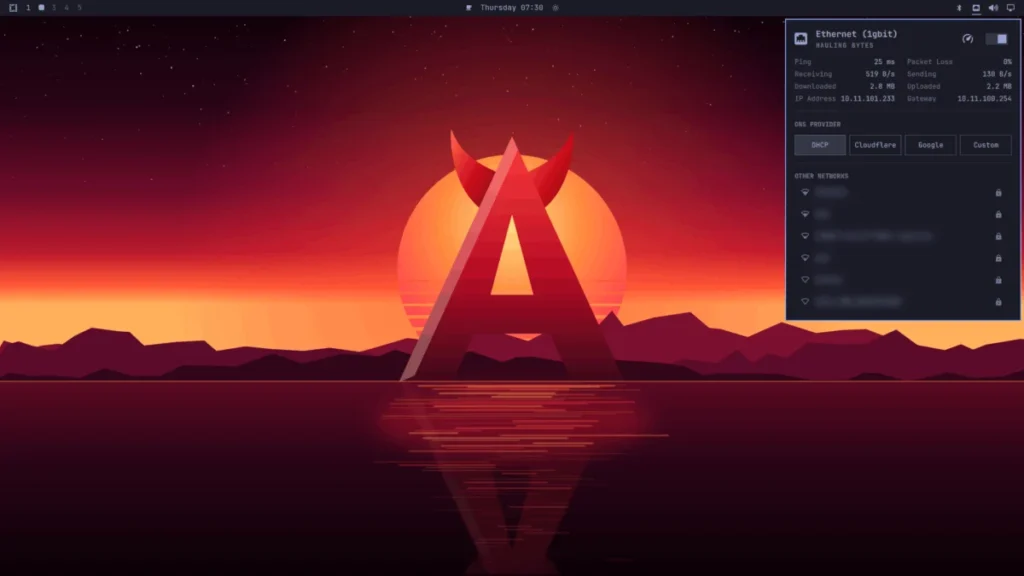
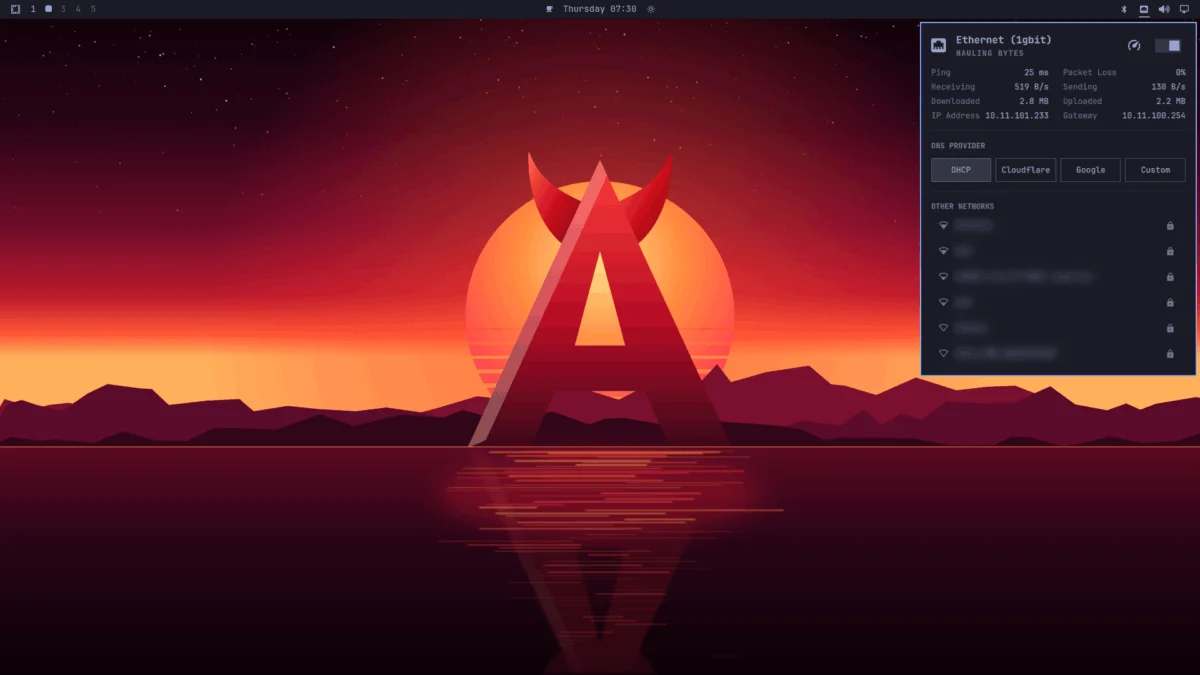
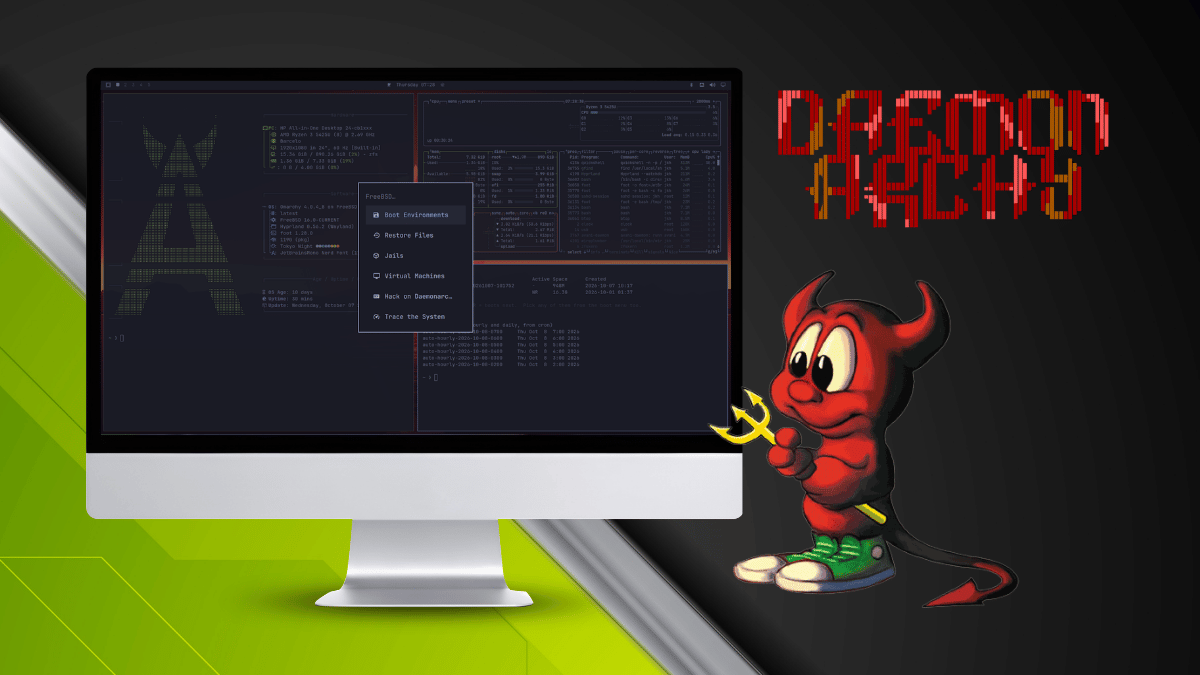
Daemonarchy is a FreeBSD-based operating system designed to bridge the gap between traditional enterprise-grade Unix and the sleek, highly customizable desktop environments often found in the Linux world. By porting the "Omarchy" desktop experience—originally built for Arch Linux—onto a FreeBSD 16.0-CURRENT base, the project provides a familiar aesthetic and workflow for users who are accustomed to modern Linux distributions but desire the security and architectural integrity of the BSD kernel.
The project is remarkably young, having been established just weeks ago, yet it has already reached version 1.3.1. It utilizes ZFS as its primary filesystem, offering native support for snapshots and rollbacks, which ensures that users can experiment with their systems without fear of irreversible breakage. While it remains a bleeding-edge project, it has already garnered significant attention for its ability to provide a "full-fat" desktop experience on a system traditionally reserved for servers and power users.
Chronology: From Concept to Reality
The inception of Daemonarchy was not the result of a multi-year roadmap, but rather a response to community sentiment. On LinkedIn, Hubbard faced repeated inquiries from users who admired the simplicity of the Omarchy project but felt alienated by the steep learning curve and perceived lack of visual refinement in FreeBSD.
"Why doesn’t that already exist?" Hubbard asked himself, sparking an rapid-fire development cycle. At the time, Hubbard was experimenting with OpenAI’s GPT Astra 6, a high-level generative AI model. He tasked the model with structuring the foundational architecture of the new distribution.
Remarkably, the initial proof-of-concept for Daemonarchy was assembled in under two hours—a testament to both Hubbard’s deep understanding of the underlying system and the efficiency of modern AI-assisted coding. Following this initial burst of development, the team utilized Poudriere, FreeBSD’s ports building tool, to validate the integrity of the packages.
Within just a few weeks of the project’s inception, multiple iterations were released, culminating in the v1.3.1 release. This velocity is virtually unheard of in the traditional BSD development cycle, where security and stability are typically prioritized over rapid feature deployment.
The Role of AI in Systems Architecture
The inclusion of GPT Astra 6 in the development process marks a watershed moment in operating system design. Unlike traditional software development, where developers manually write and debug thousands of lines of boilerplate code, Hubbard used the AI to synthesize existing FreeBSD ports and map them into the Omarchy ecosystem.
The AI not only assisted in writing the installation scripts but also played a role in naming the project. By blending the identity of the "BSD Daemon" with the "Omarchy" structure, the AI provided a name that bridges the gap between the two worlds.
However, Hubbard is quick to note that the AI acts as a co-pilot, not a replacement for human engineering. The rigorous testing process—ensuring that the ports adhere to FreeBSD’s strict standards—was handled by the human-led Poudriere builds. This synergy between AI-generated speed and human-validated reliability is what defines the Daemonarchy development philosophy.
Why Does This Exist? Bridging the Gap
The core mission of Daemonarchy is to democratize FreeBSD. Historically, FreeBSD has been perceived as a "hard" OS, requiring significant command-line expertise for installation and configuration. While this has served the server and embedded systems market well, it has acted as a barrier for desktop enthusiasts who want to utilize the power of the FreeBSD kernel for daily tasks.
Daemonarchy directly addresses this by providing an installer that rivals the best Linux distributions in its simplicity. Users are guided through standard configurations—keyboard layout, timezone, account details, and disk partitioning—in a manner that feels intuitive.
Crucially, the project does not seek to reinvent the wheel. It acknowledges its debt to the Wayland and Hyprland projects, which provide the graphical underpinnings for the desktop environment. By creating a compatibility layer that maps the pacman (Arch) and pkg (FreeBSD) package management logic, and by replacing complex service managers with the tried-and-true wpa_supplicant, Daemonarchy lowers the barrier to entry significantly.

Technical Specifications and Capabilities
Daemonarchy is built on the cutting edge: FreeBSD 16.0-CURRENT. Because this branch of FreeBSD is updated daily, the Daemonarchy ISOs are pinned to specific, stable snapshots, ensuring that users aren’t left with a broken system due to an upstream change.
Storage and Filesystems
The installer offers flexible disk management. Users can opt for a full-disk wipe or a partition-based installation, requiring a minimum of 40 GB of storage. Because the system utilizes ZFS, every installation gains immediate access to powerful features like copy-on-write, data integrity checksums, and, most importantly, instantaneous rollbacks. If a user makes a configuration error, they can revert the system to a known-good state with a simple command.
Sound and Networking
Audio is managed via PipeWire, which has become the industry standard for low-latency, high-quality audio routing on Unix-like systems. Bluetooth support is integrated via the FreeBSD Bluetooth stack, ensuring that modern peripherals like keyboards and mice work out-of-the-box. Networking is handled through wpa_supplicant, providing a stable, reliable connection that avoids the overhead of more complex network management daemons.
Application Ecosystem
Daemonarchy provides access to the vast repository of FreeBSD ports. Applications can be managed via OctoPkg, a graphical interface for package management, or through the command-line pkg utility. While Chromium is pre-installed to provide an immediate browsing experience, Linux-specific applications are currently being tested through the "Linuxulator"—the FreeBSD Linux compatibility layer—to ensure stability before they are fully integrated.
Virtualization and Isolation
One of the most powerful features inherited from FreeBSD is the concept of "Jails." Daemonarchy allows users to create isolated environments for specific applications, ensuring that even if one service is compromised, the rest of the system remains secure. For those requiring legacy or cross-platform support, the built-in hypervisor, bhyve, provides a robust way to run Linux or Windows virtual machines with near-native performance.
Implications for the Future of OS Development
The success of Daemonarchy, even in its infancy, has profound implications for the open-source community. First, it proves that the BSD kernel can be made accessible to a broader demographic without sacrificing its core values of security and performance.
Second, it validates the use of AI in architectural design. By allowing an AI to handle the mundane aspects of porting and scripting, developers can focus on higher-level integration and user experience. If this model proves sustainable, we may see a wave of "AI-assisted distributions" that bring the power of obscure or complex systems to the masses.
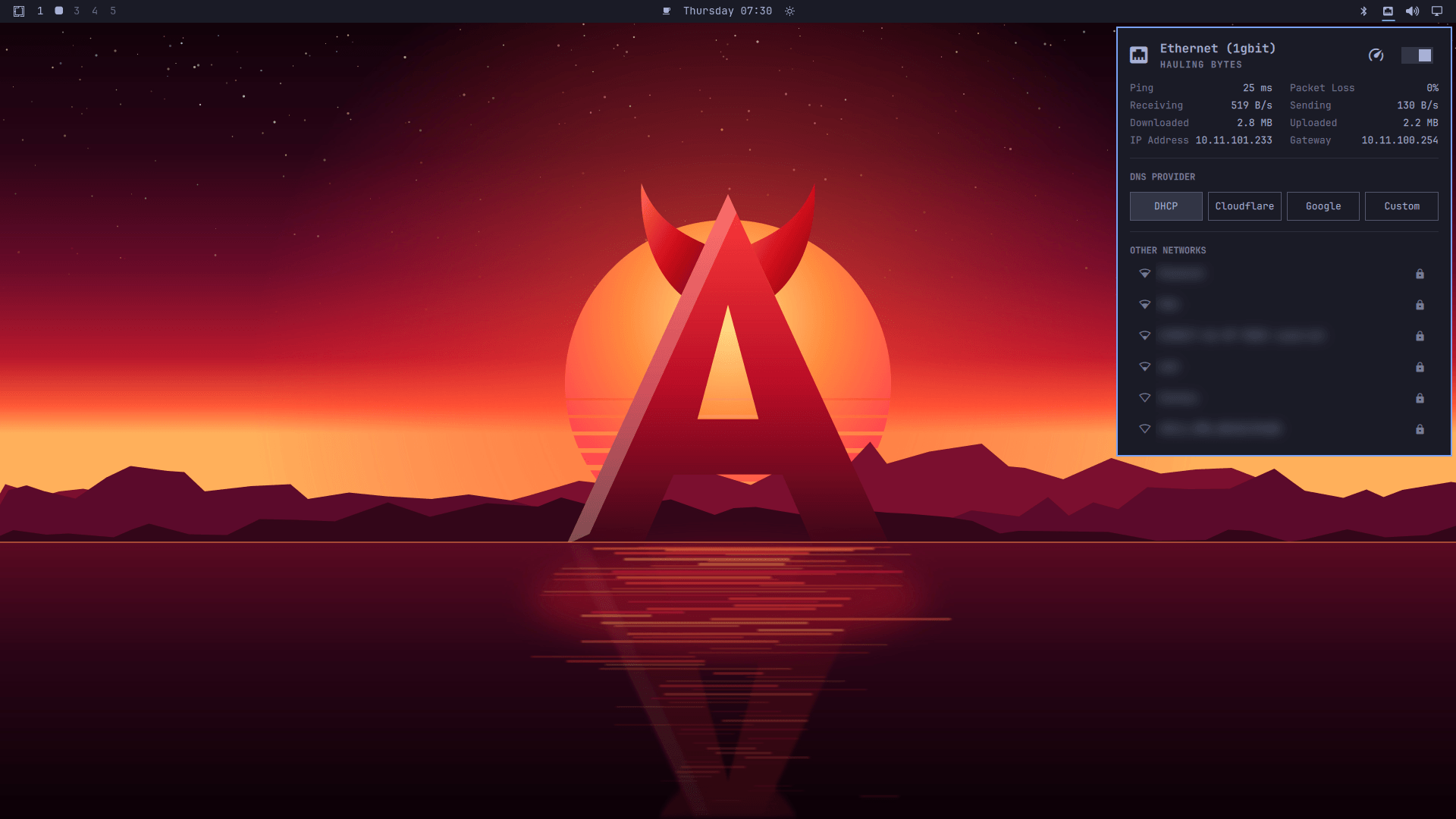
Finally, Daemonarchy highlights the importance of cross-project collaboration. By standing on the shoulders of the Wayland, Hyprland, and Arch communities, Hubbard has demonstrated that the future of operating systems is not in siloed development, but in the intelligent curation and integration of existing open-source technologies.
How to Get Started
For those interested in exploring this project, the v1.3.1 ISO (approx. 2 GiB) is available via the project’s GitHub page. Users can flash the image to a USB drive using standard tools like dd or Fedora Media Writer.
It is important to note that an internet connection is mandatory during the installation process, as the installer fetches the latest packages to ensure the system is up-to-date from the moment it is installed. As the project is currently in a state of rapid development, users are encouraged to monitor the GitHub repository for updates and contribute to the ongoing refinement of the distribution.
Conclusion
Daemonarchy is more than just a distribution; it is a proof-of-concept for the future of systems engineering. By bridging the gap between the legendary FreeBSD kernel and the modern, user-centric design of the Arch ecosystem, Jordan Hubbard has created something that is both nostalgic and revolutionary. Whether or not it becomes a daily driver for the average user remains to be seen, but its existence signals a new era where the barrier between "advanced" and "accessible" is being dismantled by the power of AI and open-source collaboration.