Android Bench 2.0: A New Era for AI-Driven Mobile Development
In the rapidly evolving landscape of mobile development, the integration of Large Language Models (LLMs) has transitioned from a novel experiment to a foundational pillar of productivity. Today, Google has announced the launch of Android Bench 2.0, a significant overhaul of its benchmarking framework designed to measure how AI models and agentic systems handle the grueling, multi-day complexities of modern Android software engineering.
This release marks a pivot from measuring simple, incremental code fixes to evaluating high-level, "long-horizon" tasks that mirror the actual day-to-day challenges faced by professional developers.
The Evolution of AI Evaluation: From Snippets to Systems
When Android Bench first debuted, its scope was intentionally narrow. Like many early AI coding benchmarks, it focused on the "low-hanging fruit" of development: isolated bug fixes, minor feature requests, and local code adjustments. While these tests provided a baseline for AI capability, they failed to account for the reality of mobile development, where a single task might span hundreds of files and require architectural foresight.
The Shift to Long-Horizon Tasks (LHT)
Android Bench 2.0 introduces the concept of Long-Horizon Tasks (LHT). These are not mere code completions; they are complex engineering undertakings that can take a human developer anywhere from several days to an entire week to resolve. Examples include:
- Dependency Modernization: Upgrading legacy dependencies across an entire production-grade codebase.
- Architectural Migrations: Converting legacy architecture (such as shifting from standard View-based UIs to Jetpack Compose).
- Greenfield Development: Building robust, feature-complete applications from scratch.
- Cross-Platform Porting: Translating complex business logic from cross-platform environments into native Android implementations.
By aligning with the Harbor framework, Android Bench 2.0 ensures that the evaluation is not just rigorous, but standardized across the industry, providing a transparent view of how models handle high-stakes environments.
Redefining Success: Why Binary Scoring Failed
One of the most critical updates in version 2.0 is the departure from binary "pass/fail" grading. In the world of professional software engineering, success is rarely absolute.
Previously, if an AI agent successfully refactored 40 screens of a legacy app into Jetpack Compose, set up complex database tables, and handled 90% of the project requirements, a binary system would mark the entire endeavor as a failure if it tripped on a single edge-case assertion. This obscured the model’s actual capabilities.
The Continuous Scoring Model
Android Bench 2.0 adopts a continuous scoring mechanism. This approach provides a nuanced signal of a model’s architectural prowess. The completion rate is now calculated based on a multifaceted rubric:
- Functionality: Does the app perform the intended task?
- Visual Fidelity: Does the UI/UX meet design specifications?
- Regression Avoidance: Did the changes break existing, unrelated features?
- Structural Adherence: Did the model respect the project’s architectural constraints?
This shift allows developers and researchers to see where a model succeeded and why it stumbled, rather than receiving a flat percentage that fails to capture the complexity of the work performed.
Data Insights: The Reality of Current AI Capabilities
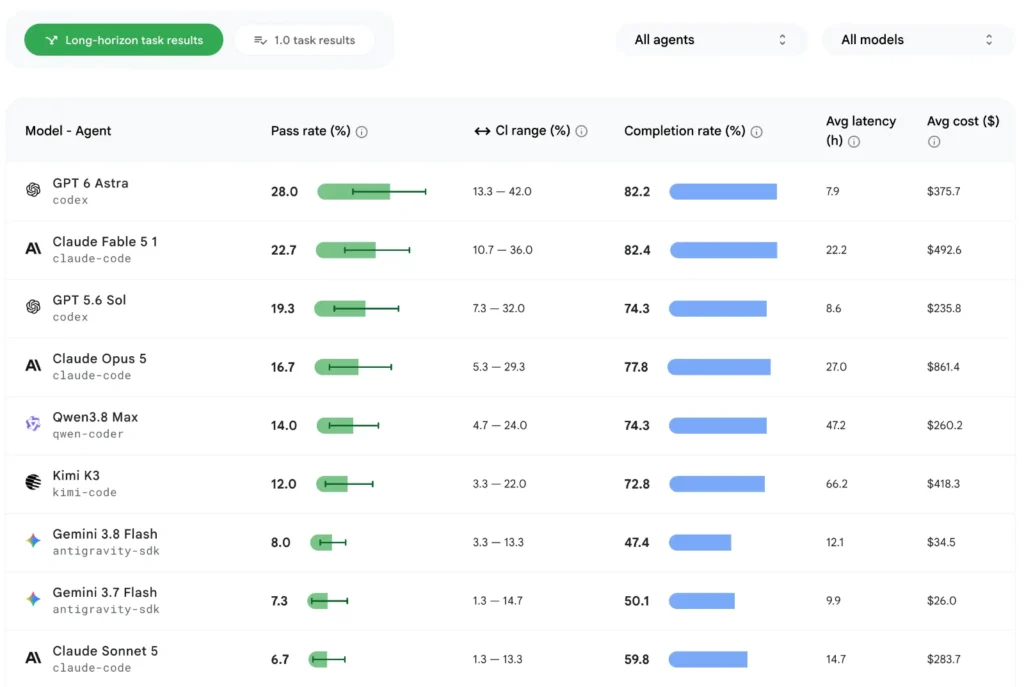
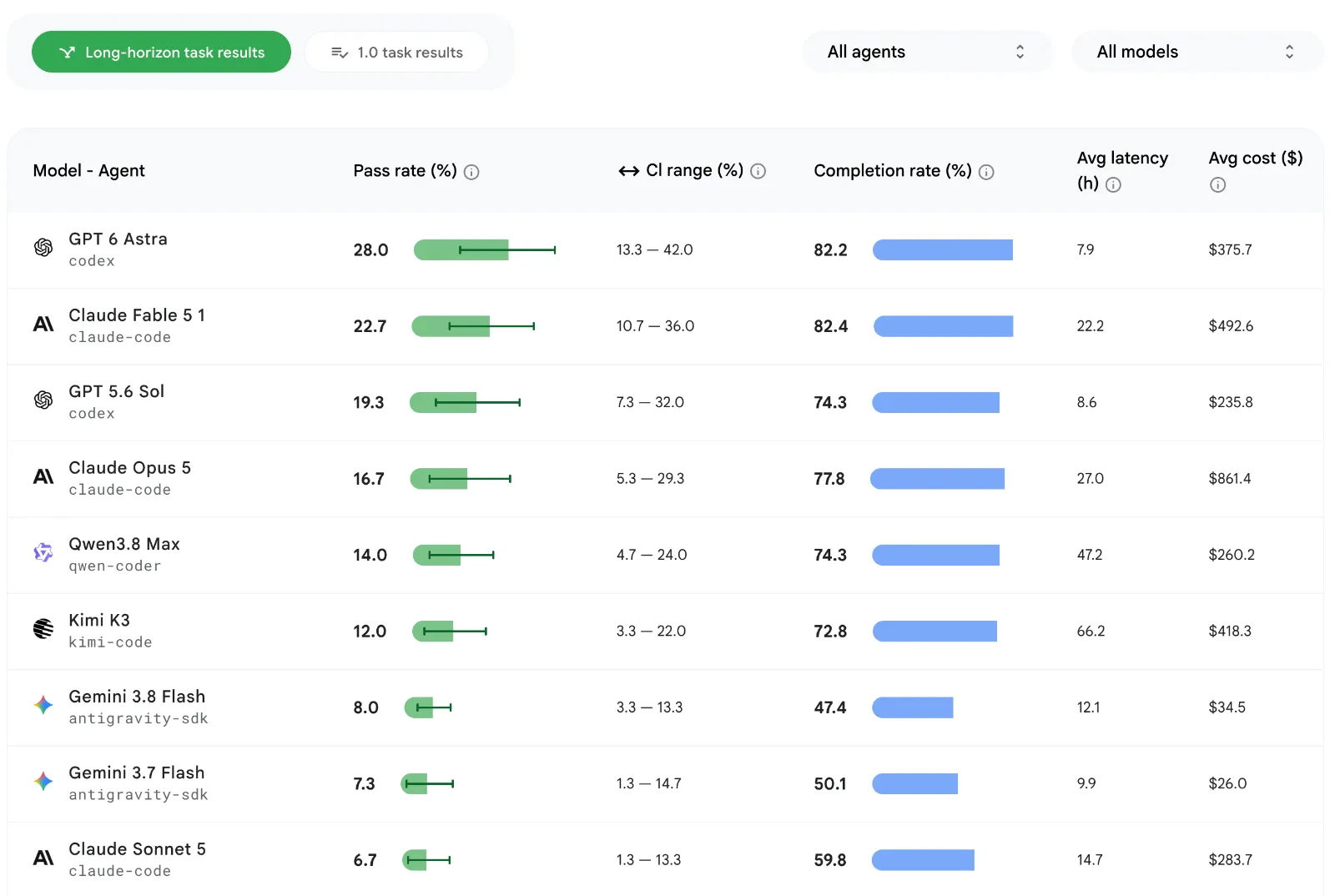
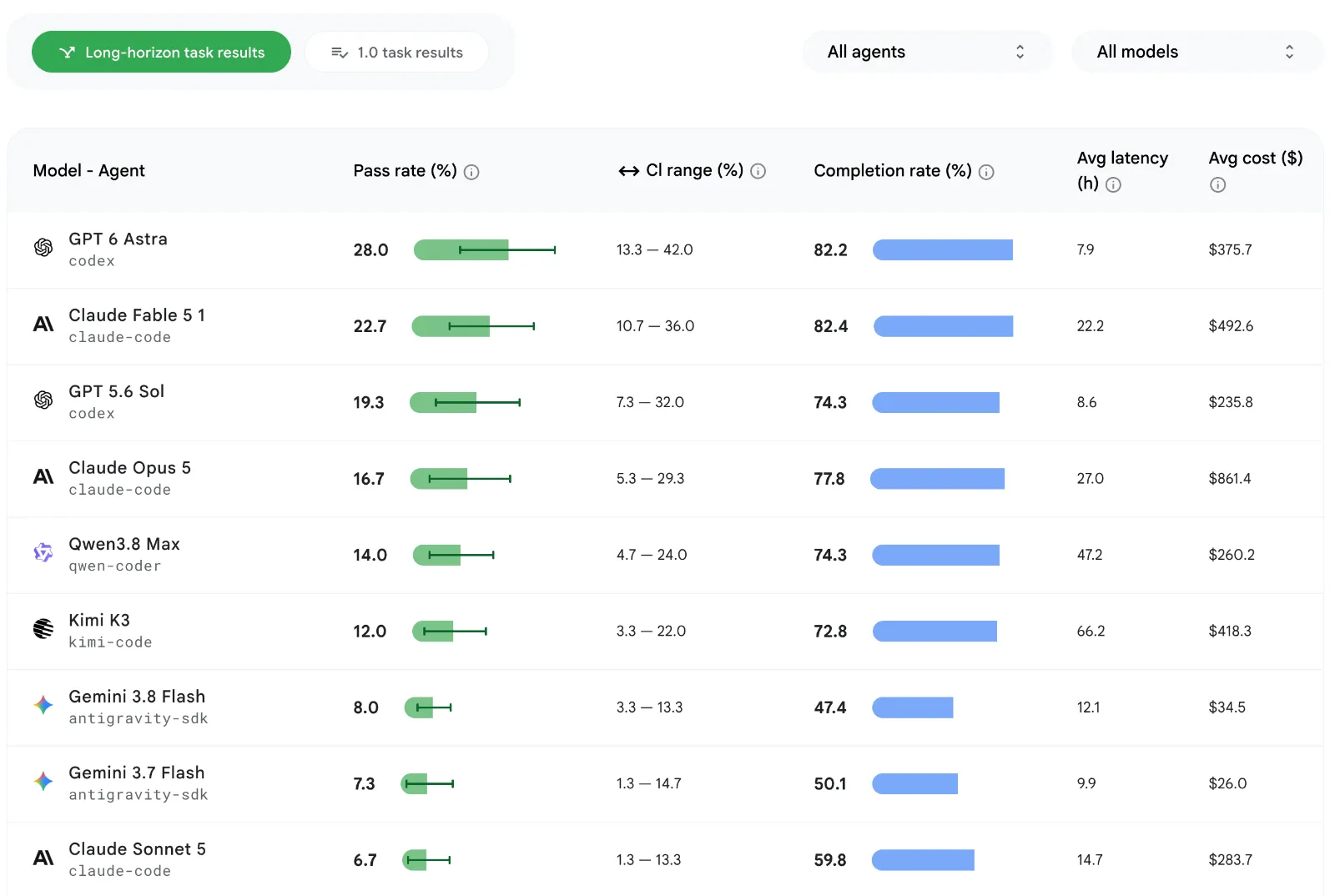
The inaugural results from the Android Bench 2.0 leaderboard reveal a sobering reality for AI enthusiasts: we are still in the early stages of true autonomous engineering. The highest pass rate for the new LHT dataset currently sits at approximately 28%, a stark contrast to the 91% pass rate seen in the simplified, incremental tasks of the original benchmark.
Strengths and Weaknesses
The data highlights distinct behavioral patterns in current frontier models:
- Strong on Transformation: Models excel at deterministic tasks. Swapping out networking libraries (like replacing Retrofit with Ktor) or refactoring Java code into Kotlin is performed with high consistency, even across massive codebases involving 125+ files and 8,000+ lines of code.
- The "Knowledge Gap" Problem: Models struggle significantly when tasks involve runtime validation, complex dependency injection graphs, or unreleased libraries. When the model encounters a breaking framework change or a library it hasn’t seen in its training data, its performance degrades rapidly.
- The Porting Hurdle: Converting cross-platform apps to native Android remains the "final boss" of current AI coding assistants. No model has achieved a 100% pass rate, and even the most advanced frontier models struggle to cross the 80% completion threshold.
The Rise of Agentic Evaluation
Perhaps the most exciting development in Android Bench 2.0 is the introduction of Agentic Evaluation. The industry has realized that the "model" is only half the equation; the "harness" or "agent" design is just as critical to success.
To reflect this, the benchmark now evaluates models in tandem with their native agents. For example, testing GPT-5.6 Sol on the Codex harness or Gemini 3.8 Flash within the Google Antigravity agent environment.
Why This Matters
Early findings suggest that the design of the agentic harness significantly influences developer outcomes. Techniques like prompt caching and compact tool windowing are demonstrating clear, measurable impacts on token reduction and success rates. By providing this data, Google is helping developers understand which AI ecosystem is best suited for their specific team’s needs.
Leaderboard Update: Who Leads the Pack?
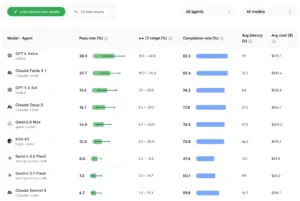
The leaderboard has been updated to include the latest industry contenders. OpenAI’s GPT-6 Astra currently sits at the top of the rankings with a 28% pass rate on LHTs. Other notable additions to the evaluation pool include:
- Gemini 3.8 Flash and Gemini 3.7 Flash (Google)
- Fable 5.1 (Anthropic)
- Kimi K3
- Qwen 3.8 Max
These additions underscore a rapidly accelerating arms race, with models being tested against increasingly difficult criteria.
Implications for the Future of Development
The transition to Android Bench 2.0 has profound implications for both AI researchers and the developers who rely on these tools.
For Researchers
The benchmark serves as a diagnostic tool. By identifying the specific areas where models fail (such as runtime validation or architectural nuances), researchers can focus their training efforts on reasoning and long-context maintenance rather than just code volume.
For Developers
For the average Android developer, the takeaway is clear: AI is an expert assistant, not a replacement. While these models can handle massive, repetitive tasks like migrating thousands of lines of code to a new language, they still require human oversight for architectural decisions and complex framework integrations.
As Google continues to refine Android Bench, the transparency offered by these metrics will become the primary guide for firms deciding which AI stack to integrate into their CI/CD pipelines.
Looking Ahead: A Community-Driven Effort
Google has emphasized that the evolution of Android Bench 2.0 is a collaborative process. The team is actively inviting the community to contribute to the dataset via GitHub. By crowdsourcing edge cases and challenging scenarios, the community is helping to ensure that the benchmark remains representative of the real world.
As we look toward the future, the integration of multi-modal evaluation—where AI can see and interact with the UI in real-time as a human would—is the next logical step. For now, Android Bench 2.0 stands as the most comprehensive, rigorous, and honest assessment of what AI can, and cannot, do for Android development.
Developers are encouraged to explore the updated methodology and review the performance cards of individual models to determine the best fit for their own development workflows. The journey toward fully autonomous coding is long, but with tools like Android Bench 2.0, we now have a map to navigate the terrain.