The Renaissance of the Open Source E-Reader: A Deep Dive into the Open Book Touch
In an era where the digital reading experience is increasingly dominated by proprietary ecosystems—walled gardens that track your reading habits, enforce restrictive Digital Rights Management (DRM), and tether your library to a single corporate account—a quiet revolution is unfolding. Developer Joey Castillo, a long-time advocate for hardware transparency and user autonomy, has officially launched the Open Book Touch on the crowdfunding platform Crowd Supply.
This project is not merely another e-reader; it is a declaration of independence. By moving away from the soldering-iron-required DIY kits of 2020 toward a sleek, consumer-ready device, the Open Book Touch represents a critical evolution in the movement to "own your data."
The Genesis: From Soldering Irons to Symmetrical Design
To understand the significance of the Open Book Touch, one must look back at the original Open Book project. In 2020, at the height of the global shift toward remote work and home-based hobbies, Castillo introduced a DIY e-reader concept. It was a project designed for the hacker, the maker, and the enthusiast—a device that required the user to source parts, solder components, and assemble the physical chassis themselves.
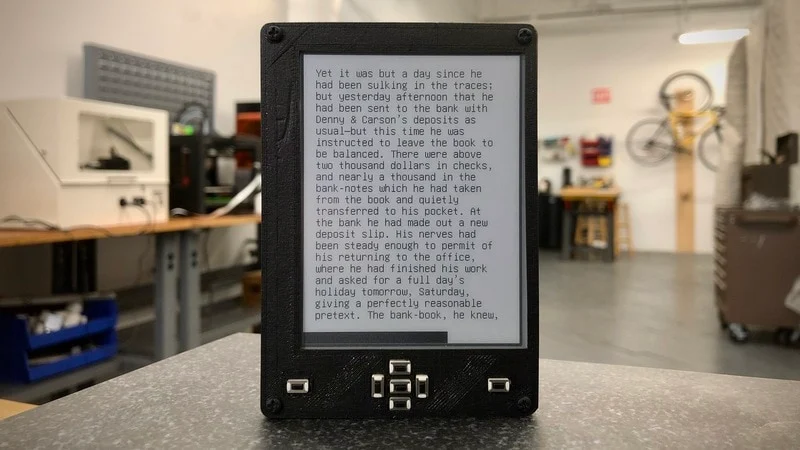
While the original iteration successfully built a passionate, albeit small, community of enthusiasts, it lacked the mass-market accessibility required to truly challenge the dominance of giants like Amazon’s Kindle or Kobo. The original design featured a 4.2-inch e-paper display accompanied by a D-pad and a suite of physical navigation buttons. It was a functional, rugged, and profoundly "maker-centric" device.
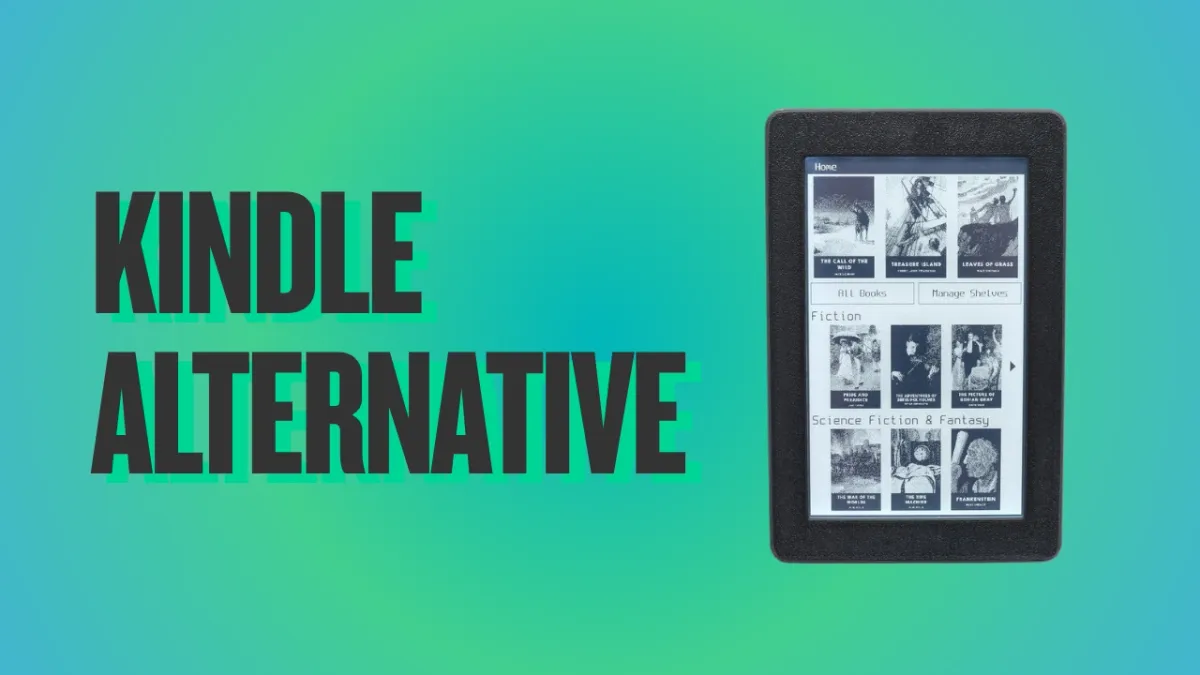
Six years later, the Open Book Touch marks a complete pivot. Moving from a modular "feather-compatible" board approach to a singular, cohesive piece of hardware, the new device measures a mere 1 cm in thickness. The physical buttons have been discarded in favor of a modern, capacitive touchscreen interface. This design choice transforms the device from a hobbyist project into a portable, refined piece of consumer electronics that fits comfortably into a pocket or a bag.
Technical Specifications: Performance Meets Efficiency
The Open Book Touch is built upon the robust ESP32-S3 microcontroller, a popular choice for power-efficient, connected devices. This is paired with 16 MB of flash memory and 8 MB of PSRAM, providing sufficient headroom for the device to handle complex EPUB files and library metadata without the need for a full-fledged, power-hungry Linux operating system.

Display and Visual Fidelity
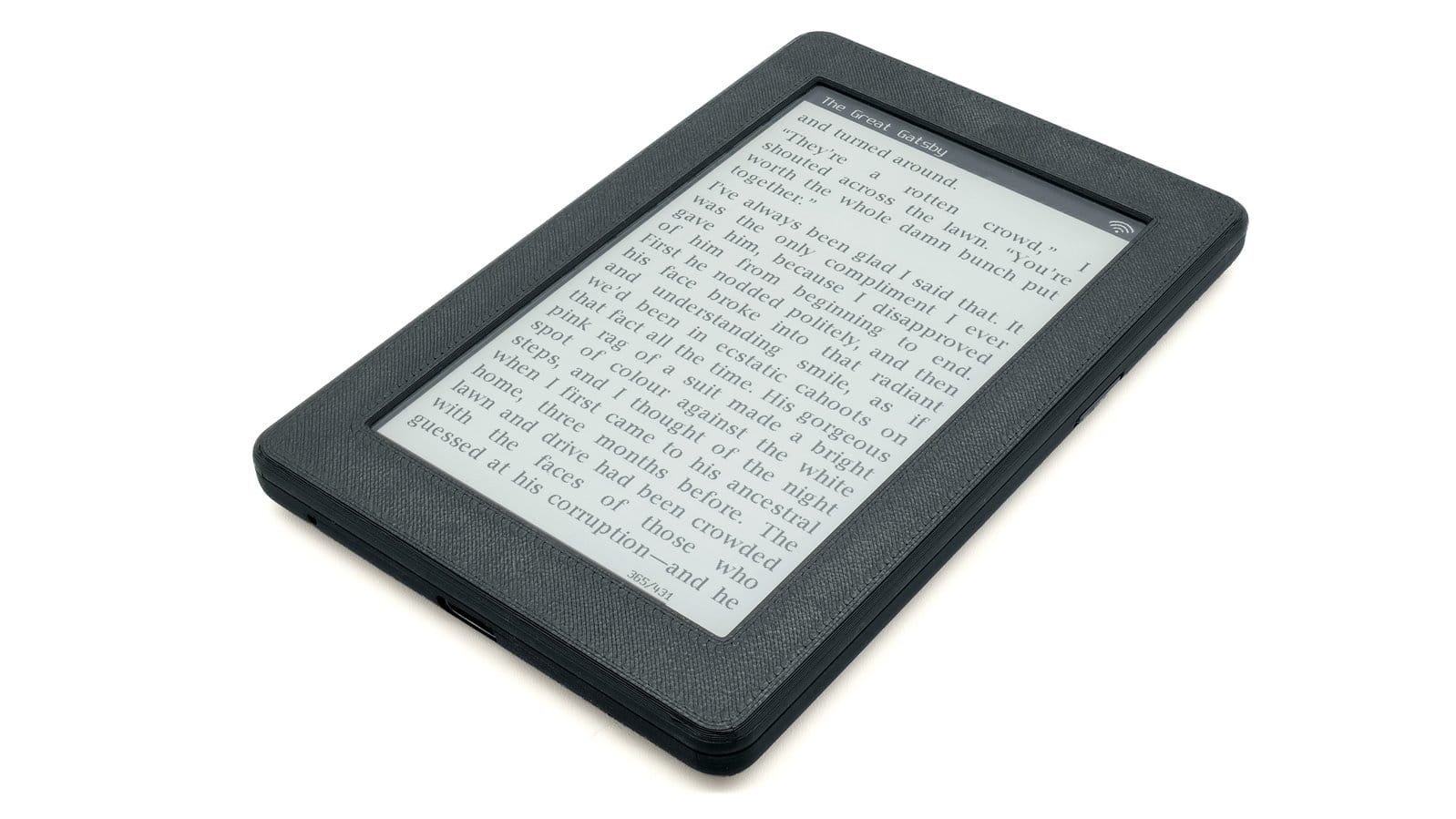
At the heart of the device is a 4.26-inch e-paper panel, boasting a resolution of 480 x 800 pixels. This yields a pixel density of approximately 220 ppi, ensuring that text appears sharp and crisp. The display operates natively in a 1-bit black-and-white mode, which allows for extremely fast page-turn refreshing. For static elements—such as book covers or custom lock screens—the device employs a 2-bit grayscale mode, providing the visual depth necessary for high-quality imagery.
Lighting and Ergonomics
One of the most requested features in any e-reader is an adjustable frontlight. The Open Book Touch addresses this by incorporating a dual-tone array: five warm LEDs and five cool LEDs. This allows users to fine-tune the color temperature, providing a soft, warm light for evening reading and a crisp, cool light for daylight environments.
Firmware and Software Philosophy
The device runs on a custom C++ firmware built on the ESP-IDF and FreeRTOS framework. Metadata management is handled locally via a lightweight SQLite database stored directly on the device. By design, the device eschews cloud connectivity. Books are loaded via a microSD card or through a local Wi-Fi interface, ensuring that the user’s library remains entirely within their physical possession.
Chronology of a Vision
The path from the initial Hackaday award in 2020 to the launch of the Open Book Touch has been one of iterative development.
- January 2020: The original Open Book wins the "Take Flight with Feather" contest. The vision is to make a mass-produced device available via DigiKey.
- Mid-2020: After the anticipated retail run faces delays, Castillo takes matters into his own hands, selling bare PCBs via Tindie. Over 100 units reach builders worldwide.
- 2022: The "Open Book Abridged" is released, utilizing the RP2040 chip to simplify the design and lower the barrier to entry for makers.
- 2026/2027: The Open Book Touch goes live on Crowd Supply. It signifies the transition from a kit-based project to a fully assembled product, with a target delivery date in early 2027.
Supporting Data: Accessibility and Global Reach
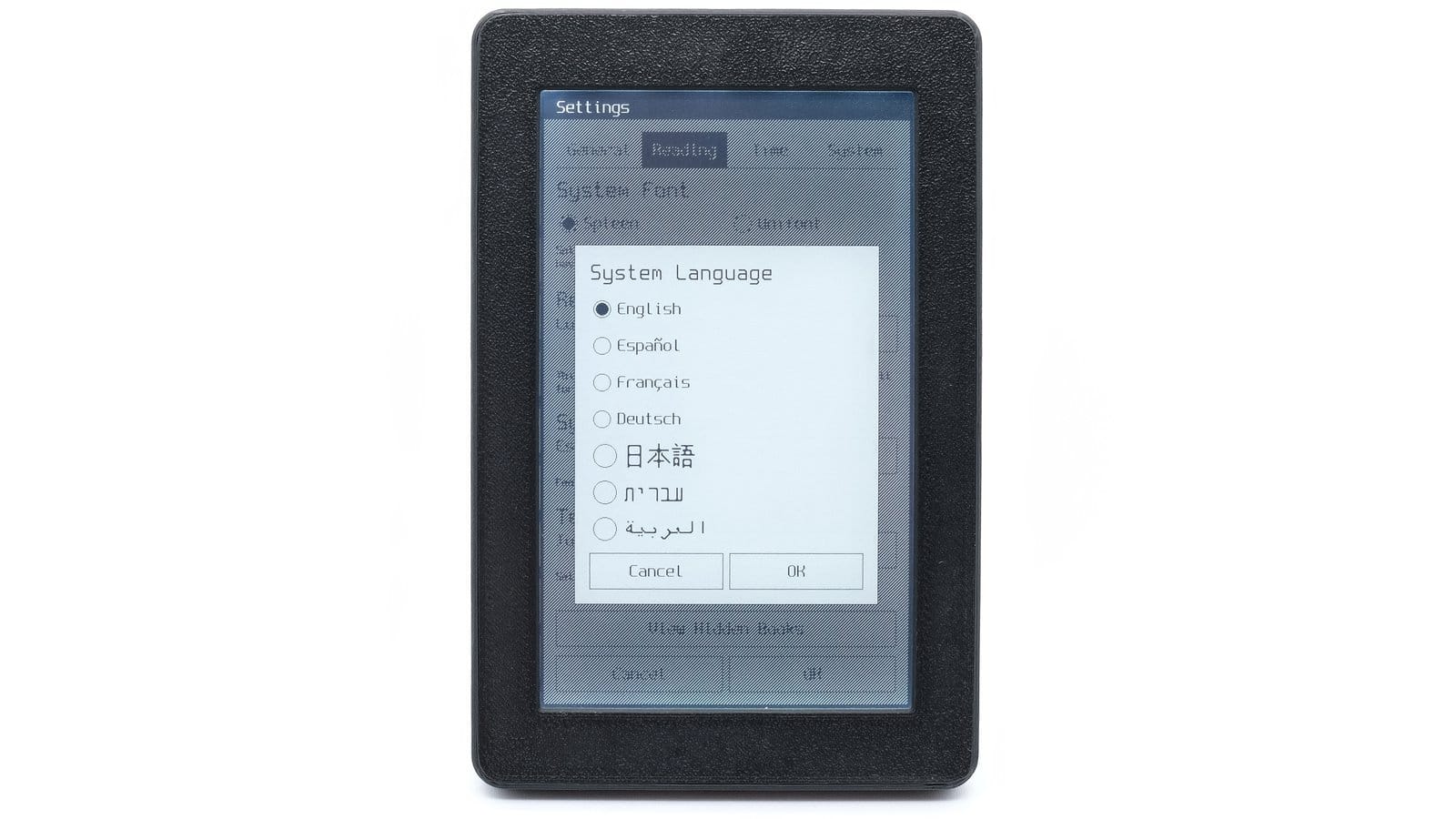
A standout feature of the Open Book Touch is its commitment to international accessibility. Unlike many low-cost e-readers that are restricted to Western languages, the Open Book Touch ships with the GNU Unifont, which covers approximately 70,000 glyphs.
The interface supports seven languages, including native implementations of the Unicode bidirectional algorithm. This ensures that languages such as Arabic and Hebrew, which are written from right to left, render correctly. Furthermore, the typesetting engine supports advanced features like justified text, proper hyphenation for English, Spanish, French, and Italian, and support for high-quality, open-source fonts like Lucida Bright and Lucida Sans, including true bold and italic weights.

The Implications of "No-DRM" Computing
The decision to completely omit DRM support is not a technical limitation; it is a political and ethical one. In a world where digital content can be revoked by a service provider at any moment, the Open Book Touch offers a "Data Sovereignty" approach.
The Pros of Total Autonomy
- Privacy: No account registration, no tracking of reading habits, and no "phoning home" to analytics servers.
- Longevity: Because the firmware is open-source (MIT-licensed) and the hardware is designed to be taken apart, the device does not have a programmed "end-of-life."
- Customization: Users have access to printable CAD files for the case, allowing for physical modifications, 3D printing custom enclosures, or replacing the user-accessible 800 mAh LiPo battery.
The Trade-offs
The lack of a companion app or cloud-syncing ecosystem does present a hurdle for the "multi-device" reader. Users who are accustomed to having their reading progress synced between a smartphone, a tablet, and an e-reader will find the Open Book Touch to be a more "isolated" experience. While the developer has hinted that future software updates might explore solutions, for now, the device is intentionally focused on the singular act of reading.
Official Stance and Crowdfunding Transparency
The Open Book Touch is currently in the midst of its Crowd Supply campaign. At the time of this writing, the project has garnered significant interest, raising over $25,000 toward its $45,000 goal.
Joey Castillo has maintained a transparent stance regarding the open-source nature of the project. While the "Focus" framework (the C++ application engine) is already public, the specific hardware board files and enclosure CADs for the Touch model are currently held private. Castillo has pledged to release these files to the public domain once the initial batches of the device have been shipped to backers. This "backer-first" model ensures that those who funded the development receive the initial value of the hardware, while preserving the long-term goal of total open-source transparency.
Conclusion: A Tool for the Independent Reader
The Open Book Touch is not trying to beat Amazon at its own game. It is not designed to be a high-performance tablet or a gateway to a subscription service. Instead, it is a specialized tool for the individual who values the tactile nature of books and the intellectual freedom of owning their own library.
With a base model priced at $149 and a limited-run "Author’s Edition" at $249, the device is positioned as a premium, niche alternative for the hardware-conscious bibliophile. As we look toward 2027 and the expected delivery of these units, the Open Book Touch stands as a testament to what is possible when developers prioritize user agency over corporate convenience. It is a reminder that in the digital age, the most radical act is often the simplest one: to read a book, on your own terms, without permission from anyone else.