The Death of SaaS Middleware: How Engineers Are Building Autonomous, Zero-Cost Outbound Pipelines with Python and LLMs
Modern go-to-market (GTM) teams have long treated outbound sales infrastructure as a tollbooth. To find a handful of qualified leads, companies routinely wire together a brittle labyrinth of fragmented software-as-a-service (SaaS) subscriptions. They pay $0.008 per verification on ZeroBounce, drain hundreds of credits on Clay or Apollo for basic web scraping, and incur steep monthly fees for proprietary LLM-wrapper tools just to personalize emails.
The financial and architectural toll of this approach is staggering. Aside from compounding subscription costs, traditional outreach stacks suffer from silent data degradation, API rate limits, and broken webhooks that drop leads mid-funnel.
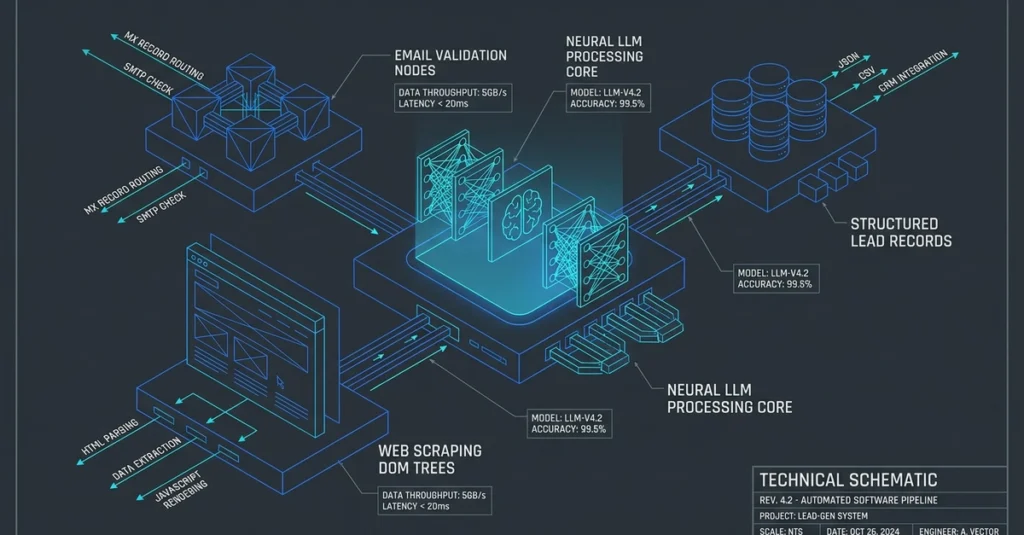
However, a paradigm shift is underway. Engineering and growth teams are bypassing commercial middleware entirely, opting instead to build native, production-grade, self-hosted outbound pipelines using Python, asyncio, raw SMTP handshakes, and strict type-validated LLM frameworks. By cutting out the middlemen, modern tech stacks can verify inboxes down to the Mail Exchange (MX) server for zero API cost, scrape target domains efficiently, and generate context-aware personalization hooks for pennies per lead.
The Bottleneck: Why Fragmented Outbound Stacks Fail
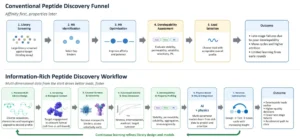
To understand why custom-built, asynchronous Python pipelines are replacing traditional sales automation suites, one must first examine the standard data flow of a modern B2B growth team:
CSV Export -> Verification API ($) -> Scraper Proxy ($) -> Webhook to Zapier/n8n ($) -> LLM Wrapper ($) -> CRMBeyond the direct financial drain, this architecture introduces profound technical vulnerabilities:
- Black-Box Verification Failures: Commercial verification APIs often rely on cached databases or surface-level checks. When they misclassify an inbox, your sending infrastructure takes the hit, resulting in hard bounces and degraded domain reputation.
- Context Bloat: Traditional web scrapers dump raw, unstructured HTML into LLM prompts. This floods context windows with useless CSS tokens, script tags, and navigation bars, driving up token costs while reducing the quality of the AI’s output.
- Drift and Brittleness: When a third-party webhook changes its schema or an intermediary service experiences downtime, the entire outbound assembly line stalls. Debugging across five different SaaS dashboards is a notoriously frustrating endeavor for engineering teams.
By consolidating these functions into a localized, asynchronous pipeline running on a modest Virtual Private Server (VPS), operational expenses plummet. Teams now report total operating costs limited strictly to compute and raw token usage—averaging just $0.001 to $0.003 per fully researched, verified, and personalized lead.

Pipeline Architecture: A Four-Stage Asynchronous Engine
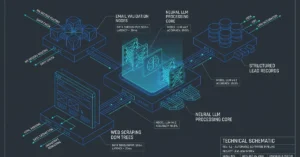
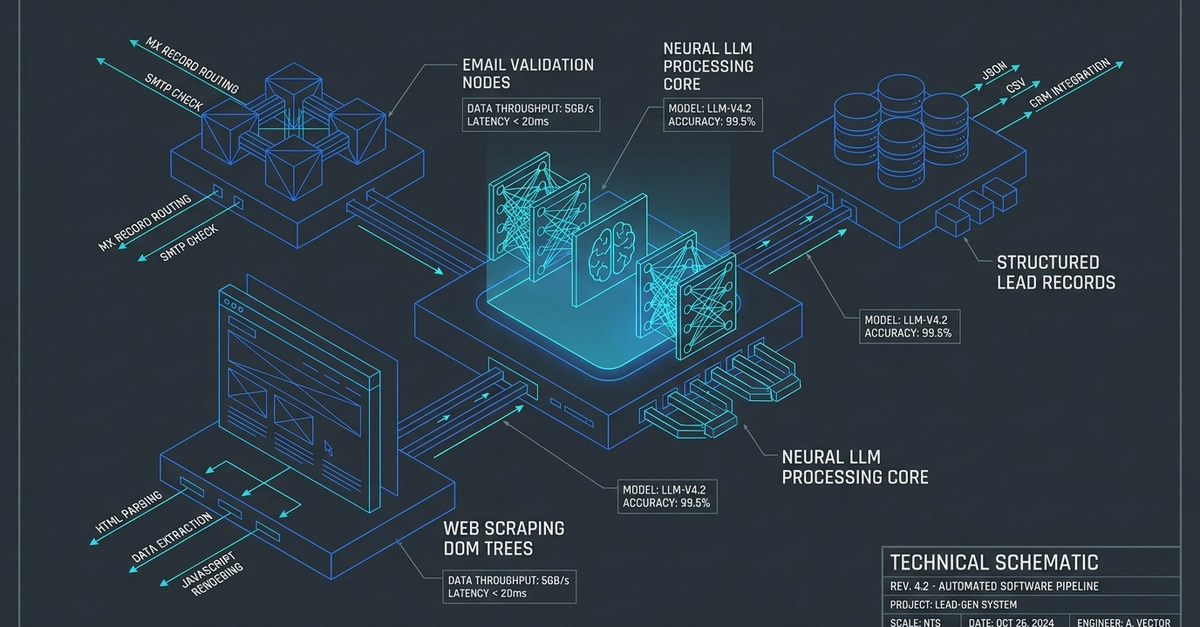
A production-grade, self-hosted outreach system relies on worker queues and asynchronous design patterns to process targets at scale without hitting rate limits or blocking threads. The architecture is broken down into four distinct stages:
[Raw Lead Stream]
       │
       ▼
[Stage 1: Async DNS & SMTP Handshake Engine]
  ├── DNS MX Record Resolution via aiodns
  └── Direct aiosmtplib Handshake (HELO -> MAIL FROM -> RCPT TO)
       │
       ├── (Bounced/Invalid) ──> [Dead Letter Queue / Drop]
       └── (Deliverable/Clean) ──┬
                                 ▼
[Stage 2: Deterministic Domain Ingestion]
  ├── Headless HTTP Extraction with TLS Fingerprint Rotation
  └── Readability Extraction & HTML-to-Markdown Stripping
                                 │
                                 ▼
[Stage 3: Typed LLM Personalization via Instructor & Pydantic]
  ├── Token-budgeted Context Injection
  └── Structured Output Schema (Company Focus, Value Prop, Hook)
                                 │
                                 ▼
[Stage 4: State & Cache Sync]
  └── SQLite WAL-mode Local Cache & CRM Webhook Trigger
Core Implementation & Code
Stage 1: Zero-Cost Direct SMTP Handshake Verification
Instead of paying per-request verification fees to third-party vendors, engineers can perform direct asynchronous MX lookups followed by an interactive SMTP transaction (HELO, MAIL FROM, RCPT TO). If the remote mail server responds with a status code of 250, the mailbox actively exists. The script immediately issues an RSET and QUIT command, verifying the inbox without ever dispatching an actual email payload.
import asyncio
import aiosmtplib
import dns.asyncresolver

async def resolve_mx(domain: str) -> str | None:
    try:
        answers = await dns.asyncresolver.resolve(domain, 'MX')
        # Sort by MX priority
        records = sorted(answers, key=lambda r: r.preference)
        return str(records[0].exchange).rstrip('.')
    except Exception:
        return None

async def verify_inbox_deliverability(email: str, sender_domain: str = "verify-probe.org") -> dict:
    user, domain = email.split('@')
    mx_host = await resolve_mx(domain)

    if not mx_host:
        return "email": email, "status": "failed", "reason": "no_mx_record"

    smtp = aiosmtplib.SMTP(hostname=mx_host, port=25, timeout=10)

    try:
        await smtp.connect()
        await smtp.helo(sender_domain)
        await smtp.mail(f"probe@sender_domain")
        code, message = await smtp.rcpt(email)
        await smtp.quit()

        # 250 indicates deliverability to the recipient address
        if code == 250:
            return "email": email, "status": "deliverable", "code": code
        elif code == 550:
            return "email": email, "status": "undeliverable", "code": code
        else:
            return "email": email, "status": "risky", "code": code, "msg": message

    except (aiosmtplib.SMTPException, asyncio.TimeoutError, OSError) as e:
        return "email": email, "status": "unknown", "error": str(e)
    finally:
        if smtp.is_connected:
            await smtp.quit()
Stage 2: Sanitized Content Extraction
Passing raw HTML to an LLM wastes financial and computational resources. By combining httpx with trafilatura, developers can extract solely the high-value core text from a company’s target domain while stripping away code bloat:
import httpx
import trafilatura

async def extract_clean_context(url: str, max_chars: int = 4000) -> str:
    if not url.startswith(("http://", "https://")):
        url = f"https://url"

    headers =
        "User-Agent": "Mozilla/5.0 (Windows NT 10.0; Win64; x64) AppleWebKit/537.36 (KHTML, like Gecko) Chrome/122.0.0.0 Safari/537.36"


    async with httpx.AsyncClient(timeout=10.0, follow_redirects=True, headers=headers) as client:
        try:
            resp = await client.get(url)
            resp.raise_for_status()
            # trafilatura strips boilerplate, scripts, navs, and converts to dense markdown/text
            extracted = trafilatura.extract(resp.text, include_links=False, include_images=False)
            return (extracted or "")[:max_chars]
        except Exception as e:
            return f"Scrape failed: str(e)"
Stage 3: Structured Hook Generation via Instructor & Pydantic
Unstructured LLM outputs frequently break automated queuing systems when models drift from formatting guidelines. Integrating the instructor library patches the API client to guarantee strict adherence to a pre-defined Pydantic schema.
from pydantic import BaseModel, Field
import instructor
from openai import AsyncOpenAI

class OutboundPersonalization(BaseModel):
    company_core_offering: str = Field(description="1-sentence technical summary of what the company builds/sells.")
    identified_pain_point: str = Field(description="Likely technical or operational challenge they face based on their scale/domain.")
    email_subject_line: str = Field(description="Short, casual, non-spammy subject line under 6 words.")
    icebreaker_hook: str = Field(description="Contextual opening sentence referencing their actual product architecture or recent company focus.")

client = instructor.from_openai(AsyncOpenAI(api_key="your-api-key"))

async def generate_hook(prospect_name: str, company_name: str, context: str) -> OutboundPersonalization:
    prompt = f"""
    Prospect: prospect_name
    Company: company_name
    Company Website Scraped Content:
    context

    Analyze the content and generate hyper-tailored outbound copy. Avoid generic compliments like 'impressive work'. Focus on mechanical reality.
    """

    return await client.chat.completions.create(
        model="gpt-4o-mini",
        response_model=OutboundPersonalization,
        messages=[
            "role": "system", "content": "You are a direct, technical SDR specializing in developer and B2B tooling.",
            "role": "user", "content": prompt
        ],
        temperature=0.2
    )
Deployment, Caching, and Concurrency Control
Scaling a local pipeline to process thousands of domain queries per hour requires careful management of network resources and state persistence.
SMTP Greylisting and DNS Socket Management
Corporate mail servers frequently issue transient 451 or 421 response codes when hit by sudden traffic bursts from unknown IPs. Production systems must implement exponential backoff algorithms and connection pooling to respect receiver limits and prevent socket exhaustion.

High-Efficiency Deduplication with SQLite WAL Mode
Re-scraping domains or re-verifying emails within a standard evaluation window wastes network bandwidth and model tokens. Utilizing a lightweight SQLite database configured in Write-Ahead Logging (WAL) mode enables high-performance concurrent async reads and writes with zero lock contention:
import aiosqlite

async def init_db():
    async with aiosqlite.connect("pipeline_cache.db") as db:
        await db.execute("PRAGMA journal_mode=WAL;")
        await db.execute("""
            CREATE TABLE IF NOT EXISTS cache (
                domain TEXT PRIMARY KEY,
                scraped_context TEXT,
                created_at TIMESTAMP DEFAULT CURRENT_TIMESTAMP
            )
        """)
        await db.commit()
CRM Routing and Webhook Hand-off
Once the Pydantic model successfully validates the lead’s data, clean records are routed straight into orchestration tools like n8n or customer relationship management systems (HubSpot, Smartlead, Instantly) via an asynchronous HTTP POST dispatch. Invalid emails and failed scrapes are filtered out prior to hand-off, protecting the organization’s outgoing mail servers from being flagged for spam.
Implications for the B2B SaaS Ecosystem
The widespread adoption of native Python and LLM-driven outreach architectures signals trouble for traditional data-broker and SaaS middleware business models. As open-source primitives mature, companies are realizing they no longer need to pay exorbitant per-credit fees for basic enrichment and validation services.
By taking control of the data pipeline, engineering teams gain absolute transparency into their metrics, protect their domain reputations through rigorous zero-cost verification, and build infinitely customizable outbound engines tailored precisely to their go-to-market strategies.