Scaling Intelligence: Google Unveils TensorFlow GNN 1.0 to Revolutionize Relational Data Processing
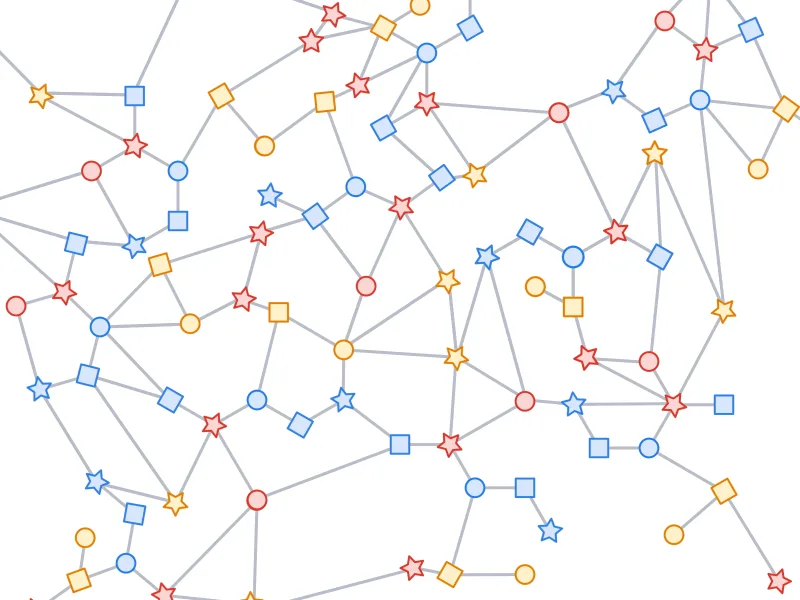
In an era where data complexity is growing exponentially, the ability to model relationships between objects is becoming as critical as analyzing the objects themselves. From the intricate webs of global supply chains and social networks to the structural complexities of molecular biology, the world is defined by connectivity. To address this, Google has officially released TensorFlow GNN (TF-GNN) 1.0, a production-grade library designed to bring the power of Graph Neural Networks (GNNs) to large-scale industrial applications.
Developed through a cross-functional collaboration between Google Research, Google Core ML, and Google DeepMind, TF-GNN 1.0 marks a significant milestone in machine learning infrastructure. It provides a robust, scalable framework that allows developers to encode discrete, relational information into continuous representations, effectively bridging the gap between graph theory and deep learning.
The Core Challenge: Moving Beyond Grids and Sequences
For decades, the standard paradigm of machine learning has favored "regular" data. Convolutional Neural Networks (CNNs) excel at processing grids of pixels (images), while Transformers and Recurrent Neural Networks (RNNs) have mastered sequences (text and audio). However, these architectures often struggle with irregular, non-Euclidean data—graphs where nodes are connected by edges in complex, varying topologies.
While traditional algorithms like DeepWalk and Node2Vec laid the groundwork for graph-based learning, they often lacked the capacity for end-to-end integration with modern deep learning pipelines. GNNs represent the next evolutionary step. By allowing information to flow across the edges of a graph, GNNs enable models to make predictions based on context. Whether it is predicting the reaction of a molecule, identifying the topic of a research paper through its citation network, or determining the probability of two products being purchased together, GNNs leverage the structural "neighborhood" of an object to enhance predictive accuracy.
Chronology of Development: From Research to Production
The journey to TF-GNN 1.0 was not an overnight endeavor. It reflects years of iterative research and the practical necessity of handling "heterogeneous" graphs—graphs where nodes and edges represent different types of entities (e.g., a "user" node connected to a "product" node via a "purchased" edge).

- Conceptualization (The Research Phase): Google researchers began identifying the limitations of existing frameworks in handling massive, heterogeneous datasets. The need for a standardized "GraphTensor" object became clear early on.
- Architectural Design: The team focused on making the
tfgnn.GraphTensora "first-class citizen" within the TensorFlow ecosystem, ensuring it could be processed by standard tools liketf.data.Datasetandtf.function. - Scaling and Optimization: A major hurdle was the "subgraph sampling" problem. Because real-world graphs can contain billions of edges, training on the full graph is often impossible. The team developed sophisticated dynamic sampling methods that allow models to train on manageable, localized subgraphs while maintaining the integrity of the global structure.
- Integration: The final phase involved wrapping these capabilities in the high-level Keras API, ensuring that developers could build complex GNNs without having to write low-level tensor manipulation code from scratch.
Supporting Data and Technical Architecture
At the heart of TF-GNN 1.0 is the tfgnn.GraphTensor. This composite tensor acts as the primary data structure, housing both the graph topology and the features associated with nodes and edges.
Dynamic Subgraph Sampling
The library introduces flexible tools for sampling subgraphs. For smaller, in-memory datasets, developers can use intuitive, interactive samplers suitable for research in Colab notebooks. For enterprise-scale data—involving hundreds of millions of nodes—TF-GNN utilizes Apache Beam. This distributed processing capability allows the library to handle massive data stores on network filesystems, ensuring that the training process remains efficient even as the graph grows.
The Message-Passing Mechanism
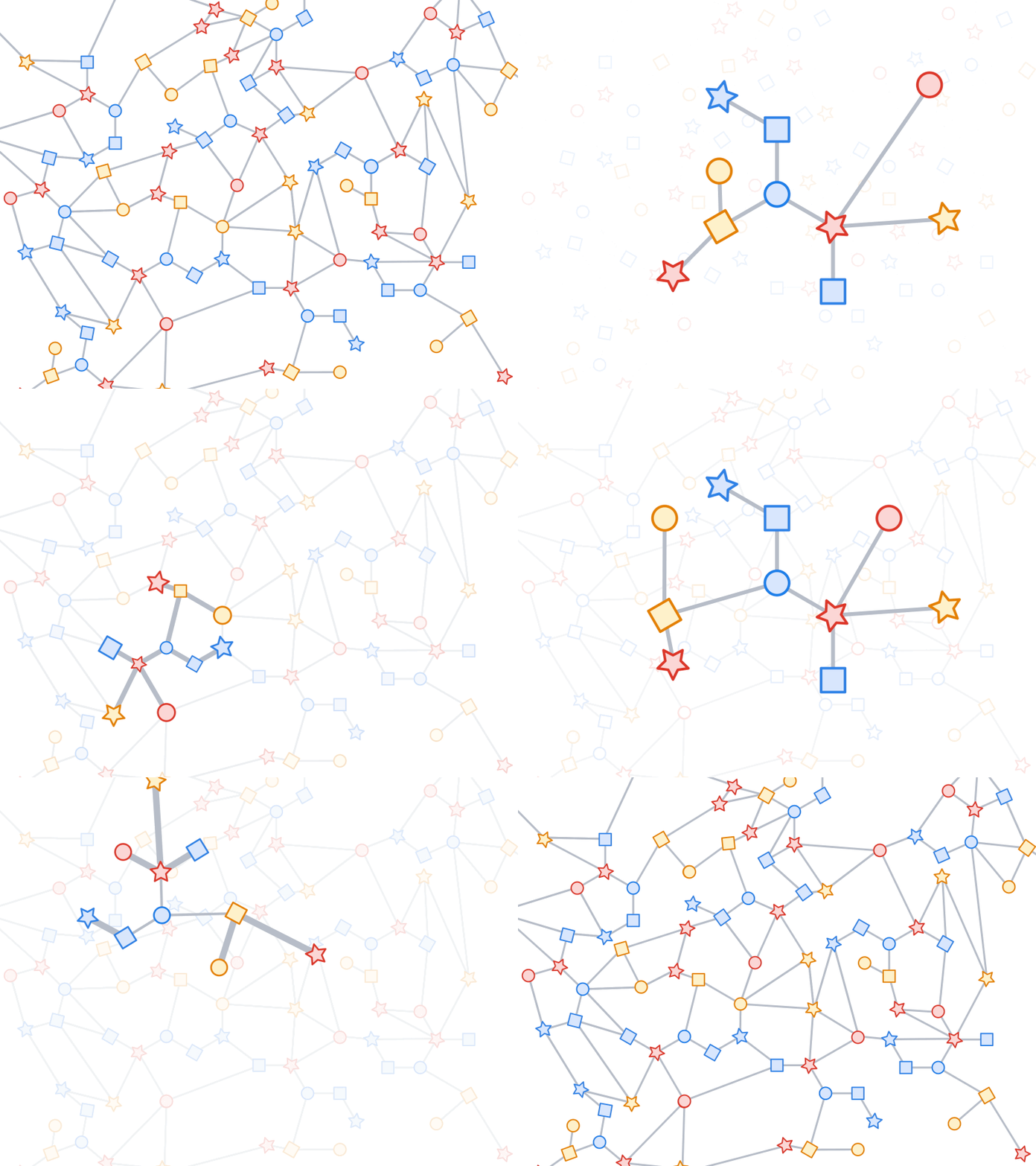
The core of a GNN’s predictive power lies in "message passing." In each round, nodes exchange information with their neighbors. After several rounds, the hidden state of a node contains a compressed summary of its entire local neighborhood. TF-GNN 1.0 allows for:
- Heterogeneous Modeling: Using separately trained layers for different types of nodes and edges, acknowledging that a "citation" edge is fundamentally different from an "authorship" edge.
- Unsupervised Learning: The ability to generate embeddings without labels, enabling the use of graph structures in downstream, non-graph specific machine learning tasks.
Simplified Orchestration with the TF-GNN Runner
The "Runner" module is designed to eliminate the boilerplate code typically required for training. It manages distributed training, provides padding for fixed-shape requirements on hardware like Cloud TPUs, and supports joint training on multiple tasks. For example, a model can be trained on a supervised classification task while simultaneously performing an unsupervised task, allowing the model to learn a richer, more nuanced representation of the data.
Official Perspectives and Expert Insight
The release is the result of a massive collaborative effort. According to the development team, the primary goal was to democratize GNNs, moving them out of the realm of purely academic research and into the hands of engineers solving real-world problems.
"TF-GNN 1.0 is built from the ground up for heterogeneous graphs," note Software Engineers Dustin Zelle and Arno Eigenwillig. By focusing on heterogeneous structures, the library mirrors the reality of modern data, where relationships between disparate entity types are the norm rather than the exception.
The acknowledgment section of the release underscores the interdisciplinary nature of the project. Experts from Google Research, Core ML, and DeepMind contributed to the design, ensuring that the library satisfies the requirements of both cutting-edge researchers and production-oriented software engineers.
Implications for the Industry
The launch of TF-GNN 1.0 has profound implications for several industries:
1. Enhanced Recommendation Engines
E-commerce and streaming platforms rely heavily on understanding user-item relationships. With TF-GNN, these systems can evolve beyond simple collaborative filtering to understand the deeper, multi-relational context of user behavior, leading to significantly more accurate recommendations.
2. Scientific Discovery and Molecular Biology
In pharmaceutical research, the ability to predict molecular properties—such as toxicity or binding affinity—is a graph-based problem. By treating molecules as graphs of atoms and bonds, GNNs can accelerate the discovery of new drugs, potentially saving years of laboratory testing.
3. Cybersecurity and Fraud Detection
Financial institutions struggle with increasingly sophisticated fraud rings. By analyzing transaction graphs rather than isolated data points, GNNs can identify anomalous patterns of activity that would remain invisible to traditional rule-based systems.
4. Knowledge Graphs and Information Retrieval
As search engines and AI assistants become more reliant on knowledge graphs, the ability to perform deep reasoning over these graphs will define the next generation of information retrieval. TF-GNN provides the tooling to make this reasoning faster and more scalable.
Future Outlook: The Path Ahead
With the release of version 1.0, Google has provided a stable foundation for the future of graph-based AI. The inclusion of advanced features like Integrated Gradients for model interpretability ensures that users can not only build these models but also understand why they make specific predictions—a critical requirement for trust and accountability in AI.
As the machine learning community continues to adopt TF-GNN, we can expect a rapid proliferation of graph-aware applications. For those looking to get started, the library offers comprehensive documentation, a collection of pre-built model templates, and interactive Colab notebooks that allow developers to experiment with standard benchmarks like OGBN-MAG immediately.
In summary, TensorFlow GNN 1.0 is more than just a software update; it is a declaration that the future of intelligent systems lies in their ability to map, understand, and predict the complex, interconnected nature of our world. Whether you are a researcher pushing the boundaries of AI or an engineer looking to optimize production systems, TF-GNN provides the tools to turn relationships into actionable insights.