Parabilis Medicines Shatters Records with Historic $770.5 Million IPO, Signaling Biotech Resurgence
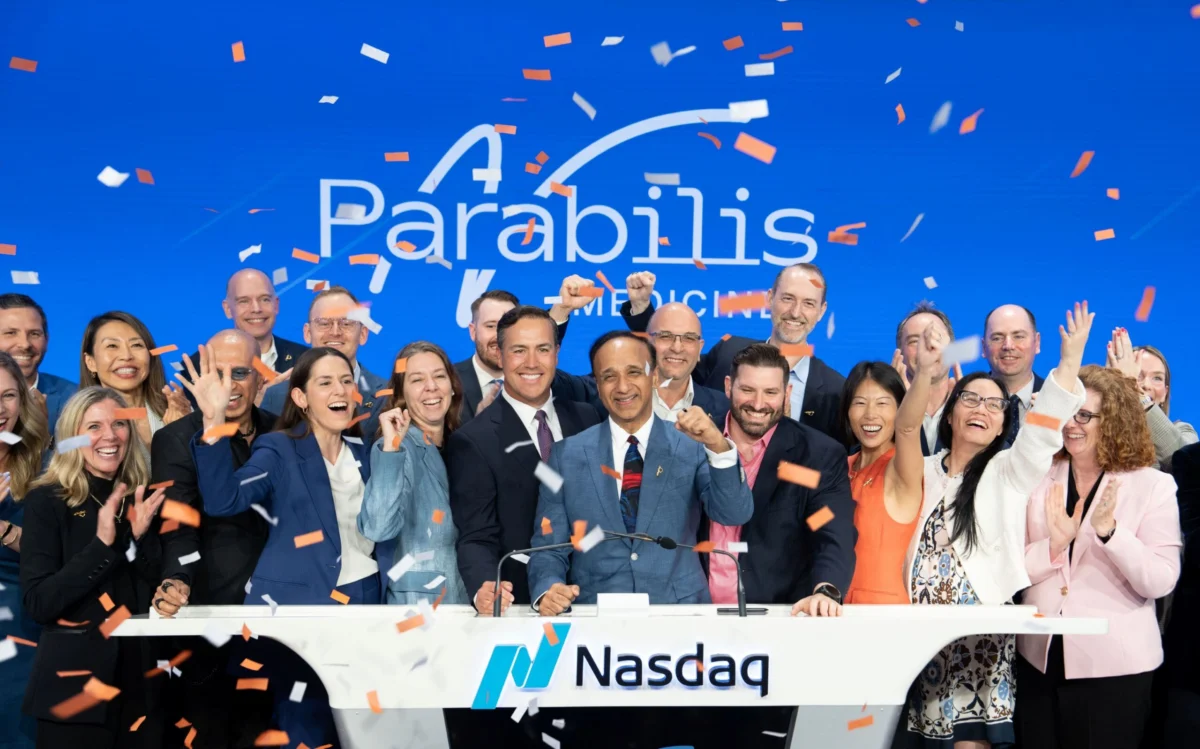
In a watershed moment for the life sciences sector, Cambridge-based Parabilis Medicines (Nasdaq: PBLS) has officially cemented its position at the vanguard of the 2026 biotech market. By successfully pricing the largest initial public offering (IPO) ever recorded by a drug developer, Parabilis has not only signaled a robust recovery for the pharmaceutical capital markets but has also validated the "Helicon" platform as a legitimate, high-value frontier in medicinal chemistry.
The offering, which saw its gross proceeds balloon to an impressive $770.5 million, serves as a powerful testament to investor appetite for companies that prioritize de-risked clinical assets over speculative, early-stage research. As the industry emerges from a period of austerity, the success of Parabilis highlights a critical pivot in how Wall Street evaluates the next generation of therapeutic innovators.
The Anatomy of a Record-Breaking IPO
The journey to the Nasdaq MarketSite in New York’s Times Square was a culmination of aggressive expansion and strategic financial maneuvering. Initially targeting a price range of $17 to $19 per share, Parabilis saw such overwhelming institutional demand that it ultimately priced its offering at $20 per share. The company initially planned to float 25 million shares, a number that was incrementally raised to 33.5 million to accommodate the surge in interest.
The final tally—$770.5 million in gross proceeds—includes a full exercise of the underwriters’ 30-day option to purchase an additional 5.025 million shares. When accounting for underwriting discounts and commissions, the net infusion of capital provides Parabilis with a formidable war chest of approximately $711.7 million. This massive liquidity injection ensures that the company is well-capitalized to pursue its clinical roadmap through the second half of 2029, a rarity for clinical-stage biotechnology firms.
The debut on the public markets was nothing short of electric. Upon opening on Wednesday, shares of Parabilis surged 58% to close their first session at $31.60. While the following days saw typical market volatility—a 4% retreat on Thursday followed by a 10% dip on Friday to close at $27.26—analysts view this as healthy profit-taking rather than a reflection of fundamental weakness.
A Decadal Journey: From FogPharma to Parabilis
The story of Parabilis is not one of overnight success, but of a decade-long, often arduous, pursuit of "undruggable" protein targets. Founded in 2015 as FogPharma by serial entrepreneur and Harvard University researcher Gregory Verdine, PhD, the company spent its formative years operating in the shadows of academic innovation.
Dr. Verdine, who served as CEO until 2023, envisioned a company that could bridge the gap between small molecules and large biologics. The solution was the "Helicon"—a stabilized helical peptide that mimics the natural shapes proteins use to interact with one another. Unlike traditional inhibitors, these Helicons can penetrate cell membranes while maintaining the high-affinity binding of a protein.
The path to the public markets involved six distinct venture capital rounds, a process marked by the challenges of the post-pandemic biotech downturn, leadership transitions, and a strategic rebranding to Parabilis Medicines in 2024. Ben Zercher, a senior biotech and pharma analyst with PitchBook, notes that the company’s evolution was far from linear. "Unlike firms like Kailera Therapeutics, which formed in 2024 and quickly amassed private capital, Parabilis took a much longer road," Zercher observed. "They spent years building proprietary datasets comprising millions of data points across hundreds of thousands of Helicons. This wasn’t just a platform; it was a decade of intense, data-driven discovery."
Clinical Strategy and the Road to Registration
With its newfound capital, Parabilis is not retreating to the lab; it is sprinting toward clinical milestones. The core of their strategy remains zolucatetide (formerly FOG-001), the first direct inhibitor of the β-catenin:TCF interaction—a biological pathway notoriously difficult to target.
The company has earmarked $150 million of the IPO proceeds specifically for the advancement of zolucatetide in the treatment of desmoid tumors. This includes the continuation of dose expansion studies and the launch of a pivotal Phase III registrational trial designed to produce the topline data necessary for FDA submission.
Beyond its lead asset, Parabilis is diversifying its clinical footprint. Approximately $120 million is dedicated to investigating zolucatetide in additional indications, including familial adenomatous polyposis (FAP) and hepatocellular carcinoma. By targeting these rare and aggressive tumors, Parabilis is positioning itself to leverage Orphan Drug and Fast Track designations, which have already been granted by the FDA.
Perhaps most significantly, the company plans to dedicate $190 million—the largest portion of the IPO proceeds—to its broader pipeline. This includes an ETS-related gene (ERG) protein degrader and an allosteric androgen receptor (ARON) program. The company’s management has made it clear that while their current focus is oncology, the Helicon platform possesses the modularity to tackle diseases in immunology, neurology, and beyond.
Strategic Synergies: The Regeneron Collaboration
The financial success of the IPO was bolstered by a critical strategic partnership. In May 2026, just days before its initial filing, Parabilis announced an up-to-$2.3 billion-plus collaboration with Regeneron Pharmaceuticals. This agreement focuses on the development of "antibody-Helicon conjugates," a novel class of drugs that combine the targeting precision of antibodies with the cell-permeability of Helicons.
As part of this agreement, Regeneron participated in a concurrent private placement, purchasing 4,166,666 shares at $18 per share. This $75 million investment, combined with a $50 million upfront payment from the collaboration, provides Parabilis with both non-dilutive capital and, more importantly, the validation of a global pharmaceutical leader. For investors, the "Regeneron stamp of approval" serves as a crucial signal that the Helicon platform has been rigorously vetted by industry experts.
Industry Implications: The "Quality-First" Era
Parabilis’s record-setting performance is the 15th biotech IPO of 2026, a year that has already seen the industry raise over $12 billion in public capital. This surge marks a stark contrast to the previous two years, where IPO windows were largely shuttered for all but the most advanced, late-stage companies.
However, the nature of these IPOs has shifted. "The volume of IPOs reflects a backlog of quality companies that kept building through the biotech funding downturn rather than a wave of hype," says Zercher. "Where the pandemic-era class sold preclinical optionality, Parabilis and the 2026 cohort are being priced on de-risked clinical programs with clear regulatory paths."
The data supports this assessment. Companies like Veradermics, which saw its share price jump 466% since its own 2026 debut, demonstrate that the market is hungry for tangible clinical success. Parabilis, with its solid cash position and transparent clinical roadmap, fits squarely into this new paradigm.
Financial Outlook and Conclusion
Despite its massive IPO, Parabilis remains a company in its growth phase, characterized by significant operating expenses. As of the first quarter of 2026, the company reported a net loss of $45.3 million, with an accumulated deficit of $586.8 million. It currently generates no commercial revenue.
However, the company’s management, led by CEO Mathai Mammen, MD, PhD, has successfully convinced the market that this deficit is a necessary investment in a platform that could redefine modern pharmacology. With the backing of major institutional investors and a robust clinical pipeline, Parabilis enters the second half of 2026 not just as a newly public entity, but as a standard-bearer for the next era of drug discovery.
As the company prepares to initiate its Phase III registrational trials, all eyes will be on whether the Helicon platform can translate its laboratory successes into life-saving treatments. For now, the historic $770.5 million IPO stands as a resounding vote of confidence in the future of the company and the enduring potential of innovative, science-driven medicine.